
CAT PERSON
 Emilia Jones plays Margot, a college student and movie theatre concession girl who goes on a date with an older patron who may or may not be a murderer. Based on Kristen Roupenian‘s 2017 viral short story in The New Yorker, director Susanna Fogel skillfully weaves a dark tale that every woman has lived.
Nicholas Braun plays Robert. Taking the world by storm as Greg on Succession, Braun leans into his height and natural awkwardness, simultaneously charming and scaring the shit out of audiences. His dialogue overflows with double entendres and demeaning terms of endearment. Braun is spectacular, settling into the role without a moment’s hesitation.  Emilia Jones (CODA) plays Margot with a delicious mix of caution, optimism, anxiety, and delightful sardonic wit. She commands your attention with equal parts “every girl” and an entirely captivating performer. Watching her feels effortless.
The script perfectly balances black humor and visceral tension. Writers Michelle Ashford and Kristen Roupenian cleverly utilize fantasy and nightmare sequences to keep the viewers constantly on edge. Countering the fear is a feminist message of empowerment, predominantly in the form of Margot’s best friend Taylor (Geraldine Viswanathan), and her professor Dr Enid Zabala (Isabella Rossellini). The movie references that initially attract Robert and Margot to one another continue throughout the film. Cinephiles rejoice. Text message conversations keep Robert ever-present.  The script also comedically highlights how far women go to remain appealing, how we placate for acceptance, the self-deprecating behavior, and the blatant shunning of red flags. There is a sex scene that is truly something to behold. It is the most cringeworthy, amusing, icky, relatable thing any woman can watch. It accurately captures the constant fear of existing as a woman. The relentless anxiety, the people pleasing, and the patriarchal pressure from every direction, CAT PERSON nails each aspect with humor and truth in fiction.
CAT PERSON
Starring Emilia Jones & Nicholas Braun
Directed by Award-Winning Filmmaker Susanna Fogel
Opens New York City & Los Angeles October 6th
In Theaters Nationally October 13th
**Official Selection – 2023 Sundance Film Festival**
Genre-Bending Thriller Based Off Kristen Roupenian’s
Viral New Yorker Short Story
Directed by Award-Winning Filmmaker
Susanna Fogel (“The Flight Attendant”, writer Booksmart)
Starring:
Emilia Jones (CODA)
Nicholas Braun (“Succession”)
Geraldine Viswanathan (Blockers)
Isabella Rossellini (Blue Velvet)
Fred Melamed (A Serious Man)
Liza Koshy (Transformers: Rise of the Beasts)
Michael Gandolfini (The Many Saints of Newark)
Written by Michelle Ashford (“Masters of Sex”), the story expands upon Kristen Roupenians’ 2017 short story of the same name published in The New Yorker. Striking a nerve with readers, “Cat Person” was the first work of short fiction to ever go viral, spurring conversations about the modern dating scene, seduction and consent around the world.
When Margot, a college sophomore (Emilia Jones) goes on a date with the older Robert (Nicholas Braun), she finds that IRL Robert doesn’t live up to the Robert she has been flirting with over texts. Cat Person is a razor-sharp exploration of the gender divide, the quagmire of navigating modern dating and the dangerous projections we make in our minds about the person at the other end of our phones.


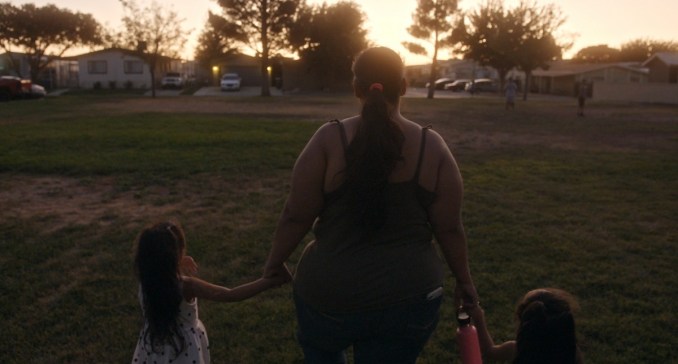 The families are eclectic. All shapes, sizes, races, ages, and socioeconomic backgrounds face the challenges of reuniting parents and children. Allegations range from neglect to sexual abuse. Each case is unique, and the system does not exist to react to those nuances.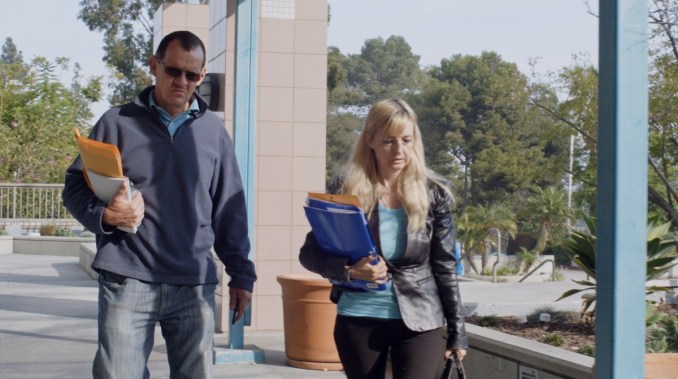


 Family tension grows after the unexpected suicide of the family matriarch. Manuel begrudgingly moves in with his son, granddaughter, and bitter daughter-in-law. As the temperatures outside rise, so does the mind-boggling behavior of Manuel and the rest of the octogenarian population.
 A shockingly violent moment halfway through jolts an audience now accustomed to the eerie din of quietly disturbing imagery. The Elderly shines in the power of visual suggestion, shadow play, reflections, and long lingering takes.


 Director John McPhail and screenwriter Mike Van Waes had the tricky job of taking Adam Ellis‘ real-life viral Twitter feed and translating it for the big screen. If you don’t know the “Dear David” story, let me sum it up. Cartoonist Adam Ellis starts to document the haunting of his apartment. Things get weirder each night, culminating in photographs of this little boy with a caved-in skull dropping onto Adam’s bed. It was truly terrifying reading the thread. I remember sweating as the incidents became creepier and more intense. It was an honest-to-goodness viral moment. This week, DEAR DAVID moves from small screens to movie screens, and the results are mostly comparable.
 The film boasts amazingly timed jump scares. Let’s give a brilliant slow clap for editors David Arthur and Glenn Garland. The script is especially relevant in our ongoing age of vitriolic online engagement. It is also a mystery wrapped in a horror movie, using a personal connection about self-worth. If you know the Dear David canon, it might be better to separate the two. Did I shout with glee when the original “David” drawing appeared? Yup. If I’m being entirely honest, the climax feels a touch hokey, but the final scene brings some redemption. DEAR DAVID is inarguably intriguing. I needed to know how McPhail would expand upon the genuinely disturbing origin material, so there’s no denying I was along for the ride. Genre fans will eat this up.

 Following the death of her mother and in her father’s footsteps, Lou dreams of becoming a firefighter EMT. On her first night on the job, things go haywire when she and her colleagues become the targets of a killer.
 Jeremy Piven plays Lou’s super supportive father, Patrick. But his past puts his daughter in direct sight of the killer. Piven is fantastic. He is a master at his craft, no doubt. Elena Kampouris plays Lou with a solid balance of unresolved trauma and tenacity. She does her best within the convoluted premise to keep us emotionally invested. She deserved to show off more of her physical badassery. I could see her owning a post-apocalyptic role with ease. The film’s best scenes are the climatic mano-a-mano battles.
 It is not an exaggeration to say I yelled, “Oh Shit,” following the first kill. I must hand it to McNamara here, as each is different and brutal. However, the film has an overreaching Saw (in its superfluous middle sequels) vibe, both in its performances and overly complicated premise. The killer wears a David mask and scrawls Latin phrases on the walls, placing sporadic traps and puzzles, which culminates in a need to, quite literally, explain the motive. VINDICTA is sort of an amalgamation of past films. Watch it for Kampouris, but a sequel should not be entertained.


 Folk horror goes hard in this tale of possession and superstition. Writer-director Demian Rugna‘s WHEN EVIL LURKS pits fear and skepticism against an unrelenting demonic force. That’s only the beginning.
  The script reveals itself in bits and pieces, with the plot having ties to some apocalyptic lore affecting entire towns. We learn of a set of rules that are cannon to this happening from generations preceding our main characters. Take David Robert Mitchell’s IT FOLLOWS, add a page out of Stephen King‘s IT, and you’ll begin to understand what you’re dealing with. Somehow, WHEN EVIL LURKS is nastier and even more shocking. The script also suggests that cities were targets first, but there is also an implication that class is somehow involved. There are also what amounts to slayers, a select group of people who confront the evil known as “Cleaners.” There is so much meat on the bone in this script that despite the urge to hide your eyes, it compels you to watch it unfold.
 One standout performance comes from Emilio Vodanovich as Jari, Pedro’s autistic son. As a mother of a child on the spectrum, I genuinely believed they had cast an actor with autism. It is a startling performance. Demian Soloman gives Jimi an authentic heart. A lot is going on behind those eyes. Ezequiel Rodríguez has your heart in your throat from beginning to end. His portrayal of Pedro runs the emotional gambit. He nails it. Rugna gives Jimi and Pedro enough depth and trauma that Soloman and Rodríguez could pull off a sequel in a heartbeat.
  Pablo Fuu‘s music is brilliantly disturbing, particularly in the repeated hard rock guitar riff. Holy Special FX, Batman! WHEN EVIL LURKS pulls no punches with the visual ick. Marcos Berta‘s work is gag-inducing and diabolical. It makes you angry and nauseous. The dialogue is often vile and biting but entirely hypnotizing as you discover more. The brutality grows from one scene to the next. WHEN EVIL LURKS is easily one of the most deranged films of the year. Rugna has broken all the rules. There is no coming back from this one.


 The noteworthy turn comes from Cindy’s neighbor Doc Zuess. John Bingham, whose character is reminiscent of Roberts Blossom from Home Alone, is brilliant. His performance legitimizes The Mean One, bringing it out of its Hallmark moments.


 Riley Rose Critchlow gives a particularly entrancing performance. Their living vs. dead personalities are vastly different but equally grin-inducing. Critchlow captures a relatable sadness, leaving a lasting impression.
  The subtle creepiness is just enough to teeter on the edge, as the film is more drama than your typical horror. THE JESSICA CABIN is a spectacular entry into the LGBTQIA+ genre, perfectly melding comedy, culture, and complex storyline. The film looks at mental health in a stunningly nuanced way. It is crazy charming and superbly funny, pushing moral boundaries while asking existential questions. Seek it out.


 The film directly follows 2022’s Death on the Nile and finds Detective Poirot enjoying retirement within the canals of Venice. His services are still in great demand (as evidenced by the constant line of hopeful clients) but he has lost his faith. When he is approached by his old friend and novelist Ariadne Oliver (Tina Fey, in a thinly veiled nod to author Agatha Christie), we know it can’t be long before the body count begins to climb.
 While the characters are thin, the atmosphere and cinematography of the film are incredibly lush – they are the real stars of the show. I would have bet you good money this film had a different cinematographer from the last two – the difference in style is night and day. But it is still Haris Zambarloukos at the helm, so all I can say is keep it up! Venice does a lot of the heavy lifting, of course, but there’s more to it than that. The first two films leveraged green-screen extensively, whereas Haunting is grounded and has a sense of place. The tone of the film is much more focused, and almost every scene contains rich imagery. I loved the way the suspense of the potential supernatural was implied in every scene – walls and windows of the palazzo creak and seem alive in a manner reminiscent of old Hollywood. No need for CGI thrills here. How great was the imagery? I could watch this movie with absolutely no dialogue and still enjoy myself immensely.


 When I saw Bad Boys for Life in 2020, I would never in a thousand years have imagined the directors had a picture like Rebel in them. This is an ambitious, profound, and thoughtful film. Like Bad Boys, this is a film brimming with violence. But Rebel never uses violence to entertain, rather aiming to shock the audience or to underline or accentuate a point.
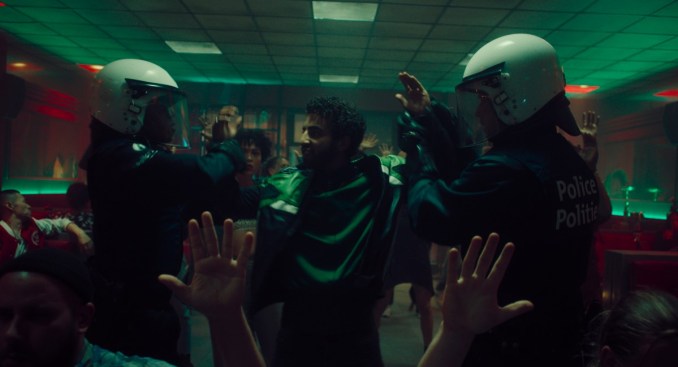 Rebel focuses on the Wasakis, a Belgian family with Moroccan roots. Kamal (Aboubakr Bensaihi) is the older brother, an idealistic drug dealer and rapper horrified by the atrocities he sees in the ongoing war in Syria. His younger brother Nassim is kind and impressionable. Devout matriarch Leila tries to watch over her boys. When Kamal travels to Syria as a volunteer, he believes he has found a non-violent way to make a difference. When he is captured by ISIS, he finds a different path forced upon him, one that will have also cause devastating effects back home.
 Kamal’s passion for rapping also provides one of the film’s most interesting elements – at times, the characters will break into musical interludes. Given the serious tone of the film, these moments could easily appear forced or interrupt the flow of the narrative. Luckily, Bensaihi’s talented flow and consistently gorgeous choreography keep this from occurring. The first such interlude, set in a Brussels’ restaurant, is particularly powerful.


 The cast is phenomenal. Focusing on our leading lady, Carmen Madonia, gives Renata an often aloof attitude, hiding a lost mindset. She’s soft-spoken, outwardly feeling othered by her sister’s personality. But little is said. Madonia’s face replaces any unneeded dialogue.


 Joëlle Haddad-Champeyroux plays innumerable ancillary characters. It is a fantastic running joke. Thomas Vieljeux gives Thibaut a melancholy and wounded self-esteem that suits the narrative. It also places Claire in an unexpected hero role.
 Lizzie Kehoe is hilarious as Claire. She’s the quirky yet emotionally stunted girl who is genuinely charming. Her giddy exuberance is infectious. Kehoe gives it her all as we wade through an increasingly complex coming-of-age story.
  The film’s only fault is perhaps its length. It could use a trim on some of the lingering shots. On the other hand, the story would benefit from being fleshed out and turned into a miniseries. I think the characters earn backstories and an even deeper emotional investment. GOODBYE, PETRUSHKA would make an accessible YA series. Writer-director Nicola Rose covers a lot of ground in an hour and forty minutes. Hidden beneath a classic meets modern fairytale structure lies political commentary, gender dynamics, emotional manipulation, and celebrated individuality. GOODBYE, PETRUSHKA has solid development potential. Rose has a voice, and there is an undoubtedly hungry audience for what she’s serving.

 Michael Reagan plays Tyler Wilson. Reagan balances a toxic masculinity that hides behind a starving artist’s desire. His dismissive intolerance is loathsome, fueled by Tyler’s not-so-secret problem with alcohol. Tedra Millan gives Jen relatability with her compounding worrying. Jen has a lot on her plate, and like most women, her need to solve all the world’s problems consumes her. Written on her face and the pace of her breathing, it’s a visceral feeling.
 This film is an extraordinary story of a power struggle that takes aim at capitalism and cleverly pits mental health against self-preservation. GHOSTS OF THE VOID leaves us with questions of morality and equal parts relief and dread.


 Dana Berger plays Jenn with an exasperated aura. She is a woman who has decided that this relationship is over. Berger’s emotional journey is vastly different from her co-star Max Woertendyke, playing Dan. He has some fight left in him as to their marriage. That comes with a caveat of information as the film rolls on. Woertendyke nails the comedy and the horror. Their remarkable chemistry and Elcar’s writing earn a second viewing. The editing is impressive. I wish I could have been in the room while Elcar was storyboarding. The coordinated chaos is delicious. The dialogue is honest and biting, even set against the mysterious goings-on. It’s undeniably ballsy.
  A therapy session from hell, BRIGHTWOOD taunts our protagonists and the audience with macabre twists and turns, dizzying us with theories. Its shocking final reveal (which is a double doozy) seemingly suggests that, in this environment, compromise and teamwork are the only way forward, for better or for worse. No spoilers from me. It’s dark as hell.

 Cinematographer Hazem Berrabah offers striking juxtaposing visuals of sheep grazing on open fields next to grey concrete structures. Half-built complexes with their innumerable exposed rebar present like monsters bearing sharp teeth and long claws.
  The defiance by detectives keeps your attention steady. No one wants to be told they cannot do their job. Performances from stars Fatma Oussaifi and Mohamed Houcine Grayaa are spellbinding. Their moody and grounded work feels personal and devastating. Oussaifi’s reaction to the overwhelming amount of misogyny hits hard. The writing is hard to shake, a compliment for writer-director Youssef Chebbi and co-writer François-Michel Allegrini.

 The number of King’s books that jumped from page to screen is astounding. As a kid in the 80s, like many of the filmmakers in the doc, I grew up seeing King’s books on my family’s shelf but immersed myself in the films first. The kids in Stand By Me and IT became my peers. I rented The Shining, Creepshow, and Pet Sementary ad nauseum. By the time 1996 rolled around, I remembered the glee I experienced when I discovered The Green Mile in the grocery store checkout aisle.
  While we don’t hear from King directly, we see stills and videos of Stephen on the sets of his adaptations. Filmmakers like Greg Nicotero, Mike Flanagan, David Carson, Taylor Hackford, Tom Holland, John Harrison, Mick Garris, and Frank Darabont share how King’s books inspired their work. They speak to the overwhelming readability of small-town horror. King singlehandedly made Maine an unlikely horror destination. I love that everyone addresses The Shining controversy. Behind-the-scenes footage and anecdotes explain the breakdown between the book and the film. Kubrick obliterates Jack Torrance’s humanity that fans of the book (King, most of all) hate.
  King’s deep dive into the political landscape has always existed. The film explores his ability to explore universal truths, whether religion, race, or greed, and make characters lovable or loathsome based on their moral compass. In the same way, we joke about The Simpsons‘ writers predicting the future, Stephen King uses the global landscape to create villains and heroes that shake us to our core. Translating that from page to screen sometimes takes a slight adjustment. The best filmmakers always ask Steve first.
  For horror fans, KING ON SCREEN is like a kid coming home with a Halloween candy haul that would put you in a coma. For fans of his books, it’s like changing costumes and going out for round two. It’s delicious fun, no matter how cliche you might find the Easter egg-filled bookend scenes. They play like a Where’s Waldo for readers and genre fans alike. (I loved it.) So, turn the lights down and make popcorn. KING ON SCREEN scares up our nostalgia and celebrates a storytelling master.


 Judith/Margot’s curated existence managing two identities and two families begins to crumble, exposing her lies, motives, and underlying trauma.
  Virginie Efira wows audiences as a woman wearing all the hats. Effortlessly embodying each distinct persona, Efira proves, once again she is a star. It is a balancing act of power structures, dangerous satisfaction, and unusual sacrifice.
  Antoine Barraud gives audiences a film almost best viewed without prior knowledge of the plot. Enticing the audience and challenging their sense of morality, MADELEINE COLLINS hypnotizes with twists, turns, and deep complexity. Barraud and co-writer Héléna Klotz carefully weave an unmissable commentary about beauty, unrequited male infatuation, and childhood trauma into the narrative. The film overflows with nuance, and its final reveal changes everything. It is a wildly elaborate hurricane of grief.

 A manipulative sociopath armed with a dangerously ambitious spirit, her wits, and an affinity for snorting wasabi voyages into the high-intensity game of stock market trading and wages war against the financial world. When she stumbles upon news of a monumental pharmaceutical trade, she risks everything to complete her ultimate success story no matter the cost.
 Kimberly-Sue Murray owns every second of screen time. Her manic energy drives the narrative like a runaway freight train. The character is slick, interested only in the genuine long con. Murray masters everything from various accents to grounded emotional release through interpretive dance. She truly is the smartest person in the room. Filmmaker Corey Stanton gives the trader a backstory that slowly reveals itself, adding a new level to the complexity of TRADER. Just when you think you’ve got the story pegged, think again. TRADER is relentlessly tense. It is a conspiracy theorist’s wet dream.
  TRADER is a one-woman show. I would love to see this live onstage, to feel the energy in person. TRADER is an indictment of capitalism and how, with the aid of the internet, the combination of the two may be the undoing of society. This twisted film is a one-of-a-kind ride. It’s an ever-evolving endgame that sucks you in. Don’t forget to unclench your jaw and draw a breath while you watch. TRADER is the ultimate disruptor.
You must be logged in to post a comment.