

A NEW KIND OF WILDERNESS

A life chronicled most intimately and authentically, the Payne family experiences physical and emotional upheaval after a family tragedy. Choosing to raise their family on a secluded farm in the woods of Norway, Maria and Nik wanted nothing more than to instill a love of nature into their children. Potentially forced to sell the beloved farm that holds all their memories, Nik, Freja, Falk, Ulv, and eldest daughter Ronja navigate unfathomable loss and fight to remain connected.
Through Maria’s striking photography, home videos, and extraordinary voiceover narration, throughout several years, filmmaker Silje Evensmo Jacobsen evokes visceral hope and sadness in A NEW KIND OF WILDERNESS. Exploring one family’s respect for the land, unique homeschooling, and off-grid lifestyle, Nik battles societal norms that Maria vowed to circumnavigate and financial limitations. The children are undeniably self-aware. Their openness with their emotions is breathtaking. When school thrusts technology upon them for the first time, they take to it like fish to water, much to the chagrin of Nik, but their wild essence never wanes as they long to hold onto their way of life. The film speaks to the resiliency of youth.
Witnessing the pure innocence and wonder of the Payne children hits you in the heart. It is easy to dismiss the genuine curiosity of your kids with the swirl of everyday chaos. Sundance 2024 audiences have the honor of joining together on an elegant meditation of grief and loneliness. A NEW KIND OF WILDERNESS reminds us to cherish each moment, the Earth, and one another.
A NEW KIND OF WILDERNESS Trailer:

Silje Evensmo Jacobsen, director of A New Kind of Wilderness
Silje Evensmo Jacobsen has directed award-winning documentary films and series for the past 15 years. Among others: Team Ingebrigtsen (2016, 2018) about an unconventional Norwegian family raising their children to be top runners, Faith Can Move Mountains (2021) about nuns breaking boundaries in rural Norway, and KRAFT/SPARK (2022) about young street dancers. A New Kind of Wilderness is her second feature.
Credits
- DIRECTOR(S)
SILJE EVENSMO JACOBSEN
- PRODUCER
MARI BAKKE RIISE
- EXECUTIVE PRODUCER
KIM CHRISTIANSEN
- CINEMATOGRAPHY
SILJE EVENSMO JACOBSEN
KARINE FOSSER
LINE K. LYNGSTADAAS
- EDITORS
KRISTIAN TVEIT
CHRISTOFFER HEIE
- COMPOSER
OLAV ØYEHAUG
- SOUND DESIGNER
YNGVE LEIDULV SÆTRE
- COLORIST
TOM CHR. LILLETVEDT
- FEATURING
ULV VATNE PAYNE
FALK VATNE PAYNE
FREJA VATNE PAYNE
RONJA BREDA VATNE
MARIA GROS VATNE
NIKOLAUS ITHELL PAYNE
- PRODUCTION COMPANY
A5 FILM
- YEAR
2024
- CATEGORY
FEATURE
- COUNTRY
NORWAY
- LANGUAGE
ENGLISH, NORWEGIAN
- RUN TIME


 Political spin can make or break a campaign. Those few who possess the skill have the power to command entire nations. In the Bloomquist Brothers’ latest film, FOUNDERS DAY, a small-town mayoral race brings chaos in the form of a serial killer dressed as, you guessed it, a twisted Founding Father straight out of a cliche painting of the signing of the Declaration of Independence. As members of the town of Fairwood get knocked off, one by one, the race is one to find the killer and their ultimate motive. Tackling every political hot-button issue and tactic with a bucket of gore, FOUNDERS DAY is here to mix things up.


 DIG! XX


 TIME BOMB Y2K makes terrific points about the effects of technology on human interaction. The film delves into how certain groups of people reacted during the unknown. Some folks became preppers, while others cried “Hoax” from the beginning. It’s a perfect metaphor for the power of disinformation, closely mirroring how a particular subsection of alt-right people think a homegrown militia uprising is coming. I had no idea this existed in preparation for Y2K. We have to take into consideration how the world reacted during COVID. The potential for violence equals the potential for peace. It is a fine line.

 Twin brothers Tristan and Làzaro are aspiring astronauts. During a late-night swim, Tristan becomes infected with a mysterious physical and mental ailment when a bright green asteroid plummets into the water. Lazaro must understand his brother’s drastic changes as he tries to maintain an elite physical and psychological state.
 Marta Nieto plays the twin’s mother, Mayra. Her performance is like a gut punch. Writers nail the invisible labor and isolation in motherhood and its inevitable breaking point. Nieto lives in the skin of Mayra and earns a standing ovation. Pablo Cobo and Loius Peres are magnificent. Cobo’s brooding anger equally matches his deep adoration for his twin. His performance as Làzaro is an emotional roller coaster, riddled with survivor’s guilt. Peres leans into palpable fear and trauma, giving audiences a complete 180 in physicality. TROPIC’s costume and makeup departments lend a hand here as they switch gears for Tristan from tailored clothes to ill-fitting outfits, as well as his elaborate facial fx. He is spectacular.
 As a special needs parent, this is a brutal but honest watch. Feeling “othered” as an individual and a family is viscerally devastating. The cinematography, particularly the underwater footage, is mesmerizing. The sci-fi elements combined with a perfect synth score create a timeless feel. TROPIC defies a single genre category. The volatility of this unique story is riveting, but its gravity lies within its intimacy.
 FREUD’S LAST SESSION
 Liv Lisa Fries delivers a stunning performance as Anna Freud, Sigmund’s intellectually accomplished daughter. The complexities of the role will undoubtedly touch a nerve with many viewers. Fries navigates the character splendidly. Matthew Goode plays C.S. Lewis. Coming to Freud for an impromptu therapy session, the audience learns about his childhood and the inspiration for his creative spark of genius. Goode effortlessly matches Hopkins’s energy. He once again establishes himself as a go-to casting choice. His raw vulnerability is captivating. Sir Anthony Hopkins remains at the top of his game. As Freud, he brings curiosity, wit, and curmudgeonly stubbornness all at once. It is yet another notch in Hopkins’s impressive career belt. This ongoing tennis match of masterful acting is perfection for historical drama lovers.
 The cinematography and production design are luscious. The editing is lovely. Freud moves about his home, passing through doorways only to be transported through time and memories. Meaningful flashbacks fill the screen as each man shares their intimate history beginning in childhood and explores how it informed their development. The script, alongside the editing, has a dazzling theatricality. This makes more sense once you learn the screenplay was based on Mark St. Germain‘s play, adapted for the screen by Germain and director Matthew Brown. A West End production of FREUD’S LAST SESSION would be delicious. The references to literary figures and quotations are smirk-inducing for the well-read audience, while the overarching existential volley proves delightful.


 Coming home for the holidays is always wrought with complex emotions. Directors Caroline Keene and Dan Kennedy give audiences much to ponder in MERRY GOOD ENOUGH. A film about familial chaos across generations, this enjoyable small-town film is sure to strike a chord this holiday season.
 Joel Murray is George, the absent but immensely excitable father figure. Writer-director Caroline Keene drops early hints of his toxic masculinity, and Murray eases into the skin of a pretty loathsome man. Daniel Desmarais plays Tim. His sardonic wit meshes perfectly with this cast of fantastic misfits. Comfort Clinton is Cynthia. She is uptight and controlling. Clinton owns the role with her evident daddy issues and needs for approval.
  Sawyer Spielberg is charming as neighbor Sam. His chemistry with Levine is magic, which makes sense since they’ve been married since 2018. Susan Gallagher‘s performance is spectacular. Keene’s script nails the mother of adult children vibe with running errands, asking if we’ve eaten, awkwardly using technology, grabbing coffee, and the overly stocked fridge. Gallagher captivates with her vulnerability. Raye Levine gives Lucy a tangible relatability. She’s funny, a little lost, and yet entirely grounded.
 At the heart of MERRY GOOD ENOUGH, this script delves into unresolved childhood trauma, emotional isolation, mental health, and forgiveness. It’s a breezy watch about finding bliss and connection in the imperfect.
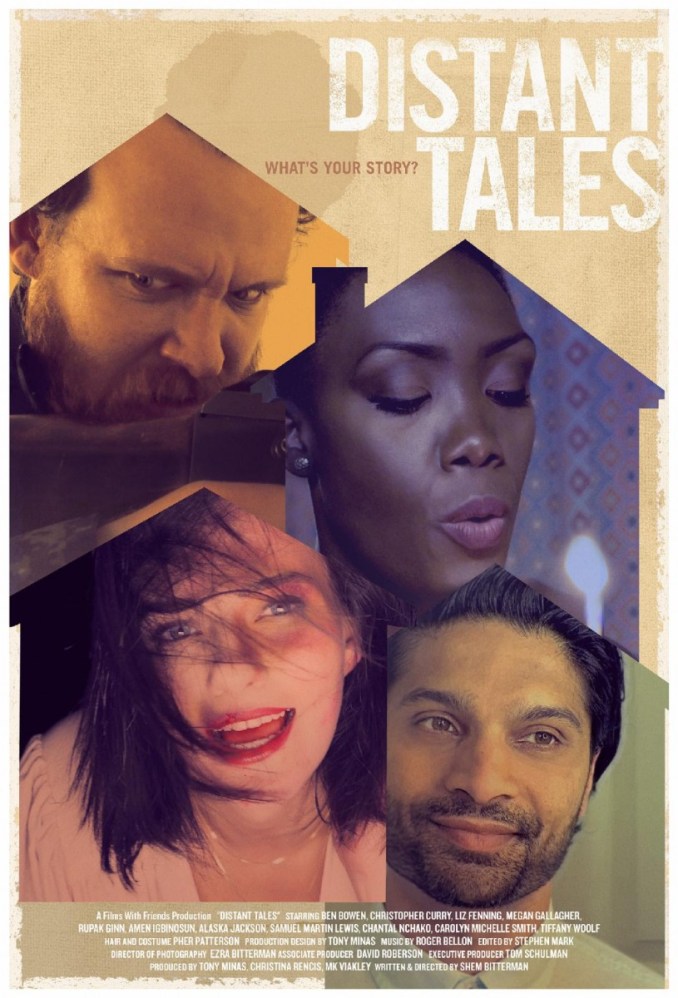


 As a whole, DISTANT TALES tackles all the chaos of lockdown in complex ways. Each story gets under the audience’s skin for vastly different reasons. If nothing else, Bitterman’s keen observation of human desperation will undoubtedly have people talking.


 Mark-Paul Gosselar plays Brookes, the groundskeeper. His dominant physical presence and the fact that he bears a resemblance to Alex make him an intriguing addition to the narrative. Virginia Madsen plays cousin Mags, a woman who knows more about the family history than Sofia wants to hear. She delivers a precise amount of eerie mystery. Ryan Kwanten is Alex, Sofia’s husband. Kwanten gives the role a frightening aura while simultaneously settling into the physical trauma left behind by the accident. These dual traits allow his acting chops to shine bright, especially considering the little dialogue Alex has. Natalia Cordova-Buckley gives Sofia a perfect balance of determination, frustration, and emotional trauma to keep you perched on the edge of your seat. Her raw vulnerability takes you on a journey that most women will find surprisingly relatable.
 A CREATURE WAS STIRRING
 Scout Taylor-Compton is Liz, a religious fanatic drifter. Alongside Connor Paolo playing her brother Kory, they seek shelter by breaking into Faith and Charm’s house. These two deliver solid chemistry and provide a weighty anchor that completely counters the energy of Metz and Basso. You will love to hate them for vastly different reasons, but it’s much deeper than you can imagine.
 Annalise Basso is Charm. An isolated and soulful take on the role, Basso takes late teen angst and manifests it into a physical performance that wows. Chrissy Metz confidently tackles the role of Faith, a nurse, and mother of a daughter who has a deadly condition. A former addict, her nuanced navigation of an impossible scenario is astonishing. Riddled with guilt and endless determination, Metz brings a fearlessly badass Mama to life.
  The lighting and camera work are fantastic. The film’s opening shot pacts an emotional punch. The dialogue is slick and dripping with innuendo. The volley between religion and science intertwined with comic book and horror canon. Don’t even attempt to guess where Shannon Wells‘ script is going because it is increasingly batshit by the minute. The practical FX made me audibly yelp over and over. When you see it, you won’t be able to remain silent. With quick homages to IT and POLTERGEIST, this creature feature meets addiction metaphor boasts a twisted ending darker than you are ready for.


 DON’T SUCK follows a washed-up headliner and the newbie he agrees to mentor, who just so happens to be a vampire.
 Jamie Kennedy


 Stress can do things to you. In THIN SKIN, Aham’s life is falling apart around him. Circumstances, some of his own doing and others out of left field, throw his days, health, and sanity into chaos.


 Lila Schmitz brings audiences the magic of West Ireland through the melodies of the locals and the emotional pull of a tune. THE JOB OF SONGS is a toe-tapping, viscerally joyous film.


 The clever dialogue juxtaposes the fragility of animals in captivity as Matt assigns an animal to each human prisoner. The underlying theme of Matt’s bullying slyly mirrors the psychological torture of animals and the imprisonment of his captives.
 Nicholas Michael McGovern delivers a mesmerizing performance through narration and chilling direct-to-camera fourth wall breaks. His steady voice soothes the audience. It is melodic and informative, making his intentions more frightening. He is magnificent.
  The unit set lends itself to a stage play. I would pay good money to witness this on Broadway. It’s immersive enough to captivate a live audience even more. LIBERTY could be a unique opportunity for Gravitas to enter the theatre world. If I were producing a screen-to-stage adaptation, I would edit live audience reactions during each performance, creating a curated, visceral experience for each ticket holder.
  Philippe De Witte‘s clever allegory about animal rights takes the audience on an unexpected moral journey. Akin to the strangling anxiety of Saw without the gore, LIBERTY is a one-of-a-kind entry into the psychological horror/ environmental thriller subgenre. LIBERTY is dark and daring. It is an emotional roller coaster that twists and turns, loops and lurches with a quiet, raw intensity. De Witte unlocks a primal fear surrounded by poetic madness. You are not ready for this film.


 Filmmaker Henya Brodbeker turns the camera on her, her husband, and their young autistic son, Ari. Through years of filming, we witness the evolution of relationships in her Orthodox community, her marriage, and with herself. This is one family’s story about belonging.
  Anyone who follows my career as a film journalist knows I’m a Mom of a young autistic son. I talk about his diagnosis and navigating the complexities of existing in a primarily neurotypical environment. We are lucky in the grand scheme of ASD possibilities. Our son’s cognitive abilities are off the charts. He is loving, funny, friendly, and would not hurt a fly. Dealing with public meltdowns, particularly if those around you do not know or understand, can be a crushing, demoralizing, tear-filled experience. Nothing is easy. It’s undeniably isolating. It’s the outside world we fear most. THE THREE OF US is irrefutable proof of how equal opportunity changes the lives of families.


 Smalltown divorcee and farmgirl Jane is in the midst of planning the final events of her BFF/ex-husband Mark’s upcoming wedding. When he and his fiancee Heather get stranded by snow, Jane steps in with the wedding planner, triggering chaos. A HOLIDAY I DO is a charming cup of cheer for these festive months ahead.
 The ensemble cast is delightful. Kayden Bryce, Marsha Warfield, Colette Hahn, Mandy Logsdon, Cameron Judd, and Dale Dobbs make you laugh and smile the entire film.
 India Chappell gives Heather the precise amount of jealousy and meltable iciness, countering Mark’s (Joe Piazza) boy next-door aura. Jill Larson is Jane’s mother, Mary Ellen. Unbeknownst to the family, the farm is on the verge of bankruptcy. Larson is like a warm hug. She is an uplifting presence and an ideal mother figure.
 Rivkah Reyes plays Sue with approachable sophistication. Her warm smile invites you in. Lindsay Hicks plays Jane with a brightness that mirrors the film itself. Her charming awkwardness is spot on. Hicks masters the art of romcom slapstick. The relationship between Jane and Sue develops naturally. Reyes and Hicks’ chemistry is endearing.
 The score by Phil Tipping and Kanoa Wolfe-Doblin perfectly matches the light-hearted, breezy premise. Its sweet simplicity lulls the viewer into a calm state. The dialogue is cute and accessible, especially for families with younger LBGTQ members. A HOLIDAY I DO is an excellent addition to the Hallmark-esque holiday films on Tello.
 2nd Annual Dances With Films – NYC


 The score possesses a moving, almost visceral effect on the viewer. The information Rolnick discovers through her years of research will shock you. Their stories remain ever-evolving living entities. The film reinforces the tried and true Churchill adage, “Those that fail to learn from history are doomed to repeat it.”


 Bradley Whitford is a veteran “participant” craving interaction. Each man gains knowledge from the other’s vastly different strategies for survival. Gregg discovers rewards flow when he either embarrasses or hurts himself. As one coaches the other, a mutually beneficial relationship develops. Alice Braga enters the scene as a woman on a mission, determined to find a way out. Her fiery passion counters Whitford’s stubbornness and Gregg’s growing popularity. When best intentions backfire, and another very influential participant butt heads with her, the consequences prove unthinkable.
  The performances are magnificent. Whitford’s energy is manic. It is like hypnotic live theatre. Alice Braga brings her usual fierceness, rattling the day-to-day flow of events. Melvin Gregg is a one-man show that gets better and better by the minute. His flawed vulnerability pulls you into this mesmerizing plot. He is magnificent.
  The first feature film to be shot entirely from one fixed camera angle,
You must be logged in to post a comment.