

presents

Nicky and Preston book a weekend in a remote cabin. Preston is a self-absorbed, cheating brat who takes Nicky for granted. Jackson and Taylor are observant and trapped ghosts. Their hopes of bringing Nicky into the afterworld get messy when they trigger a breakup.
Jackson and Taylor have lengthy dialogues consisting of thoroughly engrossing memories. They make the best of their situation, recalling the silly moments, listing off their favorite things, and trying to get any guest to see them mired in loneliness. A third of the way in, we get flashbacks and backstories for our ghoul friends, and things get even more intriguing. We meet the cabin’s owner, the titular character, Jessica.  Riley Rose Critchlow gives a particularly entrancing performance. Their living vs. dead personalities are vastly different but equally grin-inducing. Critchlow captures a relatable sadness, leaving a lasting impression.
Writer-director Daniel Montgomery gives Jackson a quirky sweetness and the best intentions. His chemistry with both Critchlow and Chase Williamson, as Nicky, is effortless. Williamson has the difficult task of processing a ton of information very quickly. His natural presence and authentic spirit (no pun intended) are delightful.  The subtle creepiness is just enough to teeter on the edge, as the film is more drama than your typical horror. THE JESSICA CABIN is a spectacular entry into the LGBTQIA+ genre, perfectly melding comedy, culture, and complex storyline. The film looks at mental health in a stunningly nuanced way. It is crazy charming and superbly funny, pushing moral boundaries while asking existential questions. Seek it out.
Comedic Horror Movie Sets Digital Debut for THE JESSICA CABIN North American VOD Platforms and DVD on September 26, 2023
Written and directed by Daniel Montgomery, THE JESSICA CABIN was produced by Daniel Montgomery and Riley Rose Critchlow of Mary-Kate and Ashtray Productions, Brendan Haley of Lonely Spectre Productions, Chase Williamson, and Jenna Marie Johnson. The featured cast includes Daniel Montgomery (‘Jackson’), Riley Rose Critchlow (‘Taylor’), Chase Williamson (‘Nicky’), Will Tranfo (‘Preston’), Kylee Thurman (‘Jessica’) and Melinda DeKay (‘Mrs. Norris’). THE JESSICA CABIN is a co-production of Mary-Kate and Ashtray Productions and Lonely Spectre Productions in association with Simulated Sky and ReKon Productions.


 The film directly follows 2022’s Death on the Nile and finds Detective Poirot enjoying retirement within the canals of Venice. His services are still in great demand (as evidenced by the constant line of hopeful clients) but he has lost his faith. When he is approached by his old friend and novelist Ariadne Oliver (Tina Fey, in a thinly veiled nod to author Agatha Christie), we know it can’t be long before the body count begins to climb.
 While the characters are thin, the atmosphere and cinematography of the film are incredibly lush – they are the real stars of the show. I would have bet you good money this film had a different cinematographer from the last two – the difference in style is night and day. But it is still Haris Zambarloukos at the helm, so all I can say is keep it up! Venice does a lot of the heavy lifting, of course, but there’s more to it than that. The first two films leveraged green-screen extensively, whereas Haunting is grounded and has a sense of place. The tone of the film is much more focused, and almost every scene contains rich imagery. I loved the way the suspense of the potential supernatural was implied in every scene – walls and windows of the palazzo creak and seem alive in a manner reminiscent of old Hollywood. No need for CGI thrills here. How great was the imagery? I could watch this movie with absolutely no dialogue and still enjoy myself immensely.


 When I saw Bad Boys for Life in 2020, I would never in a thousand years have imagined the directors had a picture like Rebel in them. This is an ambitious, profound, and thoughtful film. Like Bad Boys, this is a film brimming with violence. But Rebel never uses violence to entertain, rather aiming to shock the audience or to underline or accentuate a point.
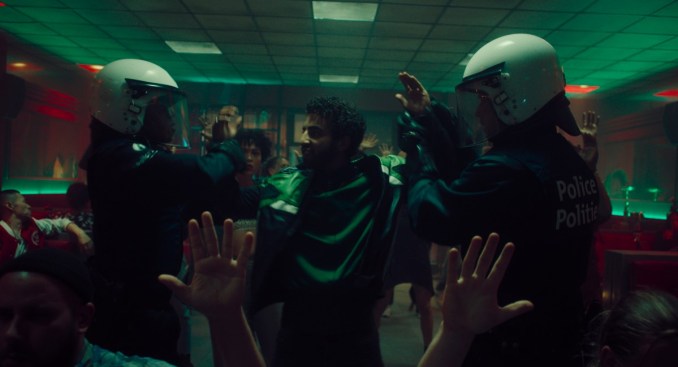 Rebel focuses on the Wasakis, a Belgian family with Moroccan roots. Kamal (Aboubakr Bensaihi) is the older brother, an idealistic drug dealer and rapper horrified by the atrocities he sees in the ongoing war in Syria. His younger brother Nassim is kind and impressionable. Devout matriarch Leila tries to watch over her boys. When Kamal travels to Syria as a volunteer, he believes he has found a non-violent way to make a difference. When he is captured by ISIS, he finds a different path forced upon him, one that will have also cause devastating effects back home.
 Kamal’s passion for rapping also provides one of the film’s most interesting elements – at times, the characters will break into musical interludes. Given the serious tone of the film, these moments could easily appear forced or interrupt the flow of the narrative. Luckily, Bensaihi’s talented flow and consistently gorgeous choreography keep this from occurring. The first such interlude, set in a Brussels’ restaurant, is particularly powerful.


 The cast is phenomenal. Focusing on our leading lady, Carmen Madonia, gives Renata an often aloof attitude, hiding a lost mindset. She’s soft-spoken, outwardly feeling othered by her sister’s personality. But little is said. Madonia’s face replaces any unneeded dialogue.


 As dementia sets in, Yohji’s arc proves devastating to witness. The story also unravels the piles of notes strewn about Yohji’s home. Takashi must piece together this collection of garbled messages, love letters, and diary entries.
 Yutaka Yamazaki‘s cinematography is memorable. There is something special about letting the camera be static and allowing the performances to speak for themselves. The script surprises with every scene, which is quite a feat for a two-and-a-half-hour runtime. GREAT ABSENCE is a nuanced look at memory, perception, regret, and the endless complexities within relationships. This film will bring you to your knees.


 The film consists of informal sit-down interviews, extensive personal writings, archival footage, and plenty of home videos of the generations of strong women in the family. We discover the hurt from Hiam’s past, the emotional baggage of leaving behind the turmoil of Palestine, but also the treasured connections of the women who shaped her. Hiam’s letters and poems serve as both insight and narration. They are intensely affecting.
  Hiam and her family love one another with their whole hearts. They have no filters when speaking to each other, and their words of affirmation are something to aspire to. Lina Soualem captures all of this in an elegant edit. The film is beautifully intimate. It’s a loving commentary on memory, identity, and honoring your past.


 The overwhelming joy of hearing these kids laugh is infectious. SUMMER QAMP is an education, through and through. As a former theatre kid and current creative adult with two kids, I strive to understand how identity plays a part in overall confidence. I grew up with often crippling anxiety, a stranglehold of perfectionism, and feeling othered. It doesn’t feel good. My job is to protect my kids from the same overwhelming feelings of chaos any way I can.
 SUMMER QAMP‘S brave kids allow the audience into their personal lives. They may not fully appreciate how fearless they are. Campers share their gender identity journey, the good, the bad, and the emotionally ugly. This film provides a conversation starter for understanding gender dysphoria from those experiencing it firsthand. It’s an aha of a film.


 Joëlle Haddad-Champeyroux plays innumerable ancillary characters. It is a fantastic running joke. Thomas Vieljeux gives Thibaut a melancholy and wounded self-esteem that suits the narrative. It also places Claire in an unexpected hero role.
 Lizzie Kehoe is hilarious as Claire. She’s the quirky yet emotionally stunted girl who is genuinely charming. Her giddy exuberance is infectious. Kehoe gives it her all as we wade through an increasingly complex coming-of-age story.
  The film’s only fault is perhaps its length. It could use a trim on some of the lingering shots. On the other hand, the story would benefit from being fleshed out and turned into a miniseries. I think the characters earn backstories and an even deeper emotional investment. GOODBYE, PETRUSHKA would make an accessible YA series. Writer-director Nicola Rose covers a lot of ground in an hour and forty minutes. Hidden beneath a classic meets modern fairytale structure lies political commentary, gender dynamics, emotional manipulation, and celebrated individuality. GOODBYE, PETRUSHKA has solid development potential. Rose has a voice, and there is an undoubtedly hungry audience for what she’s serving.


 Michael Reagan plays Tyler Wilson. Reagan balances a toxic masculinity that hides behind a starving artist’s desire. His dismissive intolerance is loathsome, fueled by Tyler’s not-so-secret problem with alcohol. Tedra Millan gives Jen relatability with her compounding worrying. Jen has a lot on her plate, and like most women, her need to solve all the world’s problems consumes her. Written on her face and the pace of her breathing, it’s a visceral feeling.
 This film is an extraordinary story of a power struggle that takes aim at capitalism and cleverly pits mental health against self-preservation. GHOSTS OF THE VOID leaves us with questions of morality and equal parts relief and dread.


 Dana Berger plays Jenn with an exasperated aura. She is a woman who has decided that this relationship is over. Berger’s emotional journey is vastly different from her co-star Max Woertendyke, playing Dan. He has some fight left in him as to their marriage. That comes with a caveat of information as the film rolls on. Woertendyke nails the comedy and the horror. Their remarkable chemistry and Elcar’s writing earn a second viewing. The editing is impressive. I wish I could have been in the room while Elcar was storyboarding. The coordinated chaos is delicious. The dialogue is honest and biting, even set against the mysterious goings-on. It’s undeniably ballsy.
  A therapy session from hell, BRIGHTWOOD taunts our protagonists and the audience with macabre twists and turns, dizzying us with theories. Its shocking final reveal (which is a double doozy) seemingly suggests that, in this environment, compromise and teamwork are the only way forward, for better or for worse. No spoilers from me. It’s dark as hell.

 Cinematographer Hazem Berrabah offers striking juxtaposing visuals of sheep grazing on open fields next to grey concrete structures. Half-built complexes with their innumerable exposed rebar present like monsters bearing sharp teeth and long claws.
  The defiance by detectives keeps your attention steady. No one wants to be told they cannot do their job. Performances from stars Fatma Oussaifi and Mohamed Houcine Grayaa are spellbinding. Their moody and grounded work feels personal and devastating. Oussaifi’s reaction to the overwhelming amount of misogyny hits hard. The writing is hard to shake, a compliment for writer-director Youssef Chebbi and co-writer François-Michel Allegrini.


 The number of King’s books that jumped from page to screen is astounding. As a kid in the 80s, like many of the filmmakers in the doc, I grew up seeing King’s books on my family’s shelf but immersed myself in the films first. The kids in Stand By Me and IT became my peers. I rented The Shining, Creepshow, and Pet Sementary ad nauseum. By the time 1996 rolled around, I remembered the glee I experienced when I discovered The Green Mile in the grocery store checkout aisle.
  While we don’t hear from King directly, we see stills and videos of Stephen on the sets of his adaptations. Filmmakers like Greg Nicotero, Mike Flanagan, David Carson, Taylor Hackford, Tom Holland, John Harrison, Mick Garris, and Frank Darabont share how King’s books inspired their work. They speak to the overwhelming readability of small-town horror. King singlehandedly made Maine an unlikely horror destination. I love that everyone addresses The Shining controversy. Behind-the-scenes footage and anecdotes explain the breakdown between the book and the film. Kubrick obliterates Jack Torrance’s humanity that fans of the book (King, most of all) hate.
  King’s deep dive into the political landscape has always existed. The film explores his ability to explore universal truths, whether religion, race, or greed, and make characters lovable or loathsome based on their moral compass. In the same way, we joke about The Simpsons‘ writers predicting the future, Stephen King uses the global landscape to create villains and heroes that shake us to our core. Translating that from page to screen sometimes takes a slight adjustment. The best filmmakers always ask Steve first.
  For horror fans, KING ON SCREEN is like a kid coming home with a Halloween candy haul that would put you in a coma. For fans of his books, it’s like changing costumes and going out for round two. It’s delicious fun, no matter how cliche you might find the Easter egg-filled bookend scenes. They play like a Where’s Waldo for readers and genre fans alike. (I loved it.) So, turn the lights down and make popcorn. KING ON SCREEN scares up our nostalgia and celebrates a storytelling master.


 Judith/Margot’s curated existence managing two identities and two families begins to crumble, exposing her lies, motives, and underlying trauma.
  Virginie Efira wows audiences as a woman wearing all the hats. Effortlessly embodying each distinct persona, Efira proves, once again she is a star. It is a balancing act of power structures, dangerous satisfaction, and unusual sacrifice.
  Antoine Barraud gives audiences a film almost best viewed without prior knowledge of the plot. Enticing the audience and challenging their sense of morality, MADELEINE COLLINS hypnotizes with twists, turns, and deep complexity. Barraud and co-writer Héléna Klotz carefully weave an unmissable commentary about beauty, unrequited male infatuation, and childhood trauma into the narrative. The film overflows with nuance, and its final reveal changes everything. It is a wildly elaborate hurricane of grief.
You must be logged in to post a comment.