
 ALL YOU NEED IS DEATH

In ALL YOU NEED IS DEATH, an ambitious couple discovers the all-consuming origin of an ancient folk song. Anna and Aleks search for a particular melody that might end in a big payday for particular collectors. They will learn that power is intoxicating, but curses come with rules. The script builds a vibrating anticipation. The audience has little information. Filmmaker Paul Duane slowly reveals our protagonists’ what, but the why remains a mystery. Based on dark Irish lore passed down through the maternal lineage and some ancient cursed story, the song drips with agony, even if the audience cannot initially understand a single word. All parties are consumed by its power the moment it is heard.
 Only one character appears to coherently recall the film’s secretive canon, but only to a point. Rita’s son reveals the unspoken, generational seriousness of their circumstances. The drastic measures he takes to protect the legend are shocking. He must find Anna and her cohorts.
These ancient songs act like spells or incantations. Themes of love, obsession, yearning, and control blur with each passing scene. Eoin McDonagh‘s intriguing editing includes flashes from the song’s origin, spliced with moments of Anna showing the interconnectedness of the women charged with the secret’s protection.  Quick visual and dialogue genre homages pop up from time to time. Horror fans will find a sly smirk spread across their lips while intently trying to figure out what the hell is going on. Cast members Simone Collins, Charlie Maher, Catherine Wiggins, and Nigel O’Neill are captivating. One performance in particular, while short-lived, is mesmerizing. Olwen Fouéré plays songstress Rita Concannon. Her presence is unmatched by anyone else in the film. It’s a chilling turn.
The makeup FX are wonderful. Both opening and closing credits lend to a disquieting feeling. The script has massive expansion potential. You cannot begin to predict what comes next. ALL YOU NEED IS DEATH boasts a disturbing finale. Paul Duane delivers an unsettling story that burrows into your brain and will leave your mouth agape in horror.
The nightmarish Irish folktale arrives on VOD and in select U.S. cinemas on April 11th
ALL YOU NEED IS DEATH stars Olwen Fouéré (Mandy, Sally Hardesty from 2022’s Texas Chainsaw Massacre), Charlie Maher (Blue Lights), Simone Collins (The Last Duel), and Gary Whelan (The Contract). The film had its World Premiere at Beyond Fest in Los Angeles, followed by an Irish Premiere at Cork International Film Festival.
Not Rated
Color
91 Minutes
English Language
About XYZ Films
XYZ Films is an independent studio whose mission is to empower visionary storytellers from every corner of the planet. XYZ was founded in 2008 by Nate Bolotin, Nick Spicer, and Aram Tertzakian and has expanded in recent years into documentary, talent management, and distribution. Some of the company’s classic titles include THE RAID franchise, 2017 Sundance winner I DON’T FEEL AT HOME IN THIS WORLD ANYMORE, and Panos Cosmatos’ psychedelic revenge thriller MANDY.


 Thomas Walton‘s CAMP PLEASANT LAKE centers around a horror camp created based on a 20-year-old legend of a missing child and the brutal murder of her family on their way to the very same camp.
 Christopher Sky is the former vile camper turned Camp of Terror counselor, Mike. He is a sufficient asshole and you will revel in his inevitable demise. Jonathan Lipnicki is hands down the best part of CAMP PLEASANT LAKE. His unfettered commitment to the role is genuinely awesome.
 It is evident the film is made by genre fans. Practical fx are bloody good, even if the pace and dialogue drag. The kills get better as the plot rolls along. I did wish the variety of attendees had been more eclectic. At $10k each, I was looking for fewer numbers and more development of these characters because the possibilities were endless.

 Kate Lyn Sheil (
 My love for Scott Haze knows no bounds. From his breakout performance in
  The ominous score by Tristan Bechet sometimes grates in a way that makes you subconsciously cringe. The continuous low din instills pure fear. Stay through the entire end credits for more eerie ear candy. THE SEEDING has echoes of The Hills Have Eyes horror and Midsommer folklore. All said it is an upsetting watch, and that’s what genre fans show up for.

 Twin brothers Tristan and Làzaro are aspiring astronauts. During a late-night swim, Tristan becomes infected with a mysterious physical and mental ailment when a bright green asteroid plummets into the water. Lazaro must understand his brother’s drastic changes as he tries to maintain an elite physical and psychological state.
 Marta Nieto plays the twin’s mother, Mayra. Her performance is like a gut punch. Writers nail the invisible labor and isolation in motherhood and its inevitable breaking point. Nieto lives in the skin of Mayra and earns a standing ovation. Pablo Cobo and Loius Peres are magnificent. Cobo’s brooding anger equally matches his deep adoration for his twin. His performance as Làzaro is an emotional roller coaster, riddled with survivor’s guilt. Peres leans into palpable fear and trauma, giving audiences a complete 180 in physicality. TROPIC’s costume and makeup departments lend a hand here as they switch gears for Tristan from tailored clothes to ill-fitting outfits, as well as his elaborate facial fx. He is spectacular.
 As a special needs parent, this is a brutal but honest watch. Feeling “othered” as an individual and a family is viscerally devastating. The cinematography, particularly the underwater footage, is mesmerizing. The sci-fi elements combined with a perfect synth score create a timeless feel. TROPIC defies a single genre category. The volatility of this unique story is riveting, but its gravity lies within its intimacy.


 Coming home for the holidays is always wrought with complex emotions. Directors Caroline Keene and Dan Kennedy give audiences much to ponder in MERRY GOOD ENOUGH. A film about familial chaos across generations, this enjoyable small-town film is sure to strike a chord this holiday season.
 Joel Murray is George, the absent but immensely excitable father figure. Writer-director Caroline Keene drops early hints of his toxic masculinity, and Murray eases into the skin of a pretty loathsome man. Daniel Desmarais plays Tim. His sardonic wit meshes perfectly with this cast of fantastic misfits. Comfort Clinton is Cynthia. She is uptight and controlling. Clinton owns the role with her evident daddy issues and needs for approval.
  Sawyer Spielberg is charming as neighbor Sam. His chemistry with Levine is magic, which makes sense since they’ve been married since 2018. Susan Gallagher‘s performance is spectacular. Keene’s script nails the mother of adult children vibe with running errands, asking if we’ve eaten, awkwardly using technology, grabbing coffee, and the overly stocked fridge. Gallagher captivates with her vulnerability. Raye Levine gives Lucy a tangible relatability. She’s funny, a little lost, and yet entirely grounded.
 At the heart of MERRY GOOD ENOUGH, this script delves into unresolved childhood trauma, emotional isolation, mental health, and forgiveness. It’s a breezy watch about finding bliss and connection in the imperfect.
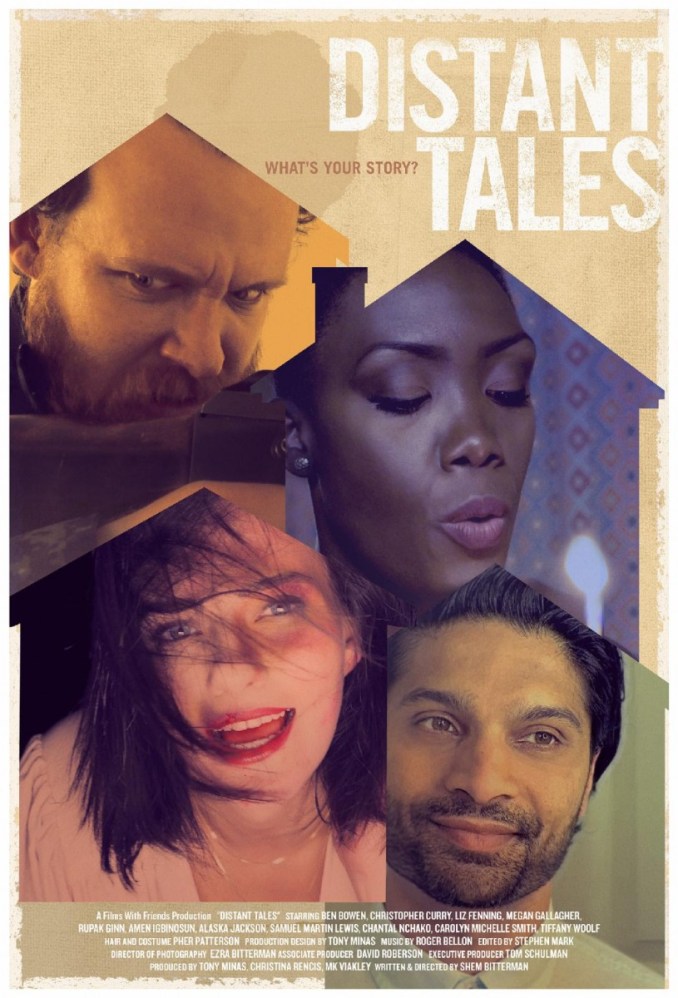


 As a whole, DISTANT TALES tackles all the chaos of lockdown in complex ways. Each story gets under the audience’s skin for vastly different reasons. If nothing else, Bitterman’s keen observation of human desperation will undoubtedly have people talking.


 Mark-Paul Gosselar plays Brookes, the groundskeeper. His dominant physical presence and the fact that he bears a resemblance to Alex make him an intriguing addition to the narrative. Virginia Madsen plays cousin Mags, a woman who knows more about the family history than Sofia wants to hear. She delivers a precise amount of eerie mystery. Ryan Kwanten is Alex, Sofia’s husband. Kwanten gives the role a frightening aura while simultaneously settling into the physical trauma left behind by the accident. These dual traits allow his acting chops to shine bright, especially considering the little dialogue Alex has. Natalia Cordova-Buckley gives Sofia a perfect balance of determination, frustration, and emotional trauma to keep you perched on the edge of your seat. Her raw vulnerability takes you on a journey that most women will find surprisingly relatable.
 A CREATURE WAS STIRRING
 Scout Taylor-Compton is Liz, a religious fanatic drifter. Alongside Connor Paolo playing her brother Kory, they seek shelter by breaking into Faith and Charm’s house. These two deliver solid chemistry and provide a weighty anchor that completely counters the energy of Metz and Basso. You will love to hate them for vastly different reasons, but it’s much deeper than you can imagine.
 Annalise Basso is Charm. An isolated and soulful take on the role, Basso takes late teen angst and manifests it into a physical performance that wows. Chrissy Metz confidently tackles the role of Faith, a nurse, and mother of a daughter who has a deadly condition. A former addict, her nuanced navigation of an impossible scenario is astonishing. Riddled with guilt and endless determination, Metz brings a fearlessly badass Mama to life.
  The lighting and camera work are fantastic. The film’s opening shot pacts an emotional punch. The dialogue is slick and dripping with innuendo. The volley between religion and science intertwined with comic book and horror canon. Don’t even attempt to guess where Shannon Wells‘ script is going because it is increasingly batshit by the minute. The practical FX made me audibly yelp over and over. When you see it, you won’t be able to remain silent. With quick homages to IT and POLTERGEIST, this creature feature meets addiction metaphor boasts a twisted ending darker than you are ready for.


 DON’T SUCK follows a washed-up headliner and the newbie he agrees to mentor, who just so happens to be a vampire.
 Jamie Kennedy


 Stress can do things to you. In THIN SKIN, Aham’s life is falling apart around him. Circumstances, some of his own doing and others out of left field, throw his days, health, and sanity into chaos.


 The clever dialogue juxtaposes the fragility of animals in captivity as Matt assigns an animal to each human prisoner. The underlying theme of Matt’s bullying slyly mirrors the psychological torture of animals and the imprisonment of his captives.
 Nicholas Michael McGovern delivers a mesmerizing performance through narration and chilling direct-to-camera fourth wall breaks. His steady voice soothes the audience. It is melodic and informative, making his intentions more frightening. He is magnificent.
  The unit set lends itself to a stage play. I would pay good money to witness this on Broadway. It’s immersive enough to captivate a live audience even more. LIBERTY could be a unique opportunity for Gravitas to enter the theatre world. If I were producing a screen-to-stage adaptation, I would edit live audience reactions during each performance, creating a curated, visceral experience for each ticket holder.
  Philippe De Witte‘s clever allegory about animal rights takes the audience on an unexpected moral journey. Akin to the strangling anxiety of Saw without the gore, LIBERTY is a one-of-a-kind entry into the psychological horror/ environmental thriller subgenre. LIBERTY is dark and daring. It is an emotional roller coaster that twists and turns, loops and lurches with a quiet, raw intensity. De Witte unlocks a primal fear surrounded by poetic madness. You are not ready for this film.

 Bradley Whitford is a veteran “participant” craving interaction. Each man gains knowledge from the other’s vastly different strategies for survival. Gregg discovers rewards flow when he either embarrasses or hurts himself. As one coaches the other, a mutually beneficial relationship develops. Alice Braga enters the scene as a woman on a mission, determined to find a way out. Her fiery passion counters Whitford’s stubbornness and Gregg’s growing popularity. When best intentions backfire, and another very influential participant butt heads with her, the consequences prove unthinkable.
  The performances are magnificent. Whitford’s energy is manic. It is like hypnotic live theatre. Alice Braga brings her usual fierceness, rattling the day-to-day flow of events. Melvin Gregg is a one-man show that gets better and better by the minute. His flawed vulnerability pulls you into this mesmerizing plot. He is magnificent.
  The first feature film to be shot entirely from one fixed camera angle,


 Emile Hirsh is a manic misogynist and one catalyst in the chaos. Matilda Lutz plays the titular Helen. She is a star. Her presence is magnetic, and you cannot take your eyes off of her. Dylan Gelula, whom I adored in Cooper Raiff‘s


 As of today’s Halloween launch day, the platform will feature over thirty titles, including those from indie distributors Oscilloscope, Dark Star, Dark Sky, Dekanalog, Utopia, Yellow Veil Pictures, and others. Titles include Jane Schoenbrun’s

 The families are eclectic. All shapes, sizes, races, ages, and socioeconomic backgrounds face the challenges of reuniting parents and children. Allegations range from neglect to sexual abuse. Each case is unique, and the system does not exist to react to those nuances.


 Director John McPhail and screenwriter Mike Van Waes had the tricky job of taking Adam Ellis‘ real-life viral Twitter feed and translating it for the big screen. If you don’t know the “Dear David” story, let me sum it up. Cartoonist Adam Ellis starts to document the haunting of his apartment. Things get weirder each night, culminating in photographs of this little boy with a caved-in skull dropping onto Adam’s bed. It was truly terrifying reading the thread. I remember sweating as the incidents became creepier and more intense. It was an honest-to-goodness viral moment. This week, DEAR DAVID moves from small screens to movie screens, and the results are mostly comparable.
 The film boasts amazingly timed jump scares. Let’s give a brilliant slow clap for editors David Arthur and Glenn Garland. The script is especially relevant in our ongoing age of vitriolic online engagement. It is also a mystery wrapped in a horror movie, using a personal connection about self-worth. If you know the Dear David canon, it might be better to separate the two. Did I shout with glee when the original “David” drawing appeared? Yup. If I’m being entirely honest, the climax feels a touch hokey, but the final scene brings some redemption. DEAR DAVID is inarguably intriguing. I needed to know how McPhail would expand upon the genuinely disturbing origin material, so there’s no denying I was along for the ride. Genre fans will eat this up.


 The noteworthy turn comes from Cindy’s neighbor Doc Zuess. John Bingham, whose character is reminiscent of Roberts Blossom from Home Alone, is brilliant. His performance legitimizes The Mean One, bringing it out of its Hallmark moments.


 Dana Berger plays Jenn with an exasperated aura. She is a woman who has decided that this relationship is over. Berger’s emotional journey is vastly different from her co-star Max Woertendyke, playing Dan. He has some fight left in him as to their marriage. That comes with a caveat of information as the film rolls on. Woertendyke nails the comedy and the horror. Their remarkable chemistry and Elcar’s writing earn a second viewing. The editing is impressive. I wish I could have been in the room while Elcar was storyboarding. The coordinated chaos is delicious. The dialogue is honest and biting, even set against the mysterious goings-on. It’s undeniably ballsy.
  A therapy session from hell, BRIGHTWOOD taunts our protagonists and the audience with macabre twists and turns, dizzying us with theories. Its shocking final reveal (which is a double doozy) seemingly suggests that, in this environment, compromise and teamwork are the only way forward, for better or for worse. No spoilers from me. It’s dark as hell.

 The number of King’s books that jumped from page to screen is astounding. As a kid in the 80s, like many of the filmmakers in the doc, I grew up seeing King’s books on my family’s shelf but immersed myself in the films first. The kids in Stand By Me and IT became my peers. I rented The Shining, Creepshow, and Pet Sementary ad nauseum. By the time 1996 rolled around, I remembered the glee I experienced when I discovered The Green Mile in the grocery store checkout aisle.
  While we don’t hear from King directly, we see stills and videos of Stephen on the sets of his adaptations. Filmmakers like Greg Nicotero, Mike Flanagan, David Carson, Taylor Hackford, Tom Holland, John Harrison, Mick Garris, and Frank Darabont share how King’s books inspired their work. They speak to the overwhelming readability of small-town horror. King singlehandedly made Maine an unlikely horror destination. I love that everyone addresses The Shining controversy. Behind-the-scenes footage and anecdotes explain the breakdown between the book and the film. Kubrick obliterates Jack Torrance’s humanity that fans of the book (King, most of all) hate.
  King’s deep dive into the political landscape has always existed. The film explores his ability to explore universal truths, whether religion, race, or greed, and make characters lovable or loathsome based on their moral compass. In the same way, we joke about The Simpsons‘ writers predicting the future, Stephen King uses the global landscape to create villains and heroes that shake us to our core. Translating that from page to screen sometimes takes a slight adjustment. The best filmmakers always ask Steve first.
  For horror fans, KING ON SCREEN is like a kid coming home with a Halloween candy haul that would put you in a coma. For fans of his books, it’s like changing costumes and going out for round two. It’s delicious fun, no matter how cliche you might find the Easter egg-filled bookend scenes. They play like a Where’s Waldo for readers and genre fans alike. (I loved it.) So, turn the lights down and make popcorn. KING ON SCREEN scares up our nostalgia and celebrates a storytelling master.
 A manipulative sociopath armed with a dangerously ambitious spirit, her wits, and an affinity for snorting wasabi voyages into the high-intensity game of stock market trading and wages war against the financial world. When she stumbles upon news of a monumental pharmaceutical trade, she risks everything to complete her ultimate success story no matter the cost.
 Kimberly-Sue Murray owns every second of screen time. Her manic energy drives the narrative like a runaway freight train. The character is slick, interested only in the genuine long con. Murray masters everything from various accents to grounded emotional release through interpretive dance. She truly is the smartest person in the room. Filmmaker Corey Stanton gives the trader a backstory that slowly reveals itself, adding a new level to the complexity of TRADER. Just when you think you’ve got the story pegged, think again. TRADER is relentlessly tense. It is a conspiracy theorist’s wet dream.
  TRADER is a one-woman show. I would love to see this live onstage, to feel the energy in person. TRADER is an indictment of capitalism and how, with the aid of the internet, the combination of the two may be the undoing of society. This twisted film is a one-of-a-kind ride. It’s an ever-evolving endgame that sucks you in. Don’t forget to unclench your jaw and draw a breath while you watch. TRADER is the ultimate disruptor.
You must be logged in to post a comment.