

IS THERE ANYBODY OUT THERE?

In search of someone else with the same physical condition, Ella Glendining takes us on a thoughtful journey in Sundance 2023 documentary IS THERE ANYBODY OUT THERE? The editing combined with the score creates a charming and deeply affecting quality. Confessional diary logs place us in Ella’s headspace. She uses home videos and sit-down chats with her Mum and Dad about what it was like to raise her. Seeking specialists and families with the same disability offers Ella more questions than answers. We follow Ella through an unexpected pregnancy. Her gorgeous son River and the Covid 19 pandemic change how she views potential surgery options. As she speaks to others via Zoom, she contemplates the appreciation of her body.
  The discussion of ableism is paramount to understanding Ella’s life and any family with a differently abled member. I am the mother of a seven-year-old son with Autism Spectrum Disorder. I suspect that with his off-the-charts cognitive abilities, the more precise diagnosis is Aspergers. I appreciated Ella and her best friend Naomi’s honest discussions about her autism and the challenges of an invisible disability. Each admits they cannot fully understand the inner workings of one another’s feelings and worry they have inadvertently said horrible things to one another. Understanding the staring, judgment, and how it pierces the heart cannot be ignored. That is also why the conversations with Ella’s parents resonated with me. Like Ella seeking someone to connect to, her Mum and Dad were touchstones for me.
  IS THERE ANYBODY OUT THERE? tackles outdated stereotypes and deep-seated trauma, but also optimism. I hope Ella Glendining understands the gravity of her film. I have to thank her for sharing her life, and I look forward to sharing her story with my son when he is a bit older. IS THERE ANYBODY OUT THERE? celebrates individualism and isn’t that the ultimate goal?
Screening Times
In Person
-
PREMIEREJan. 22 3:00PM MST
Prospector Square Theatre
PARK CITY
-
SECOND SCREENINGJan. 24 3:00PM MST
Park Avenue Theatre
PARK CITY
-
SECOND SCREENINGJan. 25 12:00PM MST
Park Avenue Theatre
PARK CITY
-
SECOND SCREENINGJan. 26 5:30PM MST
Megaplex Theatres at The Gateway 6
SALT LAKE CITY
-
SECOND SCREENINGJan. 27 2:30PM MST
Holiday Village Cinemas – 1
PARK CITY
Online
-
SECOND SCREENINGJan. 24 8:00AM MST
Available Until Jan. 29 11:55PM MST


 The film looks beautiful. Fran Fernández Pardo‘s cinematography highlights the rich colors in fabrics and paint and captures extraordinary angles in fantasy sequences. The commentary on religious oppression and desire is unmissable. The performances are outstanding. Kiti Mánve breathes vulnerability and quiet ferocity into the role of Mari Cruz. It is a stunning, award-worthy turn.
 Screening Times


 Simon’s psychological manipulation appears in many forms. The constant beratement, the gaslighting, the incessant need to control Alice’s appearance, her whereabouts, what she eats, and when she communicates with him.
  Simultaneously frightening and punchable, Charlie Carrick plays Simon with loathsome energy. Kaniehttio Horn, as Tess, brings tough cookie energy. It’s a wonderful balance for Wunmi Mosaku playing Sophie. She arrives with a genuine mother-hen vibe. As tensions rise, Mosaku serves as a mediator and mender. These three women complement each other perfectly. It was a joy to watch such grounded performances.
 Anna Kendrick is captivating as Alice. Writer Alanna Francis hands Kendrick a gift by giving the character the hair-pulling disorder, Trichotillomania. She is the physical embodiment of anxiety. Her naturally petite frame and stature lend themselves to heightened physical frailty. But it is Kendrick’s idiosyncracies that place you inside the mind of a woman consumed by terror.
 The script’s structure occurs in three distinct acts. The subplot of a local missing woman presents the viewer with a myriad of emotional and narrative possibilities. The gravity of female friendship and the innate protective instincts we carry loom large. The fear women face on a day-to-day basis feels weighty in the narrative. ALICE, DARLING is a keen reclamation of power through the love and support of their fellow sisters.

 DUNGEONS & DRAGONS: HONOR AMONG THIEVES TO OPEN FEST
 Flamin’ Hot
 Parachute
 Angel Applicant
 Down Low
 A Disturbance in the Force
 Brooklyn 45
 Breaking Fast with a Coca Cola
 I Probably Shouldn’t Be Telling You This
 The Bus (Spain)
 Beyond The Fringe (Spain)
 Dead Enders
 Breaking Silence
 Aespa VR Concert at Kwangya (Republic of Korea, U.S.)
 Eggscape (Argentina)

 present
 Locke’s script sets a solid pace, with details of her daughter’s disappearance slowly revealing themselves, unrequited love, past regressions, and secrets boiling over. Darlene’s ex-brother-in-law lands on her doorstep under the guise of a surprise family reunion, but his ulterior motive involves a revelation in Sally’s case. The information he’s been sitting on as Darlene relentlessly searched for Sally, became an advocate for other families, and got her alcoholism under control. The rage and fear evolve into a knockdown, drag-out fight between redemption and revenge.
  Compounded by the raging snow outside, any turmoil coming from the house is more than muffled. This simple device proves to be a wonderful segway for Gretchen to reenter the story.
  Here is where I felt like
 THE APOLOGY
 Top L–R: Bravo, Burkina!, Girl, Polite Society, Mami Wata.
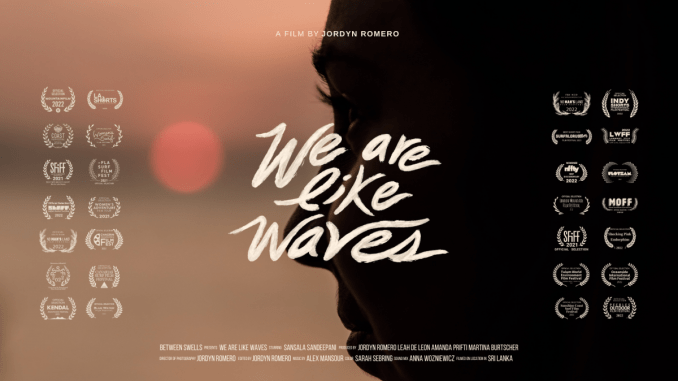
 Director Jordyn Romero bonded with Sanu over their love of surfing, a predominantly male-dominated sport. Sanu’s fearless pursuit of wanting to become the first female surf instructor from Sri Lanka lies beyond the horizon. In Sanu’s words, “We Are Like Waves. You cannot stop us.” This simple act of rebellion is certain to have a ripple effect. Romero brings audiences a relatable story told with grace. Boasting a beautifully encompassing score, WE ARE LIKE WAVES sees Romero and Sanu carve a path for the next generation.


 Yale University’s meticulous record-keeping in the Sterling library proves invaluable. After scanning 60, 000 pages in the microform media room, the aha moment appears; a 1959 letter between

 Kimi’s traumatic childhood and Russia’s national political upheaval created the perfect ticking time bomb of existence. He and Marusya needed each other to stay alive, but unresolved trauma is a killer lying in wait. Through marriage, rehab, divorce, and Kimi on a headlong downward spiral, Marusya must find other ways to dull the inner chaos. She had to decide, make a plan to live, or join her innumerable friends in suicide.


 The systemic failure at Fort Hood will leave you seething. After two months of desperate outcry, the Army finally makes a statement and begins to search, but it is too little too late. With the pro bono help of maverick lawyer Natalie Khawam, The Guillen family takes their fight to Capital Hill.
  I remember this story. I remember feeling so angry when I heard how long Vanessa had been missing before I heard about it on the news. Then, when the details emerged of her murder and subsequent failure at Fort Hood, I was disgusted. Those feelings returned and multiplied as I watched this film. Understanding the extent of their coverup will blow your mind. The military justice system allows for secrecy and discretion to sweep everything under the rug. It is beyond broken.


 Demi Moore plays upstairs neighbor Maureen. She’s a hot pink and animal print-drenched eccentric woman and the perfect influence on Suze, giving her permission to let go of her inhibitions. Karl Glusman is Teddy, a member of The Young Gents with an eye for Arthur. Glusman nails the classic greaser role, adding a relentless sensuality to his words. He is fantastic.
  The score is brilliant, with a mix of bass plucking, bongo drums, and saxophone wails. Short bursts of choreography smartly encapsulate the mood and era. The sets are deliciously accentuated with neon-colored everyday objects, black light hues, and engulfing blues and magenta. Everything sort of glows like a live-action comic book.




 Abigail Fuller’s short film Shepherd’s Song contemplates Earth’s interconnectedness through the eyes of California grazier Jenya Schneider. Climate change threats in the west frequently come in the form of severe droughts and wildfires. Jenya and her partner Jack have chosen a cyclically beneficial lifestyle for the Earth, their clients, and themselves. Four hundred ewes, recycled fencing, and unrelenting passion comprise their venture. Grazing becomes a service to the land, and the sheep produce wool and lanolin. The science behind grazing done right shows the value to the ecosystems it serves. It’s healing the land.
 A beautiful score by Serena Goransson moves from subtle to soaring as the film progresses. It feels perfect. Carmen Delaney’s mix of handheld and drone cinematography gives the audience an idea of the landscape scale against Jenya and Jack’s figures through the mountainous grasslands. It is stunning. SHEPHERD’S SONG is part climate film, part nature film, and all heart. We can all learn a whole lot from Jenya and Jack. They are showing the world how to repair the damage we’ve done, one area of grassland at a time.


 The legwork done by these women is mindblowing. The all-hours phone calls, the messages, the threats, and the intimate and honest way they approached anyone connected with Miramax and The Weinstein Company. The film conveys the emotional exhaustion of it all. Story after story of similar allegations and subsequent NDAs sucker punch you, over and over. As these cases now play out in real-time, it is fascinating to witness how to reach a victim and what compels an enabler. One particular detail I found interesting was Weinstein’s obsession with whether the team had spoken to
  Carey Mulligan


 Tora the Trucker Cat, truck driver David, and girlfriend Destiny travel together from state to state for months. Tora has a leash to explore national parks and a seat in David’s backpack when she needs a break. Tora has become the focus of David’s newfound photography skills. She’s a bit of a celebrity that’s allowed David to express himself in ways he never thought possible.


You must be logged in to post a comment.