
FAILURE TO PROTECT

FAILURE TO PROTECT follows five parents – Anna, Trish, Rheta, Ernst, and Rosa – as they fight desperately to reunify with their children taken by Child Protective Services (CPS). It’s an unwavering and nuanced look at the child welfare system where criminals have more rights than parents.
The families’ stories showcase the variety of circumstance that can lead to a child’s removal from the home, as well as the trials and tribulations that inevitably follow. The cases are as complex as they are tragic. They include histories of mental illness, as well as allegations of abuse, neglect, and trauma. Parents are pitted against their own children and each other. Along the way, the parents fight to clear their names, and prove their fitness as guardians.
Through these highly personal stories, we explore many tough questions, such as do parents whose personal struggles compromised their children’s safety deserve a second chance? Is the CPS system biased against minorities, LGBTQIA+ couples, and the economically disadvantaged? To avoid leaving a child in an abusive or dangerous environment, do social workers remove children first and ask questions later? The film offers an unprecedented, in-depth window into the grim realities of the child welfare system through the often ignored perspective of parents.
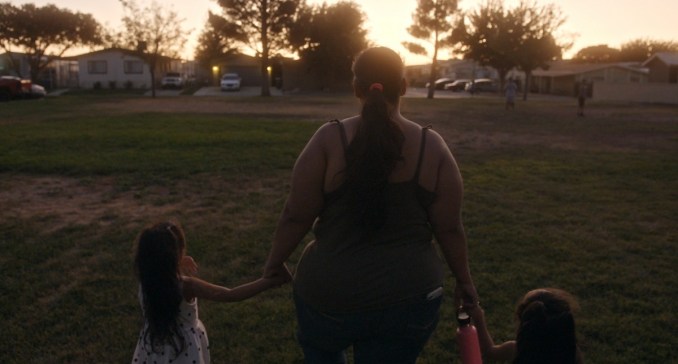 The families are eclectic. All shapes, sizes, races, ages, and socioeconomic backgrounds face the challenges of reuniting parents and children. Allegations range from neglect to sexual abuse. Each case is unique, and the system does not exist to react to those nuances.
The film features interviews with parents recounting the circumstances/allegations that caused their children’s removal and social workers explaining how the system functions. Civil rights lawyers and judges speak to the lessened burden of proof concerning children. The film illuminates the parent’s rights, most of whom have no idea they exist. Bodycam footage of children’s removal and news clips of the death of kids in foster care tear your heart out.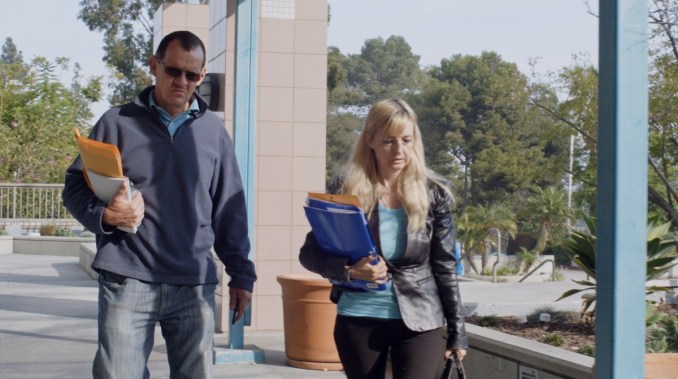
The amount of unresolved and generational trauma involved in these cases will not surprise you, but the manufacturing of “facts” by social workers will. When you hear “The Right To Lie” case, your jaw will drop to the floor. Or expletives come bursting forth. *raises hand* Netflix‘s TAKE CARE OF MAYA is a terrific companion film to FAILURE TO PROTECT. Each film shines a light on the faults in the family services system. While the film features a variety of families, the racial biases are pervasive. This eye-opening doc pulls no punches. It puts everyone in the hot seat.
FAILURE TO PROTECT l Official Trailer l from Jeremy Pion-Berlin on Vimeo.
OPENING ON DIGITAL PLATFORMS ON OCTOBER 17
FAILURE TO PROTECT was directed, produced, and edited by Jeremy Pion-Berlin. It was executive-produced by Jordan Savage, Devon Collins, Lisa Pion-Berlin, Jeff Porter, and Sgt. Major Keith L. Craig. It has a running time of 98 minutes and will not be rated by the MPAA. The film has screened at numerous prestigious film festivals including Phoenix Film Festival, Julien Dubuque International Film Festival, Atlanta Docufest, and Doc Boston, and has won numerous awards including“Best of Fest“ at Frozen River Film Festival, “Best Documentary” and “Best Director” at Oceanside International Film Festival, “Audience Choice Award” at Atlanta Docufest, “Best Director Documentary” and “Audience Choice Award” at First Glance Film Festival Los Angeles, “Best US Documentary Film” at Doc. Boston, among other awards. FAILURE TO PROTECT will be released on digital platforms by Porter+Craig Film & Media on October 17.
SOCIAL MEDIA HANDLES
@failure_to_protect


 The editing is masterful. The narrative flow is deliciously punctuated with L’Orange’s (Austin’s artist name) uniquely produced and created beats. His music is hypnotic, sampling blues and standards to assemble something fresh, almost binaural in its rhythms. While THE MAD WRITER follows Austin’s musical and surgical journey, it speaks universally to those suffering from depression and unsure of their place in the world. Austin says it best in the film. Everyone wants to feel “satisfied, clever, and useful.” He’s not wrong.


 Family tension grows after the unexpected suicide of the family matriarch. Manuel begrudgingly moves in with his son, granddaughter, and bitter daughter-in-law. As the temperatures outside rise, so does the mind-boggling behavior of Manuel and the rest of the octogenarian population.
 A shockingly violent moment halfway through jolts an audience now accustomed to the eerie din of quietly disturbing imagery. The Elderly shines in the power of visual suggestion, shadow play, reflections, and long lingering takes.


 Director John McPhail and screenwriter Mike Van Waes had the tricky job of taking Adam Ellis‘ real-life viral Twitter feed and translating it for the big screen. If you don’t know the “Dear David” story, let me sum it up. Cartoonist Adam Ellis starts to document the haunting of his apartment. Things get weirder each night, culminating in photographs of this little boy with a caved-in skull dropping onto Adam’s bed. It was truly terrifying reading the thread. I remember sweating as the incidents became creepier and more intense. It was an honest-to-goodness viral moment. This week, DEAR DAVID moves from small screens to movie screens, and the results are mostly comparable.
 The film boasts amazingly timed jump scares. Let’s give a brilliant slow clap for editors David Arthur and Glenn Garland. The script is especially relevant in our ongoing age of vitriolic online engagement. It is also a mystery wrapped in a horror movie, using a personal connection about self-worth. If you know the Dear David canon, it might be better to separate the two. Did I shout with glee when the original “David” drawing appeared? Yup. If I’m being entirely honest, the climax feels a touch hokey, but the final scene brings some redemption. DEAR DAVID is inarguably intriguing. I needed to know how McPhail would expand upon the genuinely disturbing origin material, so there’s no denying I was along for the ride. Genre fans will eat this up.
 LAST STRAW


 Following the death of her mother and in her father’s footsteps, Lou dreams of becoming a firefighter EMT. On her first night on the job, things go haywire when she and her colleagues become the targets of a killer.
 Jeremy Piven plays Lou’s super supportive father, Patrick. But his past puts his daughter in direct sight of the killer. Piven is fantastic. He is a master at his craft, no doubt. Elena Kampouris plays Lou with a solid balance of unresolved trauma and tenacity. She does her best within the convoluted premise to keep us emotionally invested. She deserved to show off more of her physical badassery. I could see her owning a post-apocalyptic role with ease. The film’s best scenes are the climatic mano-a-mano battles.
 It is not an exaggeration to say I yelled, “Oh Shit,” following the first kill. I must hand it to McNamara here, as each is different and brutal. However, the film has an overreaching Saw (in its superfluous middle sequels) vibe, both in its performances and overly complicated premise. The killer wears a David mask and scrawls Latin phrases on the walls, placing sporadic traps and puzzles, which culminates in a need to, quite literally, explain the motive. VINDICTA is sort of an amalgamation of past films. Watch it for Kampouris, but a sequel should not be entertained.


 Folk horror goes hard in this tale of possession and superstition. Writer-director Demian Rugna‘s WHEN EVIL LURKS pits fear and skepticism against an unrelenting demonic force. That’s only the beginning.
  The script reveals itself in bits and pieces, with the plot having ties to some apocalyptic lore affecting entire towns. We learn of a set of rules that are cannon to this happening from generations preceding our main characters. Take David Robert Mitchell’s IT FOLLOWS, add a page out of Stephen King‘s IT, and you’ll begin to understand what you’re dealing with. Somehow, WHEN EVIL LURKS is nastier and even more shocking. The script also suggests that cities were targets first, but there is also an implication that class is somehow involved. There are also what amounts to slayers, a select group of people who confront the evil known as “Cleaners.” There is so much meat on the bone in this script that despite the urge to hide your eyes, it compels you to watch it unfold.
 One standout performance comes from Emilio Vodanovich as Jari, Pedro’s autistic son. As a mother of a child on the spectrum, I genuinely believed they had cast an actor with autism. It is a startling performance. Demian Soloman gives Jimi an authentic heart. A lot is going on behind those eyes. Ezequiel Rodríguez has your heart in your throat from beginning to end. His portrayal of Pedro runs the emotional gambit. He nails it. Rugna gives Jimi and Pedro enough depth and trauma that Soloman and Rodríguez could pull off a sequel in a heartbeat.
  Pablo Fuu‘s music is brilliantly disturbing, particularly in the repeated hard rock guitar riff. Holy Special FX, Batman! WHEN EVIL LURKS pulls no punches with the visual ick. Marcos Berta‘s work is gag-inducing and diabolical. It makes you angry and nauseous. The dialogue is often vile and biting but entirely hypnotizing as you discover more. The brutality grows from one scene to the next. WHEN EVIL LURKS is easily one of the most deranged films of the year. Rugna has broken all the rules. There is no coming back from this one.


 The noteworthy turn comes from Cindy’s neighbor Doc Zuess. John Bingham, whose character is reminiscent of Roberts Blossom from Home Alone, is brilliant. His performance legitimizes The Mean One, bringing it out of its Hallmark moments.

 Beginning in Shakespearean fashion, the chaos and bait-and-switch screenplay of Claude Schmitz‘s THE OTHER LAURENS earns your attention. Private investigator, Gabriel gets contacted by his niece to look into the recent death of her father and Gabriel’s estranged twin brother, François.
  Loise Leroy wows in her feature debut as Jade. The emotional turmoil she endures puts Leroy through the wringer, and she handles it like a pro. She is a star. Olivier Rabourdin plays dual roles as Gabriel and François. His ability to shape-shift will captivate you. THE OTHER LAURENS is an epic film, brimming with twists and turns, and is a real stand-out from Fantastic Fest 2023.
 Writer-director Nicholas Tomnay takes us on a journey of twisted morality. Down on his luck, chef Ryan steps into the life of his schoolmate and cooks for a small group of ultra-wealthy diners. The experience is nothing like he imagined.
 Nick Stahl has been on my radar my entire life. We are the same age, and as a cinephile from the womb, I’ve followed his career from The Man Without a Face to Disturbing Behavior and, more recently,

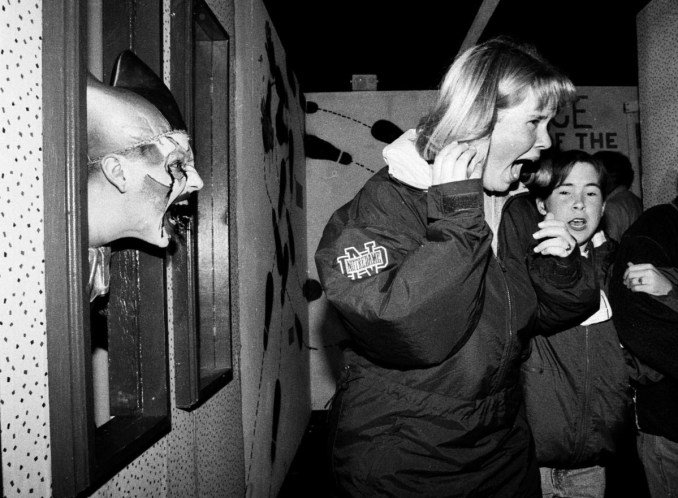 1991, in the middle of a Massachusetts cornfield, open every day in October, Dave Bertolino‘s Spooky World was a horror con and a theme park. It was the first dedicated haunted attraction, paving the way for every modern-day, big-name fright night across the country. Built on a dollar and a dream, Spooky World grew more popular and went through numerous iterations. As one of the first featured guests, Tom Savini’s direct influence on Spookyworld shifted from a homegrown haunted hayride to a proper frightening experience within a year, with Tom building his own branded Haunted House. The busier the park, the more elaborate and inventive Bertolino had to become.
 The townspeople of Berlin had a fantastic relationship with Bertolino. Bringing jobs, money, and recognition to a sleepy farming town. But, not everyone was thrilled with the boundary-pushing additions, playing politics and making Bertilino’s job harder. That’s not to say that his antics and ideas came without skepticism from within.
 Growing up in northern Connecticut, I cannot believe I never ventured up the Spooky World as a self-proclaimed Halloween addict and horror fanatic. I’m thankful the park ever existed, and its humble and exciting existence spread like wildfire so that global genre fans could care and scare together.

 Opportunity, loyalty, guilt, and greed drive THE WAIT (La Espera) headlong into tragedy. F. Javier Gutierrez‘s 2023 Fantastic Fest film takes our protagonist on a torturous journey into madness. To save his flailing marriage, Eladio agrees to take cash under the table to break the rules. The consequences are deadly. When the drink takes over his existence, visions and strange occurrences send him on a wild goose chase for redemption and salvation.
 Striking sun-baked cinematography juxtaposed with nightmare scenarios makes for a visually splendid treat for genre fans. The first third of the film lies firmly in the classic Western genre. The sudden flip into supernatural horror is jarring, but our leading man, Victor Clavijo, has you tied in knots on his emotional journey and the mystery at hand. One nightmarish torment scene boasts fantastic practical and Special FX makeup. The mystery grows steadily. The motive is a slow burn, though it does pay off. THE WAIT (La Espera) is a solid folk horror entry and an even more niche win for the Western horror subgenre.


 Riley Rose Critchlow gives a particularly entrancing performance. Their living vs. dead personalities are vastly different but equally grin-inducing. Critchlow captures a relatable sadness, leaving a lasting impression.
  The subtle creepiness is just enough to teeter on the edge, as the film is more drama than your typical horror. THE JESSICA CABIN is a spectacular entry into the LGBTQIA+ genre, perfectly melding comedy, culture, and complex storyline. The film looks at mental health in a stunningly nuanced way. It is crazy charming and superbly funny, pushing moral boundaries while asking existential questions. Seek it out.


 The cast is phenomenal. Focusing on our leading lady, Carmen Madonia, gives Renata an often aloof attitude, hiding a lost mindset. She’s soft-spoken, outwardly feeling othered by her sister’s personality. But little is said. Madonia’s face replaces any unneeded dialogue.


 As dementia sets in, Yohji’s arc proves devastating to witness. The story also unravels the piles of notes strewn about Yohji’s home. Takashi must piece together this collection of garbled messages, love letters, and diary entries.
 Yutaka Yamazaki‘s cinematography is memorable. There is something special about letting the camera be static and allowing the performances to speak for themselves. The script surprises with every scene, which is quite a feat for a two-and-a-half-hour runtime. GREAT ABSENCE is a nuanced look at memory, perception, regret, and the endless complexities within relationships. This film will bring you to your knees.


 The film consists of informal sit-down interviews, extensive personal writings, archival footage, and plenty of home videos of the generations of strong women in the family. We discover the hurt from Hiam’s past, the emotional baggage of leaving behind the turmoil of Palestine, but also the treasured connections of the women who shaped her. Hiam’s letters and poems serve as both insight and narration. They are intensely affecting.
  Hiam and her family love one another with their whole hearts. They have no filters when speaking to each other, and their words of affirmation are something to aspire to. Lina Soualem captures all of this in an elegant edit. The film is beautifully intimate. It’s a loving commentary on memory, identity, and honoring your past.


 The overwhelming joy of hearing these kids laugh is infectious. SUMMER QAMP is an education, through and through. As a former theatre kid and current creative adult with two kids, I strive to understand how identity plays a part in overall confidence. I grew up with often crippling anxiety, a stranglehold of perfectionism, and feeling othered. It doesn’t feel good. My job is to protect my kids from the same overwhelming feelings of chaos any way I can.
 SUMMER QAMP‘S brave kids allow the audience into their personal lives. They may not fully appreciate how fearless they are. Campers share their gender identity journey, the good, the bad, and the emotionally ugly. This film provides a conversation starter for understanding gender dysphoria from those experiencing it firsthand. It’s an aha of a film.

You must be logged in to post a comment.