
NEVER GONNA SNOW AGAIN

On a gray, foggy morning outside a large Polish city, Zhenia (Alec Utgoff), a masseur from the East, enters the lives of the wealthy residents of a gated community. Using hypnotic, almost magical techniques to get a residence permit, he starts working. The well-to-do residents in their cookie-cutter homes seemingly have it all, but they all suffer from an inner sadness, some unexplained longing. The attractive and mysterious newcomer’s hands heal, and Zhenia’s eyes seem to penetrate their souls. To them, his Russian accent sounds like a song from the past, a memory of their seemingly safer childhoods. The latest from writer/director Malgorzata Szumowska (ELLES, IN THE NAME OF) and her longtime collaborator Michal Englert is an unclassifiable meditation on class, immigration, and global warming with touches of magical realism and moments of sober beauty and subtle humor.
 Simply beautiful cinematography and one hell of a leading performance consume the audience in BAM’s Kino Polska’s New York premiere of NEVER GONNA SNOW AGAIN. Alec Utgoff as Zhenia gives an intoxicating performance. There’s something about his gaze that puts you at ease. You’re fully aware there’s a complexity tied to his childhood in Chernobyl. The dialogue from his clients never lets you forget. The nuance of this role is enthralling. The darker mystery slowly makes its way to light as he does his massage and, unbeknownst to them, hypnosis on his clients. They reside in a wealthy, gated estate outside the city. From the outside, each house essentially a replica of the next. Inside, the residents gossip and confess their trauma and innermost thoughts. Sinister undertones always linger. Zhenia’s unique ability to connect with people is merely the beginning of his capabilities. That talent isn’t something that can be hidden indefinitely. The score is haunting and meaningful, heightening this carefully crafted film. Trust me when I say, this movie is special. You’ll be as hypnotized as Zhenia’s clients. NEVER GONNA SNOW AGAIN is bursting with endless intrigue. It’s a journey that you will never see coming.
NEVER GONNA SNOW AGAIN
Dirs. Malgorzata Szumowska & Michal Englert
2020, 113min
Language: In Polish with English subtitles
With Alec Utgoff, Maja Ostaszewska, Agata Kulesza
From Friday, April 30th through Thursday, May 6th BAM presents the fourth edition of *Kino Polska: New Polish Cinema*, bringing together the best new works from Poland’s boundary-pushing filmmakers. The series is presented in partnership with the Polish Cultural Institute New York and co-programmed by Tomek Smolarski. Kino Polska features seven feature films, including the New York premiere of Poland’s Oscar submission *NEVER GONNA SNOW AGAIN* (2020). Director Malgorzata Szumowska (whose Berlinale prizewinner Mug screened in the 2018 iteration of *Kino Polska*) partners with longtime cinematographer and co-writer Michal Englert’s for this Venice Film Festival hit about an enigmatic healer (Alec Utgoff, “Stranger Things”) who casts a spell over a rich Polish community. This year’s series also includes Mariko Bobrik’s touching debut feature *THE TASTE OF PHO* (2019) about a Vietnamese father and
daughter dealing with grief and the immigrant experience in Warsaw; the bittersweet coming-of-age drama *I NEVER CRY* (2020) from Piotr Domalewski whose previous film SILENT NIGHT won major awards in Poland; Bartosz Kruhlik’s edge-of-your-seat thriller *SUPERNOVA* (2019); Piotr Adamski’s *EASTERN* (2019), a tale of revenge set in a dystopic Poland; Mariusz Wilczynski’s deeply personal, hand-drawn animated film *KILL IT AND LEAVE THIS TOWN* (2020)—winner of the Grand Prize for Feature Animation at the Ottawa International Animation Festival and a FIPRESCI Award at the 2020 Viennale; and Agnieszka Holland’s Soviet Union thriller *MR. JONES* (2019) starring James Norton, Vanessa Kirby, and Peter Sarsgaard.
*All films will screen April 30th – May 6th on BAM’s virtual streaming platform at BAM.org .


 If you’re looking for something wholesome to watch with the family, look no further than DOLPHIN ISLAND. Filmed in The Bahamas after the devastation of Hurricane Dorian, the cast and crew are local and lovely. The film’s score is perfect for the story and the characters. It’s light and friendly and matches like a dream with mother nature’s gorgeous scenery. Mitzy the dolphin provides laughs and heart alongside the family drama. I watched this with my four-year-old daughter who is obsessed with sea creatures. She absolutely adored the scenes with Mitzy and the rest of the beautiful creatures on the island conservatory where our leads Jonah and Annabel live and work. The performances are charming. You’ll recognize a few faces and be introduced to some great new talent, as well. Tyler Jade Nixon is grounded and genuine as we need her to be. You know this young lady. Bob Bledsoe uses his comedy chops to be a slimy lawyer you’ll love to hate. Peter Woodward is the grandfather we all wish we could enjoy. His sense of responsibility, gumption, and adoration for Nixon‘s Annabel is captivating. The script tackles complex family dynamics, friendship, class warfare, grief, and climate change. It’s never preachy. DOLPHIN ISLAND is a film you’d find on the UP network or even Hallmark. It’s quaint with well-thought-out messaging. Family films are few and far between. Rest assured you can sit down with your entire family and enjoy.


 Greg Bryk

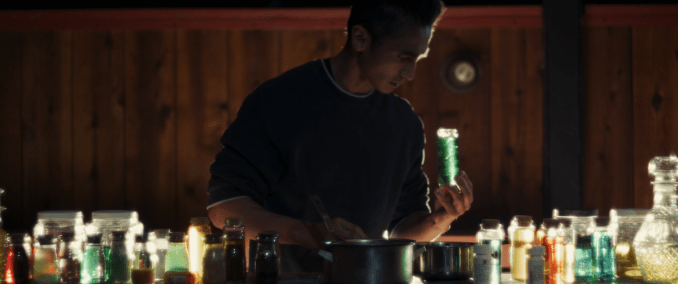 The moment I realized At Night Comes Wolves was more than a woman escaping her trash marriage, I was genuinely intrigued!
 T
T

 Before we were married, my husband and I lived in India for a year. We pretended to be married to avoid the social scrutiny. We purchased a scooter to get places on the weekends and took rickshaw rides as infrequently as possible because of Westerner price gouging. The streets were always overflowing with vehicles and people. Before I continue, I feel I must preface this review with the fact that my husband and I are white. We were born and raised on the east coast of the United States. Once we arrived in India, we dove headfirst into the culture, food, and local customs. It was all so new to us. We would be forever changed by our time there. The social structure in India is a caste system. The disparity between the upper class and the lower class is astounding. In the US, it’s easier to hide. There is a bit more visual nuance. In India, it’s much more black and white. In Ashish Pant‘s The Knot, a young, affluent couple is forced to confront that very social construct after a sudden accident. The foundation of their marriage begins to crack as the lies they tell one another and themselves will have dire consequences.
 The Knot is a morality tale and a relationship movie. Geeta and Shirish are forced to confront their own flaws and the power dynamics in their marriage. Shirish’s obsession with status comes to a head with Geeta’s attempts to dissolve her guilt. Performances across the board are wonderful and the look of the film is lush. The Knot makes a point to show the realities of the country. This authenticity is key to the film’s success. The traffic is a chaotic free-for-all. We lived in Hyderabad. Drivers didn’t use their turn signals, instead, they would honk their horns. From the audio in the film, it sounds as if little has changed since 2009. It’s indescribably dangerous. We often wondered how many hit-and-run deaths were hidden due to the normalized practice of bribery. The film slyly grapples with the hierarchy at its worst. Pant uses subtle shifts in language, music, and dialect to illustrate caste. It’s such an intelligent and daring screenplay. The Knot boasts an explosive finale. The very last pan of the camera and the breaking of the fourth wall is chilling. Bravo to Ashish Pant for making such a fearless debut film.


 The film’s final scene is so abrupt it’s actually irritating. This is clearly a massive plot point that is given but a moment, and that moment is the end of the film? That’s a ballsy way to, perhaps, set up a sequel. You must already have the audience on your side for that to succeed. The film is like taking every season of Ryan Murphy‘s American Horror Story and mashing them together with zero explanation. There is no consistency in the screenplay other than Marianne’s “take no shit”, anti-slut-shaming, mom-boss attitude, and Linus’ vile weakness. When you finally get to the supposed outcome with daughter Adelaide, it screams The Haunting of Bly Manor. The overall look of the film is undeniably gorgeous. Some scenes contain viscerally jarring imagery. Ultimately, Shudder subscribers can decide for themselves whether it’s overstuffed or if we’re more in a 13 Ghosts territory. You could give it a pass being that it’s based on the true story of the most haunted house in England. In my opinion, The Banishing deserves to be fleshed out as a series. Show up for the performances, the set, and the cinematography, and let me know what you think once the screen goes black for good.


 I first heard about Honeydew after its virtual premiere at Nightstream Film Festival. It is a miracle that I was able to avoid spoilers. I am delighted to report the intense buzz was spot on. Honeydew is that good. The sound editing and score consumed me. Combined with some split-screen deliciousness, Honeydew was dizzying madness. Writer-director Devereaux Milburn has taken the most successful aspects of classic and modern horror to create something insanely scary. It gets under your skin in a truly chilling way. The film also boasted one of the weirdest cameos ever. I did a literal double-take.
 Malin Barr as Riley is amazing. Sawyer Spielberg as Sam is fantastic. The chemistry between the two actors is electric. Milburn’s dialogue allows them to convey the small cracks that exist in every relationship. These are keenly exacerbated by their bizarre circumstances. Barr and Spielberg are a hell of a pair but are also allowed to shine on their own. You’re constantly worried about them all while fascinated by their individual needs. Jaime Bradley knocks it out of the park as Gunni. What amounts to almost an entirely physical performance, he will disturb you to no end. Bradley owns every frame. Barbara Kingsley is a genius. As Karen, she walks an extremely fine line between sweet and horrifying, leaning heavily towards the latter. The way these characters are written and the care with which they are performed culminates in one of the most uneasy watches in 2021.


 What could go wrong with attempting to play God? Only everything. Instincts suppressed lead to one dangerous boiling pot of hormonal and phenomenally intelligent young people. It’s all one big morality question. Putting these unsuspecting kids in this position to save the entirety of the human race is a lot to ask. Then to lie to them, control them, use them without allowing them to be fully human themselves is cruel. And yet it’s not that simple. Limited resources forced this scenario. The likelihood of its success already feels like an uphill battle. All hell breaks loose when something attacks Richard, the only adult on board. Will these 30 young people fight their instincts or one another?
 Colin Farrell as Richard is remarkable. He is the father figure. Loving, protective, and genuinely wanting these kids to succeed. Lily-Rose Depp as Sela is astonishing. She walks the perfect line of innocence and strength. Her journey, like Sheridan’s, is fascinating to watch evolve. Fionn Whitehead plays Zac with terrifying aggression. His portrayal of unhinged, pure testosterone-driven rage is all too familiar in the best way possible. Tye Sheridan plays Christopher with a curiosity and a growing intensity that makes him the perfect protagonist. He is levelheaded, kind, and determined to survive. Sheridan easily owns his leading man status.
 Voyagers becomes a near-future version of Lord Of The Flies. It’s chaos created and chaos inevitable. The set is cool as hell. It feels immense and claustrophobic all at once. Trevor Gureckis‘ score is gorgeous. Writer-director Neil Burger has given audiences a heart-pounding and brilliant film. This one will stick with you long after the credits roll.


 Women have been trained to be pleasers. Asking for help has not been hardwired into our DNA. It takes a lot for most of us to ask for help. In I’m Fine (Thanks For Asking) we follow Danny over the course of one very long day. She is desperately trying to earn the last $200 she needs to secure a new apartment for her and her daughter Wes. It is not going well. As she pounds the pavement to get them out of this tragic position, the reality of her situation slowly takes hold. I’m Fine (Thanks For Asking) boasts a genuine screenplay about grief and struggle. Kelley Kali‘s performance, direction, and writing are feminist-driven and incredibly honest. From comical to heartfelt, it was refreshing to hear the juxtaposition in dialogue. There are scenes where Kali allows herself the express exasperation. Others in which she pleads for leniency. Each encounter is equally important. This character is a fully fleshed-out woman with flaws and determination.
 This film is definitely about trauma. That’s undeniable. Alexis is dealing with synaesthesia (the ability to see sound) and intermittent bouts of losing the hearing she has regained. Yes, it’s a lot. Her PTSD coping strategy goes off the rails faster than anticipated. The sound editing in this film is key to its success. Color is another factor that helps the audience immerse themselves into Alexis’ mindset. To auditorily and visually understand her euphoria is important here. This is the film’s most successful aspect. It is truly glorious. But something stalls the overall flow of the film. What I think is off is the order in which we see her unusual “Experiments” occur. The nonchalance is of it all needed to be explored more. I would have loved to see some scenes with a psychotherapist juxtaposed with the behavior. Is it fair to assess this film as one woman’s perfect form of torture porn? Maybe not. It’s certainly more complex. The beginning had so much potential but it really jumps the shark about 30 minutes in. Jasmin Savoy Brown as Alexis is as committed as they come, but I think the material fails her. Detective Fuentes’s dialogue is so over the top it reads farcical. There is a lot to work with but Sound of Violence ultimately becomes silly. Alexis’s journey begins as extreme commitment and mutates into complete disassociation.


 Casting two of the biggest horror legends in Larry Fessenden and Barbara Crampton was pure genius. Fessenden gets his comeuppance as a misogynist minister and clueless husband when he stumbles upon the reason his wife is so different as of late. Witnessing him bungling around is extremely satisfying. His chemistry with Crampton is perfection. Barbara plays Anne; a woman who is not allowed to have a point of view, let alone shine. She is the dutiful wife who puts her dreams aside for stability. Her initial sadness is palpable. Once circumstances change, Crampton gets to play a new completely new role. She is fierce as hell. I loved every second of this character’s second chance at life. Her performance is borderline camp and I could not get enough of her. Crampton never seems to stop working. After this role, I can imagine she’ll be even more overwhelmed with offers.
 Travis Stevens does an incredible job of highlighting the mundane and oftentimes loathsome trappings of marriage. The result of 30 years of oppression that Anne tolerates is infuriating but creates the perfect backdrop for her arc. This script is about the restructuring of power. Even the title is genius, subconsciously telling you that Anne isn’t in charge of her own identity. I laughed out loud and cheered audibly when Anne begins to stand up for herself. The pure, unadulterated sass is magic. After Girl On The Third Floor, I expected a lot from Stevens. Boy, does he deliver the goods. (Keep an eye out for CM Punk to make a quick appearance, btw.) Jakob’s Wife has kick-ass music from Tara Busch. Yvonne Reddy‘s costumes are carefully curated to reflect the vibrance of Anne’s newfound confidence. Based on Girl On The Third Floor, where bodily fluids were aplenty, I assumed the gore factor would be high. In fact, the amount of blood is glorious and over-the-top to the point of giggle fits. Stevens’ dialogue maintains its wit and unfiltered outbursts. Perhaps my favorite bit comes in the form of Crampton telling a little girl to, “Fuck Off.” But his would not be the only time I guffawed during Jakob’s Wife. A scene that has Anne rearranging her living room furniture is anything but ordinary. It’s revelatory. There’s a Death Becomes Her wackiness to it all. As one of the all-time great genre films, this is a huge compliment. Visually, the Master is clearly inspired by Salem’s Lot and the classic Nosferatu. This film is not just a vampire movie, it’s a complex look at relationships. It’s a feminist awakening. There is much to love about Jakob’s Wife. It’s one of the best films from this year’s SXSW virtual fest. It’s destined to be a massive hit, breaking the genre molds to make Crampton, Fessenden, and Travis Stevens household names.





You must be logged in to post a comment.