

YANNICK

The absurdity of filmmaker Quentin Dupieux (Smoking Causes Coughing) is back in his latest film, YANNICK. During a live performance of a play, a dissatisfied audience member stops the actors, demanding a better story. The actors do not take his criticism well, leading the man to take more drastic measures.
With real-life increases in incidences of unruly theatergoers, Dupieux taps into the lack of civility and the culture of complaint. You see it all over the Internet because anyone can upload to YouTube or TikTok these days “expressing” their faux outrage. From conspiracy theories to rage-baiting clickbait, we have gone mad. YANNICK also directly addresses how quickly words lead to the threat of physical violence.
 Dupieux is a master of providing comedy within social commentary. As Yannick becomes more agitated, he reveals how out of touch he is with general society while simultaneously hurling offensive barbs at his captives. Equal parts hilarious and terrifying, all I could imagine as an actor and theatre patron was how I might escape such a scenario.
Longtime collaborator Raphaël Quenard gives our titular character a fully fleshed-out nuance that startles. His surprisingly levelheaded approach and matter-of-fact delivery create an entirely unsettling fear. All of this is evident within the first twenty minutes of the film. Quenard delivers one hell of a turn. He is fantastic.
 The honest laughs come when Dupieux leans fully into the meta satire in new dialogue written by Yannick. Filled with redundancies and mistakes, the audience in the theatre and at home belly laugh at the actors’ forced commitment.
The cast nails the table-read style of acting. It’s such a specific cadence. Fellow performers will eat it up. YANNICK is classic Dupieux. His dialogue drips with sarcasm, saying the quiet part out loud. That is what makes his films deliciously unpredictable.
YANNICK captures the essence of live theatre and life itself. Dupieux continues to thrill with his coordinated chaos. These days, everyone’s a critic.
YANNICK PREMIERES EXCLUSIVELY ON MUBI, APRIL 5
DJ-turned-filmmaker Quentin Dupieux (Smoking Causes Coughing, Deerskin) returns with the Locarno-prize-winning comedy YANNICK, an absurdist tale navigating the relationship between artists and audiences.
On a rare night off, car park guard Yannick attends a production of the play “Le Cocu.” Dissatisfied by the performance, he hijacks the show and demands to be made the playwright in order to get his valuable time back. Despite the ridicule, he is determined to prove even a car park guard can create good entertainment.
Shot in secret in just 6 days, Dupieux serves up his signature slice of satire in this quick-fire meta-comedy reflecting on his own relationship with audiences and critics.
Director’s Biography
Born in Paris in 1974, Quentin Dupieux discovered cinema and bought his first synthesizer at the age of 18. Under the name Mr Oizo, he released his track Flat Beat and albums such as Analog Worms Attack, Moustache (Half a Scissor), and Lambs Anger.
In 2007, Dupieux directed, shot, edited, and composed the music for his first feature film, Steak. He went on to direct the absurdist horror film Rubber (2010) and the comedy Wrong, followed by Wrong Cops (2012), Reality (2014), Keep an Eye Out (2018) with Benoît Poelvoorde and Grégoire Ludig, Deerskin (2019) with Jean Dujardin and Adèle Haenel, Mandibles (2020), with Grégoire Ludig and David Marsais, Incredible but true, selected at Berlinale 2022, and Smoking Makes Coughing, presented in the Midnight Screening section at Cannes Film Festival 2022.
Yannick, his latest feature film stars Raphaël Quenard, Pio Marmaï, Blanche Gardin, and Sébastien Chassagne; and was produced by Hugo Sélignac (Chi-Fou-Mi) and Thomas and Mathieu Verhaegue (Atelier de Production).
MUBI is a global streaming service, production company and film distributor dedicated to elevating great cinema. MUBI creates, curates, acquires and champions visionary films, bringing them to audiences all over the world.
MUBI is a place to discover ambitious films by visionary filmmakers. From iconic directors to emerging auteurs. All carefully chosen by MUBI’s curators. With MUBI GO, members in select countries can get a free ticket every week to see the best new films in cinemas. And Notebook explores all sides of cinema culture — both in print and online.
Founded in 2007 by Efe Cakarel, MUBI is the biggest community of film lovers, anywhere. Available across 190 countries, with more than 16 million members around the world. MUBI acquired renowned sales agent and production company The Match Factory and Match Factory Productions in January 2022, and a majority stake in leading Benelux film distributor Cinéart in February 2024.
Subscription plans are $14.99 a month or $119.88 for 12 months, or $19.99 a month or $167.88 for 12 months to include MUBI GO. MUBI is available on the web, Roku devices, Apple Vision Pro, Amazon Fire TV, Apple TV, LG and Samsung Smart TVs, as well as on mobile devices including iPad, iPhone and Android.


 Summoning Sylvia


 Everything from the lighting, the lens, costumes, set design, the score, hair and makeup, and the jokes nail the era. Along with the live tape, black and white behind-the-scenes footage shows us what the at-home audience missed.
  David Dastmalchian owns every frame as Jack Delroy. A delicious mix of genuine and fame-hungry, his effortless performance is mesmerizing. He has the audience in the palm of his hand. You cannot take your eyes off of him.


 Coming home for the holidays is always wrought with complex emotions. Directors Caroline Keene and Dan Kennedy give audiences much to ponder in MERRY GOOD ENOUGH. A film about familial chaos across generations, this enjoyable small-town film is sure to strike a chord this holiday season.
 Joel Murray is George, the absent but immensely excitable father figure. Writer-director Caroline Keene drops early hints of his toxic masculinity, and Murray eases into the skin of a pretty loathsome man. Daniel Desmarais plays Tim. His sardonic wit meshes perfectly with this cast of fantastic misfits. Comfort Clinton is Cynthia. She is uptight and controlling. Clinton owns the role with her evident daddy issues and needs for approval.
  Sawyer Spielberg is charming as neighbor Sam. His chemistry with Levine is magic, which makes sense since they’ve been married since 2018. Susan Gallagher‘s performance is spectacular. Keene’s script nails the mother of adult children vibe with running errands, asking if we’ve eaten, awkwardly using technology, grabbing coffee, and the overly stocked fridge. Gallagher captivates with her vulnerability. Raye Levine gives Lucy a tangible relatability. She’s funny, a little lost, and yet entirely grounded.
 At the heart of MERRY GOOD ENOUGH, this script delves into unresolved childhood trauma, emotional isolation, mental health, and forgiveness. It’s a breezy watch about finding bliss and connection in the imperfect.


 Filmmaker Henya Brodbeker turns the camera on her, her husband, and their young autistic son, Ari. Through years of filming, we witness the evolution of relationships in her Orthodox community, her marriage, and with herself. This is one family’s story about belonging.
  Anyone who follows my career as a film journalist knows I’m a Mom of a young autistic son. I talk about his diagnosis and navigating the complexities of existing in a primarily neurotypical environment. We are lucky in the grand scheme of ASD possibilities. Our son’s cognitive abilities are off the charts. He is loving, funny, friendly, and would not hurt a fly. Dealing with public meltdowns, particularly if those around you do not know or understand, can be a crushing, demoralizing, tear-filled experience. Nothing is easy. It’s undeniably isolating. It’s the outside world we fear most. THE THREE OF US is irrefutable proof of how equal opportunity changes the lives of families.


 Smalltown divorcee and farmgirl Jane is in the midst of planning the final events of her BFF/ex-husband Mark’s upcoming wedding. When he and his fiancee Heather get stranded by snow, Jane steps in with the wedding planner, triggering chaos. A HOLIDAY I DO is a charming cup of cheer for these festive months ahead.
 The ensemble cast is delightful. Kayden Bryce, Marsha Warfield, Colette Hahn, Mandy Logsdon, Cameron Judd, and Dale Dobbs make you laugh and smile the entire film.
 India Chappell gives Heather the precise amount of jealousy and meltable iciness, countering Mark’s (Joe Piazza) boy next-door aura. Jill Larson is Jane’s mother, Mary Ellen. Unbeknownst to the family, the farm is on the verge of bankruptcy. Larson is like a warm hug. She is an uplifting presence and an ideal mother figure.
 Rivkah Reyes plays Sue with approachable sophistication. Her warm smile invites you in. Lindsay Hicks plays Jane with a brightness that mirrors the film itself. Her charming awkwardness is spot on. Hicks masters the art of romcom slapstick. The relationship between Jane and Sue develops naturally. Reyes and Hicks’ chemistry is endearing.
 The score by Phil Tipping and Kanoa Wolfe-Doblin perfectly matches the light-hearted, breezy premise. Its sweet simplicity lulls the viewer into a calm state. The dialogue is cute and accessible, especially for families with younger LBGTQ members. A HOLIDAY I DO is an excellent addition to the Hallmark-esque holiday films on Tello.


 Filmed in my and Kind’s neighborhood of the Upper West Side, the film takes place as Chloe describes it, making the scenario even funnier. Do I want to see the feature-length version of this? Yup. Is this perhaps the most convincing actual proof of concept ever created? I think it might.

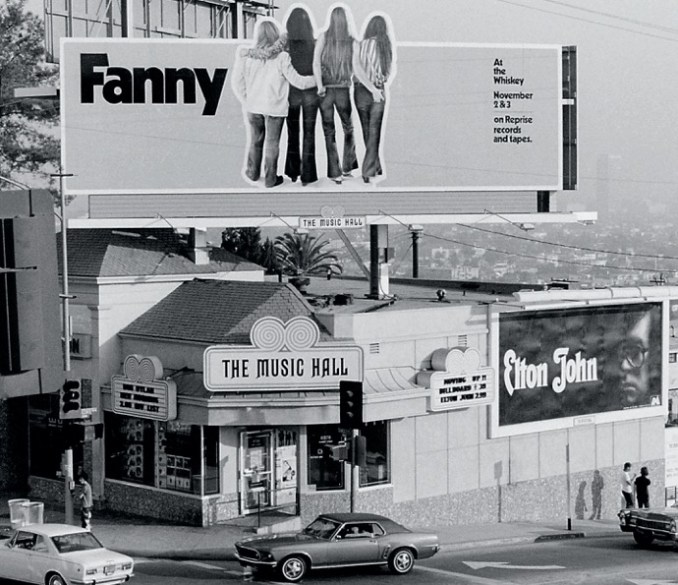 Experiencing Fanny’s songs for the first time, I immediately recognized the impact made on so many other artists. So how is Fanny not in my musical catalog? Jean, June, Alice, Brie, Patti, Cam, and Nickey were trailblazers who worked three times as hard as men and cranked out thought-provoking lyrics ahead of the times. Fanny was a feminist rock group with sharp wit and zero fear. The documentary utilizes sit-down interviews, studio sessions past and present, and live performances on stage and on television. The archival photography from Linda Wolf is extraordinary.
 Fanny broke up due to a deadly combination of things; misogyny, societal times, no one big bop to make money, and having a studio that pushed them to their limits. As members came and went throughout the years, the sound morphed but always retained that iconic grit.

 When Abby’s grandma dies, the only thing she inherits a stupid kite – after giving it to her brother; he is mysteriously killed and the kite disappears. While searching for the truth, she is tangled in a strange supernatural plot, where this killer kite continues to kill! Now, Abby must string together a way to stop the kite before it blows us all away. Kites may not be the scariest monster ever, but they’re up there.
 Could KILLER KITES be the new Midnight Madness screening? Anything is possible. Check out the trailer below.
 FROM BLACK
 Anna Camp plays Cora. She is unrecognizable in this role. Audiences usually recognize her perky personality and blonde hair. Raven-haired and emotionally battered, Cora brims with complexity. Camp allows herself to dive deep into grief and regret. It is an out-of-the-box performance for her, and she is magnificent. I’d love to see her in more dark roles. She can handle them.


 Like in The Blair Witch Project, each character goes by their real-life name. Banfitch is the sole cinematographer. The shaky handheld camerawork gives the film solid legitimacy. The sound editing varies based on the speaker’s proximity to the camera, lending to the validity of the experience. With the film opening with a horrifying 911 call, memory card number one contains relatively mundane introductions to the characters. Background information reveals itself in what is essentially Robbie’s private vacation footage. But, you’re so entranced by the opening audio, you become obsessed with discovering the cause of those screams. That, my friends, is compelling editing.
 Card two introduces the mystery in earnest. Card three is chaos. 99.9% of the film occurs through Robbie’s lens’ perspective. Much of the explosive final hour is lit by nothing but a flashlight. Therefore, a great deal of what we can’t see paralyzes us. Don’t for a second think that the daylight is any safer. What we do get a glimpse of is gag-inducing and chaotic fear. Ultimately, the ear-piercing manipulation of sound grabs you by the throat. I forgot to breathe. Fair warning: Everything is so dizzying you may get queasy. The script evolves in such a clever and unique way I just resigned myself to yelling. “WTF?!” at each new reveal. It simply keeps going and going. I stopped trying to figure out which way was up. THE OUTWATERS‘ final few minutes made me gasp. If that’s not an endorsement, I don’t know what is. Robbie Banfitch is the next great horror auteur. No one can take that away from him.


 As a self-professed Gleek, the series contains so much information I didn’t know. Safety issues, money, and around-the-clock nonstop work, from the mouths of friends, crew members, and entertainment reporters, The Price of Glee pulls the curtain back on all the behind-the-scenes drama and addresses the all too familiar internet rumor that the show may be cursed. Episode one concludes with Cory Monteith’s death and ends on a cliffhanger. Episode two picks right back up where we left off, focusing mainly on the aftermath of Monteith’s passing. Delving into Mark Salling’s child pornography conviction and subsequent suicide, this episode melds into the third with Naya Rivera‘s father speaking about her tragic death.
 Transitions between conversations feature video clips and cast photos. My main gripe with episodes two and three is the repetition of said images. A show that spanned six seasons deserved fresh photos. It was a glaring amateur mistake. Is THE PRICE OF GLEE a touch like an E! True Hollywood Story? Very much so, but as a fan, I was endlessly intrigued, hoping for any new information. While the cast has come forward to say they were not involved, hearing crew members that genuinely cared for them and with (mostly) kind words, their insight is vital to understanding the immense pressure this phenomenon created.


 Even though the script overflows with tropes, they are masterfully woven into a compelling narrative. As multiple complications arise, the camera finally moves in a smooth dronelike manner. Then the gore hits us right in the face. *nudge, nudge, wink, wink* I would pay so much money to experience YULE LOG again in 3D. No, seriously. Also, don’t for a moment think you have the slightest idea of what comes next. YULE LOG is absolutely deranged and ridiculously entertaining.
 Performances are outstanding. The commitment to the absurd is perfection. With shocking emotional swings and spectacular editing, there is not a slow moment. How Adult Swim managed to sneak in a last-minute horror film without Warner Bros. knowing blows my mind. It’s a holiday miracle. The creativity applied to this low-budget and undeniably genius production makes it one of the finest genre films of the year. YULE LOG is a Willy Winka mindfuck of a revenge horror. Don’t dare leave before the credits. You’ll miss out on writer-director Casper Kelley’s original theme song. It’s one final bizarre and brilliant stocking stuffer.


 Kimi’s traumatic childhood and Russia’s national political upheaval created the perfect ticking time bomb of existence. He and Marusya needed each other to stay alive, but unresolved trauma is a killer lying in wait. Through marriage, rehab, divorce, and Kimi on a headlong downward spiral, Marusya must find other ways to dull the inner chaos. She had to decide, make a plan to live, or join her innumerable friends in suicide.


 The doc also discusses Mainstream Mickey and counterculture Mickey and how his image became synonymous with cultural change through the years. They touch upon copyright infringement and the complexities that grew out of Walt’s loss of Oswald the Rabbit. Filmmakers and interviewees do not shy away from the negative stereotypes appearing in certain cartoons and how Mickey became a corporate symbol. It’s an honest take.
  I was lucky enough to have been a performer at Disneyland in 2000. For the insiders, I’ll say I had the magical title of “pageant helper,” which carries more weight than it suggests. I thought perhaps working at the parks would kill a little bit of the joy, as technically, I had peeked behind the curtain, quite literally. Nothing could be further from the truth. Anytime I stepped onto the grounds out from backstage (the areas no guest ever sees), I would be a giant kid all over again. On one unforgettable day, I had the unprecedented honor of meeting the actor Walt hired to wear the first Mickey costume on Disneyland’s opening day. There I am, a sweaty mess, in half a costume smiling like a fangirl. It was a part of history most people would never get to touch.
  Visually, Mickey: The Story of a Mouse is a cinematic dream. From hand-drawn frame-by-frame cell animation to chemist-mixed paint to the collaborations we see today as animation and technology shift by the day. We experience the sheer artistry involved in Mickey as animators recreate some of his most iconic roles throughout history. In a sort of meta moment, these creators work on the newest Mickey short, “Mickey In A Minute,” during the doc, one hand-drawn scene at a time. The final product is Disney perfection.

 [Viewfinders]
  [Viewfinder]
 [MUBI Spotlight]
  [Debuts]
  [Debuts]
  This Halloween, MUBI presents
  Legendary horror master George A. Romero returns to MUBI with a gruesome double feature with a generous amount of blood, guts, and sociopolitical allegory to satisfy any zombie movie cravings. From the final two chapters of Romero’s epic five-decade long Dead series: the “found-footage” shot
  This October, as the days grow shorter and the air grows colder, MUBI presents a double feature celebrating some of the very best of contemporary Icelandic cinema, which has recently experienced a resurgence of sorts in the international festival circuit. In
  To celebrate the Halloween spirit, this October MUBI presents Michio Yamanto’s aptly titled
  British experimental artist, critic, and writer Morgan Quaintance explores cinema as collective memory. Through his texturally rich short films, Quaintance focuses on hidden or forgotten history through the reconstruction of archival materials, moving image, photographs, written text and disconnected sounds. This month MUBI presents a double bill of his most recent work:
  To celebrate the release of
  This month, MUBI continues its ongoing retrospective of misunderstood French master Maurice Pialat with

 It’s the summer of 1948 in Redhook, Brooklyn, and the Trouth family exists in quiet peace until Louis Jr. appears after years away. Old wounds have festered, and now he’s back for revenge. Guilt is his weapon. Well, that and a unique knife with a Turkish inscription belonging to younger brother Charles. BRUTAL SEASON is like an immersive theater experience on film. This slow-burn thriller is not what I expected, in all the right ways.
 Performances across the board are stellar. One is particularly inescapable. The subtle manipulation Houston Settle brings into the fray, you know he’s up to no good. Jr.’s bitterness is palpable. His passive-aggressive nature turns vicious.
  There’s no denying that BRUTALSEASON has a similar energy to

 One of the most immersive cinematic nature series ever made, Nat Geo’s Epic Adventures with Bertie Gregory is a wow. I was in relentless awe of the up close and personal footage of the arctic life, be it takes, seals, penguins, and much more.


You must be logged in to post a comment.