
We Are Art – Through the Eyes of Annalaura

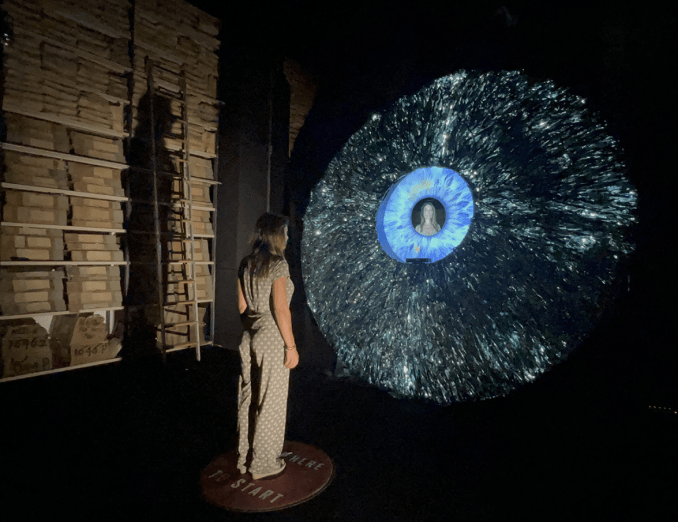
Filmed on location in Naples, Italy, We Are Art Through the Eyes of Annalaura was written, produced and directed by acclaimed artist Annalaura di Luggo, in collaboration with production supervisor and creative consultant Stanley Isaacs, and is an inspirational story of creativity, second chances and new beginnings. The documentary feature depicts Annalaura’s journey as she undertakes her most artistic challenge, creating Colloculi, an immersive, multi-media, interactive art installation constructed in the shape of a Giant Eye made of recycled aluminum, symbolizing environmental rebirth and recycling. She incorporates her artistic visualization of the lives of four young people who, in their own way, found a spiritual path out of the darkness into the light and reclaimed their self-esteem and found new value in life.
From concept to fruition, Italian artist Annalaura di Luggo takes inspiration for a multimedia art installation from the Bruegel painting, “The Blind Leading The Blind.” She intends to not only is to inspire but include the viewer in the experience of the piece. They are the fourth layer. WE ARE ART- Through The Eyes of Annalaura is a whirlwind journey through redemption and creation.
The casting process for the four individuals Annalaura wants to include in the project gives the audience a taste of the local Naples community. Each person has a story, a work of art unto themselves. Pino grew up surrounded by drugs, violence, and neglect. His future goal is to avoid a similar path as his parents and thrive through education. Noemi approaches the world through experiences, sports, and animals. Born blind, she longs to break any preconceived notion the world might have about her and to live as fully as any sighted person. Her description of what color is to her is awe-inspiring.
 Youssouf arrived on the shores of Naples in a rubber dinghy from the Ivory Coast in 2016. Alone and with nothing to his name, he endured discrimination, educated himself, and began to work. Engaged and with a child, his goal is to be present for her. Adopted at the age of five from Moscow, Larissa found herself bullied for her appearance, leading her to abuse alcohol. Resiliency and self-love push her forward in life.
At Method Treatment, we provide the highest quality care in a luxurious, comfortable setting. Our team of specialists helps patients develop strategies for long-term sobriety.
Like any artist, Annalaura possesses eccentric energy. Her mind is in constant creative mode. Each media artist she approaches finds themselves immediately sucked into her vortex of ideas and enthusiasm. Beyond that first impression, her genuine care for Pino, Noemi, Youssouf, and Karissa is clear as day. Their work together becomes a therapy session melded into Annalaura’s final creation. Her profound words for her subjects will take the viewer aback.
WE ARE ART escapes pretentiousness by keeping the audience involved in each intimate and intentional step. There are a staggering amount of minds and hands touching this project. “Colloculi,” the final work of art, is dazzling, simultaneously speaking to the uniqueness of each life and the universal nature of humanity. Annalaura di Luggo should be proud. Bravo.
Opening At The Laemmle Monica In Los Angeles On September 16
And The Village East In New York September 23
Q&A to follow after both Opening Nights
Written & Directed By
Annalaura di Luggo


 An aspiring clown grappling with her gender identity combats a fascistic caped crusader, in writer-director Vera Drew’s uproariously subversive queer coming-of-age origin story.
 Vera Drew‘s TIFF22 Midnight Madness feature, THE PEOPLE’S JOKER, is a visual explosion of mixed media deliciousness. Creatively autobiographical, watching the film is like taking ecstasy while simultaneously receiving an important message. Drew’s script overflows with biting satire about gender politics, comedy, and emotional healing. While we’re busy laughing and wondering how she got away with parodying DC, Disney, and other trademarks, she slyly exposes cyclical and deep-seated trauma.
 I have to mention Nathan Faustyn by name. He plays Penguin with an unfiltered edge. Faustyn has incredible comic timing, and his chemistry with Vera is perfect. I want to see more of him in anything. Vera Drew speaks truth to power in a raw and undeniably hilarious manner. The writing is fearless, the performance is vulnerable, and her vision as a filmmaker is endlessly engrossing and quirky.
 I adored the “bleeping” to avoid deadnaming. It was a quietly powerful device allowing Drew to address it head-on later in the film. Keep your ears sharp for voice cameos from Tim Heidecker and Bob Odenkirk. The original music is super catchy. Stick around through the credits for some extra treats. You’ll finally realize how expansive THE PEOPLE’S JOKER is. Each visual aspect comes from a different creative’s brilliant mind. This wild fandom mash-up is part confessional therapy session and another part cult coming-of-age indie.


 How do you keep a nine-year-old from spilling the beans? Jean Costa brings the perfect amount of sass to the role of young Jean. His performance is so natural you might think he’s improvising each line.
 Maeve Jinkings plays Irene with slick confidence and a fearless attitude. She is never intimidated by Juan’s presence. On the contrary, she sees him as a nuisance and a necessary means to an end. Jinkings casual delivery under pressure makes Markowicz’s screenplay shine. It’s a real wow.


 One of the most immersive cinematic nature series ever made, Nat Geo’s Epic Adventures with Bertie Gregory is a wow. I was in relentless awe of the up close and personal footage of the arctic life, be it takes, seals, penguins, and much more.


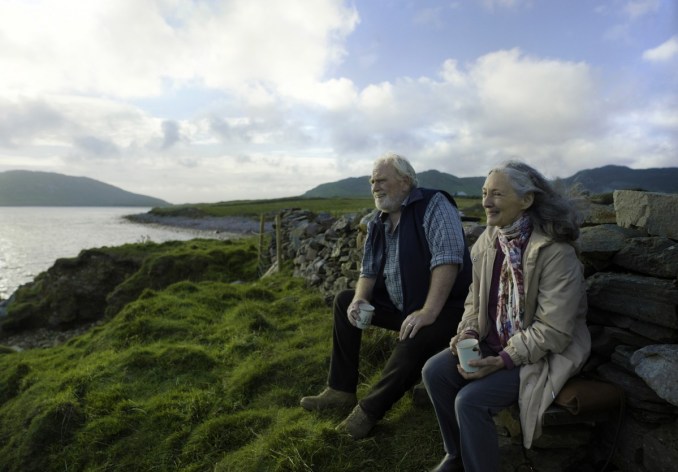 This endearing later-stage love story is as lovely as can be. Annie and Howard’s earnest chemistry come to life with the extraordinary performances by James Cosmo and Bríd Brennan. Beautifully paced histories of their former selves lend to its authenticity. So much of the script occurs in things unsaid.


 The entire cast is breathtaking. Our leading lady, Vicky Krieps, gives a mesmerizing performance as a woman unraveling. Each beat is carefully curated, mired in sadness and pure love. Krieps’ unadulterated vulnerability demands your attention. It is an award-worthy turn. Hold Me Tight is an extraordinary study of grief and moving forward. You cannot walk away from this film unchanged.


 Check out the newest trailer for the film and our


 As revelations of the allegations against Lee-Curtis come to light, the complex nature of the story gets stickier. The dialogue is laugh-out-loud hilarious. Ebo makes full use of righteous indignation to excuse/cover sins. The script mirrors real life so accurately it is shocking. The hidden shame, faux outrage, and especially the hypocrisy, every character in Honk For Jesus is lying to themselves.
 Regina Hall plays Trinitie Childs. Doing her best dutiful wife with a plastered smile, Hall is perfection. Each beat jumps off the screen. But there are cracks beneath the surface, waiting for the precise moment to break free. Sterling K. Brown as Lee-Curtis Childs is an explosive ball of energy. It’s a powerful and physical performance. Brown’s relentless commitment to the absurd makes this film as intriguing as it is funny. The chemistry between Hall and Brown is spectacular. It is an equal partnership of fierceness. The support they give to one another in every scene is palpable.
 Honk For Jesus. Save Your Soul. is a fight for the Childs’ last remaining shred of dignity. The balance of over-the-top farce and deep-seated issues creates a hell of a story. Blind faith is a dangerous thing. Adamma Ebo knows it, and so too shall audiences.


 The opening night film for Fantastic Fest 2022 is the world premiere of Paramount Pictures’ SMILE, the intensely creepy debut feature from Parker Finn that’ll have even the seasoned FF crowd gripping their armrests in genuine fright.

 Shark Attack & AGFA Takeover
 FESTIVAL FILM LINEUP BELOW:


 Rageaholic has a distinct three-act storytelling structure. Act one finds Detective Fukama in a drug and alcohol-assisted haze of aggression. When his behavior makes for negative PR for the force and the local community of Fujimi, he is shipped off to the United States for some unique rehabilitation.
 Act three; those driven from society now reside in squalid tent cities but thrive in their kinship. Confronted with how he ultimately fits into the grander scheme of control, Fukama must find the balance between good and evil to set things right. The depraved violence that ensues feels right. I’d be lying if I didn’t admit to wincing and a lot of cheering.


 In private, there is an uncomplicated intimacy between Maria and Sascha, but judgment bubbles to the surface once in mixed company. Self-loathing and regret are deep-seated, a deadly combination for sabotage. The script slowly but slickly reveals Sascha’s inner demons, putting Maria and the audience in an uncomfortable position. The second half of Bliss deals with the ripple of her emotional instability. It’s tricky but familiar. Performances from Katharina Behrens and Eva Collé are spectacular, fearless, and raw. It’s stylistically similar to a docu-drama, and I dug the energy of the entire film. Writer-director Henrika Kull gives audiences a gem.


 *Resisting the urge to title this review “camping is in tents.”*
 Performances are fine. I wish I sensed more believable chemistry between our four protagonists. Michael D’ Amico and Jonathan Vanderzon fare better as our villains. Their presence elicited a genuinely visceral reaction.
 Camping Trip would benefit from a 15 to 20-minute cut. While the climax is satisfying, by no means did it need that much slow-motion editing. What follows is a confusing shift in relationships that feels forced. Like much of their response to finding a body and a bag filled with money, their decisions are laughable, if not infuriating. If nothing else, it gives the audience a reason to keep watching and wondering how this bungling crew parts ways.
 The camera work in the final ten minutes is quite literally dizzying. It also allows the audience to use their imaginations, rather than relying on mediocre fight choreography and the continued use of watered-down practical fx blood. Polly’s particular skill makes for a slick final moment. I had hoped it was featured more in the story. Michel DeMars’ score in this scene, in particular, is perfect. In the end, Camping Trip has an intriguing plot, even if the exposition lacks polish.


 Lucas Neff, whom I loved in Fear, Inc, plays Jason, the target of Benny’s sting. His effortless performance had my palms sweating. Neff’s emotional highs and lows elicit a visceral reaction. Jake Dvorsky is Sam, and co-writer Hunter Milano plays Ryan. Both are Benny’s buddies and unwitting co-conspirators. Do not write either of these performances off as sidekicks because each gives a nuanced and enthralling performance.
 Benny’s deep-seated unresolved trauma motivates his revenge under the guise of heroism. Wes Dunlap‘s performance is mesmerizing. He displays alpha confidence accompanied by simmering hurt and fear. When things go haywire, Dunlap leaves it all on the screen. It’s one hell of a turn.
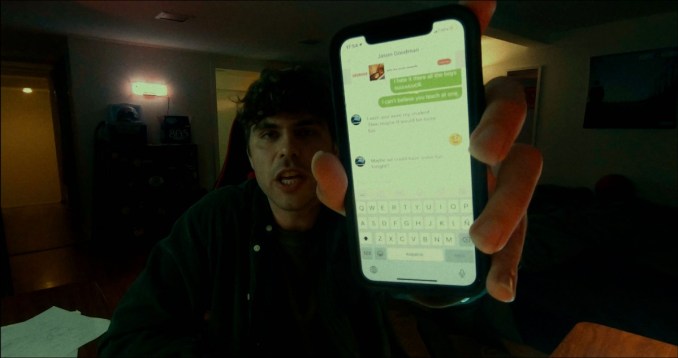 A ping pong match of intensity, Low Life benefits from rapid and thoughtful editing. But it’s the script that continues to shock. At every turn, I had my head in my hands. My heart was constantly racing, waiting for the other shoe to drop. How Milano and Rotter craft a script that ramps up the severity of the situation blew me away. Twist after twist, Low Life is one of the year’s best screenplays.

You must be logged in to post a comment.