

DICKWEED
 SXSW 2024 audiences are in for a real WTF documentary in Jonathan Ignatius Green‘s DICKWEED. In 2012, a wild kidnapping in the middle of the night led to torture, mystery, and one man’s loss of his, let’s say, manhood. The ensuing wild goose chase and brazen criminal actions challenge all involved. Police had no idea what kind of mastermind they were dealing with.
The film pulls no punches, with Michael launching headfirst into his story. An average day after working at his cannabis shop turns deadly when masked men grab him and a new roommate, drive them out into the desert, and demand to know where he buried a million dollars.
DICKWEED utilizes crime scene photos, dashcam footage, and sit-down interviews with the victims, detectives, and lawyers involved in the case. It sounds like a mockumentary. I had to look up the synopsis twice to confirm I wouldn’t make a fool of myself.
From Newport Beach, the search for suspects becomes a global affair. Revealing more details takes the fun out of this off-the-wall viewing experience. DICKWEED is an episode of 20/20 on steroids. True crime fans will devour this film. Get ready, SXSW 2024, for a shocking global manhunt, seemingly triggered by an innocuous passing comment. Your jaw will drop.
Film Screenings
Credits
Director: |
Jonathan Ignatius Green |
|---|---|
Executive Producer: |
Amy Bandlien Storkel, Bryan Storkel |
Producer: |
David Ricksecker, Jefferis Gray |
Cinematographer: |
Skyler Bocciolatt, Ben Joyner |
Editor: |
Peter Garriott, Connor Davis |
Music: |
John Jennings Boyd |
Principal Cast: |
Emily Pokora, Ronald Douglass, Greg Kriek, Rizzy Fuentes, Jerry Gregorio, Mikey Shayan, Kristen Vaganos, Brand Birtwistle, Jamison Sandbloom, John Fantasia |
Two people got kidnapped. One man lost his dick. No-one got any money. This heist-gone-horribly-wrong led one Newport Beach detective on an international manhunt for the most twisted criminal he’d ever hunted. In 2012, Michael, a local weed dispensary owner, got home from work and plopped down on the sofa like any other weeknight. Three hours later he was zip-tied and eating dirt as three men tried to beat him into admitting where he’d buried the million dollars. And he would have gladly told them rather than endure what happened next. The only problem was, he hadn’t buried a million dollars, and after they tortured him and left him to die, he still had no idea who these men were.
For all things SXSW 2024, click here!


 The documentary is by turns uplifting and shattering. Most powerfully, it is a stark reminder of the human costs of ongoing Russo-Ukrainian war. Unbelievably, this week will mark 2 years since Russia’s invasion and escalation of the conflict. While the war may not be at the forefront of the public conscious in 2024 to the same degree as it once was, it remains a constant for the staff and families at Veselka. This is not an overseas battle for them – these are their loved ones and families fighting and dying while the world moves on to the next crisis.


 On-the-ground video from January 6th, up close and personal from cell phones, retraumatizes the viewer. The new footage is mind-boggling and will undoubtedly fill you with rage and disgust. The film features sociologists, authors, historians, lawyers, and pastors. We examine the Constitution and the precise articles requiring separation of church and state. We look at evolving statistics on social issues through the years. The interconnectedness of women’s rights, race, and power is undeniable.
  Violence as a means of “spiritual defense” comes directly from the pulpit over and over. The film effectively builds towards January 6th by wading through the madness swirling in the years prior. It is utterly bewildering and 100 percent terrifying. This coordinated effort to keep people in a cult is deliberate and well-funded. History repeats itself. Wait until you find out the architect of Evangelical sermons.
  GOD & COUNTRY keenly explores the long history and bastardization of Christianity through White Nationalism. It is a political movement about power. America is a ticking time bomb encouraged by social media, media, and billions of dollars. Stay vigilant and show up at the polls because democracy depends on it.


 Timoner gets a completely unfiltered look inside the magic and mayhem in 7 years of behind-the-scenes footage. It’s a competition between the vibrant, often cocky, argumentative, drug-fueled, genuinely talented musician behavior of BJM versus the chill, business-minded, trustworthy, equally gifted Dandys. Each band pushes the other to greatness with contrasting tactics. Ondi’s handheld freestyle way of shooting is immersive and tangible. With the rapid-fire editing and narration from Joel Gion and Courtney Taylor, you’re entirely entertained. Huge personalities clash, eccentricities push people’s buttons, and childhood trauma rears its ugly head.


 The documentary follows Tina Cordova as she advocates for herself and her fellow “downwinders.” Downwinders are innocent bystanders who may have suffered negative health effects from the Trinity test – the 1945 detonation of a newly developed nuclear weapon in New Mexico.
 The anecdotes from the immediate aftermath of the nuclear test are truly horrifying. One particularly striking recounting involves children playing with what they thought was “warm snow, but may have actually been nuclear fallout. Still more disturbing is the potential generational effects of the test. There are recounts of stillbirths, of children born without eyes, and of widespread cases of cancer across the affected communities. Cordova herself is a thyroid cancer survivor, the 4th generation in her family to have cancer since the test in 1945.
 Filmmaker Scott Cummings brings Sundance 2024 audiences into the everyday lives of Satanists. The Church of Satan boasts innumerable followers around the world.


 DIG! XX


 TIME BOMB Y2K makes terrific points about the effects of technology on human interaction. The film delves into how certain groups of people reacted during the unknown. Some folks became preppers, while others cried “Hoax” from the beginning. It’s a perfect metaphor for the power of disinformation, closely mirroring how a particular subsection of alt-right people think a homegrown militia uprising is coming. I had no idea this existed in preparation for Y2K. We have to take into consideration how the world reacted during COVID. The potential for violence equals the potential for peace. It is a fine line.


 Filmmaker Henya Brodbeker turns the camera on her, her husband, and their young autistic son, Ari. Through years of filming, we witness the evolution of relationships in her Orthodox community, her marriage, and with herself. This is one family’s story about belonging.
  Anyone who follows my career as a film journalist knows I’m a Mom of a young autistic son. I talk about his diagnosis and navigating the complexities of existing in a primarily neurotypical environment. We are lucky in the grand scheme of ASD possibilities. Our son’s cognitive abilities are off the charts. He is loving, funny, friendly, and would not hurt a fly. Dealing with public meltdowns, particularly if those around you do not know or understand, can be a crushing, demoralizing, tear-filled experience. Nothing is easy. It’s undeniably isolating. It’s the outside world we fear most. THE THREE OF US is irrefutable proof of how equal opportunity changes the lives of families.
 2nd Annual Dances With Films – NYC


 The score possesses a moving, almost visceral effect on the viewer. The information Rolnick discovers through her years of research will shock you. Their stories remain ever-evolving living entities. The film reinforces the tried and true Churchill adage, “Those that fail to learn from history are doomed to repeat it.”

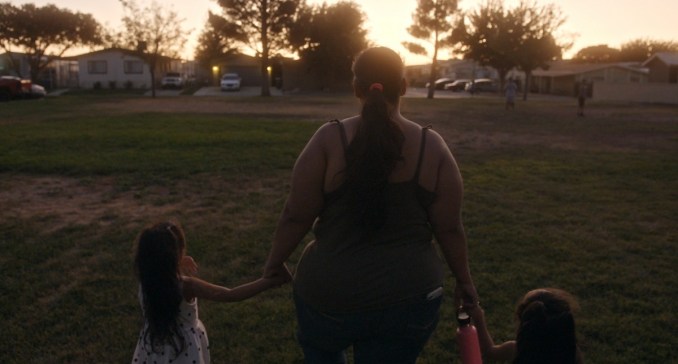 The families are eclectic. All shapes, sizes, races, ages, and socioeconomic backgrounds face the challenges of reuniting parents and children. Allegations range from neglect to sexual abuse. Each case is unique, and the system does not exist to react to those nuances.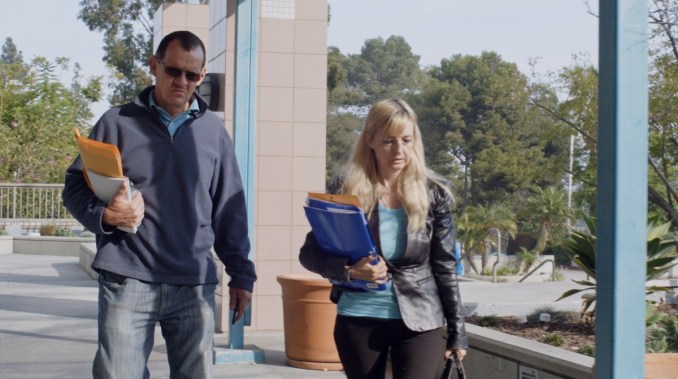


 The editing is masterful. The narrative flow is deliciously punctuated with L’Orange’s (Austin’s artist name) uniquely produced and created beats. His music is hypnotic, sampling blues and standards to assemble something fresh, almost binaural in its rhythms. While THE MAD WRITER follows Austin’s musical and surgical journey, it speaks universally to those suffering from depression and unsure of their place in the world. Austin says it best in the film. Everyone wants to feel “satisfied, clever, and useful.” He’s not wrong.


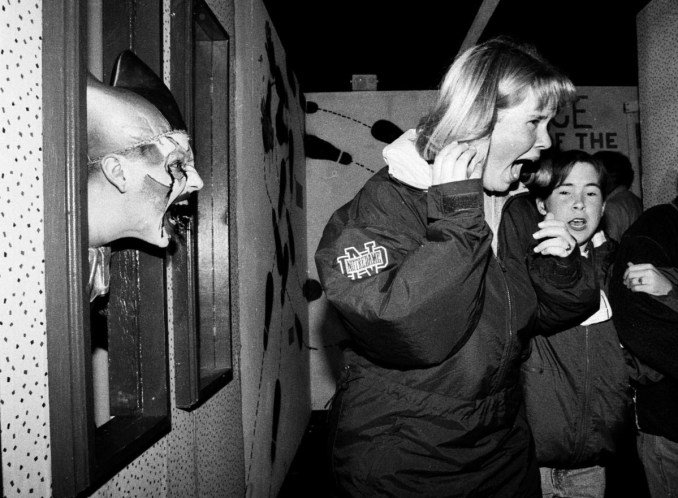 1991, in the middle of a Massachusetts cornfield, open every day in October, Dave Bertolino‘s Spooky World was a horror con and a theme park. It was the first dedicated haunted attraction, paving the way for every modern-day, big-name fright night across the country. Built on a dollar and a dream, Spooky World grew more popular and went through numerous iterations. As one of the first featured guests, Tom Savini’s direct influence on Spookyworld shifted from a homegrown haunted hayride to a proper frightening experience within a year, with Tom building his own branded Haunted House. The busier the park, the more elaborate and inventive Bertolino had to become.
 The townspeople of Berlin had a fantastic relationship with Bertolino. Bringing jobs, money, and recognition to a sleepy farming town. But, not everyone was thrilled with the boundary-pushing additions, playing politics and making Bertilino’s job harder. That’s not to say that his antics and ideas came without skepticism from within.
 Growing up in northern Connecticut, I cannot believe I never ventured up the Spooky World as a self-proclaimed Halloween addict and horror fanatic. I’m thankful the park ever existed, and its humble and exciting existence spread like wildfire so that global genre fans could care and scare together.
You must be logged in to post a comment.