

GO HEAL YOURSELF

Against the wishes of her family, Yasmin sets out to find a treatment for her
epilepsy via alternative medicine. Meeting inspiring people all around the
world, she learns that this route is not as easy as simply taking a pill.
 My aunt has always used homeopathic remedies. She’s beaten breast cancer twice. As someone with chronic pain from a neck injury caused by a car accident, anxiety since childhood, severe dance injuries, and phantom pain and diastasis recti from two C-sections, I would love to find ways to heal myself juts like I found the CBD oil for anxiety which allows me to cope with my mind. You hear testimonials constantly on the internet or get messages on social media from women in health and wellness, aka the newest pyramid scheme. In Go Heal Yourself, filmmaker Yasmin C. Rams goes on a mission to explore alternative medicine for her epilepsy and her father’s Parkinson’s. It is a journey fraught with emotion.
The argument of western vs. eastern medicine will never fade. Alternative medicine is a rare topic in my house. We believe in science, but that never discounts the science we aren’t familiar with yet. Although, my neck injury was so painful that I did my first and only session of acupuncture. It did not move the needle (pun intended) on my pain scale. I’ve since watched two aunts go through breast cancer treatments. Neither of their stories is the norm. While one used homeopathic medicine and CBD treatments (find the Exhale Wellness Delta 8 joint here), the other did chemotherapy but never got sick. I’ve never heard of that before.
 In Go Heal Yourself, Yasmin’s father is skeptical. Her attempts to change his diet or convince him that his medication isn’t helping fall of deaf ears. Her epilepsy seems to reach a point of no return as CBD and herbal supplements become too expensive. In her search for answers, Rams reaches out to those individuals across the globe who claim their sickness wained due to a drastic lifestyle change and not medication. You cannot help but become emotionally attached to the people featured in Go Heal Yourself. You’d be hardpressed not to know someone in your life that isn’t afflicted similarly. While some of them heal, others struggle. Each believes that holistic medicine will lessen their ailments in the end. It’s the mental aspect that seems the most powerful. With mindfulness becoming more mainstream, those who practice may feel vindication from this doc.
We are fully invested in Yasmin’s journey. It’s a personal, oftentimes dark, diary of sorts. Undoubtedly, we’re hoping to find our miracle cure as we watch. Go Heal Yourself is going to rattle people, and there’s no getting around it. But if it causes us to stop and think for a moment about what our health means in our souls, then it has succeeded wholeheartedly. At the very least it opens up the dialogue.
Online Dates
Sunday, November 14 – Sunday, November 28, 2021
Year: 2021


 Patrick McNamee as John is everything we need him to be; vulnerable and a little lost. I must give mention to John’s would-be sidekick, Nicki. Sacha Parkinson is funny, brash, and fills the screen with her vibrant presence. As the script progresses, the one character we never physically hear from becomes the most intriguing. Phil is an enigma for John. Unraveling the mystery of the man takes center stage and is undoubtedly the most successful aspect of the script. Filled with surprises, The Pebble and the Boy is like a warm hug. It’s a breezy, coming-of-age road movie with one hell of a soundtrack.


 Are you
  Genre fans, let me introduce

 Is “the Pill” killing us? Perhaps not, according to the innumerable doctors who prescribe it to 11 million women. 35% of which are for reasons other than preventing pregnancy. Anytime I heard about my girlfriends going on birth control in high school or college, it was the same complaints; weight gain, mood swings, depression, and suicidal ideation. I never went on the pill because I was terrified by the side effects. In
  I struggled to get pregnant for eight months. Every month I cried when the pregnancy test was negative. Then someone turned me onto an app very similar to the method discussed in the doc. I tracked my temperature each morning and some other information because you cannot get pregnant every day of your cycle, but that’s not what has been drilled into our heads since Sex Ed class in 5th grade. Within three months, I was pregnant, and I knew because of my spike in temperature. I knew before taking a test because I had learned the natural cycle of my body.


 JAGGED

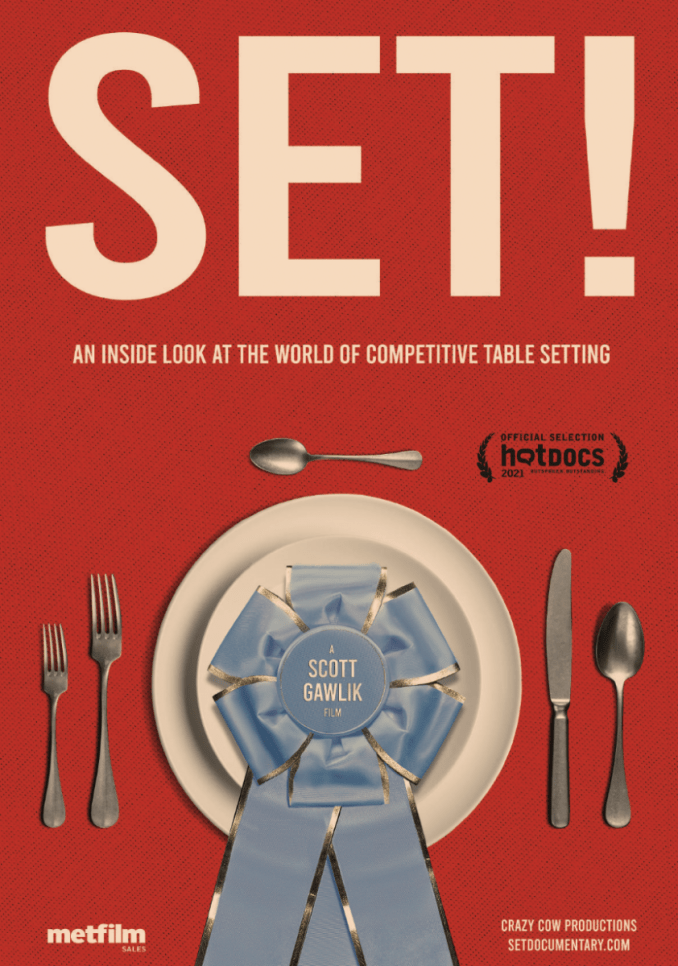
 Competitive tablescaping? Yes, you read that correctly. What, praytell, is competitive tablescaping? Well, it’s only the most amazing, strange, imaginative, cutthroat sport you’ve probably never heard of. Each year, under the guidance of a specific theme, competitors create place settings that will either wow or ward off a panel of judges and their fellow contestants. In
  Every inch and angle of cutlery and drinking glasses amounts to a point total. Scores are a cumulative system where one tiny mistake could cost you the top prize, which I think is bragging rights and not the 50 cent ribbon. What makes this sport so massively entertaining comes down to the interpretation of the theme and the competitors’ personalities. In
  The judging is rigid. The rules are clear, but that doesn’t mean some of the comments aren’t questionable. Gawlik presents this aspect with glorious tongue-in-cheek energy through the film’s editing. But the drama pervades the entire process. A mostly female-dominated pastime, SET! also features a male competitor, Tim, who made his Dr. Suess-themed table on a literal dime. Others spend thousands on a single display. The snark, the tears, and the infighting make SET! something akin to

 In the aftermath of Hurricane Katrina, people lost homes, heirlooms, family, and stories. In
  Watching


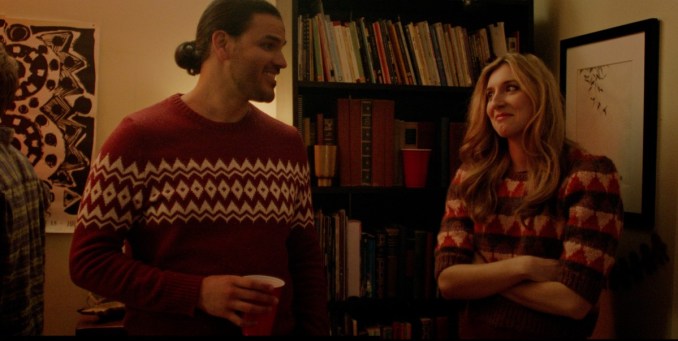
 Elizabeth Guest


 Grief is a personal journey. When your person gets ripped from your orbit, all bets are off. “Coping” can mean destructive behavior in the form of alcohol, binge eating, even self-harm. Or, grief can manifest itself into the most creative outlets. In Zowie’s case, pain and darkness are where she’s become comfortable. It’s also where her sister appears to her, bringing her momentary joy. In


 IDA RED
 Sofia Hublitz
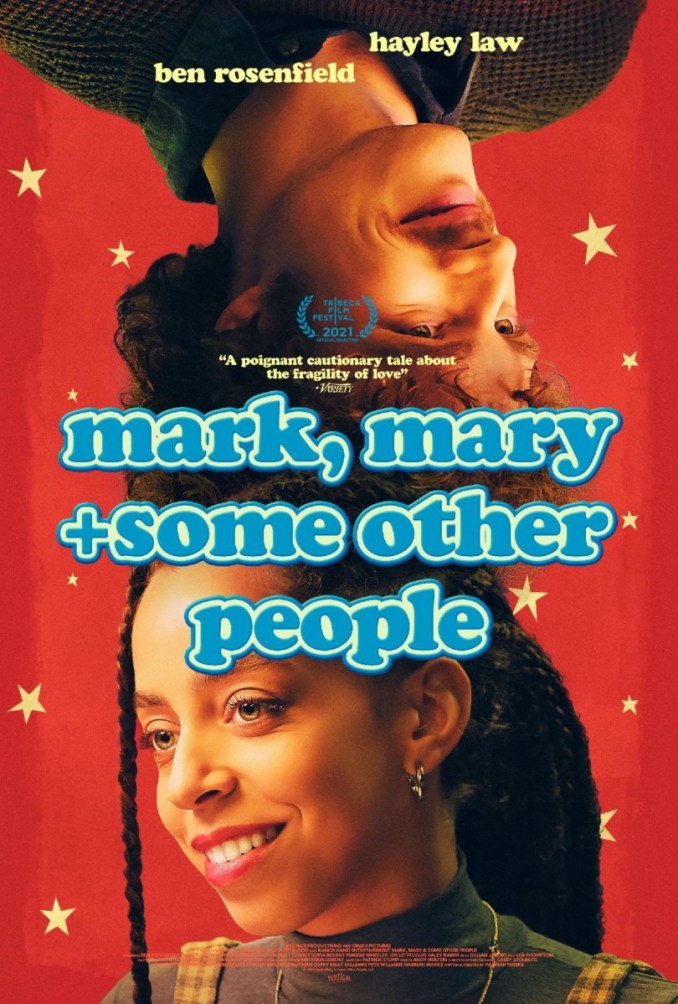
 “Traditional” relationships structures were created by, well, who knows. Love is weird and complicated, no matter how hard we try. We’re only human. We have urges that are as basic as they come. Anyone who claims to not be attracted to a person outside of their monogamous relationship is a liar. Love is messy and ever-evolving, and writer-director Hannah Marks gets that. Marks popped onto my radar with

 Tin Can


 As
As  The palpable sadness of

 Mimi Kuzyk
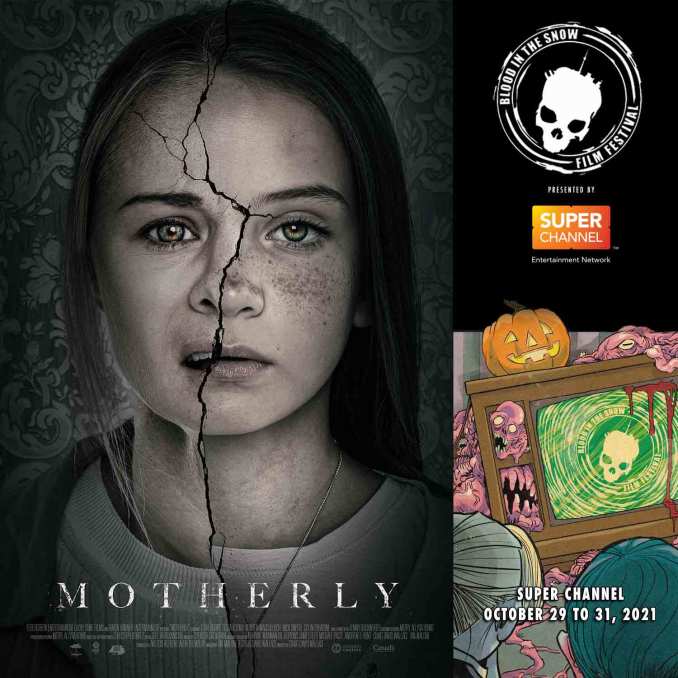
 Performances across the board are phenomenal.
 Giant Bear (*shown alongside Don’t Say Its Name)
 The Death Doula
 Watershed
 Creepy Bits- Chapter 1- “Baby Face”
 Narcoleap: S2
 GHOST- A Primitive Evolution
 Midnight Lunch Break
 The Revenge of the Snowflakes
 We All Dream (*being shown with Motherly at 9 pm this evening)
 Disquietude (screening with Tin Can Sunday night at 11:30 pm.)


 Two kickass female leads in one film? Thank you. The cast generally consists of more women, and I am not complaining. It’s inspiring to watch these actresses communicate with each other. Leads,


 Sisters With Transistors beautifully brings to life a niche history that you didn’t know you were missing but will surely recognize. The film seamlessly weaves together the personal stories of innovative composers like Clara Rockmore, Daphne Oram, Bebe Barron, Pauline Oliveros, and Suzanne Ciani through live performances, archival footage, and visual interpretations of their music. Some pieces are moody and atmospheric; others are challenging and experimental. Yet, all of them reverberate with unique genius, creativity, and passion. The overall effect is a captivating documentary on an unsung history that is endlessly engaging to watch.


You must be logged in to post a comment.