

APARTMENT 413

Marco spends his days applying for jobs online, researching ressources pour travailler en Europe, and waiting for Dana, his pregnant girlfriend, to get home. Strange post-it notes mysteriously appear around the apartment with cryptic warnings. A mechanic texts and calls him with menacing messages from an old non-functioning cell phone. The walls close in and tensions build between Marco and Dana’s relationship until all sense of safety dwindles as the lines between imagined and reality blur for both Marco and the audience. When Marco discovers the root of it all, his real problems begin.


One of my favorite scream queen-writer-directors, Brea Grant, plays Dana. Because of the ever-evolving nature of Marco’s predicament, Grant is allowed to play the entire emotional spectrum. Her nonchalant chemistry with Saenz is astounding. Nicholas Saenz is impeccably engaging. The film’s success hinges on his likability. Much like the script, his performance has more of an impact once the credits roll. The film takes place almost exclusively inside the small apartment. This set is a tight squeeze that the audience feels just as much as Marco. Saenz gives us his all. It’s a dizzying and heartbreaking performance. Screenwriter Ron Meade gives us all the breadcrumbs along the way. They’re so slyly distributed. Along with anxiety of job searching, feelings of inadequacy, and isolation, Apartment 413 is a slow burn psychological horror that punches you in the gut. As that final puzzle piece falls into place, it turns out this is one of the most disturbing films I’ve seen in a while.
Nicholas Saenz (“American Crime”), Brea Grant (“Beyond the Gates”), and Dave Buckner star in Matt Patterson’s unnerving APARTMENT 413, premiering On Digital this September from Terror Films.


 Frankie (John Pollono), Swaino (Jon Bernthal), and Packie (Shea Whigham) are working-class men that share a friendship bond going back to childhood. That bond is strengthened further by their co-parenting of Frankie’s beloved daughter Crystal, who has spent a lifetime being raised by a loving– if raucous– male collective. This sets the scene for a fascinating character study of a group of men raised in a culture steeped in toxic masculinity who struggle to push back against it but often fall incredibly short.
  At first, Small Engine Repair seems like a dark family drama with a comedic edge. However, it is not until the second act that the viewer realizes that they are in the midst of a thriller. Complex performances by the entire cast gradually build tension through sharp looks, quick words, and complicated histories until the atmosphere on screen is so thick with menace that suddenly, every word and movement is a threat.


 While the success of this film hinges on the commitment of the spectacular ensemble, I must specifically salute Enzo Cellucci and David Krumholtz. The majority of the film revolves around Max remaining an observer. It is not until he is forced to participate that we are fully consumed by the heat of embarrassment only actors know in their souls. Cellucci’s emotional and physical beatdown creates greatness. As Adam, David Krumholtz is a goddamn character study in CLASS. It is everything, from the slicked-back hair, the robe over silk pajamas, and the pièce de résistance, the accent. The impeccably precise bastardization of a British accent is a thing of glory. If your ear is sharp enough, you’ll notice how it changes from scene to scene. It is, as they say, the chef’s kiss. CLASS is easily one of the most honest and cringeworthy shorts I’ve ever watched. I lived inside every second, and I loved it just as much. I’m still laughing. I am dying to see this developed into something bigger. It certainly deserves the audience. To everyone involved, Bravo!


 What would I do if I were trapped in a bathroom with my family? When I watch films, I instantly put myself in the shoes of the lead protagonist. This time was different. I put myself in the shoes of Vinessa Shaw‘s character, Diane. Under the auspice of a tornado warning, the safety of her children is her main priority. No one could have predicted the evil that would ensue as they realized they were on their own. Shaw has a moment so gutwrenching, I could not hold back tears having two small children of my own. John James Cronin is fantastic as Bobby. He perfectly encapsulates innocence and fear.
 Sierra McCormick, who I believe was the best part of American Horror Stories, nails it again. Her anxiety is palpable, and she is unafraid to leave it all onscreen. If she isn’t the next genre darling, I’ll be shocked. The script does a great job of highlighting the awkwardness, the lack of privacy, and the growing tension under duress. Who wants to use the toilet in front of your family? Screenwriter Max Booth III provides us with a sharp left turn a third of the way in. The gasp and look of horror on my face must have been hideous. No matter how I assumed this story would play out, that one moment is so mind-blowing it will send chills down your spine. The film’s most impactful aspect is the sound. Man does this cast sell it. Your own imagination is your worst enemy while watching. The ambiguity lets every viewer come away with a different and twisted result. Director Sean King O’Grady has an undeniable hit with We Need To Do Something. Here’s hoping he and Booth team up again and again.


 Growing up Catholic didn’t honestly impact me until 8th-grade. I should say that attending Catholic School didn’t make me feel any different until one specific religion class. It was a moment that changed my entire life. It was explained to me, that telling my mother I was gay would be the equivalent of telling her I had committed murder. That was a defining moment. Today, my mother lovingly refers to one of my younger sisters and me as her “heathen children.” I begrudgingly attended Christmas and Easter Mass with my family throughout my college years. Then I put my foot down. I would no longer perpetuate the charade. To put this all in extra context, I am a straight woman. I grew up in the arts, surrounded by some of the most extraordinary humans on this planet. I continue to defend equal rights and acceptance, despite pushback from too many. Films like Scott Boswell’s A WAKE are important for families who may not even know they are in crisis. This story offers acceptance and unconditional love as lifesaving tools.
 The cast is amazing. Each actor brings the energy necessary to tell this story with truth and realism. Some moments are awkward, while others are rage-inducing. Megan Trout, as older sister Megan, is great. She’s the voice of reason in all of the chaos, whether the other family members are ready or not. Kolton Stewart, as Jameson, is lovely. His quiet strength brings a calm to the sadness. Bettina Devin as Grandmother is a gem. She’s elegant and understanding. Sofia Rosinsky‘s neurotic mentality is a story unto itself. Through flashbacks, we can see a clear progression of her personality, her growing manic tendencies, and genuine curiosity. She’s a spitfire.



 At an impasse of religion and love, the title of this thought-provoking short film suggests that it’s a horror film. While not touted as such, what unfolds in 25 minutes between family members is absolutely horrific. To fully appreciate the nuance in Over My Dead Body takes an open mind. Often, we place ourselves in the shoes of the characters on screen. Here, depending on your religious beliefs (or lack thereof), the complexities are unsurpassed. Having religion forced upon me as a child backfired at the age of about 14. In a world filled with volatility caused by media corporations, conflicting gods, and traditions, Over My Dead Body hits harder in modern times. Our families are supposed to love us unconditionally. What happens when that isn’t true? The cinematography is smart and takes advantage of the lush sets and costumes. Performances from this true ensemble cast are magnetic. You know this family. It resembles your own in more ways than you might realize at first watch. With an ending that will leave you breathless, the impact of this short should echo loudly.


 Sefchik’s visual work is nothing short of stunning. This should come as no surprise given his extensive career as a digital artist with the likes of George Lucas and James Cameron. The details are immaculate. While the performances from our dedicated cast veer into the amateur lane at times, their brightest moments come when interacting with what isn’t actually there. That’s more impressive than it sounds. Sefchik also co-wrote the script with producer Derrick Ligas. Social commentary is smartly placed inside a horror film. Themes of environmental destruction, media, and capitalism soak this story in realism. Using personal fears to goad our players into darkness is a brilliant touch. When greed rules, evil prevails. The fact that this entire film was made for $65,000 is mindblowing. Any indie filmmaker can attest to that. BEHEMOTH is a win in its script and most certainly in Sefchik’s mesmerizing VFX. If this is his first foray into feature storytelling, I cannot wait to see, quite literally, what comes next.

 Confetti is a heartfelt film that aims to tackle complicated issues of immigration, dyslexia, and the barriers that parents will overcome to provide a better life for their children.
  Confetti is a refreshing insight into the Asian American immigrant experience that is not frequently centered. Director Ann Hu should be commended for elevating complex intersectional stories like this one, even if some plot points feel a bit disjointed or unfinished. Charming performances by Zhu Zhu and Harmonie He animate a touching story of perseverance and sacrifice.

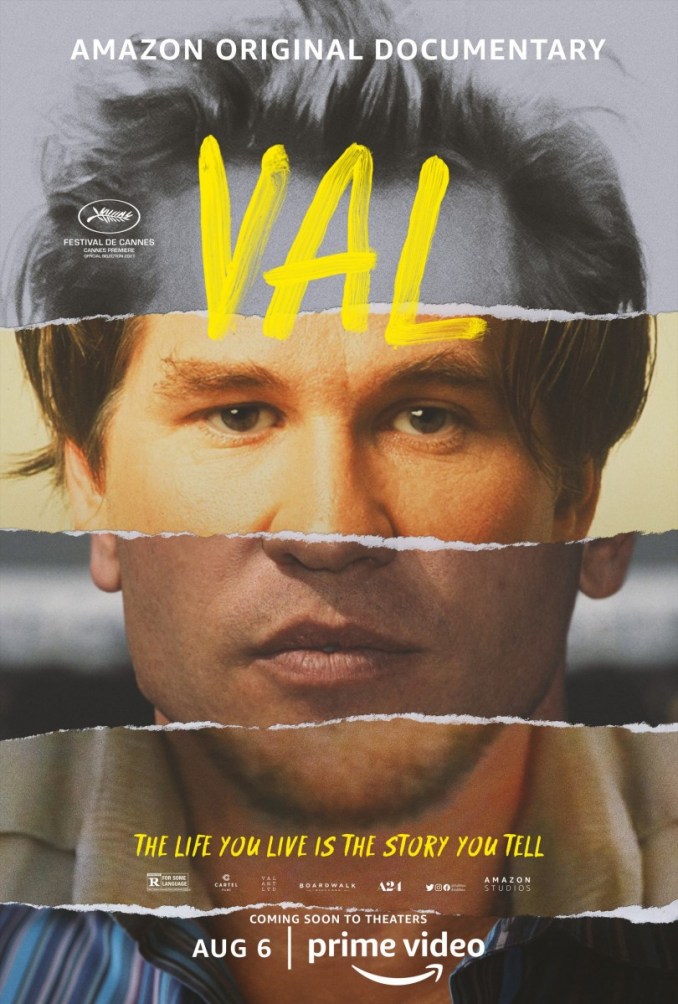
 Let’s start with a confession – I’ll always think of Val Kilmer as my Batman. 1995’s Batman Forever was the first superhero film I ever saw, and that impression was deep and lasting. The car! The suit! Nicole Kidman! That is not to indicate that I am incapable of evaluating Kilmer fairly, but only to say this image of him at the likely mountain-top of his fame has left a lasting impression.


 I’ve never trusted wolves. You could argue this is because I’ve always been raised around ultra-docile dogs, but I think my 20+ years of watching movies are really to blame. The ratio just doesn’t hold water. For every domesticated wolf acting as Kevin Costner’s sidekick, there are countless more stalking our hero through a snowy tundra, howls echoing through the night.
 Sam Hobkinson’s smooth direction compels the audience forward. There’s a charming and particularly modern manner to the way that Hobkinson features key figures in Misha’s journey to stardom – their whole essence summarized into a single characteristic (“The Publisher”, “The Journalist”) We are not really meant to get to know these people (although “The Survivor” radiates winking humor with deep emotion in her few minutes of screen-time) – they are here to feed us the facts we need to drive the narrative forward, to build momentum towards the film’s core question. Which is, of course, can we believe Misha?


 Drugging his family and holding them captive in a bunker aside, toxic masculinity is smartly displayed throughout John’s journey. It appears in a spit fight, inappropriate conversations, and almost drowning a friend. The culmination of these moments keeps you tense and extremely uncomfortable. John and The Hole is unpredictable. I believe the most disturbing aspect of Nicolás Giacobone‘s screenplay is actually the final scene. Not wanting to spoil anything for the reader, I was horrified. The reasons are a complex mix of socioeconomics and Giacobone’s understanding our how the world functions. John and The Hole begs a larger conversation about aggression, pressure, and parenting. Do not miss this film.

 Ride The Eagle is a one-of-a-kind film. The script is written by director Trent O’Donnell and star Jake Johnson. Tackling regret, forgiveness, and everything in between, there’s an honesty that stings and inspires. Mostly, Ride The Eagle makes you smile.
 The script is filled with quirky characters. J.K. Simmons is fantastic in his manic energy. His delivery makes you involuntarily grin. Susan Sarandon, who we only see in her videotape to Leif, gives us warmth, and wisdom, and a boatload of snark. Her dialogue is yet another example of the care taken by O’Donnell and Johnson in their writing. There is a specificity that allows us to sit in Leif’s emotional shoes.
 I want D’arcy Carden to be my new best friend. The scenes between her and Johnson are pure gold. Their chemistry is off the charts. Made even more impressive by the fact that they speak exclusively over the phone. It’s like watching a masterclass in scene partnering. Their report nudges the script into rom-com territory. But, in truth,
  The score is vibrant and incredibly thoughtful. Ride the Eagle shines with heart and charm. It has a palpable vulnerability that makes it undeniably relatable. Of the nearly 200 films I’ve seen in 2021, Ride The Eagle easily soars onto my top 10 list.

 If an innocent man was sitting in front of you, would you even know it? This is a question I asked myself several times throughout Enemies of the State, Sonia Kennebeck’s propulsive new documentary. Years ago, movies made these kinds of questions easy on us: there’s that old western stereotype of the gunslinging hero wearing the white hat, staring down a villain dressed in black. These days, our digital lives have complicated that confrontation. In a world where stories of hackers, deep fakes, and police corruption flood the headlines, who can truly be trusted?
 In a film where nothing is certain, Kennebeck’s balanced direction is welcomed. Pains are taken to give equal air time to protagonists on each side of the conflict, to keep the viewer in check. I naturally found myself empathizing with DeHart’s family early in the film. In the immediate next scene, the camera lingers on the variety of medals on Detective Brett Kniss’ walls – as if to say, “You don’t want to believe this guy? He’s an Eagle Scout!”
You must be logged in to post a comment.