

THE FUTURE

At 42, Dr. Bloch (Reymonde Amsellem), a profiler, wants a child. A future. Her only way is to find a surrogate mother. At the same time, her groundbreaking algorithm designed to identify individuals planning to carry out terror attacks fails and a young Palestinian woman (Samar Qupty) assassinates the Israeli minister of Space and Tourism. In order to ‘fix the bugs’ in her algorithm, Nurit faces the assassin in person. The sessions between these two brilliant women raise questions about their past, while the sessions between Bloch and the potential surrogate (Dar Zuzovsky) challenge Bloch’s decision about her future.
An in-your-face opening sequence begins an unexpected plot in Noam Kaplan‘s Tribeca 2023 film THE FUTURE. A stinging and smart near-future Minority Report-like plot, the title has a double meaning. At 42, Nurit is a world-renowned profiler amid personal and professional deadlines. Charged with picking the brain of a resistance assassin named Yafa, she is also approaching the final days to choose a surrogate. Is motherhood part of her future?
Dar Zuzovsky plays potential surrogate Maor with a sunshiny disposition that is completely jarring. Something is off, but you can’t quite put your finger on it. Samar Qupty is Yafa. She is whipsmart with an acerbic wit and defensive edge. Her softening mirrors Nurit in real-time. It is a memorable turn. Reymonde Amsellem plays Nurit with a measured tone. She is undeniably brilliant. The dynamic between Nurit and Yafa is fascinating. They are combative, challenging, and yet connect in ways you don’t expect. Their relationship is essential to understanding Nurit’s journey.
Time is a recurring theme; the days counting down to the moon landing, minutes in traffic, and days until surrogacy implantation. Mixed into the ominous score is a repeated sound of a heartbeat. The numerous double meanings in this film are clever. They are unmissable. Effi Cohen Verte’s editing is a wonder. This femme-centric film focuses entirely on women. You never see Nurit’s husband. You only hear his voice. The final scene hits you like a ton of bricks. It is, simply put, genius.
WRITTEN AND DIRECTED BY Noam Kaplan
STARRING Dar Zuzovsky, Samar Qupty, Reymonde Amsellem
PRODUCED BY Yoav Roeh, Arit Zamir
CINEMATOGRAPHY BY Shark de Mayo
EDITED BY Effi Cohen Vertes
MUSIC BY David Klemes
In Person


 Young Je’Vida comes to life through the eyes of Agafia Niemenmaa. This personification of innocence is captivating against the stark quiet of Finnish snow and ice. She is a star. Sanna-Kaisa Palo gives present-day Lida a palpable lived-in trauma and definitive rage. Dismissive at the beginning, her healing journey comes with the shedding of shame and reclamation of identity through the next generation.

 WISTERIA

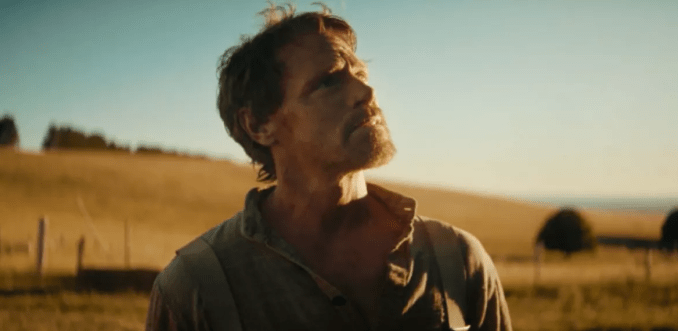


 Directed by: Steve Buscemi


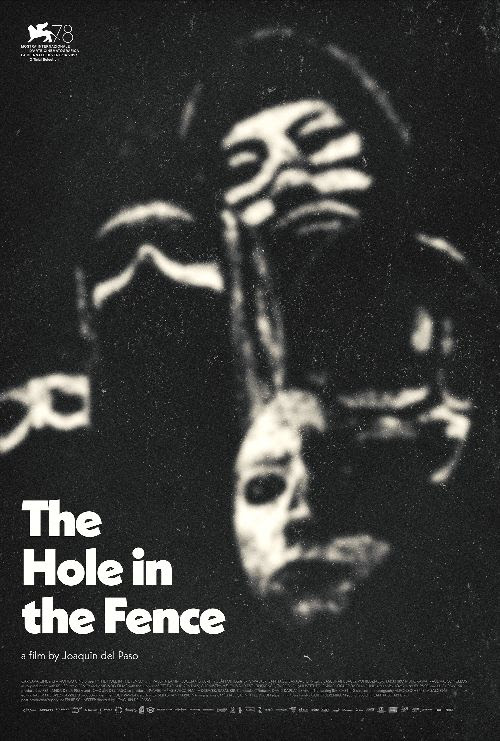
 Save one or two, a group predominantly of elitist little shits wage war against the weaker for power. To no one’s surprise, these kids could not care less about following the religious aspects of the camp’s intentions, instead actively torturing the child with the darkest skin. Perhaps the saddest part is how the hatred spreads so quickly.
 Outside the inner workings of the boys, there is a grander racism playing out beyond the chain link fence of the camp. A hole brings fear that an outsider has infiltrated the grounds. Slowly, we discover the nefarious intentions of the staff, the indoctrination of following orders, and never questioning authority.
 The film plays out in two distinct acts. Once in the woods, the fractures widen, and smaller groups become exceedingly hostile. This Lord Of The Flies meets The Village script is exhilarating. My nerves almost could not take it. Performances are extraordinary. The film speaks to a growing global evil in Christofascism, sexual abuse in the church, and the destruction of otherness. A HOLE IN THE FENCE displays toxic masculinity at its core. It is a sick test and focuses on the myth of manhood. It is a microcosm, and we should all be afraid.

 FIRST WAVE OF TITLES FOR ITS 27th EDITION


 Shazad Latif, as Kaz, has a quiet confidence that draws you in from the beginning. He possesses something special that makes the audience feel safe around him. Anyone would be lucky to have Kaz as a member of their family. Lily James plays Zoe with ambition, smarts, and girl-next-door sass. This character’s depth, flaws, and strengths equally embraced make the film thoroughly relatable. Dating is complicated, especially now. James embodies the modern-day woman and brings an elegance to Zoe that captures the audience immediately. Latif and James have a chemistry that feels earned.


 Although outlawed in 1970, mushrooms had been in innumerable treatments beginning in the 20s. In 2000 Johns Hopkins received approval to continue research. Psychological readiness is intrinsic in granting patient approval. The study of psilocybin is just as important as cannabis studies, a subject DOSED also delves into at length. Meyers, Chandler, and Brooks allow us into raw trips. Laurie describes the images and sensations and, more importantly, the emotional after-effects of psilocybin. We hear from researchers and therapists about the positive effects of “magic mushrooms,” When we receive a fatal diagnosis, the psychological impact is immeasurable.
 Meyers and Chandler fully acknowledge the limitations of solely profiling Laurie but hope that her story will open up the dialogue for the curious and the medical field to come together in a mutually beneficial journey. DOSED is an intimate and deeply affecting film about the possibilities in the relationship between nature and healing. Laurie Brooks’ story is one filled with inspiration. We walk away acknowledging one vital thing; that fully experiencing every moment is the key to living.


 Director Oscar Harding happened upon the tape as a child but had only had the pleasure of watching until his father hit stop on the VCR. It isn’t until the VHS reemerges in his adulthood that he feels compelled to dig deeper into the man beyond the vast amount of background provided by Charles along the way.


 Giedrius Kiela and Gabija Bargailaite play Paulius and Indre, respectively. Each brings qualities of pain. Kiela’s aggression has the audience in a death grip. His volatility is frightening. Bargailaite is more subtle. Her unraveling happens in a finale that breaks you. They are hypnotizing.
 Slick editing and long takes on a stationary camera make the audience an unwilling witness to Paulius and Indre’s plans. The script’s structure leaves much to the imagination as clues come slowly. My mind swirled as I watched Paulius walk Indre through the crime’s timeline. You feel compelled to keep watching. As someone whose close friend died under mysterious circumstances years ago, the unresolved pain and trauma are palpable. The need to understand and reason with the devil never fades, no matter how many years go by. PILGRIMS captures the very messy essence of grief.


 Thomas Parigi‘s performance transfixes. His ability to hold the audience in the palm of his hands, quite literally in this case, has the viewer waiting with bated breath for his next move. Parigi is a musician. His Soundcloud is as mesmerizing as his performance in the film. This debut role should garner him the attention he deserves. Parigi pulls you into this one-of-a-kind folklore horror dealing with loss, love, self-confidence, and generational embracement. The Strange Case of Jacky Caillou is an undisputable gem.


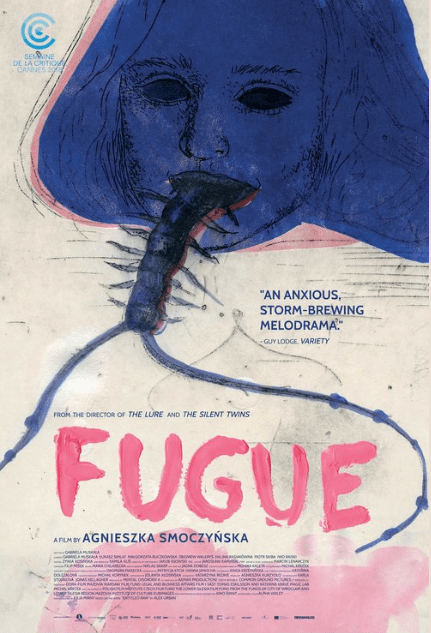
 Sporadic blue-tinged purgatory-like flashbacks of the woman in her heels, mussed blonde hair, and filthy trench coat give us little to go on. These sequences are undeniably unsettling. For most of the film, we draw our own conclusions based on the apparent hollowness of their marriage and a suggestion of an affair. Jakub Kijowski‘s bleak, but ravishing, cinematography sets the tone. Alicja stands apart from most of the action, furthering the feeling of isolation in an already stark environment.
 Iwo Rajski plays Daniel with a natural fierceness that suggests he is starring in a documentary rather than a narrative. He is fantastic. Gabriela Muskala pens the screenplay and plays Alicja/Kinga. Her ability to reel you into her turmoil feels effortless. She is magnetic.


 Kristine Kujath Thorp is magnificent as Signe. Her ability to cry on cue serves the character at any given moment. Her self-absorption knows no bounds, and Thorp leans into obsessive and damaging behavior like a pro. Her performance feels effortless.


 Two dominant themes in The Lost King are disability visibility and gender bias. Phillipa feels a kinship with Richard, angered he has been deemed a monster due to his severe scoliosis. It seems Shakespeare had a hand in demonizing his appearance for these years. The historical digging that happens in the film is eye-opening. She is whipsmart and undeterred in her mission to clear King Richard’s sullied reputation. We feel the frustration as Philiipa comes up against men taking credit for her work. Cheering her on when she stands up for herself, choosing to spread a strong feminist message to young girls rather than chase the fame regaled onto male archeologists on her dig.
 The film’s magical realism adds a beautiful element to Phillipa’s journey. It highlights the emotional pull to finish her search. Not to mention how charming actor Harry Lloyd is as Richard. Steve Coogan plays Phillipa’s ex-husband John, a man going through a mid-life crisis who grows to respect Phillipa’s passion for her subject. Coogan is an icon and is no less intriguing in this role. Sally Hawkins plays Phillipa. Her ability to live in a character’s skin is magnificent. Her physicality dazzles. She can do no wrong in my book. Her enthusiasm is contagious.


 THE WORST ONES is a meta-narrative that succeeds in conveying hope through hardship. Not only does the film shine in its storytelling, embracing heartbreak and socioeconomic trauma, but the performances also by our four young actors will hypnotize the viewer. Check out the clip below for a taste:


 “Manifest your destiny” becomes literal in writer-director Tomas Gomez Bustillo‘s SXSW 2023 film CHRONICLES OF A WANDERING SAINT. In a small village in Santa Rita, Riat is an elderly chapel keeper who longs for sainthood. At odds with the righteous women from her prayer group, she cooks up a scheme to produce a “miracle’ at the expense of everyone in her life.

You must be logged in to post a comment.