

HUNTING DAZE
 Annick Blanc gives SXSW 2024 audiences something to chew on with HUNTING DAZE, a genre-defying tale of isolation, pack mentality, and self-preservation. Exotic dancer Nina finds herself stuck and calls upon a former client for roadside assistance. Without transport, he brings her back to an isolated cabin in the wilderness. Upon discovering it is a bachelor party, the eclectic group of men agrees to let her stay the weekend if, and only if, she can abide by an “all for one’ mentality.
Beautiful drone shots and an enveloping score draw you in immediately. Slow-motion dynamics and natural lighting have an immersive effect on the audience. The dialogue brilliantly hovers between misogynist and welcoming. Scenarios range from the absurd to fraught with danger. Blanc understands the constant din of fear a woman feels surrounded by exclusively male energy. It’s a volatility forced upon us and a visceral buzzing from head to toe.
Nina experiences ominous visions during the film, allowing Blanc to introduce magical realism into the script. These moments are some of the most extraordinary cinematically, taking us inside Nina’s subconscious.
Nahéma Ricci is a badass as Nina. She is magnetic, holding the audience in the palm of her hand. Blanc gives her one hell of an arc, and Ricci delivers. She is a star.
Each character is fully fleshed out, with their distinct quirks and personalities making for an unpredictable momentum. Blanc leans into the pack mentality quite literally with appearances by wolves. HUNTING DAZE is a spectacular metaphor for patriarchal power. My way or the highway structure assumes a male authority, especially if a woman attempts to rock the boat. This overarching sense of superiority we face from microaggressions to murder, HUNTING DAZE is a film of simmering feminist rage.
Film Screenings
Credits
Director: |
Annick Blanc |
|---|---|
Producer: |
Maria Gracia Turgeon, Annick Blanc |
Screenwriter: |
Annick Blanc |
Cinematographer: |
Vincent Gonneville |
Editor: |
Amélie Labrèche |
Music: |
Peter Venne |
Principal Cast: |
Nahéma Ricci, Bruno Marcil, Frédéric Millaire-Zouvi, Marc Beaupré, Alexandre Landry, Maxime Genois, Noubi Ndiaye |


 Director Shannon Walsh shares the extraordinary love story between an artist and his larger-than-life wife. SXSW 2024 audiences discover the legacy of Adrianne and Alan St. George. This documentary is a tale of adoration, art, and Adrianne.
 Herein lies the challenge for Alan and Shannon. How do you do justice to such a love story? Experimental musical interludes, Adrianne’s Doll Room, quirky home movies, and the ever-expanding house that grows like a whimsical version of The Winchester House. The mansion is an explosion of color, lavish draping fabrics, sculptures, and murals, all featuring Adrianne and Alan’s likenesses. It is Versailles meets Grimm’s Fairytales, each room mirroring a slice of her exuberant persona. She was and remains Alan’s muse for all things.


 SXSW 2024 audiences are in for a real WTF documentary in Jonathan Ignatius Green‘s DICKWEED. In 2012, a wild kidnapping in the middle of the night led to torture, mystery, and one man’s loss of his, let’s say, manhood. The ensuing wild goose chase and brazen criminal actions challenge all involved. Police had no idea what kind of mastermind they were dealing with.


 Dr. Franklin Caul has created a simulated consciousness with the dead. The DOJ wants it, but Caul has ulterior motives. The tech uses data from the deceased to have conversations or seek answers. In the mix is a swirl of overlapping thoughts and confusion that get under your skin. You cannot help but listen to them, and they are chilling. Caul observes that when suicide is the cause of death, the deterioration of self slows.
 What might sound crazy is that this tech already exists. Customers can pay several different companies worldwide to build an AI version of their past loved ones. A recent Sundance documentary,


 Thomas Walton‘s CAMP PLEASANT LAKE centers around a horror camp created based on a 20-year-old legend of a missing child and the brutal murder of her family on their way to the very same camp.
 Christopher Sky is the former vile camper turned Camp of Terror counselor, Mike. He is a sufficient asshole and you will revel in his inevitable demise. Jonathan Lipnicki is hands down the best part of CAMP PLEASANT LAKE. His unfettered commitment to the role is genuinely awesome.
 It is evident the film is made by genre fans. Practical fx are bloody good, even if the pace and dialogue drag. The kills get better as the plot rolls along. I did wish the variety of attendees had been more eclectic. At $10k each, I was looking for fewer numbers and more development of these characters because the possibilities were endless.
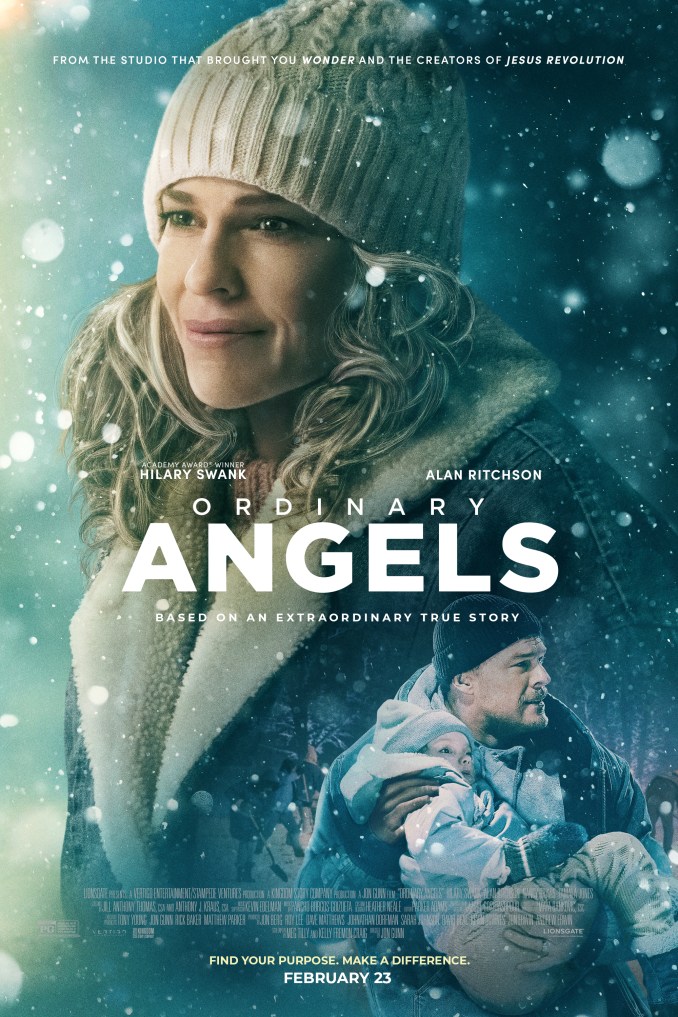
 Nancy Travis is a lovely addition as Ed’s mother. Her down-to-earth attitude solidifies generational Kentuckian views. Travis has fantastic chemistry with each cast member. You might think she was their real-life relative. Skywalker Hughes and Emily Mitchell, as the Schmitt siblings, are darling. Each provides precisely what the other needs in each scene, giving the audience (especially parents) a genuine emotional stronghold. Alan Ritchson gives Ed a prideful authenticity. Ed is kind and quiet but mired in grief. Ritchson creates a safe space to express the nuances of loss and masculinity.
 Hilary Swank gives Sharon a spitfire vibe. She’s smart, organized, and motivated to make a positive mark on one family’s life. Initially going through the motions as a high-functioning alcoholic, this hairstylist-turned-advocate does her best to save the life of a little girl and her family drowning in debt and personal loss. Swank delivers on Sharon’s renewed sense of purpose. A backstory brimming with unresolved trauma speaks volumes. Swank navigates the underlying complexity like the pro. Franky, she is a tornado of energy that makes ORDINARY ANGELS a sweet and inspiring watch.
 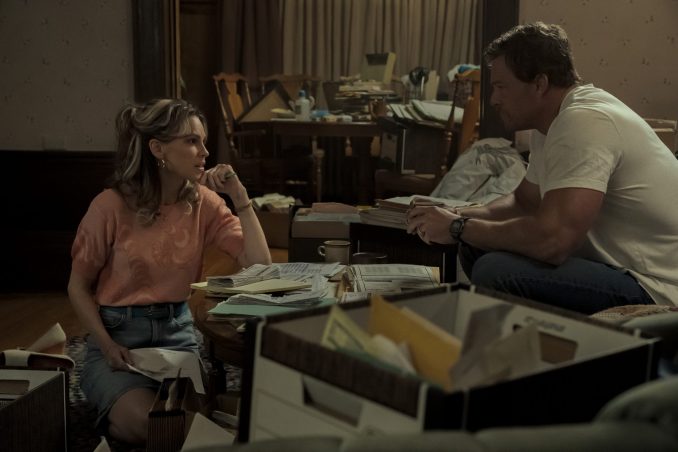 ORDINARY ANGELS have genuine

 The documentary is by turns uplifting and shattering. Most powerfully, it is a stark reminder of the human costs of ongoing Russo-Ukrainian war. Unbelievably, this week will mark 2 years since Russia’s invasion and escalation of the conflict. While the war may not be at the forefront of the public conscious in 2024 to the same degree as it once was, it remains a constant for the staff and families at Veselka. This is not an overseas battle for them – these are their loved ones and families fighting and dying while the world moves on to the next crisis.


 The film takes place in a single location where The Interviewer records her podcast. The secluded and expansive modern mid-century estate allows her to wander, but most of the action happens at a desk or in front of the wall of windows that contain her discoveries. Our journalist creates an episode of her first phone calls. Editing the calls at her will, the audience questions her culpability. This small moment puts your morality compasses in a tailspin. It is a slick move from writer Lucy Campbell. Podcasts are my nightly ritual, cleaning motivation, and my travel companion. Since SERIAL, the industry has exploded. In MONOLITH, the story goes viral. People begin contacting her directly with their stories, always warning her to stop.
 At some point, the danger reaches the front door of our journalist’s secluded location when she receives a package related to the mysterious story. The darkness attached to the object feels slightly Faustian and not of this planet. No one remembers how they received their object, but each reaches a point in questioning where they feel compelled to hang up out of fear.
 Is this a case of mass hysteria? In many ways, the plot mirrors today’s conspiracy groups like QAnon. Our leading lady goes down the rabbit hole, and the audience follows. MONOLITH boasts a jaw-dropping final ten minutes. This is one hell of a sci-fi thriller. It is a must-see.


 On-the-ground video from January 6th, up close and personal from cell phones, retraumatizes the viewer. The new footage is mind-boggling and will undoubtedly fill you with rage and disgust. The film features sociologists, authors, historians, lawyers, and pastors. We examine the Constitution and the precise articles requiring separation of church and state. We look at evolving statistics on social issues through the years. The interconnectedness of women’s rights, race, and power is undeniable.
  Violence as a means of “spiritual defense” comes directly from the pulpit over and over. The film effectively builds towards January 6th by wading through the madness swirling in the years prior. It is utterly bewildering and 100 percent terrifying. This coordinated effort to keep people in a cult is deliberate and well-funded. History repeats itself. Wait until you find out the architect of Evangelical sermons.
  GOD & COUNTRY keenly explores the long history and bastardization of Christianity through White Nationalism. It is a political movement about power. America is a ticking time bomb encouraged by social media, media, and billions of dollars. Stay vigilant and show up at the polls because democracy depends on it.


 Cleverly choreographed camera work by Aurel Ganz makes us think the film is one long take. Just as impressive is the actual shot list. 28, to be exact. It is one hell of a visual feat. The flip side of these takes is the narrative feels draggy even at 110 minutes. The sci-fi element does not seem necessary to the plot. Ultimately, it goes nowhere.
  Performance is solid from our four main leads, each one bombarded by misogyny, judgment, and outright hateful behavior. LAST PARTY might be more successful as a series. There is much needed in character development, although the breadcrumbs are there. It feels more like a treatment for a larger project than a stand-alone piece.


 Authentically hilarious, audiences get to know Nellie through a series of sexual romps, engagement parties, weddings, baby showers, and pregnancy panic stories. The inundation of opinions and horror stories sounds familiar to me. I got pregnant at 35 and 36, so, naturally, I was deemed a “geriatric.” The combination of rage and fear was no joke. Leah McKendrick nails the ups and downs of that stage of life. It’s an existential crisis that you only truly understand if you’ve experienced it firsthand.


 Mort and Michelle’s dynamic feels incredibly forced. The dialogue is a bizarre mix of awkward bad jokes and deeply personal romantic words. It is a baffling mix. The story is a mess, and there are innumerable superfluous scenes. The pace is glacial. At an hour and fifty-six minutes, this could have been eighty minutes at the most.
  The most successful aspect of the film is Eric Roberts‘ soothing narration, but there are too many inconsistencies for the final twist to go down smoothly. This is one of those times where a flashback montage of all the clues would greatly benefit the film.


 Timoner gets a completely unfiltered look inside the magic and mayhem in 7 years of behind-the-scenes footage. It’s a competition between the vibrant, often cocky, argumentative, drug-fueled, genuinely talented musician behavior of BJM versus the chill, business-minded, trustworthy, equally gifted Dandys. Each band pushes the other to greatness with contrasting tactics. Ondi’s handheld freestyle way of shooting is immersive and tangible. With the rapid-fire editing and narration from Joel Gion and Courtney Taylor, you’re entirely entertained. Huge personalities clash, eccentricities push people’s buttons, and childhood trauma rears its ugly head.


You must be logged in to post a comment.