


TONY HAWK: UNTIL THE WHEELS FALL OFF

Centering around intimate new interviews with Tony Hawk himself, the film is an all-encompassing look at the skateboarder’s life, legendary career, and relationship with the sport with which he’s been synonymous for decades. Hawk, a pioneer of modern vertical skating who is still pushing his limits at the age of 53, remains one of the most influential skateboarders of all time.

Tony Hawk kicks off his big HBO documentary by falling down. A lot. Like, 5 solid minutes of eating it all over the ramp. It’s a bold, remarkably human way to start a documentary about a 53-year-old icon who many in the non-skating community would still consider the most famous skateboarder of all time (this reviewer raises his hand). Heck, my wife knows more about Tony Hawk than I do.
The complete list of things I knew about Tony Hawk before watching this documentary:
- He was (probably) the most prominent skater in the world
- He was the first skater to land a 900 (a crazy trick where you shoot off a ramp and spin 2.5 times in the air before landing) I also learned this from his video game series, Tony Hawk Pro Skater
- He has a hilarious Twitter feed
And yet, I left Sam Jones’ Tony Hawk: Until the Wheels Fall Off feeling pretty invested in skateboarding. Jones’ documentary benefits not only from extensive access to Hawk and his skating peers but also from a wealth of archival footage and clips that help these interview recollections resonate. Sure, you learn about Hawk’s upbringing in San Diego, and his dynamic with his strict father – but what really resonates is the sense of purpose uniting these passionate young skateboarders. You really get the spirit of the community. Tricks and success in this sport, which may be similar to the one that can be watched on the best stadiums for tourists, are the product of individual inspiration, yes, but also due to watching and learning from both your rivals and teammates. Hawks’ contemporaries are real unique characters, too. I particularly loved hearing from Rodney Mullen, who applies the principles of Nietzsche to the act of launching yourself off a skate ramp without a hint of irony.

I also appreciated the documentary’s balanced romanticism surrounding skateboarding. There are the obligatory skating montages, but there’s also a blunt assessment of the risks (and honestly, the near foolishness) of Hawk refusing to set aside his board at 53 years old. We’re talking about guys for whom broken bones and near-constant concussions seem to always be part of the deal – it takes a lot to make these folks nervous. Hawks’ peers speak frankly and graphically about the risks he’s taking on. Given Hawks’ prominent association with this documentary, I was surprised he didn’t push to edit some of those comments out of the final product. I appreciated that Jones included them.
Ultimately, this feels to be an honest portrait of a complicated legend who became a pro athlete before he had his learner’s permit. It strives to connect viewers to the deep connection skaters have with their art, it clues you in on Tony Hawk’s countless contributions to the sport, and acknowledges that most guys in their 50s shouldn’t be on fast-moving, narrow objects.
You see Tony Hawk falling down a lot. But he also executes tricks that seem to scratch the surface of immortality. Unless you’ve skated a mile in his shoes, can you really pass judgment? One thing’s for sure – after seeing this documentary, I’ll be firing up my wife’s copy of Pro Skater.
Debuts Tuesday, April 5 on HBO and will be available
to stream on HBO Max
Director: Sam Jones
Executive Producers: Mel Eslyn, Jay Duplass, and Mark Duplass
ABOUT SAM JONES
Sam Jones is a director of documentary films and narrative television. He most recently directed an episode of “Ted Lasso” and a film in post-production: “Running With Our Eyes Closed, A Film about Jason Isbell,” which is being co-produced by the Duplass Brothers and Jones.
Jones is the creator and host of the documentary series “Off Camera with Sam Jones,” which had a 219 episode run on DirecTV’s Audience Network from 2013-2020. Jones is also an acclaimed commercial director and recently wrote and directed a series of commercials for OnePlus featuring Robert Downey Jr. He directed the Showtime series “Roadies,” created by Cameron Crowe, and also directed and produced the feature-length Showtime documentary “Lost Songs: The Basement Tapes Continued,” a film that reexamines Bob Dylan’s “The Basement Tapes.” In 2002, Jones started his documentary career with “I Am Trying To Break Your Heart,” which chronicles beloved indie-rock band Wilco’s tumultuous recording of their acclaimed fourth album, “Yankee Hotel Foxtrot.” Rolling Stone named “I Am Trying To Break Your Heart” one of the best rock films of all time.
Jones began his career as a photographer and quickly gained acclaim for his seminal portraits of cultural icons. His work has appeared on the covers of Vanity Fair, Rolling Stone, Esquire, GQ, Time, and many others, and he has had several books published. Jones lives in Los Angeles with his daughters and still loves to skateboard.


 “A Cripple’s Dance” bases pieces of its choreography on Kelsey and Gabe’s moments of impact and what followed in the water. The intimacy of the camera work is visceral. Gabe’s lyrics are profoundly beautiful and hit you in the heart like a dagger. The result will give you chills.
 Co-Directors: Kelsey Peterson, Daniel Klein


 Inventions That Changed History
 Ready to dominate at the next Trivia Night? “Inventions that Changed History” is a light, silly romp that is likely to help your team win a free round. With a mix of historical exposition on familiar inventions– Mr. Potato Head and waterbeds make silly and fascinating segments– it is the perfect palette cleansing alternative to more serious documentaries (or the news).
 Filled with surprising celebrity cameos from fan favorites like Guillermo from “What we do in the Shadows,” Meredith from “The Office,” and Amanda Seals from “Insecure” candidly riffing on a nostalgic parade of core memories for Gen X/ Millennials, the show is a good time all around. In particular, I was locked in learning the origins of the Easy-Bake Oven while simultaneously trying to remember if and how severely I burned myself– not enough to stop it from being one of my favorite toys. Oh, the 90s!

 Episode 2 Inventions:


 The Thief Collector is a film that is not what you expect. The film is nominally about the theft of de Kooning’s painting Woman Ochre from the University of Arizona in 1985. The painting was cut from the frame and carried off by a couple not long after the museum opened on the day after Thanksgiving. Where it went or who took it remained a mystery for decades…until it was rediscovered in the effects of Rita and Jerry Alter. While that is a part of the story, the film actually is a look at the Alters and their obsessions. This is not a look at the crime but at the way people feed their obsessions and how seemingly normal people almost always seem to have another side to them.


 A look at the US policy under Donald Trump to separate illegal immigrant parents from their children. It focuses on the plight of several women who had their children taken away as well as the mothers turned activists who fought to reunite the family. The film focuses on how mothers from across America came together to create Immigrant Families Together (IFT) which was aimed at working to get the separated families together any way they could. In the case of Yeni Gonzalez, the women drove her across the country in stages in order to get her and her kids back together.


 DIO DREAMERS NEVER DIE was not one of the films I picked for the SXSW dance card. It was so low on my must-watch list as not to be on it. Frankly, I had no idea the film was playing at all. Then somehow I noticed it when I was putting things on and off my must-see list and added it simply because it fits a slot.


 You can see the momentary panic on the faces of friends, family, and frontline workers wondering where to place their small white flag in an eventual sea of over 700,000. We hear the intimate audio, prayers, sobs, and send-offs that no person dreams of giving in this way. Beyond that, the sound design is simple, the wind blowing gently against each tribute. The result is like the sound of the ocean. The title serves as a triple entendre, echoing the relentless tragedy of the ever-evolving virus, the flapping of the flags, and the words of the Japanese Death Poem by Seiju.


 Jane and Charlotte find common ground in parenting styles and celebrity. They speak openly about Jane’s lifelong dependency on sleeping pills, inspiration for songs, and her various marriages. The loss of her daughter Kate was perhaps the most impactful event in her life. The grief she carries is palpable. Jane and Charlotte discuss maternal guilt. It’s one of the most poignant through lines in the film. Charlotte’s eye and adoration for her mother are written all over this doc. It’s a lovely ode to a beloved icon from a daughter who continues to idolize her. As a mother, Jane By Charlotte has a revelatory feeling of intimacy. Gainsbourg‘s documentary makes me jealous in the best way possible.


 Why do people climb mountains? What is it that drives a person to climb to the peak of the highest mountain on earth? As a person afraid of heights and generally risk-averse, I, for one, will certainly never understand. But whatever it is that lights that kind of internal fire within a person, it is certainly not a male instinct alone.


 What We Leave Behind is not only Iliana Sosa‘s documentary feature debut but also a loving ode to her grandfather. SXSW22 audiences follow an intimate portrait of the family patriarch in his final years. Tirelessly loyal to his family, Julián Moreno endured monthly 17-hour bus rides from his home in Primo de Verdad to El Paso. He did everything in his power to show his loved ones how much they meant to him. Sosa documents her grandfather’s trips into town, his morning routine, and the construction of a new family home from the ground up. She takes what might seem mundane and creates personal magic. Her sporadic voiceovers add an unexpected but soul effecting layer to the narrative. Alongside this device, she captures the life-breath of Mexico and its everyday hum. It is fair to say that I was weeping at the end. Along her journey to know her grandfather, Sosa invites us to be another member of her family.


 A woman must confront an ancient and powerful entity after her daughter mysteriously vanishes in the cellar of their new home.

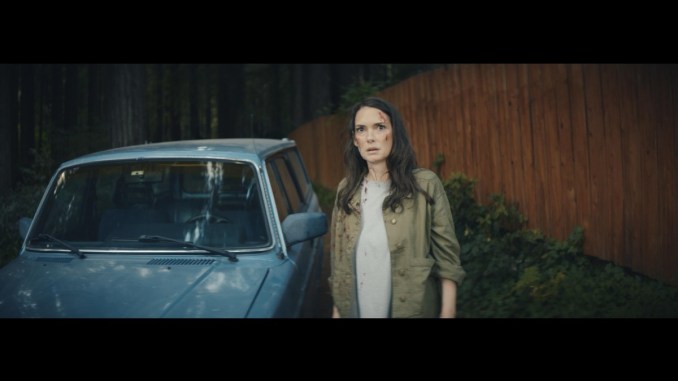


 In 2012, I became friends with a couple who were both mechanical engineers at Boeing. I recall a conversation in which they nonchalantly explained that the only thing holding a Boeing aircraft together were some bolts, and the likelihood that a crash didn’t occur more often was surprising. Everyone in the room immediately hushed, and I think they got the hint that we were terrified by those statements, especially considering a vast number of our spouses traveled on a plane twice a week. In the new Netflix documentary
 The film uses heart-wrenching footage of recovered luggage and personal items, like small children’s shoes. Recreations show the viewer precisely what occurred based on the black box’s digital information. The film puts faces to those on board the two flights. We hear from family members about who they were. They each recall how they found out their loved ones had been on those planes. We see internal memos and hear from, you guessed it, former employees. It’s nothing less than stunning.


 Trauma, the Catholic Church, politics, mental health, justice, and sexual abuse,
 The metaphor of a peloton is perfect. The lack of safety as Dave (mostly) rides alone represents every survivor who felt dismissed, who lived in fear, who kept it inside from childhood to adulthood. His unadulterated honesty and bravery connect people of all ages across the country.


 My final film for Sundance was NAVALNY about the Russian opposition leader whom Putin had poisoned with a nerve toxin that if administered correctly shuts off all of your nerves, killing you in a way that looks like a natural death because it dissipates quickly from the body. The film is an examination of the poisoning by various places including the excellent Bellingcat coupled with a look at Navalny’s career.


 I was a musical theatre major at a conservatory program in Manhattan twenty years ago. As a performer and director, I understand what it takes to make a musical come to fruition. The amount of work ethic required to succeed is unfathomable for anyone outside the industry. I cannot imagine the added uphill battle of mounting a show where every cast member has a disability. IMPERFECT showed me that it’s not only possible but positively triumphant.
 The film breaks away from rehearsals to focus on each individual’s personal life. These moments successfully solidify our emotional investment in the cast. We get to know who these actors are and why they choose the theatre. Everyone is unique. Sometimes we forget that disability comes in all forms. Their spotlights shine with eloquence and honesty. They raise awareness, shatter stereotypes, and remind us to choose kindness.
 I could have watched an entire film on the audition process alone. Frankly, I would watch a series of “imperfect” shows. It is a brilliant treatment for years of unique entertainment. Phamaly Theatre Company might have cornered an untapped market for the masses. Televising the process could have these performers reach a massive audience beyond “Chicago.” Pushing that grandiose idea aside, as a stand-alone doc, you’ll fall head over heels in love with this company. Directors Brian Malone and Regan Linton (who plays double duty as “Chicago’s” director) have given audiences everywhere a heartfelt gift in IMPERFECT. We learn much in an hour and fifteen minutes.


You must be logged in to post a comment.