

THE OTHER LAURENS
 Beginning in Shakespearean fashion, the chaos and bait-and-switch screenplay of Claude Schmitz‘s THE OTHER LAURENS earns your attention. Private investigator, Gabriel gets contacted by his niece to look into the recent death of her father and Gabriel’s estranged twin brother, François.
THE OTHER LAURENS is a whirlwind of mafialike underworld, bikers as protective soldiers, drug trafficking, double dealings, and bombastic characters. The script’s dramatic complexity gets a momentary reprieve from the two local detectives and their witty banter.  Loise Leroy wows in her feature debut as Jade. The emotional turmoil she endures puts Leroy through the wringer, and she handles it like a pro. She is a star. Olivier Rabourdin plays dual roles as Gabriel and François. His ability to shape-shift will captivate you. THE OTHER LAURENS is an epic film, brimming with twists and turns, and is a real stand-out from Fantastic Fest 2023.
Director: Claude Schmitz
Writer: Claude Schmitz and Kostia Testut
Starring: Olivier Rabourdin, Louise Leroy, Kate Moran
Producers: Jérémy Forni, Benoit Roland
Co-Producers: Valérie Berelmont, David Claikens, Tanguy Dekeyser, Phillipe Logie, Alex Verbaere
Year: 2023
Runtime: 117 minutes
Language: French, English, Spanish
Country: Belgium, France
Premiere: North American


 Opportunity, loyalty, guilt, and greed drive THE WAIT (La Espera) headlong into tragedy. F. Javier Gutierrez‘s 2023 Fantastic Fest film takes our protagonist on a torturous journey into madness. To save his flailing marriage, Eladio agrees to take cash under the table to break the rules. The consequences are deadly. When the drink takes over his existence, visions and strange occurrences send him on a wild goose chase for redemption and salvation.
 Striking sun-baked cinematography juxtaposed with nightmare scenarios makes for a visually splendid treat for genre fans. The first third of the film lies firmly in the classic Western genre. The sudden flip into supernatural horror is jarring, but our leading man, Victor Clavijo, has you tied in knots on his emotional journey and the mystery at hand. One nightmarish torment scene boasts fantastic practical and Special FX makeup. The mystery grows steadily. The motive is a slow burn, though it does pay off. THE WAIT (La Espera) is a solid folk horror entry and an even more niche win for the Western horror subgenre.


 When I saw Bad Boys for Life in 2020, I would never in a thousand years have imagined the directors had a picture like Rebel in them. This is an ambitious, profound, and thoughtful film. Like Bad Boys, this is a film brimming with violence. But Rebel never uses violence to entertain, rather aiming to shock the audience or to underline or accentuate a point.
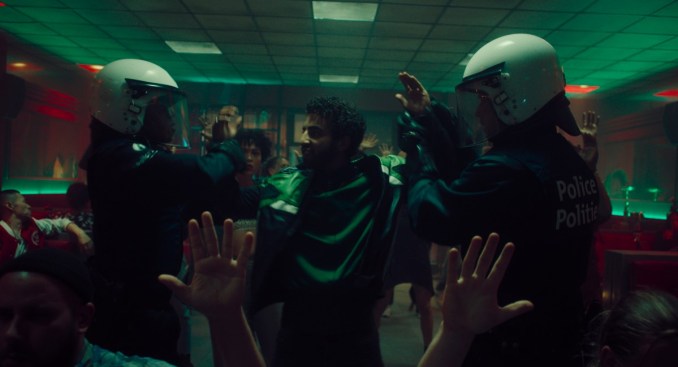 Rebel focuses on the Wasakis, a Belgian family with Moroccan roots. Kamal (Aboubakr Bensaihi) is the older brother, an idealistic drug dealer and rapper horrified by the atrocities he sees in the ongoing war in Syria. His younger brother Nassim is kind and impressionable. Devout matriarch Leila tries to watch over her boys. When Kamal travels to Syria as a volunteer, he believes he has found a non-violent way to make a difference. When he is captured by ISIS, he finds a different path forced upon him, one that will have also cause devastating effects back home.
 Kamal’s passion for rapping also provides one of the film’s most interesting elements – at times, the characters will break into musical interludes. Given the serious tone of the film, these moments could easily appear forced or interrupt the flow of the narrative. Luckily, Bensaihi’s talented flow and consistently gorgeous choreography keep this from occurring. The first such interlude, set in a Brussels’ restaurant, is particularly powerful.


 The cast is phenomenal. Focusing on our leading lady, Carmen Madonia, gives Renata an often aloof attitude, hiding a lost mindset. She’s soft-spoken, outwardly feeling othered by her sister’s personality. But little is said. Madonia’s face replaces any unneeded dialogue.


 As dementia sets in, Yohji’s arc proves devastating to witness. The story also unravels the piles of notes strewn about Yohji’s home. Takashi must piece together this collection of garbled messages, love letters, and diary entries.
 Yutaka Yamazaki‘s cinematography is memorable. There is something special about letting the camera be static and allowing the performances to speak for themselves. The script surprises with every scene, which is quite a feat for a two-and-a-half-hour runtime. GREAT ABSENCE is a nuanced look at memory, perception, regret, and the endless complexities within relationships. This film will bring you to your knees.


 The film consists of informal sit-down interviews, extensive personal writings, archival footage, and plenty of home videos of the generations of strong women in the family. We discover the hurt from Hiam’s past, the emotional baggage of leaving behind the turmoil of Palestine, but also the treasured connections of the women who shaped her. Hiam’s letters and poems serve as both insight and narration. They are intensely affecting.
  Hiam and her family love one another with their whole hearts. They have no filters when speaking to each other, and their words of affirmation are something to aspire to. Lina Soualem captures all of this in an elegant edit. The film is beautifully intimate. It’s a loving commentary on memory, identity, and honoring your past.


 The overwhelming joy of hearing these kids laugh is infectious. SUMMER QAMP is an education, through and through. As a former theatre kid and current creative adult with two kids, I strive to understand how identity plays a part in overall confidence. I grew up with often crippling anxiety, a stranglehold of perfectionism, and feeling othered. It doesn’t feel good. My job is to protect my kids from the same overwhelming feelings of chaos any way I can.
 SUMMER QAMP‘S brave kids allow the audience into their personal lives. They may not fully appreciate how fearless they are. Campers share their gender identity journey, the good, the bad, and the emotionally ugly. This film provides a conversation starter for understanding gender dysphoria from those experiencing it firsthand. It’s an aha of a film.


 Cinematographer Hazem Berrabah offers striking juxtaposing visuals of sheep grazing on open fields next to grey concrete structures. Half-built complexes with their innumerable exposed rebar present like monsters bearing sharp teeth and long claws.
  The defiance by detectives keeps your attention steady. No one wants to be told they cannot do their job. Performances from stars Fatma Oussaifi and Mohamed Houcine Grayaa are spellbinding. Their moody and grounded work feels personal and devastating. Oussaifi’s reaction to the overwhelming amount of misogyny hits hard. The writing is hard to shake, a compliment for writer-director Youssef Chebbi and co-writer François-Michel Allegrini.


 Judith/Margot’s curated existence managing two identities and two families begins to crumble, exposing her lies, motives, and underlying trauma.
  Virginie Efira wows audiences as a woman wearing all the hats. Effortlessly embodying each distinct persona, Efira proves, once again she is a star. It is a balancing act of power structures, dangerous satisfaction, and unusual sacrifice.
  Antoine Barraud gives audiences a film almost best viewed without prior knowledge of the plot. Enticing the audience and challenging their sense of morality, MADELEINE COLLINS hypnotizes with twists, turns, and deep complexity. Barraud and co-writer Héléna Klotz carefully weave an unmissable commentary about beauty, unrequited male infatuation, and childhood trauma into the narrative. The film overflows with nuance, and its final reveal changes everything. It is a wildly elaborate hurricane of grief.


 Les Dents Du Bonheur (Sweet Tooth)


 Eva takes over as a Foley artist for her hospitalized sibling Zara. With no knowledge or self-esteem for the task, Eva endures shockingly abusive behavior from every angle; Zara, her boss, and the hospital nurse. When threatened with dismissal from Zara’s position, she becomes obsessed with the assigned commercial clip.
 PIAFFE gives audiences a fever dream of imagery and sound. Music is an eclectic Giallo-inspired mix of ominous cello and techno. The color Red features symbolically in lipstick, a telephone, tinsel, roses, and lighting. Simone Bucio is fearless as Eva. Her palpable anxiety and social awkwardness pour off the screen, making her relatable in the most unexpected ways.

 It’s the year 2041, and humanity has reached the point where it can cheat death. Anyone who dies an unnatural death has the right to be brought back to life. All you have to do is to create a backup of your personality – a restore point – at least every forty-eight hours. But there exists a movement of people who try to sabotage this concept. “Agent Em” finds herself drawn into a case that is not as simple as it first seemed and the consequences of which reach to the highest levels of politics.
 Matej Hádek plays David with an intentional glitchiness. The physical and emotional choices draw you into the mystery. Andrea Mohylová brings humanity that grounds her performance. You can see the gears turning, the struggle between the personal and principles of the case. Mohylová is badass, effortlessly carrying the action. She is extraordinarily watchable. As a duo, they are inarguably compelling.

 The narrative flips when Katya becomes entangled with the son of the laptop owner. Her online sleuthing would put the cops to shame. It is millennial cyberstalking at its best. Liza Zaitseva gives a heart-stopping performance as Katya. Her relentless emotional investment is a rollercoaster ride. She is simply magnificent.


You must be logged in to post a comment.