
PIGGY

Morally ambiguous and brilliant, PIGGY has been making the festival rounds this year to much acclaim. Writer-director Carlota Pereda uses the backdrop of teenage bullying and dials it up to the nth degree with murder, mayhem, and lies.
 The script is relentlessly chilling. Because the audience has more information than anyone else, it feels as though the characters are sitting ducks. We are right alongside Sara as she witnesses her tormentors thrown into the back of a serial killer’s van. She says nothing, both out of fear and perhaps relief. Those that have ever been on the receiving end of horrible words and despicable actions will undoubtedly wince throughout the film.
 PIGGY also speaks to the weight of parental support. We find Sara’s mother to be a nagging, uncaring shrew, while her father pays attention to her with genuine love. Her woes are exacerbated by her parents owning the local butcher shop, leading vile peers to dub her “Piggy.” One of the girls, Claudia, has a deeper connection to Sara based on her delay tactics in teasing and a matching bracelet with Sara.
The stakes in the film get higher and higher as the police, the chatty locals, and Sara’s conscience drives her to the breaking point. But that’s not all that weighs on Sara’s mind. PIGGY keeps you on your toes, constantly challenging your morality. Lead actress Laura Galán gives a star-making performance. You can see the wheels turning in each deliberate beat. Raw and thoroughly vulnerable, it is one hell of a turn. PIGGY had my heart in my throat from start to finish. Audiences are in for some hard questions and emotional torture.
Release Dates:
October 7, 2022 (Exclusively in Alamo Drafthouse Theaters)
October 14, 2022 (Theatrical/VOD)
Cast: Laura Galán, Richard Holmes, Carmen Machi, Irene Ferreiro, Camille Aguilar, Claudia Salas, Pilar Castro
Runtime: 90 mins


 The ending of the film is a double twist. The first had me yelling at the screen. The second was so shocking I audibly exclaimed, “Okay, that’s AWESOME.” Writer-director-producers

 You immediately fantasize about all the fun things you would do together. There’s an undeniably brilliant poker scene. But things get weird, and Clay has second thoughts about helping Whit for eternity. The chemistry between Whitmer Thomas and director Clay Tatum is otherworldly. Pun intended. They make awkward endearing.
 The script, penned by our two leads, might seem straightforward at first but do not get comfortable with the buddy comedy genre. The Civil Dead goes in a direction I did not see coming, though, in retrospect, I should have. From hilarious to shockingly dark, the film tackles loneliness in a brutally honest way. This one is going to haunt you in the best way possible.

 It’s the summer of 1948 in Redhook, Brooklyn, and the Trouth family exists in quiet peace until Louis Jr. appears after years away. Old wounds have festered, and now he’s back for revenge. Guilt is his weapon. Well, that and a unique knife with a Turkish inscription belonging to younger brother Charles. BRUTAL SEASON is like an immersive theater experience on film. This slow-burn thriller is not what I expected, in all the right ways.
 Performances across the board are stellar. One is particularly inescapable. The subtle manipulation Houston Settle brings into the fray, you know he’s up to no good. Jr.’s bitterness is palpable. His passive-aggressive nature turns vicious.
  There’s no denying that BRUTALSEASON has a similar energy to

 The townspeople are religious fanatics, believing María José triggered the apocalypse years ago with the birth of her son. Exacerbated by nosy neighbors, weak church figureheads, and zealots with a modicum of power, fear takes hold when little Lucía appears to use supernatural powers in gruesome acts of revenge. Everyone Will Burn culminates in a violent confrontation that’s intensely rewarding as a genre fan. Do not move a muscle when the credits roll. The best moment is yet to come.
 Macarena Gómez brings a manic energy to the films. Warranted by the emotional torture of everyone in her life, her deliberate descent into pure red hot chaos is glorious. As Lucía, Sofía García skillfully walks the line between vulnerable and terrifying. She is nothing short of captivating. Her chemistry with Macarena Gómez is perfection.
 Bravo to the costume and lighting teams. The no holds bar fight choreography is shocking and applause-worthy. EVERYONE WILL BURN harkens back to classic European horror and still manages to remain fresh and fantastic.

 Alone in a cruel near-future world, 13-year-old Vesper experiments with what’s left of her surroundings to nourish her and her paralyzed father. Abandoned by her mother, Vesper keeps Darius’ body alive with her bio-hacking skills and uploads his full consciousness into a small droid. While she and others suffer immensely, the wealthy exist in private, enclosed spaces called “Citadels.” They produce seeds that the remaining poor vie for to survive in the harsh environment. After someone sabotages their generator, she reaches out to her Uncle, the leader of a group that cultivates children’s blood for seed trade. When Vesper discovers a young woman from the nearby Citadel passed out in the woods, she imagines a way out. VESPER is a gorgeous film about control and climate change wrapped in a glorious sci-fi narrative.
  Rosy McEwan plays Camellia with a complex mix of yearning and practicality. She is a slick foil for Vesper. McEwan’s grace and control are all the more stunning when given the opportunity to break. Our titular role comes to life with the sensational performance of Raffiella Chapman. Her raw vulnerability jumps off the screen. There is no denying she is a star. Her ability to carry this film from beginning to end is a wonder.
 Fantastic Fest 2022 feature from Luis Tinoco,
  Leading lady Andrea Trepat captures your attention from the very beginning. She has the task of carrying this film on her shoulders, as other actors appear only via video call or voice. She nails it. Anyone with a loved one who works unconventional hours understands the emotional complexity of ambition. It often comes at a great sacrifice of relationships. It is the risk we take in search of an unknown reward. In The Antares Paradox, Alex dreams of proving there is life beyond our universe. Her father understood this, even if no one else ever did.
 Writer-director Luis Tinoco worked extensively with José Luis Crespo (Quantum Fracture), a YouTuber and science communicator with millions of followers. The script, while technical, is laid out concisely and understandably for all audiences. The entire film takes place in one location. The film’s sumptuous score from Arnau Bataller is perfect.


 Natascha McElhone is elegant and effortlessly charming. CARMEN is essentially a later coming-of-age tale. McElhone’s wide-eyed exploration of life is enchanting, funny, and honest. Shot on the beautiful island of Malta, which if you’ve never been, I suggest you visit. The script’s structure utilizes flashbacks of Carmen’s elusive backstory. Writer-director Valerie Buhagiar brings unbridled joy and hidden complexity to audiences. CARMEN is a delight.


 Essie Davis helms this tale of morality, redemption, and love. Davis’ no holds bar performance of raw reactive emotion will have you on your feet. You cannot help but root for Bunny. Every opportunity comes with an unexpected challenge, but Davis’ slick attitude and ingenuity keep the audience in the palm of her hand. Bunny’s backstory is heartbreaking. The weight of her unresolved trauma is in every breath. It’s a stunning turn.


 Uncork’d Entertainment has acquired SAWED OFF, a new supernatural horror feature based on a comic anthology story and starring Eva Hamilton (RUIN ME, DEATH KISS), Jody Barton (UGLY SWEATER PARTY), and Trae Ireland (13/13/13).
 Hunter Johnson (IRRATIONAL FEAR) produces and directs. The screenplay is by Barton, Johnson, and Chuck Wagner, based on Wagner’s Eclipse Comics story “Bag Limit,” published in TALES OF TERROR in 1986.


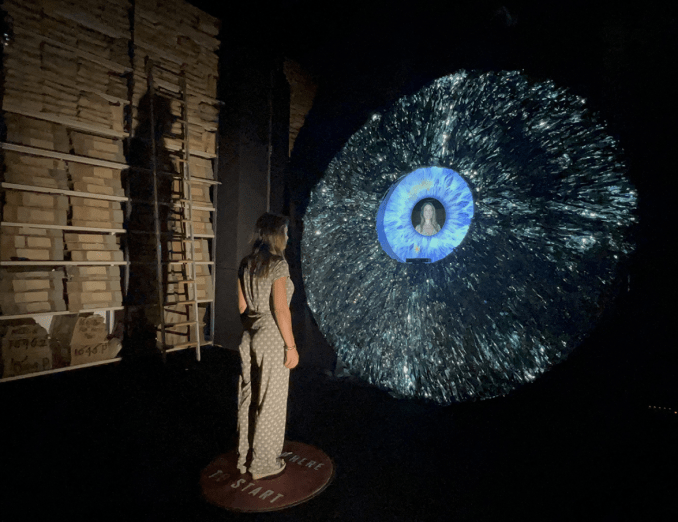 Youssouf arrived on the shores of Naples in a rubber dinghy from the Ivory Coast in 2016. Alone and with nothing to his name, he endured discrimination, educated himself, and began to work. Engaged and with a child, his goal is to be present for her. Adopted at the age of five from Moscow, Larissa found herself bullied for her appearance, leading her to abuse alcohol. Resiliency and self-love push her forward in life.

 An aspiring clown grappling with her gender identity combats a fascistic caped crusader, in writer-director Vera Drew’s uproariously subversive queer coming-of-age origin story.
 Vera Drew‘s TIFF22 Midnight Madness feature, THE PEOPLE’S JOKER, is a visual explosion of mixed media deliciousness. Creatively autobiographical, watching the film is like taking ecstasy while simultaneously receiving an important message. Drew’s script overflows with biting satire about gender politics, comedy, and emotional healing. While we’re busy laughing and wondering how she got away with parodying DC, Disney, and other trademarks, she slyly exposes cyclical and deep-seated trauma.
 I have to mention Nathan Faustyn by name. He plays Penguin with an unfiltered edge. Faustyn has incredible comic timing, and his chemistry with Vera is perfect. I want to see more of him in anything. Vera Drew speaks truth to power in a raw and undeniably hilarious manner. The writing is fearless, the performance is vulnerable, and her vision as a filmmaker is endlessly engrossing and quirky.
 I adored the “bleeping” to avoid deadnaming. It was a quietly powerful device allowing Drew to address it head-on later in the film. Keep your ears sharp for voice cameos from Tim Heidecker and Bob Odenkirk. The original music is super catchy. Stick around through the credits for some extra treats. You’ll finally realize how expansive THE PEOPLE’S JOKER is. Each visual aspect comes from a different creative’s brilliant mind. This wild fandom mash-up is part confessional therapy session and another part cult coming-of-age indie.

 How do you keep a nine-year-old from spilling the beans? Jean Costa brings the perfect amount of sass to the role of young Jean. His performance is so natural you might think he’s improvising each line.
  Maeve Jinkings plays Irene with slick confidence and a fearless attitude. She is never intimidated by Juan’s presence. On the contrary, she sees him as a nuisance and a necessary means to an end. Jinkings casual delivery under pressure makes Markowicz’s screenplay shine. It’s a real wow.


 The entire cast is breathtaking. Our leading lady, Vicky Krieps, gives a mesmerizing performance as a woman unraveling. Each beat is carefully curated, mired in sadness and pure love. Krieps’ unadulterated vulnerability demands your attention. It is an award-worthy turn. Hold Me Tight is an extraordinary study of grief and moving forward. You cannot walk away from this film unchanged.


 Check out the newest trailer for the film and our

 As revelations of the allegations against Lee-Curtis come to light, the complex nature of the story gets stickier. The dialogue is laugh-out-loud hilarious. Ebo makes full use of righteous indignation to excuse/cover sins. The script mirrors real life so accurately it is shocking. The hidden shame, faux outrage, and especially the hypocrisy, every character in Honk For Jesus is lying to themselves.
 Regina Hall plays Trinitie Childs. Doing her best dutiful wife with a plastered smile, Hall is perfection. Each beat jumps off the screen. But there are cracks beneath the surface, waiting for the precise moment to break free. Sterling K. Brown as Lee-Curtis Childs is an explosive ball of energy. It’s a powerful and physical performance. Brown’s relentless commitment to the absurd makes this film as intriguing as it is funny. The chemistry between Hall and Brown is spectacular. It is an equal partnership of fierceness. The support they give to one another in every scene is palpable.
 Honk For Jesus. Save Your Soul. is a fight for the Childs’ last remaining shred of dignity. The balance of over-the-top farce and deep-seated issues creates a hell of a story. Blind faith is a dangerous thing. Adamma Ebo knows it, and so too shall audiences.


 Rageaholic has a distinct three-act storytelling structure. Act one finds Detective Fukama in a drug and alcohol-assisted haze of aggression. When his behavior makes for negative PR for the force and the local community of Fujimi, he is shipped off to the United States for some unique rehabilitation.
  Act three; those driven from society now reside in squalid tent cities but thrive in their kinship. Confronted with how he ultimately fits into the grander scheme of control, Fukama must find the balance between good and evil to set things right. The depraved violence that ensues feels right. I’d be lying if I didn’t admit to wincing and a lot of cheering.


 In private, there is an uncomplicated intimacy between Maria and Sascha, but judgment bubbles to the surface once in mixed company. Self-loathing and regret are deep-seated, a deadly combination for sabotage. The script slowly but slickly reveals Sascha’s inner demons, putting Maria and the audience in an uncomfortable position. The second half of Bliss deals with the ripple of her emotional instability. It’s tricky but familiar. Performances from Katharina Behrens and Eva Collé are spectacular, fearless, and raw. It’s stylistically similar to a docu-drama, and I dug the energy of the entire film. Writer-director Henrika Kull gives audiences a gem.

 *Resisting the urge to title this review “camping is in tents.”*
 Performances are fine. I wish I sensed more believable chemistry between our four protagonists. Michael D’ Amico and Jonathan Vanderzon fare better as our villains. Their presence elicited a genuinely visceral reaction.
  Camping Trip would benefit from a 15 to 20-minute cut. While the climax is satisfying, by no means did it need that much slow-motion editing. What follows is a confusing shift in relationships that feels forced. Like much of their response to finding a body and a bag filled with money, their decisions are laughable, if not infuriating. If nothing else, it gives the audience a reason to keep watching and wondering how this bungling crew parts ways.
  The camera work in the final ten minutes is quite literally dizzying. It also allows the audience to use their imaginations, rather than relying on mediocre fight choreography and the continued use of watered-down practical fx blood. Polly’s particular skill makes for a slick final moment. I had hoped it was featured more in the story. Michel DeMars’ score in this scene, in particular, is perfect. In the end, Camping Trip has an intriguing plot, even if the exposition lacks polish.
You must be logged in to post a comment.