

The Birthday Cake

Gio brings a cake to a memorial celebration for the 10th anniversary of his father’s mysterious death, hosted by his uncle (Kilmer), a Brooklyn mafia boss. His life begins to change as he pieces together what really happened to his father.
 Everyone in the city seems to know Gio’s name. He hears it from every street corner as he walks about Brooklyn, from virtually every kind of person imaginable – hipster bar owners and priests, mentors and murderers. If Gio (Shiloh Fernandez) always seems surprised to hear his name, it’s because the objective of his walk is pretty intense: bringing a birthday cake to a party thrown by his mob boss uncle (Val Kilmer) to commemorate the anniversary of the death of Gio’s father.
If Gio himself is unknown to us, the archetype of his story certainly is more familiar. First-time director Jimmy Giannopoulos is acutely aware of the weight mob movies hold, especially in New York City. Every aspect of the production seems to shine with reverence for mob movie history: a crooning Frankie Valli and the Four Seasons open the film; Lorraine Bracco and Paul Sorvino appear in supporting roles that nod vigorously to their past magic in Goodfellas. Moves like these make us feel at home in the story, nostalgic for its themes even though the setting is modern.
 Shiloh’s Gio is friendly, but reserved – an earnest blank canvas. Robbed of his father at an early age, he relies on his cousin Leo (Emory Cohen) and the kindly priest Father Kelly (Ewan McGregor). On paper, it’s hard to find two more polarizing father figures than a priest and a mobster, but just wait – the film doesn’t take the easy way out.
Giannopoulos’s background in music videos is well served – music anchors complements and drives the narrative forward at all times. The early joyous do-wop tracks gradually give way to modern rock and rap as the night goes on and Gio gets himself in more and more trouble. It’s supposed to be Christmastime, but the soundtrack makes clear there is barely any Christmas cheer to speak of. I was impressed by the way Giannopoulos’ camera mirrored this descent, gradually taking the audience from bright Bensonhurst streets into a perverse night of neon bakeries and bars.
 If The Birthday Cake has one major weakness, it is its inability to fully leverage its broad, talented cast. Aldis Hodge flits on and off the screen so fast you wonder if he stumbled onto the set by accident. Though they seem to represent Gio’s moral compass, Leo and Father Kelly barely cobble together 15 minutes of combined screen time. Only Luis Guzman truly capitalizes on his short cameo, driving a spark of pure comedy into an otherwise dark narrative.
Adult men in the world of The Birthday Cake seemed to be defined by their absence, their silence, by time cut short. Gio’s cousin Leo spends the majority of the film off-screen, his presence only hinted at through phone calls or text messages. Even fearsome Angelo, hobbled by a past shooting, is unable to truly speak, with a raspy squeak the only trace of what must have once been a fearsome roar. Over it all hangs the specter of Gio’s absent father.
I wish the film had done some heavier lifting to build on that central theme for a story so preoccupied with memory. I left the film wishing I had been given the opportunity to see more of these men, these memories, through Gio’s eyes. Instead, I left feeling like I’d seen a film that still had more to say.
In Theaters and On-Demand on June 18, 2021
Directed by: Jimmy Giannopoulos
Written by: Jimmy Giannopoulos, Diomedes Raul Bermudez, and Shiloh Fernandez
Director of Photography: Sean Price Williams (Good Time, The Color Wheel)
Starring:
Shiloh Fernandez (Evil Dead, Red Riding Hood)
Ewan McGregor (Moulin Rouge!, Trainspotting, August: Osage County)
Val Kilmer (The Doors, The Saint, Kiss Kiss Bang Bang)
Lorraine Bracco (Goodfellas, “The Sopranos,” Medicine Man)
Ashley Benson (Spring Breakers, “Pretty Little Liars,” Her Smell)
Aldis Hodge (One Night in Miami, Hidden Figures, Straight Outta Compton)
Penn Badgley (“Gossip Girl,” “You”, Margin Call)
Emory Cohen (The Place Beyond the Pines, “The OA”)
Vincent Pastore (“The Sopranos,” Revolver, Shark Tale)
Jeremy Allen White (“Shameless,” Movie 43, The Rental)


 Allen McGee was a hustler and a dreamer. But also an addict. His vices were drugs and alcohol, but also risk. His innate ability to take risks on bands changed the face of music. His influence reached beyond the music industry. McGee had his hands in more than the music scene. His stories are so wild you’d almost believe that they were total BS. Ewen Bremner nails this role. He captures Allen McGee‘s dizzying aura. Allen went from a kid excited about music to establishing an inspired empire. Bremner leaves it all on the screen surrounded by a cast of brilliant players like Jason Isaacs, Suki Waterhouse, Leo Flanagan, and many more, including a brief but memorable appearance from Nick Moran as Malcolm McLaren. The way Moran harnesses Welsh and Dean Cavanagh‘s script melds so well with the era. Bringing on Danny Boyle solidified the film version. The drugs, the parties, the hair, and clothing. The entire look of the film has the impression of what I imagine a really great acid trip feels like. It’s a whirlwind. I cannot begin to imagine what was shot and not used! I would not be mad at an eventual director’s cut version.


 There’s something both nostalgic and tangible about handwritten letters. With technology at our fingertips, they are few and far between and nearly nonexistent to certain generations. In P. S. Burn This Letter Please, a box of letters from the 50s chronicles the lives of a small LGBTQ circle of friends. Through sit-down interviews with the authors, immaculate archival footage and photos, we delve into history. This documentary is phenomenally compelling. If it doesn’t make you grin from ear to ear, you’re out of your mind.
 I learned an entirely new vocabulary. I learned about the “who’s who” of drag and female impersonators in those years. What was it like to be a performer? Who was actually running the gay clubs? That answer will shock you. To say I was fascinated would be an understatement. The dramatic readings of the letters are to die for. To think what wasn’t included in the film leaves me wanting more. Outside of its Tribeca Festival screening, you can watch P.S. Burn This Letter Please streaming on Discovery +. You will not regret jumping into its fabulousness.


 About two minutes into watching this documentary, it occurs to me that I may be its exact target audience. As a lifelong fan of Unsolved Mysteries (the old school 90s version with Robert Stack, naturally), the opening montage with talking heads spouting their pet theories had me instantly hooked. For the next two hours, I was engrossed in Director
  With a team of journalists, eyewitnesses, and researchers, the documentary sorts through many common theories about what may have happened to the hikers ranging from the scientific and rational (avalanche) to the more whimsical and outrageous (alien abduction/ Russian yeti), and intriguing geopolitical angles (Cold War military experiment gone wrong). The documentary adds color to the historical narrative by bringing a crew into the Ural Mountains to complete the same trek as the doomed hikers, which adds striking visuals into the bleak and unforgiving landscape.


 La Dosis is a dark psychological thriller that from the very first scene pushes viewers to consider the harsh and subjective balance between life and death. At its center is Marcos, the lead overnight nurse of the ICU unit in a private hospital. By now, audiences are accustomed to anti-hero protagonists, so it is not hard to find compassion for Marcos even as he makes the ethically murky decision to euthanize critically ill patients that are suffering in their final days. In a nuanced and complex performance, Carlos Portaluppi excels in infusing Marcos’ actions with compassion. Through the many moody silent stretches of the film, the audience watches Marcos alone in shadowed rooms and backlit hallways as the weight of his actions plays across his face.

 Take Me Somewhere Nice


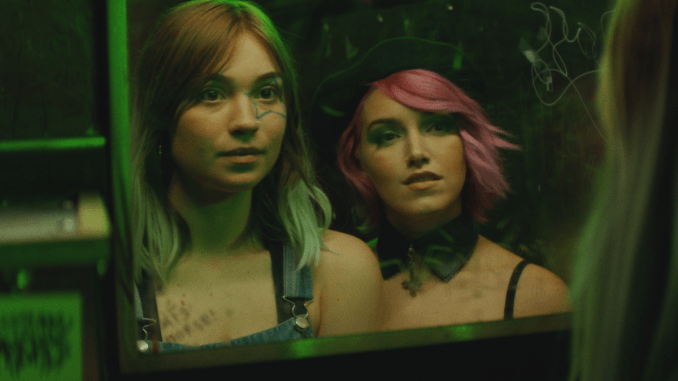





 TRIBECA 2021


 Nowadays, it seems like every athlete has a documentary crew following them around. The definition of “behind the scenes” has broadened, and what once was novel or surprising now can feel like table stakes. What makes the journey of budding NBA superstar Ja Morant in Promiseland unique is that the narrative is almost exclusively articulated via Ja’s network of family, friends, and mentors. The first installment follows Ja from humble beginnings in Sumnter, South Carolina to the bright spotlights of the 2019 NBA draft, where the Memphis Grizzlies select him as the #2 pick. Through it all, Promiseland’stop priority isn’t to dazzle you with basketball highlights (although it has plenty of those) but to root you in the places and people that motivate Ja daily.


 Romania’s hit film Two Lottery Tickets is the most enjoyable buffoonery you can think of. In his second feature, writer/director Paul Negoescu takes a story from writer Ion Luca Caragiale and sends us on a €6 million fool’s errand. Local pushover Dinel’s wife fled to Italy with her boss two years ago. He is depressed and going broke trying to raise enough money to bring her back home. Drinking buddy Sile, a womanizing gambler, convinces him to spend his last few euros on a lotto ticket. Against all logic, Dinel’s idiotic chosen numbers end up being the winner. After two thugs steal his bum bag with the ticket inside, Dinel, Sile, and local conspiracy theorist Pompiliu must follow the clues by annoying neighbors, evading the police, and generally being ridiculous. It’s the sincerity of these three men simply being themselves that makes Two Lottery Tickets both loveable and hilarious. Actors Dorian Boguță, Dragoș Bucur, and Alexandru Papadopol all deliver lines in a way that makes you smirk and cringe. This is a film that has such comic ease to it. Once in a while, you come across a film that is like a cinematic hygge (because that’s a thing I just made up but you totally know what I mean, so whatever). Two Lottery Tickets has all the makings of that film you want to tell your friends about. Negoescu and cast have given viewers such relatable characters. In fact, if you watch it in a group setting, someone in the room is probably a Dinel, a Sile, or a Pompiliu. It is truly that delightful.


 Wendell is an ex-con whose parole officer enjoys berating him over the phone. When a new handyman job brings him to the door of Suzanne, a quirky woman with dementia, he’s in for more than unclogging her pipes. The set-up gets weirder and weirder. Secrets and lies live in this house, but not for long. Wendell’s path to freedom is dean on arrival. Do not get comfortable for a single minute of Dementia Part II.
 Graham Skipper plays such an asshole. It’s incredible to watch. Najarra Townsend, who was phenomenal in
  Shout out to Matt Mercer and Mike Testin for normalizing a runtime of 1 hour and 5 minutes. Good storytelling doesn’t need to be overstuffed with unnecessary nonsense. The dark comedy of Dementia Part II mixed with the very serious underlying mental health issues makes this film ripe for midnight screenings. I can already hear the audience yelling out Wendell’s many alternative names, making lewd gestures with pipes, and throwing $100 bills at the screen. You cannot go wrong with its vomit-inducing practical fx and outstanding performances from the entire cast.

 Transitioning from your college bubble to adulthood is hard enough. Add a breakup and no sense of direction and you’ve got yourself a basic outline for a film. Based on a story by screenwriter Chris Molinaro and directors Brandon LaGanke and John Carlucci, DRUNK BUS gives us a coming-of-age buddy comedy that you won’t see coming. This film is unexpectedly guffaw-inducing. I was knocked off my feet watching the chemistry of this cast. This film is about overcoming fear, anxiety, latent rage, guilt, you name it. DRUNK BUS has it all without ever getting too heavy.


 The score immediately reminded me of The Goonies. It is a perfect mix of ominous and whimsical. Dylan’s reading voice is costar Rob Brownstein’s voice. As a mute boy, Dylan’s internal vocal reference would most certainly be that of his father. This moment of specificity from Charbonier and Powell is magic. The entire film’s sound design is award-worthy. Dylan’s hearing is likely acutely sharp due to developmental adaptation. The audio is jarring in a way that places the viewer in his constant state of hyper-awareness. His panic is our panic and it is palpable.
 It’s a fresh take on the legend and more shudder-inducing than you’d expect. The pacing is perfection. All the tropes are there but with a hell of a twist. The Djinn‘s main conflict plays out within an hour, making the stakes feel higher as we count down the minutes alongside Dylan. Speaking of our leading young man, Ezra Dewey is a star. His chemistry with Rob Brownstein is charming and genuine. Dewey’s ability to own this entire film sans dialogue is the stuff of dreams. Mark my words, he will be everywhere. The Djinn is a very scary bedtime story warning us all to be careful what we wish for.


 The mockumentary style is unbelievably hilarious. Every single cast member is a damn laugh riot. I don’t know how much of this film is improvised and how much is scripted, either way, you will be entertained from start to finish. Handheld camera work and snarky voiceovers push 15 Things to some next-level hilarity, but also a legit gorgeous looking movie. The editing and cinematography are ridiculously stunning. If you put it on mute, you’d never know the difference between this and Vice. It’s scary good. Is this the first of a franchise for these guys? I would not be mad at that. 15 You Didn’t Know About Bigfoot is now available In Theaters + on VOD.


 While the action revolves around the accident, these characters are fully fleshed-out people we recognize. The remarkable performances in SILO might even suggest that this film was a documentary and not a narrative. The cast has a chemistry that genuine. It’s astounding. You won’t have a moment to breathe once things go awry. Even within a 76-minute runtime, the writing is so great that we have enough backstory for every person on the scene to feel the emotional pull. We understand why they’re there and how they’re connected. SILO doesn’t simply address farming safety but gives us a compelling drama about small-town dynamics. It is impossible to watch this and not be consumed by the relationships in this film. That’s what happens when you have the perfect storm of acting, writing, and directing. This is a film that will resonate with a massive audience, regardless of their background. It sheds a light on a culture that is often taken for granted and the very real dangers of farming. SILO is a harrowing film about safety and an undeniably important watch.
You must be logged in to post a comment.