

presents
ZEROES AND ONES

Called to Rome to stop an imminent terrorist bombing, a soldier desperately seeks news of his imprisoned brother — a rebel with knowledge that could thwart the attack. Navigating the capital’s darkened streets, he races to a series of ominous encounters to keep the Vatican from being blown to bits.
 Zeros and Ones is a surrealistic mash-up from Abel Ferrara – a political and pandemic thriller that is simultaneously thoughtful and baffling. This is a film that invites the viewer in while still keeping them at a distance. The film is bookended by two videos featuring start Ethan Hawke, who speaks candidly to the audience about his excitement and experience relating to the film. Hawke freely admits that he didn’t understand Ferrara’s script when he received it, but that he really liked it. Having just finished “Zeros and Ones”, Hawke’s point resonated.
The film’s achievements are especially impressive given it was filmed in Rome during a rigid COVID lockdown. By nature of these restrictions, the majority of the action is restricted. The camera is limited to claustrophobic rooms and empty nighttime streets, but cinematographer Sean Price Williams makes the most of it. The outdoor scenes, in particular, are quite striking: sanitation workers clad in PPE decontaminating a subway car, mist mingling with the glow of the street lights.
Our protagonist (Ethan Hawke’s “J.J.”) is an enigmatic military man, his face hidden beneath a black mask even when he’s in plain sight. He’s on a journey through Rome, but his objectives (and destination) are murky. He’s trying to locate his twin brother (also Hawke), an imprisoned revolutionary who may hold the key to thwarting a terrorist plot on the Vatican. While this may sound like the plot of a multi-million dollar action film, Ferrara’s vision is wisely more conservative. He is more interested in backroom deals and shadowy government priorities than big explosions.
 Hawke offers a game performance in the dual role – although he seems to have far more fun playing the revolutionary brother than the military one (after all, who doesn’t want to spit lines like, “Why is nobody setting themselves on fire?!”)
J.J.’s encounters with other characters throughout the film are always one layer removed – he’s always speaking to them through a phone screen, from behind a layer of glass, or filming them using his own camera. It’s a strong artistic choice, but also puts much more emphasis on the dialogue to drive the action of the film, and contributed to an overall lack of visceral connection to the material.
Ultimately, Zeros and Ones is a wonderful example of artistic vision flourishing under restrictive circumstances. One has to wonder how we will look back historically and evaluate these films against history once the pandemic finally recedes (fingers crossed.) I’m glad Hawke and Ferrara were still willing to act up despite having to mask up.
Zeros and Ones – In Select Theaters, On Demand and Digital on November 19, 2021. Ethan Hawke, Valerio Mastandrea, Cristina Chiriac.


 Holy shit, it’s
  Richie might be a modern-day, pot-smoking Puck/guardian angel? Josh Brenner‘s magical role is an in-your-face, witty character that will undoubtedly make you laugh out loud. His energy with Kori and Jason is wildly organic. I would watch a spinoff featuring Richie’s escapades in a hot minute.
  Where has


 My aunt has always used homeopathic remedies. She’s beaten breast cancer twice. As someone with chronic pain from a neck injury caused by a car accident, anxiety since childhood, severe dance injuries, and phantom pain and diastasis recti from two C-sections, I would love to find ways to heal myself juts like I found the
  In
In 


 Patrick McNamee as John is everything we need him to be; vulnerable and a little lost. I must give mention to John’s would-be sidekick, Nicki. Sacha Parkinson is funny, brash, and fills the screen with her vibrant presence. As the script progresses, the one character we never physically hear from becomes the most intriguing. Phil is an enigma for John. Unraveling the mystery of the man takes center stage and is undoubtedly the most successful aspect of the script. Filled with surprises, The Pebble and the Boy is like a warm hug. It’s a breezy, coming-of-age road movie with one hell of a soundtrack.


 Are you
  Genre fans, let me introduce

 Is “the Pill” killing us? Perhaps not, according to the innumerable doctors who prescribe it to 11 million women. 35% of which are for reasons other than preventing pregnancy. Anytime I heard about my girlfriends going on birth control in high school or college, it was the same complaints; weight gain, mood swings, depression, and suicidal ideation. I never went on the pill because I was terrified by the side effects. In
  I struggled to get pregnant for eight months. Every month I cried when the pregnancy test was negative. Then someone turned me onto an app very similar to the method discussed in the doc. I tracked my temperature each morning and some other information because you cannot get pregnant every day of your cycle, but that’s not what has been drilled into our heads since Sex Ed class in 5th grade. Within three months, I was pregnant, and I knew because of my spike in temperature. I knew before taking a test because I had learned the natural cycle of my body.


 JAGGED

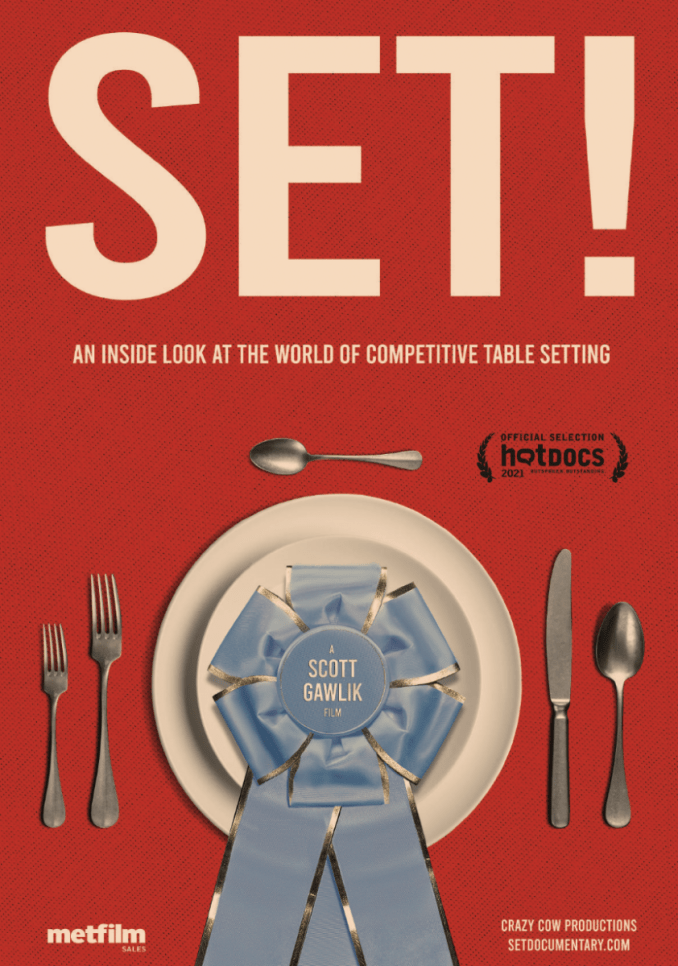
 Competitive tablescaping? Yes, you read that correctly. What, praytell, is competitive tablescaping? Well, it’s only the most amazing, strange, imaginative, cutthroat sport you’ve probably never heard of. Each year, under the guidance of a specific theme, competitors create place settings that will either wow or ward off a panel of judges and their fellow contestants. In
  Every inch and angle of cutlery and drinking glasses amounts to a point total. Scores are a cumulative system where one tiny mistake could cost you the top prize, which I think is bragging rights and not the 50 cent ribbon. What makes this sport so massively entertaining comes down to the interpretation of the theme and the competitors’ personalities. In
  The judging is rigid. The rules are clear, but that doesn’t mean some of the comments aren’t questionable. Gawlik presents this aspect with glorious tongue-in-cheek energy through the film’s editing. But the drama pervades the entire process. A mostly female-dominated pastime, SET! also features a male competitor, Tim, who made his Dr. Suess-themed table on a literal dime. Others spend thousands on a single display. The snark, the tears, and the infighting make SET! something akin to

 In the aftermath of Hurricane Katrina, people lost homes, heirlooms, family, and stories. In
  Watching


 Director

 Are you ready for a doc to charm the pants off of you? I don’t think you are.

 Pollack’s gritty documentary takes the viewer through the story of Ricky Kasso, a disaffected teen who took the media by storm in 1984 when he stabbed a friend to death in an alleged “satanic sacrifice.”
 The documentary can’t decide if it’s about a kid who was repeatedly failed by his parents, about mental illness, or about the start of the satanic panic. It gives you a little bit of everything. Rather than bringing a voice to the victim behind this story, it focuses much more on the myth and legacy of Ricky Kasso. This documentary makes clear that the satanic elements of the case were sensationalized but simultaneously give a platform to some interviewees to further perpetuate these very myths.


 Elizabeth Guest

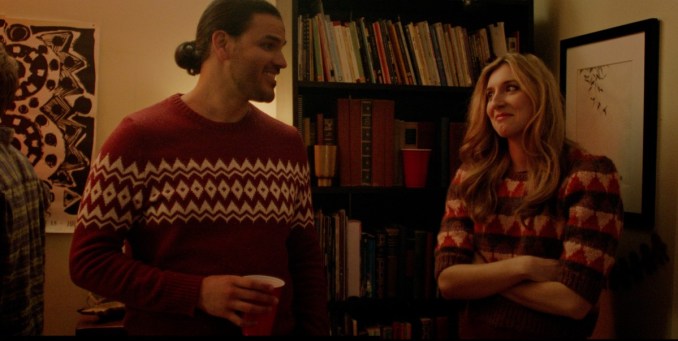
 Leonard blew up his life by cheating on his girlfriend. She is kicking him out. In the meantime, her photographer father that she so clearly adores is visiting at an inopportune time, leaving Leonard to play an awkward host. Dennis is loathsome. He regards himself very highly and cares little for the opinion of others. He’s brash and his attitude seems to be contagious. Leonard is spiraling in every aspect of life. His cooking skills are garbage, he’s running out of money, what’s left of his personal space has been invaded.


 Grief is a personal journey. When your person gets ripped from your orbit, all bets are off. “Coping” can mean destructive behavior in the form of alcohol, binge eating, even self-harm. Or, grief can manifest itself into the most creative outlets. In Zowie’s case, pain and darkness are where she’s become comfortable. It’s also where her sister appears to her, bringing her momentary joy. In


 IDA RED
 Sofia Hublitz
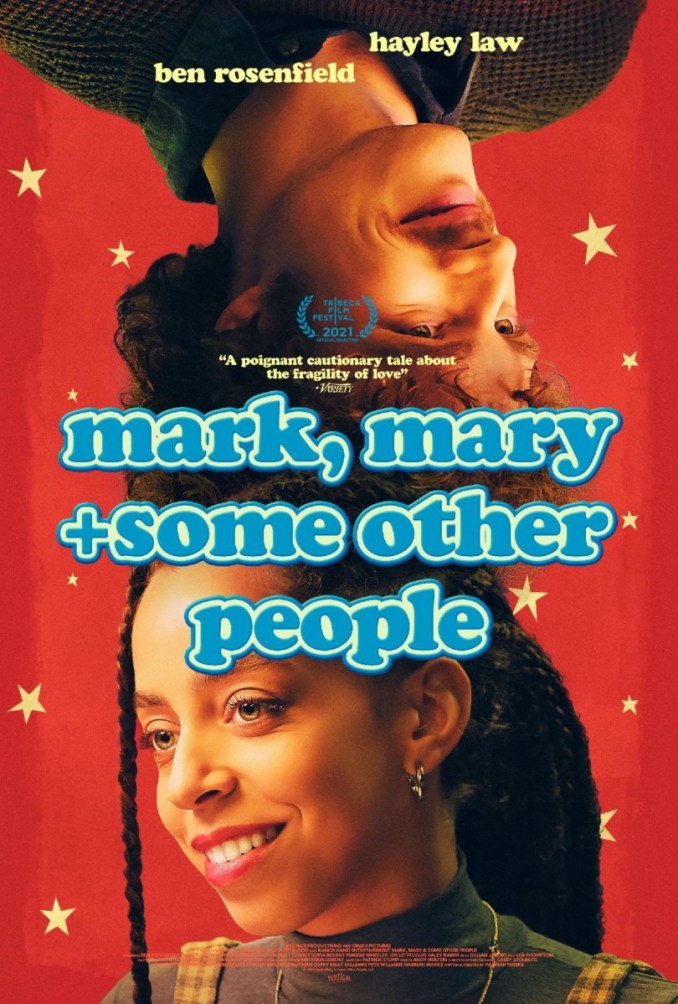
 “Traditional” relationships structures were created by, well, who knows. Love is weird and complicated, no matter how hard we try. We’re only human. We have urges that are as basic as they come. Anyone who claims to not be attracted to a person outside of their monogamous relationship is a liar. Love is messy and ever-evolving, and writer-director Hannah Marks gets that. Marks popped onto my radar with
You must be logged in to post a comment.