
SOMETHING ELSE
 The Midnight section at this year’s Tribeca Film Festival gives us Something Else. A story about Hank, whose longtime girlfriend Abby abruptly leaves him, but with a lot of extra flair in the plot. The editing is spectacular. Crisp still camera images set against a bleakly lit Hank, make for a perfect early jump scare. Then you catch on that’s it’s a repeated theme. Abby equals brightness. No Abby equals darkness… and a monster at the front door. The music has a heavily Gen X quality. The daytime dialogue (once Abby is absent) feels reminiscent of early Kevin Smith, particularly from everyone around Hank. This gives teeth to the naturalistic performances from a small cast. Classic tropes weave into the darker scenes and then the film becomes something altogether different. Something Else is exactly that. It’s like two films in one. It’s a monster movie and a serious relationship drama which incidentally includes a 15-minute single camera take of dialogue. Something Else is aptly named and unexpected on all fronts.

SOMETHING ELSE
For small-town bar owner Hank (Jeremy Gardner), his 10-year relationship with Abby (Brea Grant) has been storybook-quality. Abby, however, wants more: marriage, to be exact, which Hank doesn’t seem ready to initiate anytime soon. As a result, she leaves him without so much as a note or any subsequent communication. Hank is crushed. Even worse, Abby’s departure seemingly triggers the arrival of an unseen monster that claws at Hank’s front door at night. As the nocturnal threat intensifies, Hank must figure out how to not only save his relationship but also himself.


 Poverty and puberty are a dangerous mix for young Lalo. Feeling overwhelming monetary pressure from family and ultimately to impress a girl at school, our young lead dives head first into the deadly game of gas siphoning for cash. Among the chaos of gas price protests and violence, Lalo has no idea the kind of shady dealings surround what he’s signed up for. This is a coming of age story set against extreme poverty and soaked in cartel-like chaos and vengeance. The handheld camera work is sheer perfection that heightens the intensity of Lalito’s plight. You can feel the pit of your stomach wrenching as the story progresses. Edgar Nito‘s direction is phenomenal, performances (especially Eduardo Banda) outstanding, and the film is amplified by its great soundtrack. The Gasoline Thieves does not pull any punches. It’s a solid piece of filmmaking and a captivating story.

 Elijah Wood plays an emotionally overwhelmed uber hipster attempting to reconnect with his estranged father. Summoned to a secluded home via a mysterious letter from his dad, he finds himself in an unexpected situation. Wood, as always, is vulnerable and funny. I’ll buy anything he’s selling. His body of work is so eclectic and wonderfully bizarre, what’s not to love? Now let’s talk about Ant Timpson‘s amazing directing. As a producer, The ABC’s Of Death is off the wall fun and don’t even get me started on the insanity that is The Greasy Strangler. Come To Daddy, Timpson’s directorial debut is a genre-bending funhouse. Tribeca’s Midnight section is the perfect slot for Timpson’s work and I do mean that as a compliment. This film takes a sharp turn at 30 minutes in, then hurtles from mysterious to funny, unsettling to WTF, and it is a delight. The camera work is top-notch. There is mayhem for days. Wonderfully timed plot treats fall into our laps like a busted piñata. I simply cannot express how damn fun this film is. You will not have any clue where this is going.


 The film explores not only the decision but the potential for that regret. It also addresses the fears that all women have about losing their identity. As someone who is a SAHM to two kids under three, 15months apart, there are many days I feel like “I’m just Mom.” I yearn for adult conversation and most definitely experience postpartum anxiety. Thankfully, the film also addresses these emotions. It doesn’t skirt the conversation about getting pregnant and the potential difficulties involved. Motherhood is endless judgment. But so is the opposite. A woman cannot win either way. We don’t judge men in the same way, but I suppose that’s no surprise. Women’s rights are once again under scrutiny. Be it the government, doctors, the economy, the societal pressure to reproduce is unreal when you break it down by dollars and cents. Director Maxine Trump speaks with women from all backgrounds and life choices to see where they’re coming from as she tries to find her own truth about wanting to have kids with her husband. It’s an incredibly thoughtful film that made me feel more normal, frankly. TO KID OR NOT TO KID is wonderfully relevant in a time when women feel like they finally have more of a voice. The world is changing and women’s honesty will make the world a better place. We need to hold one another up not tear each other down. There are too many forces at hand already trying their best to divide us.
 This doc explores the boundaries we push for love and acceptance. Amit is a husband, a father, and business owner. She is also transgender. This story is about her transition and how it affects the family and friends that surround her. It’s a timely film here in the US as the government is attempting to legally discredit transgender identity by legally defining gender as a biological, immutable condition determined by genitalia at birth. Amit has four children with her wife Galit. Daughter Agam is beyond wise for her years and the most vocal about their unique family dynamics. She understands that people’s ignorance is not her problem. She chooses to surround herself with open-minded peers. The emotional toll of transitioning seems endless. It has the highest highs and lowest lows. How does a marriage survive when circumstance completely changes? What happens after she goes to Thailand for gender reassignment surgery for a month? It’s not a glamorous film. It’s real, it’s honest. It’s exactly what people need to see. Family in Transition is a story of unconditional love and the ultimate sacrifices we make to become whole from the inside out.


 Cam is unique for so many reasons. First, it’s a genre-bending menagerie. You think you know what you’re in for with a sex worker vying to be in the top ten of her live sex show site. But the script is flipped several times and in completely unexpected ways each time. It’s difficult to categorize Cam and I do mean this as a compliment. It seesaws from horror to thriller and swings into surreal territory all while keeping the audience in the dark until the very end. Rarely do we see sex workers treated as human beings, but in Cam, there is a sense of empowerment attached to the storyline. Lead actress, Madeline Brewer, has the massive task of being more than two distinct characters and to explain further would ruin the plot. Brewer knocks it out of the park here. Her talent is undeniable. I will say that the commentary on social media and immediate gratification it can produce is front and center. The final scene renders the plot unapologetic. Cam is an all-around good trip.


 One boisterous man was the driving force in Hollywood glamour and parties in the 70’s. He is also responsible for one of the most beloved movie musical of all time. Allan Carr was essentially a self-made PR maven. The irony of his eventual takedown by the critics that once thought he spun gold is not surprising. This film gives us everything from interviews with Carr during his ups and downs, intimate sit down interviews with friends and peers, and even footage from the infamous academy awards ceremony. But the best part of this film is feeling like you’re now part of the history of the best of Allan Carr. Who doesn’t love Grease?! La Cage is legendary. His love of the golden age of Hollywood combined with Broadway gave the world a plethora of entertainment that was someone’s cup of tea at any given point, regardless of the monetary success. Thank goodness for Allan Carr and his fabulousness. Cheers to Allan up in that malt shop in the sky.


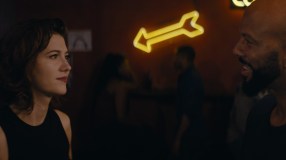


 This film is a sidesplitting winner. Outside of the documentary genre, we’re not often let into the world of adults on the autism spectrum. Keep The Change follows the beginnings of a relationship between two very different individuals who are ultimately seeking to be accepted and cherished for who they are. The issues of self-love, sexuality, class, are addressed in endearing and tongue-in-cheek ways. Newcomers and leads Brandon Polansky and Samantha Elisofon have an insane chemistry. The two appear to be polar opposites making their banter all the more entertaining. Any time you pit a glum and cynical individual against an outgoing and seemingly innocent one, interesting things are bound to happen. The dialogue is biting, witty, and oftentimes offensive, keeping the viewer on their toes and thoroughly amused. Writer/director Rachel Israel has given us a true gem. This unique romcom will undoubtedly charm the pants off of you and teach you some much-needed tolerance.

 Mamet gives a deliciously sardonic lean to the role that is funny and honest. The manic ways of Shoshanna Shapiro are nowhere in site. This should put Mamet on some serious casting lists. First-time writer-director Sophie Brooks shows us how a person can have a hold on your soul years after parting ways. The script is really smart and refreshing. It doesn’t glamorize the requisite navigation through adult relationships, those messy, real-life moments are the little things that stick with us in the end. Reality is much more awkward and The Boy Downstairs does not shy away from confrontation or feelings. It allows the audience to reflect on their own past emotional conflicts and in this film’s particular case, flashback sequences are the backbone of the plot. Strong performances from Matthew Shear and Dierdre O’Connell make The Boy Downstairs what it is. The chemistry is astounding. Being a grownup is complicated enough, so once you introduce the complexities of love and friendship, all hell will break loose, even if it’s a quiet thing. You can see The Boy Downstairs in theaters today.

 Permission is one of the most honest portrayals of how awkward true intimacy is. When you are so comfortable with someone to the point of predictability, does that have the potential to become a death sentence for a relationship? Life’s ‘what ifs” are some of the most tempting ideas a person can entertain. The chemistry between the entire cast is palpable. You will find yourself falling in love with Hall and Stevens and definitely crushing on Arnaud, Gershon, Craig, Spector, and Sudeikis. This true ensemble of actors along with writer/director Brian Crano has given us a gift. What may appear on the surface as small moments in the script are incredibly impactful due to some really brilliant acting and writing. Permission has an authenticity that sneaks up on you. It’s those moments that define the story and make it so relatable. The music is perfectly paired with each scene, almost becoming its own fly on the wall secondary cast member. Overall, the film is a refreshing look at adult relationships and how to find
You must be logged in to post a comment.