
 I ONLY REST IN THE STORM
Pedro Pinho‘s sophomore film, I ONLY REST IN THE STORM, premiered for NYFF audiences yesterday. The film follows Sergio, an environmental engineer who drives from his homeland, Portugal, to Guinea-Bissau, West Africa, to work on a recently halted project. Tasked with reporting whether building a road from the desert to the jungle would be profitable or even plausible, he tries his best to ingratiate himself with the locals, to mixed reactions.  Portugal-born, Brazil-based filmmaker Pedro Pinho tackles racism in an unfiltered, confrontational manner. The dialogue is no-holds-bar and yet entirely calm in its honesty. Alongside Sergio, the audience is thrust into a lively group of queer friends, who argue among their own ranks about blackness and identity. It feels very intimate to witness. It’s a head-on white savior complex reckoning. The longer you watch and learn, white behavior feels very self-congratulatory, regardless of true intentions.
  Performances are spectacular. The immersive cinematography is a character all its own. The film often feels like a documentary with elders casually dropping facts about colonialism in social settings. I ONLY REST IN THE STORM captures you in its boldness, if you can hold on for the three and a half hour runtime. While it would undoubtedly benefit to cut that time in half, you cannot deny the meandering plot points. Each is strong, but as a whole, the film is a five-course gluttonous meal.
  Before we were married, my husband and I abandoned our lives in New York and moved to Hyderabad, India, so that he could work for a local microfinance institution. He and I, both white, served more as a spectacle, fully owning our privilege as we navigated endlessly intrusive questions and the knowledge of our ability to leave the city on our own accord. To be the minority was an eye-opening experience. I ONLY REST IN THE STORM plays for a predominantly white NYFF audience. I would have loved to be a fly on the wall after yesterday’s premiere. One can only imagine the justifications over cocktails.

 SHE LOVED BLOSSOMS MORE
 The boys flitter between trials, doing whatever drugs they can procure, speaking with utter nonchalance about their intentions. Hedgehog, clearly consumed by sadness, eagerly claws his way towards his ultimate goal. Obsession takes hold.
 Cinematographer Christos Karamanis brings the viewer inside their drug trips, of which there are many, blurring the lines of reality. Fair warning: if you are sensitive to light or sound, the film can be overwhelming, but inarguably hypnotic. Performances, particularly Panos Papadopoulos, are fantastic.
 Sci-fi extravagance aside, Veslemes takes audiences on a visceral and emotional ride into darkness. There is no denying SHE LOVED BLOSSOMS MORE is a WTF, jaw-dropping watch.


 Parts Two & Three: now wandering the land, the animals in tow, Gaspar’s existential crisis continues as he meets spirits, resides in a manor, converses with religious icons, all while Ogre and his minion pursue him. The film is A LOT. Green continues his signature style with static cameras capturing 4th wall-breaking deadpan delivery. Honestly, it will either be a winner for audiences or a total miss. The complexity of satire is laugh-out-loud funny, but outside intellectual circles, it might be a tough pill to swallow.
 For more Fantastic Fest coverage,
 ZENITHAL
 Francis believes Sonia has told the police he is responsible, causing him to flee from the authorities. In his desperation, he finds solace in a laundry client who always seems to be wooing Francis away from his station. Turns out this man is no eye-fucking mechanic but a supervillain, woman-hating, mad surgeon named Doctor Sweeper, who wants to upgrade Francis with a massive robotic, brain-implanted penis and blow up the moon to disrupt menstrual cycles. (Still with me?)
 Now, Sonia, Francis’ business partner Marcus, and a few ladies from Sonia’s Sexkido class (a method of martial arts that takes advantage of men’s depravity and returns power to women. While meant to be silly, I think it’s brilliant), must find Doctor Sweeper, save Francis, and clear his name.
 Performances from the entire cast are phenomenal. They land somewhere in between Austin Powers and Zoolander, with incredible one-liners and a 1000% commitment to the gag.


 Beautiful camera work has an immersive feel. Eccentric production design initially mirrors Anx’s graphic artist occupation, eventually morphing to match the ever-evolving circumstances of the disease. There is a Tim Burton/JimHenson-esque quality to the creature fx. A grotesque whimsy that makes it difficult to look away.
 Matthieu Sampeur and Edith Proust give us magnificent performances. The script possesses a dark inevitably the longer they are together. Director Thibault Emin, alongside co-writers Alice Butaud and Emma Sandona, delivers a surprising link to childhood trauma in Anx. The existential aspect creeps up on you and burrows under your skin. The psychosexual element is bonkers. ELSE is a genre-obliterating love story.

 THE SOUL EATER
 Directors Julien Maury and Alexandre Bustillo craft an intricate mystery that intertwines folklore and crime. Screenwriters Annelyse Batrel and Ludovic Lefebvre skillfully adapt the French novel by Alexis Laipsker, keeping audiences off-kilter and second-guessing.
  Performances from our two leads are stellar. Virginie Ledoyen gives Elisabeth deep personal darkness stemming from unimaginable loss. Paul Hamy makes Franck down to earth in an indescribably tangible way. Their chemistry is a fantastic mix of caution, stubbornness, and authentic partnership. They make a genuinely solid on-screen team.
  True crime and horror fans will immediately feel pulled into the narrative. The film reveals a shocking final 30 minutes, boasting one of the most unhinged fight scenes I’ve ever seen, and delivering multiple appalling twists! THE SOUL EATER reminds us that we never know what goes on behind closed doors and that fear is the scariest monster. It will devour you whole.
  For all things Fantasia 2024,


 The narrative shifts into a visionary anthology of stories as Nathan moves through the levels of Hell. The progression feels like the dark films by Jim Henson in the 80s, but PANDEMONIUM takes it to an entirely new level of demented. It is the definition of French Extreme Cinema.
 Hugo Dillon is Nathan. He is the only constant in PANDEMONIUM. We have pieces of his story, but only what he reveals. Dillon delivers a brilliant performance filled with fear, disdain, and bargaining. He’s phenomenal.
  An imaginative descent into the personal Hell we create, PANDEMONIUM is like nothing you’ve seen before.


 The fragility of Jeanne’s station and extraordinary influence are beautifully nurtured by Lavernhe’s continuous narration.
 Benjamin Lavernhe delivers an unforgettable performance as La Borde. He is Jeanne’s guide to life at court and the only entirely human interaction anyone encounters. Lavernhe is the emotional stronghold of the film.
  Maïwenn gives Jeanne a ceaselessly passionate and curious air. Her gentle elegance and care for her fellow actors beam off the screen. She is nothing less than captivating. Depp and Maïwenn’s chemistry is off the charts. She and Lavernhe take your breath away.


 Dupieux is a master of providing comedy within social commentary. As Yannick becomes more agitated, he reveals how out of touch he is with general society while simultaneously hurling offensive barbs at his captives. Equal parts hilarious and terrifying, all I could imagine as an actor and theatre patron was how I might escape such a scenario.
 The honest laughs come when Dupieux leans fully into the meta satire in new dialogue written by Yannick. Filled with redundancies and mistakes, the audience in the theatre and at home belly laugh at the actors’ forced commitment.

 Cleverly choreographed camera work by Aurel Ganz makes us think the film is one long take. Just as impressive is the actual shot list. 28, to be exact. It is one hell of a visual feat. The flip side of these takes is the narrative feels draggy even at 110 minutes. The sci-fi element does not seem necessary to the plot. Ultimately, it goes nowhere.
  Performance is solid from our four main leads, each one bombarded by misogyny, judgment, and outright hateful behavior. LAST PARTY might be more successful as a series. There is much needed in character development, although the breadcrumbs are there. It feels more like a treatment for a larger project than a stand-alone piece.


 Twin brothers Tristan and Làzaro are aspiring astronauts. During a late-night swim, Tristan becomes infected with a mysterious physical and mental ailment when a bright green asteroid plummets into the water. Lazaro must understand his brother’s drastic changes as he tries to maintain an elite physical and psychological state.
 Marta Nieto plays the twin’s mother, Mayra. Her performance is like a gut punch. Writers nail the invisible labor and isolation in motherhood and its inevitable breaking point. Nieto lives in the skin of Mayra and earns a standing ovation. Pablo Cobo and Loius Peres are magnificent. Cobo’s brooding anger equally matches his deep adoration for his twin. His performance as Làzaro is an emotional roller coaster, riddled with survivor’s guilt. Peres leans into palpable fear and trauma, giving audiences a complete 180 in physicality. TROPIC’s costume and makeup departments lend a hand here as they switch gears for Tristan from tailored clothes to ill-fitting outfits, as well as his elaborate facial fx. He is spectacular.
 As a special needs parent, this is a brutal but honest watch. Feeling “othered” as an individual and a family is viscerally devastating. The cinematography, particularly the underwater footage, is mesmerizing. The sci-fi elements combined with a perfect synth score create a timeless feel. TROPIC defies a single genre category. The volatility of this unique story is riveting, but its gravity lies within its intimacy.

 Beginning in Shakespearean fashion, the chaos and bait-and-switch screenplay of Claude Schmitz‘s THE OTHER LAURENS earns your attention. Private investigator, Gabriel gets contacted by his niece to look into the recent death of her father and Gabriel’s estranged twin brother, François.
  Loise Leroy wows in her feature debut as Jade. The emotional turmoil she endures puts Leroy through the wringer, and she handles it like a pro. She is a star. Olivier Rabourdin plays dual roles as Gabriel and François. His ability to shape-shift will captivate you. THE OTHER LAURENS is an epic film, brimming with twists and turns, and is a real stand-out from Fantastic Fest 2023.


 The film consists of informal sit-down interviews, extensive personal writings, archival footage, and plenty of home videos of the generations of strong women in the family. We discover the hurt from Hiam’s past, the emotional baggage of leaving behind the turmoil of Palestine, but also the treasured connections of the women who shaped her. Hiam’s letters and poems serve as both insight and narration. They are intensely affecting.
  Hiam and her family love one another with their whole hearts. They have no filters when speaking to each other, and their words of affirmation are something to aspire to. Lina Soualem captures all of this in an elegant edit. The film is beautifully intimate. It’s a loving commentary on memory, identity, and honoring your past.


 Cinematographer Hazem Berrabah offers striking juxtaposing visuals of sheep grazing on open fields next to grey concrete structures. Half-built complexes with their innumerable exposed rebar present like monsters bearing sharp teeth and long claws.
  The defiance by detectives keeps your attention steady. No one wants to be told they cannot do their job. Performances from stars Fatma Oussaifi and Mohamed Houcine Grayaa are spellbinding. Their moody and grounded work feels personal and devastating. Oussaifi’s reaction to the overwhelming amount of misogyny hits hard. The writing is hard to shake, a compliment for writer-director Youssef Chebbi and co-writer François-Michel Allegrini.


 Judith/Margot’s curated existence managing two identities and two families begins to crumble, exposing her lies, motives, and underlying trauma.
  Virginie Efira wows audiences as a woman wearing all the hats. Effortlessly embodying each distinct persona, Efira proves, once again she is a star. It is a balancing act of power structures, dangerous satisfaction, and unusual sacrifice.
  Antoine Barraud gives audiences a film almost best viewed without prior knowledge of the plot. Enticing the audience and challenging their sense of morality, MADELEINE COLLINS hypnotizes with twists, turns, and deep complexity. Barraud and co-writer Héléna Klotz carefully weave an unmissable commentary about beauty, unrequited male infatuation, and childhood trauma into the narrative. The film overflows with nuance, and its final reveal changes everything. It is a wildly elaborate hurricane of grief.


 Les Dents Du Bonheur (Sweet Tooth)


 WISTERIA
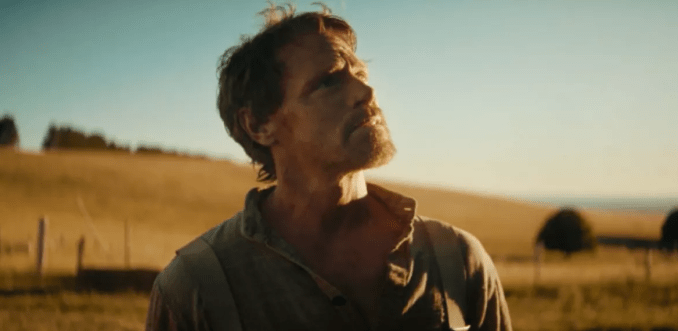


 Thomas Parigi‘s performance transfixes. His ability to hold the audience in the palm of his hands, quite literally in this case, has the viewer waiting with bated breath for his next move. Parigi is a musician. His Soundcloud is as mesmerizing as his performance in the film. This debut role should garner him the attention he deserves. Parigi pulls you into this one-of-a-kind folklore horror dealing with loss, love, self-confidence, and generational embracement. The Strange Case of Jacky Caillou is an undisputable gem.
You must be logged in to post a comment.