

ALICE, DARLING

Anna Kendrick plays Alice, a woman at the end of her emotional and physical rope. Her toxic relationship comes to the forefront when she lies to attend a week-long vacation with her best friends. As her personality becomes increasingly manic, her secretive behaviors and stories of Simon raise red flags for those closest to her.  Simon’s psychological manipulation appears in many forms. The constant beratement, the gaslighting, the incessant need to control Alice’s appearance, her whereabouts, what she eats, and when she communicates with him.
  Simultaneously frightening and punchable, Charlie Carrick plays Simon with loathsome energy. Kaniehttio Horn, as Tess, brings tough cookie energy. It’s a wonderful balance for Wunmi Mosaku playing Sophie. She arrives with a genuine mother-hen vibe. As tensions rise, Mosaku serves as a mediator and mender. These three women complement each other perfectly. It was a joy to watch such grounded performances.
 Anna Kendrick is captivating as Alice. Writer Alanna Francis hands Kendrick a gift by giving the character the hair-pulling disorder, Trichotillomania. She is the physical embodiment of anxiety. Her naturally petite frame and stature lend themselves to heightened physical frailty. But it is Kendrick’s idiosyncracies that place you inside the mind of a woman consumed by terror.
 The script’s structure occurs in three distinct acts. The subplot of a local missing woman presents the viewer with a myriad of emotional and narrative possibilities. The gravity of female friendship and the innate protective instincts we carry loom large. The fear women face on a day-to-day basis feels weighty in the narrative. ALICE, DARLING is a keen reclamation of power through the love and support of their fellow sisters.
SYNOPSIS: In the taut thriller ALICE, DARLING, Oscar® nominee Anna Kendrick (Best Supporting Actress, Up in the Air, 2009) stars as a woman pushed to the breaking point by her psychologically abusive boyfriend, Simon. While on vacation with two close girlfriends, Alice rediscovers the essence of herself and gains some much-needed perspective. Slowly, she starts to fray the cords of codependency that bind her. But Simon’s vengeance is as inevitable as it is shattering – and, once unleashed, it tests Alice’s strength, her courage, and the bonds of her deep-rooted friendships.


 First-time director Ric Maddox, alongside writers Sean Crampton and Jordan Wisely, brings the story of an elite ex-Navy seal with PTSD placed in a top-secret government rehabilitation program. Using criminal civilians as bait, can our soldier in question be saved? A twist on The Most Dangerous Game (1931) meets Universal Soldier (1992), THE STALKING FIELDS is an action-packed entry into a potential new franchise.
 The dialogue has a uniquely poetic perspective at times but quickly becomes contrasted by innumerable F-bombs. I say this as a person who has a sailor’s mouth, and this felt excessive. The quick-take editing has all the horror genre elements. From the lighting to the angles, it is visually intriguing. I must applaud the creativity in location design. Besides the woods, the military behind the scenes could easily take place in a cleverly lit warehouse walled off entirely with plastic sheeting. That budget must have been astronomical. I have to hand it to the CG team for some legit graphics on each monitor. They had my eyes darting from screen to screen. Bravo for the detail.


 As a self-professed Gleek, the series contains so much information I didn’t know. Safety issues, money, and around-the-clock nonstop work, from the mouths of friends, crew members, and entertainment reporters, The Price of Glee pulls the curtain back on all the behind-the-scenes drama and addresses the all too familiar internet rumor that the show may be cursed. Episode one concludes with Cory Monteith’s death and ends on a cliffhanger. Episode two picks right back up where we left off, focusing mainly on the aftermath of Monteith’s passing. Delving into Mark Salling’s child pornography conviction and subsequent suicide, this episode melds into the third with Naya Rivera‘s father speaking about her tragic death.
 Transitions between conversations feature video clips and cast photos. My main gripe with episodes two and three is the repetition of said images. A show that spanned six seasons deserved fresh photos. It was a glaring amateur mistake. Is THE PRICE OF GLEE a touch like an E! True Hollywood Story? Very much so, but as a fan, I was endlessly intrigued, hoping for any new information. While the cast has come forward to say they were not involved, hearing crew members that genuinely cared for them and with (mostly) kind words, their insight is vital to understanding the immense pressure this phenomenon created.


 DUNGEONS & DRAGONS: HONOR AMONG THIEVES TO OPEN FEST
 Flamin’ Hot
 Parachute
 Angel Applicant
 Down Low
 A Disturbance in the Force
 Brooklyn 45
 Breaking Fast with a Coca Cola
 I Probably Shouldn’t Be Telling You This
 The Bus (Spain)
 Beyond The Fringe (Spain)
 Dead Enders
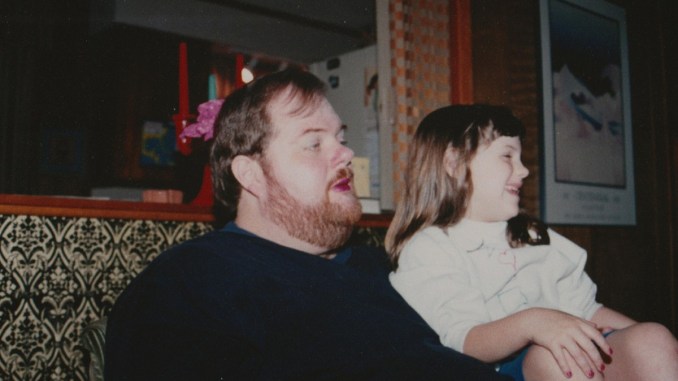 Breaking Silence
 Aespa VR Concert at Kwangya (Republic of Korea, U.S.)
 Eggscape (Argentina)

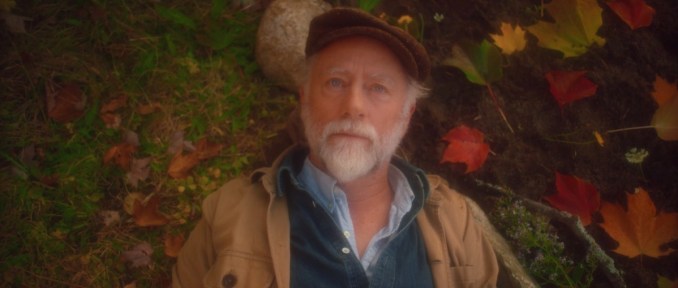 Steve Balderson‘s films are rather distinctive. Their lush visual impact sticks in your brain. His newest film, Alchemy of the Spirit, is no exception. Possessing a dreamy, even otherworldly look, Balderson makes the mundane glow. The quiet becomes claustrophobic. As the film begins, the sound editing alongside the score creates an unsettling feeling. The audience resides inside the manic mind of a grieving man. At 23 mins and 10 seconds into the film, we get a shot that elicits every emotion tied to this film. The symmetry, artistic and of two souls as one, is breathtaking. You will not miss it. There is a Picasso-esque madness to it. Balderson thought about its impact as it is the current key art for the film. Very smart. That sense of panic eases once introduced to a languid score of Debussy, Bach, and other classical beauty. While the darkness lies just under the surface, the screenplay’s nuances extend beyond what I expected from the first third of the film.
 Sarah Clarke, as Evelyn, is chilling and beautiful. Her voice, combined with soul-piercing imagery, is haunting. The grounded chemistry between Clarke and Xander Berkeley plays with a familiarity of real-life lovers, which makes sense as the two actors have been married since 2002. Berkeley, who I recently lauded in
  The idea of “the proper way to grieve” is front and center. How do we honor the dead? How do we mark the life we have? Oliver creates a literal death mask both as a means to stop time and keep Evelyn’s spirit alive. We get to explore the meaning of life through memory. The film easily could have been a stage play. It is dripping with theatricality. Alchemy of the Spirit is a genre-bending ode to art and romance. It’s a visual love poem.

 The 6-month journey from Earth to Mars captured the most intense solar flares ever experienced in all space exploration, forcing the team to reboot both rovers. Angela Bassett’s voice gently narrates Spirit and Opportunity’s actions. The CGI simulations of Spirit and Opportunity are breathtaking. I’ve never seen anything like them. The footage from inside the labs and control room, combined with the tense sci-fi-inspired score, keep you on the edge of your seat. You find yourself cheering, holding your breath, tearing up, and singing along to the mission-curated soundtrack.
  If the mystery of space intrigues you, if you’ve ever looked up at the night sky and wondered if we were alone in the universe, GOOD NIGHT OPPY is a film tailor-made for your imagination. It’s a shame The Academy overlooked such a crowd-pleaser. If there ever was a more appropriate “To infinity and beyond” moment in documentary filmmaking, I sure as hell can’t think of one.


 The insights into Caro’s work process are breathtaking. One moment, in particular, stands out: while working on one of the volumes focused on the life of Lyndon Johnson, Caro had the opportunity to interview Johnson’s younger brother, Sam Houston Johnson. A tremendous opportunity, but Caro found he wasn’t getting the level of rich detail he craved. So, he brings Sam back into his childhood kitchen and has him sit in the very chair he sat in as a young boy. Caro sits behind him so that everything appears just as it would be in Sam’s memories. It is only then that Caro asks his questions again. Talk about literal background research.
  Turn Every Page offers a peek behind the curtain of a complex and critical industry. Ironically, what it offers very little of is the dynamic between its two titular protagonists. Aside from one scene, they never interact on camera. Despite director Lizzie Gottlieb’s best efforts, this cannot help but feel a bit like a missed opportunity. In this framing, both men are free to lay their own narratives. It would have been a pleasure to see them challenged to edit one another’s perspectives.


 Even though the script overflows with tropes, they are masterfully woven into a compelling narrative. As multiple complications arise, the camera finally moves in a smooth dronelike manner. Then the gore hits us right in the face. *nudge, nudge, wink, wink* I would pay so much money to experience YULE LOG again in 3D. No, seriously. Also, don’t for a moment think you have the slightest idea of what comes next. YULE LOG is absolutely deranged and ridiculously entertaining.
 Performances are outstanding. The commitment to the absurd is perfection. With shocking emotional swings and spectacular editing, there is not a slow moment. How Adult Swim managed to sneak in a last-minute horror film without Warner Bros. knowing blows my mind. It’s a holiday miracle. The creativity applied to this low-budget and undeniably genius production makes it one of the finest genre films of the year. YULE LOG is a Willy Winka mindfuck of a revenge horror. Don’t dare leave before the credits. You’ll miss out on writer-director Casper Kelley’s original theme song. It’s one final bizarre and brilliant stocking stuffer.

 “Ryan” takes an emotionally invested approach as JK’s publicist. He speaks in disguise, understanding the sensitive nature of everything he is about to reveal. Since Ryan has a sister with a painful genetic disease, his interest lies in protecting the children and JK’s bold innovation. Politics, science, government regulations, and public opinion clash as JK’s work is exposed before publication. The Chinese government rescinds its promise of protection.

 present
 Locke’s script sets a solid pace, with details of her daughter’s disappearance slowly revealing themselves, unrequited love, past regressions, and secrets boiling over. Darlene’s ex-brother-in-law lands on her doorstep under the guise of a surprise family reunion, but his ulterior motive involves a revelation in Sally’s case. The information he’s been sitting on as Darlene relentlessly searched for Sally, became an advocate for other families, and got her alcoholism under control. The rage and fear evolve into a knockdown, drag-out fight between redemption and revenge.
  Compounded by the raging snow outside, any turmoil coming from the house is more than muffled. This simple device proves to be a wonderful segway for Gretchen to reenter the story.
  Here is where I felt like
 THE APOLOGY
 Find Out Why All Eyes Are On Independents
 Top L–R: Bravo, Burkina!, Girl, Polite Society, Mami Wata.


 The noteworthy turn comes from Cindy’s neighbor Doc Zuess. John Bingham, whose character is reminiscent of Roberts Blossom from Home Alone, is brilliant. His performance legitimizes The Mean One, bringing it out of its Hallmark moments.

 The gruesome kills are juxtaposed with a sick soundtrack (and one brilliant oral sex scene), top that off with a particularly shocking choice of violence. When Tori witnesses the act, our killer Santa goes ham on the house. The words, “Oh! That’s fucking nuts,” poured out of my mouth as he breached the threshold. I would be surprised if you didn’t end up saying the same.
 Riley Dandy and Sam Delich give spectacular performances. Given writer-director Joe Begos‘ meaty fandom-laced dialogue, they look like they loved every minute. The discussion about horror sequel superiority had me cheering out loud.
  Steve Moore‘s original music is bitchin’. The practical fx are a gift. The pyrotechnic work keeps things merry and bright. The special makeup and Animatronic robot effects from Josh and Sienna Russell are a Christmas miracle. Will everyone compare it to Silent Night Deadly Night meets Terminator? Probably but who cares. CHRISTMAS BLOODY CHRISTMAS is a holiday horror treat. So, spike your eggnog, get as lit as your tree, and rock the hell out of this film.


 John Travolta plays island crime boss Buckley. His eccentricity is evident through costume choices and dialogue. Thank goodness he is who he is because the character leans heavily into caricature territory. He is at his best in high-stakes action sequences.
  Bruce Willis plays Ian Swan with that legendary, effortless swagger we love. He is funny, charismatic, and a total badass. He is everything you want him to be.
  Somehow, PARADISE CITY makes Jenner’s character impervious to automatic rifle bullets and, somehow, possesses the ability to survive a 10th-floor header into a shallow koi pond. It is unbelievable. No, literally, even for an action film, it is far-fetched. And this pains me to say that every female performance is downright atrocious, except for Mary Ann Perreira as Auntie Kona. She is a treasure. The dialogue from director Chuck Russell and co-writers Corey Large, and Edward John Drake, is mostly eye-roll-inducing. The already sped-through, convoluted plot also jumps in time, but not enough. It is messy.
  Here is what works. The fight choreography is undeniably entertaining. (Extra points for having Savannah kick off her heels for brawling.) Overall, the tightest scenes occur when Savannah and Ryan arrive in Paradise City proper. There is genuine yet surprising humor and a grounded backstory. That’s all I’ll say to avoid spoilers. I could see this story maybe working better in serial form. But that’s a big maybe. Jenner is the only one that sustains authenticity. He deserves better, and so does Bruce Willis’s legacy.
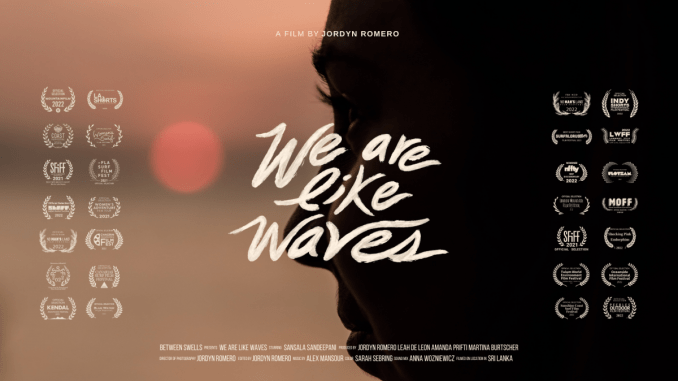
 Director Jordyn Romero bonded with Sanu over their love of surfing, a predominantly male-dominated sport. Sanu’s fearless pursuit of wanting to become the first female surf instructor from Sri Lanka lies beyond the horizon. In Sanu’s words, “We Are Like Waves. You cannot stop us.” This simple act of rebellion is certain to have a ripple effect. Romero brings audiences a relatable story told with grace. Boasting a beautifully encompassing score, WE ARE LIKE WAVES sees Romero and Sanu carve a path for the next generation.

 The script slickly combines historic iconography from the plague to mirror current events and builds upon the concept of mass hysteria and mental health. Mitton introduces demonology and then mixes in the idea of viral internet posts, an issue directly addressed in
  Gabby Beans


You must be logged in to post a comment.