


Academy Award® winner Robert Zemeckis directs this live action and CGI retelling of the beloved tale of a wooden puppet who embarks on a thrilling adventure to become a real boy. Tom Hanks stars as Geppetto, the woodcarver who builds and treats Pinocchio (Benjamin Evan Ainsworth) as if he were his real son. Joseph Gordon-Levitt is Jiminy Cricket, who serves as Pinocchio’s guide as well as his “conscience”; Academy Award® nominee Cynthia Erivo is the Blue Fairy; Keegan-Michael Key is “Honest” John; Academy Award® nominee Lorraine Bracco is Sofia the Seagull, a new character, and Luke Evans is The Coachman. Also in the cast are Kyanne Lamaya as Fabiana and Jaquita Ta’Le as her marionette Sabina, Giuseppe Battiston as Stromboli and Lewin Lloyd as Lampwick.
A Disney+ Day premiere, “Pinocchio” will launch September 8, 2022, exclusively on Disney+.

Tom Hanks as Geppetto in PINOCCHIO, exclusively on Disney+. Photo courtesy of Disney Enterprises, Inc. © 2022 Disney Enterprises, Inc. All Rights Reserved.
The screenplay for “Pinocchio” is by Robert Zemeckis & Chris Weitz. Andrew Miano, Chris Weitz, Robert Zemeckis, and Derek Hogue are the film’s producers, with Jack Rapke, Jacqueline Levine, Jeremy Johns, and Paul Weitz the film’s executive producers.
Pre-Save/Pre-Add the brand new Pinocchio Soundtrack Now: https://presave.umusic.com/pinocchio-… Disney+ Day is an annual celebration of the Disney+ global community that debuted in 2021 and features content premieres from the streaming service’s marquee brands, special experiences and offers for subscribers and fans, and more.
This year, Disney+ Day returns on Thursday, September 8, leading into D23 Expo: The Ultimate Disney Fan Event presented by Visa in Anaheim, CA.


 Lucas Neff, whom I loved in Fear, Inc, plays Jason, the target of Benny’s sting. His effortless performance had my palms sweating. Neff’s emotional highs and lows elicit a visceral reaction. Jake Dvorsky is Sam, and co-writer Hunter Milano plays Ryan. Both are Benny’s buddies and unwitting co-conspirators. Do not write either of these performances off as sidekicks because each gives a nuanced and enthralling performance.
  Benny’s deep-seated unresolved trauma motivates his revenge under the guise of heroism. Wes Dunlap‘s performance is mesmerizing. He displays alpha confidence accompanied by simmering hurt and fear. When things go haywire, Dunlap leaves it all on the screen. It’s one hell of a turn.
 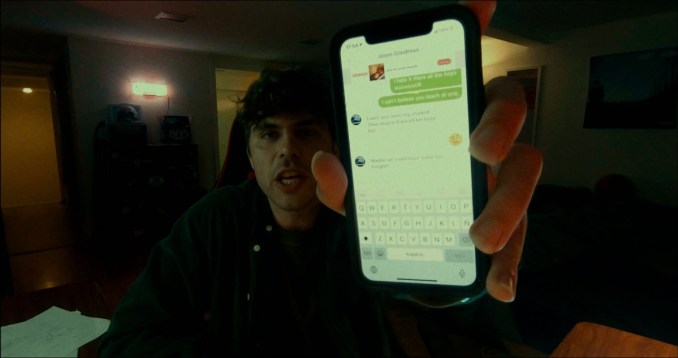 A ping pong match of intensity, Low Life benefits from rapid and thoughtful editing. But it’s the script that continues to shock. At every turn, I had my head in my hands. My heart was constantly racing, waiting for the other shoe to drop. How Milano and Rotter craft a script that ramps up the severity of the situation blew me away. Twist after twist, Low Life is one of the year’s best screenplays.


 Director Abi Damaris Corbin brings to life the true story of Brian Brown-Easley. John Boyega plays the real-life ex-Marine who, in a last-ditch effort to get the money the VA owes him, threatens to blow up a Wells Fargo with two female managers inside with him. Breaking is an intense thriller that keeps your heart in your throat from beginning to end. It is one of the most extraordinary stories of principle I’ve ever seen.
  John Boyega presents the audience with a masterclass of human desperation. Each beat screams off the screen, even in his silence. This man has clear signs of PTSD, but his sincerity and circumstance have you rooting for him. The emotional nuance blew me away as Boyega is simultaneously patient and commanding. This performance deserves every award possible. You cannot ignore it.


 With a title like Get Away if You Can, I sat down expecting a 90-minute sea-set thriller with the potential for a high body count. Instead, I was treated to a thoughtful meditation on love, purpose, and gender.
 The filming locations are stunning – the filmmakers deftly navigate the cramped interiors and deck of the sailing yacht, giving a sense of scale and place at all times. The island drawing Domi’s (Dominique Braun) attention might be part of the “islands of despair”, but it is truly gorgeous. As in, I can understand having a fight with your spouse over an island like this. If despair looks like this, sign me up. Scenes away from the boat and island are purposeful, and further our associations with the two leads. Through flashbacks and phone calls, Domi’s world is shown to be lush, green, and free. TJ’s flashbacks, on the other hand, are grounded in steel, machinery, and work. The settings smartly reinforce the opposing dynamics pulling at the two lovers.
 Since much of the film’s plot finds TJ and Domi in conflict, we don’t get to see much direct chemistry between the two leads. Braun’s Domi has a heavy load to carry, and we feel her appetites and frustrations. Martin’s TJ is given less to work with, expressing his frustrations by guzzling red wine and gorging himself on saltines. Ed Harris gives a compelling supporting turn as Alan, the father of Martin’s character. Alan is a stern man from a military background. But, more than this, he seems to embody toxic masculinity itself. Harris’ restrained physical performance speaks volumes – this is a man who can make chewing a piece of steak simultaneously hilarious, intimidating, and hostile. Harris’ energy lurks even in scenes where is physically absent.
 I found the film’s climax to be brave and thoughtful. You may not agree with the choices the characters make, but you can understand the journey that has brought them to that moment. Despite some choppy waves, there’s ultimately a lot to like about this boat trip.

 The improvements to the CG are hella cool. I think She-Hulk looks better than Hulk! Sorry, Mr. Ruffalo. I still love you, and I hope we see more of you in the remaining episodes.
  Breaking the fourth wall is another device that sets this series apart. Written and created for television by Jessica Gao and directed by Kat Coiro (who both executive produce), the structure of the pilot is straightforward; a flashback to a few weeks ago when Jennifer became a hulk. The final scene takes us full circle, and it’s everything you’d want in a Marvel series starring a badass lawyer with acerbic wit who just so happens to have gamma rays in her bloodstream. No big deal.
  If you pay attention to the credits, and you always should in any Marvel film or series, you’ll notice how many women are part of the crew in every aspect of She-Hulk. And, we have to talk about the credits scene without spoilers. Jessica Walters is a Captain America fangirl, and damnit, it’s hilarious. Could this rival Jessica Jones as my favorite female comic book development? Yeah, I think there’s a solid argument to be made.
 ► Watch Marvel on Disney+:


 This insanely talented ensemble gets thrown into a blender of bizarre. Writer-director Jeff Baena co-writes with Brie. I cannot figure out if Spin Me Round means to be a modern take on Office Space or just a misstep into empowerment. It all feels rather icky whenever Nick (Alessandro Nivola) comes on screen. With an abundance of genuinely hilarious dynamics between cast members, those moments often become overshadowed by inconsistent storytelling, leaving you cringing.
 Molly Shannon is Deb, and she is perfectly Molly Shannon. Her unpredictability makes her one of the highlights of the entire film. Zach Woods brings a fantastic arc to the character of Dana. He transforms from fanboy to puppy love to man on a mission and effortlessly captivates. Ben Sinclair lands somewhere between villainous sidekick and smarmy eccentric, and I loved it. Tim Heidecker, Ayden Mayeri, and Fred Armisen provide plenty of memorable moments.
 Aubrey Plaza makes every film she appears in exponentially better. She is the most intriguing character in this film. You cannot ignore the comparisons to Ghislaine Maxwell, whether intentional or not. I want to see an entire movie on her backstory. Alison Brie is wonderful in everything. Her performance as Amber is no exception. She possesses simultaneous versatility and familiarity for audiences. Ultimately, the cast prevents Spin Me Round from leaving a bad taste in your mouth. Show up for the acting, and you can’t go wrong.


 Both leads deliver strong performances. Hirsch’s Mike is an artist. While he wants the prize money, his easygoing demeanor hints at a more privileged background. Hirsch gives a grounded performance – his career has taken some strange turns since his bravura turn in 2007’s Into the Wild. Here he again proves he will excel when given roles where he can use physicality to convey emotion. Bosworth’s Kate is more guarded and driven – she recites mantras to herself every morning in the bathroom mirror. I loved the versatility of Bosworth’s performance – keep an eye on the techniques Kate employs to motivate and keep Mike focused on the prize throughout the film.


 Performances sell this film. Matthew Finlan at Gunnar with a slimy rich kid flair that makes him supremely punchable. Rossif Sutherland‘s genuine vulnerability in grounds the chaos. With the audience’s knowledge, his performance is one of the most important in the film. Julia Stiles is mind-blowing as Tricia. I’ll only reveal that the rollercoaster of this role is delicious, and I did not see it coming.
 Isabelle Fuhrman plays the audience like a fiddle in what might seem like a tricky undertaking years later. The final reveal in Orphan was a game-changing moment that sticks in genre fans’ minds. For Fuhrman to nail this performance, knowing the audience is in on the secret this time speaks volumes about her skills. The use of body doubles ensured that she remained in the role. Had she been recast, we might have had a very different conversation about this franchise.
 The use of mirrors is a noticeable and effective trope. Growing up in Connecticut, I can attest that the costume department gets an A+ for their work. Now, we need to discuss the screenplay. A total WTF twist keeps Orphan: First Kill fresh and engaging. The terror tables overturn with an unexpected villainous turn from multiple characters in the film. The unpredictability of this prequel manages to be creepy and cringe all at once. There’s a deliberate white privilege that is chef’s kiss. I wasn’t sure whom to root for. It was a ping-pong match of vile behavior. That made me all the more invested in the madness. When I tell you that I reveled in a particular kill, you’d be hard-pressed to disagree upon viewing. Orphan: First Kill is a wild ride genre fans will happily stay on if only to see how this chapter plays out.


 The film chronicles Diana’s life in the media from the days before her engagement until her horrific death. There are no talking heads, no overarching narration, simply thousands of hours of archival footage edited together with care and great intention. Studying the body language of Diana, Charles, and the royal family is fascinating. The commentary comes in the form of media voiceovers that are equally adoring and scathing. Feeling as if we know Diana and understanding the revelations that have since come to light, I was seething as I witnessed the treatment of an uncaring husband and the fickle media.
  The score is breathtaking. The editing is an award-worthy triumph. Watching the downward spiral of a young woman thrown to the wolves is daunting. I found myself shaking my head, filled with sadness and anger at those who failed spectacularly to protect her. And therein lies the double-edged sword of this film. Our obsession with a woman so special and fascinating makes us accomplices.


 The seemingly simple premise becomes one of the most intense and harrowing films I’ve ever seen. I didn’t have a fear of heights before
  The screenplay by Mann and
  The sometimes sparse, menacing score by

 David Leitch’s Bullet Train is not high art, but it’s a damn fine way to spend 126 minutes. There are times in life when you might order a side salad with your meal, but we all know what your heart really wants is the fries. Well, Bullet Train is what happens when the fries are the centerpiece of the meal. It won’t inspire deep revelations about the human condition, but it is a flashy and fun journey that satisfies (just don’t pretend it’s something it’s not.)
 The plot concerns 5 assassins whose objectives and fates converge on a bullet train speeding from Tokyo to Kyoto. Brad Pitt stars as Ladybug, a hitman in a serious career funk, convinced he’s cursed with bad luck (don’t worry, he’s getting some therapy for it.) Pitt, fresh off his first career Oscar win (Best Supporting Actor, Once Upon a Time in Hollywood) seems to be having an absolute blast. Ladybug gets to indulge in more physical comedy than any other character and delivers some of the film’s best lines (“Hurt people hurt people“) The speed with which Pitt can develop easy chemistry with a new co-star is foundational to the success of Bullet Train‘s ensemble.
 Despite the film’s comedic tone, it’s important to acknowledge that is also extremely violent. Barely 5 minutes go by without somebody being shot, stabbed, bitten, gored, or otherwise demolished. The overall comedic attitude of the film does lessen the impact of the violence itself, but nobody would call this a family-friendly movie. It won’t be everyone’s cup of tea, but for those willing to take the trip, Bullet Train is an absolutely worthwhile thrill ride. Sometimes it feels good to just order the damn fries.


 The meandering dialogue is hilarious and infuriating. Dupieux has characters constantly waiting to get to the damn point already, and you know what? It works like gangbusters. Performances are outstanding across the board. They feel effortless through the profound theme of chasing vanity. His previous films


 Grace Kaufman is Abbie. As a college student, she possesses a casual abandon to her behavior. Her age-appropriate nonchalance is perfectly balanced with Hall’s ever-evolving intensity. Tim Roth is a master manipulator as David. He’s downright frightening. His backstory as a groomer is beyond upsetting. Roth gives off a slimy aura that makes the viewer’s full body cringe. Rebecca Hall
 The heightened sound editing chills the senses. It’s a palpable stress-inducing choice that accosts the audience. You’ll have to remember to breathe while watching Resurrection. Andrew Semans‘ writing astounds me. He understands the fear and gaslighting so many women live with daily, then takes it to the nth degree. It’s also about telling your story. Resurrection is relentlessly terrifying and grossly relevant. Believe women.


 With Nope, Jordan Peele further solidifies his standing as the modern horror auteur. Who else is making movies like Peele right now? A better question might be, who else do the studios trust to make big budget, non-franchise films like this? (the list is very short.) With his third feature, Peele again delivers on that trust with another compelling narrative that pairs thrills with dazzling cinematography, as well as a willingness to subvert the expectations of his audience.
 Siblings OJ (Daniel Kaluuya) and Emerald (Keke Palmer) Haywood are co-owners of Haywood’s Hollywood Horses, horse trainers serving the entertainment industry and descendants of a proud legacy. They are struggling to keep their heads above water in a competitive, dwindling industry (after all, a CGI horse is way easier to train, right?) They also have to contend with the long reputational shadow of their late father (Keith David), as well as the pressures of their family’s place in cinematic history (legend has it that they are direct decedents of the jockey featured in one of the very first motion pictures.) When OJ thinks he may have discovered UFO on the edges of their family ranch, he seizes on an opportunity to capture (and profit from) photographic evidence of their discovery.
 Daniel Kaluuya and Keke Palmer give tremendous lead performances. Working with Peele for the second time (after 2017’s prolific Get Out), Kaluuya gives a subtle showcase. I can’t get enough of this pairing – I hope they work together 20 more times. Kaluuya’s OJ is quieter and more introverted than Palmer’s Emerald. Given his screen-time, he has minimal dialogue in the film – most of his performance comes from his eyes, his facial expressions, and his body language. I was reminded of Clint Eastwood’s Man with No Name character – someone who listened more than he spoke but was deliberate (and often lethal) in his action. Palmer’s Emerald is a ball of kinetic energy but also delivers poignant moments as well (especially in the film’s final act.) The two siblings have an easy, unfussy chemistry with each other.
 Steven Yeun is phenomenal in the supporting role of former child star turned ranch/amusement park owner Ricky “Jupe” Park. When he was younger, Ricky was part of a TV sitcom co-starring a chimpanzee named Gordy. A tragedy occurred on set, and Ricky has spent his adulthood profiting off the memory of this trauma. While this incident fits with the film’s overall theme of spectacle (and the ways that humanity tries, and fail, to contain nature) it is an awkward fit. There are some haunting images associated with Ricky’s story (especially a moment where Gordy looks directly into the camera lens), but the resolution of this sub-plot doesn’t fit seamlessly with the action occurring on the Haywood ranch. Perhaps there is a larger intention here from Peele, but it just didn’t connect with me.

 Actress Eline Schumacher leaves her soul on the screen. The slow, deliberate fracturing of the human psyche is breathtaking. It’s a brave, emotionally wrought, and award-worthy performance.


 Jaimie’s genuine intentions lead Nan to interactions with a varying pool of hilarious people and ridiculous scenarios. Her irreverent behavior never ends. Nan does shots with a rowdy rugby team, attends a rave, and runs from police, just for starters. The clever transitional handcrafted 2D animation sequences are a hilarious ode to Jaime’s occupation and Monty Python. Mathew Horne as Jaime is the perfect foil for Tate. He essentially sits in as the audience in his failed attempts to keep Nan in check, emotionally and politically. Horne is so watchable. He has a natural charm.
 It is the first time we hear Nan’s history. And boy, it is quite telling. It also allows Tate to shine her stellar acting skills with varying impressions, accents, and plenty of acerbic wit. You have to wonder how much dialogue is actually written by Tate and Brett Goldstein and how much is Tate’s famous improv abilities.
 I first fell in love with her as a Whovian. Anyone who knows Tate’s performance as Donna Noble and, like me, did a deep dive into her extensive career understands what a pure delight she is. If you’ve seen her portrayal of Beatrice alongside David Tennant in the stage version of Much Ado About Nothing in 2011, you know the depths of her talent. Nan allows her to let loose in the most inhibited ways possible. In long form, The Nan Movie is a raunchy and rebellious road movie, with a side genuine of heart and humor. It is an undeniably fun watch, so get ready to sit back, relax, and laugh.


 Kota Eberhardt, as Desi, holds her own against Krige. Her presence is equally as fierce as her costar. Something about her performance demands your attention. Eberhardt could easily carry a film on her own. Alice Krige is the epitome of genius as Veronica Ghent. The nuance she radiates is breathtaking.
 The film possesses a mesmerizing score from Clint Mansell. Something Argento would approve. Jaime Ramsay‘s camera work is dizzying and invasive. The juxtaposition of striking visuals and memory fragments represents unresolved trauma, new and ancient. She Will feels like a victory cry for the #MeToo movement. Slick editing heightens the film’s themes of nature, instinct, suppression of power, and interconnected female experience. Charlotte Colbert‘s debut with co-writer Kitty Percy is a rage-shedding catharsis. She Will is the witchy stuff of dreams.
You must be logged in to post a comment.