


Set in the suburbs of Boulogne-Sur-Mer in northern France, The Worst Ones captures a film within a film as it follows the production of a feature whose director turns to the local Cité Picasso housing project for casting. Eager to capture performances of gritty authenticity, the director selects four working class teenagers to act in the film to the surprise and consternation of the local community, who question the director’s choice of “the worst ones.” As the director and crew audition, rehearse, film, and interact with their hand-picked cast, jealousies are stoked, lines are crossed, and ethical questions arise, with thought-provoking and at times darkly funny results. Winner of the top prize in the Un Certain Regard section of the 2022 Cannes Film Festival, The Worst Ones announces directors Lise Akoka and Romane Gueret as exciting new voices in French cinema.
 THE WORST ONES is a meta-narrative that succeeds in conveying hope through hardship. Not only does the film shine in its storytelling, embracing heartbreak and socioeconomic trauma, but the performances also by our four young actors will hypnotize the viewer. Check out the clip below for a taste:
Timéo Mahaut and Mallory Wanecque play the theatrical brother and sister duo, Lily and Ryan. Each pulling from the script an element of abandonment and aggression. This recurring theme is “permission to feel,” The screenplay skillfully taps into the idea that these children struggle to experience a traditional childhood when food, parents, stability, and peace seem out of reach. Their casting becomes the ultimate healing outlet. THE WORST ONES boasts a compelling film-within-a-film structure with an ending that leaves an impression on your soul.


 The insights into Caro’s work process are breathtaking. One moment, in particular, stands out: while working on one of the volumes focused on the life of Lyndon Johnson, Caro had the opportunity to interview Johnson’s younger brother, Sam Houston Johnson. A tremendous opportunity, but Caro found he wasn’t getting the level of rich detail he craved. So, he brings Sam back into his childhood kitchen and has him sit in the very chair he sat in as a young boy. Caro sits behind him so that everything appears just as it would be in Sam’s memories. It is only then that Caro asks his questions again. Talk about literal background research.
  Turn Every Page offers a peek behind the curtain of a complex and critical industry. Ironically, what it offers very little of is the dynamic between its two titular protagonists. Aside from one scene, they never interact on camera. Despite director Lizzie Gottlieb’s best efforts, this cannot help but feel a bit like a missed opportunity. In this framing, both men are free to lay their own narratives. It would have been a pleasure to see them challenged to edit one another’s perspectives.


 Will-o’-the-Wisp
 DREAMING WALLS: Inside The Chelsea Hotel




 Director


 Karam’s use of sound, in particular, makes
  Beanie Feldstein
 The Humans


 Leonard blew up his life by cheating on his girlfriend. She is kicking him out. In the meantime, her photographer father that she so clearly adores is visiting at an inopportune time, leaving Leonard to play an awkward host. Dennis is loathsome. He regards himself very highly and cares little for the opinion of others. He’s brash and his attitude seems to be contagious. Leonard is spiraling in every aspect of life. His cooking skills are garbage, he’s running out of money, what’s left of his personal space has been invaded.


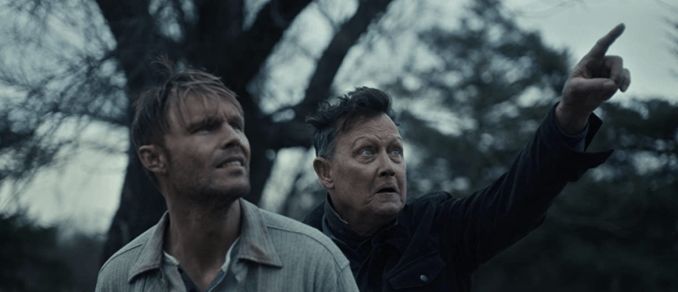
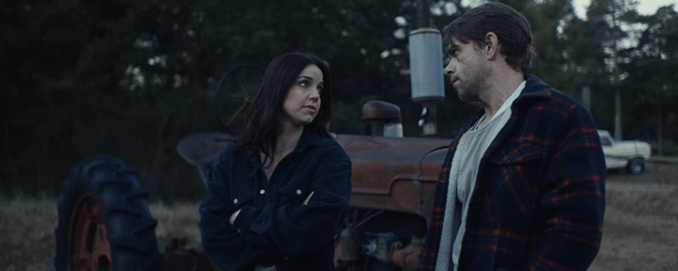


 Isolation, survival, depression, organized chaos. These are heavy-hitting words to describe a film with a blunt force trauma of an opening. My Heart Can’t Beat Unless You Tell It To is a film that’s been on everyone’s lips for a year now. It’s been killing it on the festival circuit, and rightly so. This slow-burn horror puts three siblings at odds due to one’s unique affliction. Jesse has become the taskmaster Mamabird, driving the survival of her family. Dwight is stuck between resentment and loyalty as his patience is running out. Youngest brother Thomas just wants to break free of his physical and emotional prison. Stunted in every way possible, what would life look like without his elder siblings? Is blood thicker than water? My Heart Can’t Beat Unless You Tell It To begs that very question, quite literally.
 Patrick Fugit as Dwight is heartbreaking. The cracks are evident from the very beginning. His conscience weighs on him as his desire for normalcy and peace are all-consuming. Ingrid Sophie Schram as Jesse is everything we need her to be. Focused and utterly exhausted. The survival of this family unit is driven by her sense of duty and not necessarily by love this many years in. She and Fugit are brilliant scene partners. Owen Campbell as Thomas is a nuanced mix of childlike and monster. You simultaneously sympathize and loathe him. These are striking performances.


 It took 8 months to get pregnant with my son. In the grand scheme for a lot of women, that isn’t long at all. Since I turned 35 in the first month of my pregnancy, it was deemed a “geriatric pregnancy.” That felt about as awesome as you might imagine. Growing a human being is stressful enough without the constant barrage of opinions. People telling you what you can and cannot eat, how you should parent, and what you should be feeling. It’s super fun. And by that, I mean it sucks, just in case you didn’t catch the heavy-handed sarcasm. Tribeca Festival 21 film FALSE POSITIVE takes all of that anxiety and cranks it to 11. Ilana Glazer and Justin Theroux play Lucy and Adrian, a couple that has a personal connection with a famed fertility doctor. From the moment Lucy gets a glimpse of her baby on the sonogram, she knows something is very, very wrong.
 The script does a solid job setting the stage with the misogyny and gaslighting thrust upon pregnant women. While the internet can be their worst enemy (for the love of God, stay away from WebMD) a mother has instincts that she should never ignore. False Positive smartly plays upon those anxieties and adds highly macabre stakes. You’re not quite sure what is real. It’s intensely dark. Ilana Glazer is pitch-perfect at every turn. Cast her in every genre, right now. Justin Theroux is a fantastic foil. You feel the skin-crawling vibe he unleashes once the audience is placed in Lucy’s shoes. His straight man act makes him all the more unsettling. Dr. Hindle is played brilliantly by Pierce Brosnan. His charm and calmness are grossly offputting even through his perfect smile.



 “You’re not the only one raising these girls,” Coach Jean Bell says to Tonia Handy, mother of the Sheppard sisters Tai, Rainn, and Brooke in a heartfelt moment that perfectly articulates the thesis of this story. Although the sisters have faced the kind of adversity that makes their success all the more inspiring, the magic of the film is in watching a village pull together to prepare these young ladies for bright futures of their choosing.
  The documentary picks up in the aftermath of these exceptional events as the girls navigate the demands of high-level competitive sport and more universal trials like coming-of-age. In the hands of a different group of filmmakers, the documentary may have focused gratuitously on the tragedy and hardship of the girl’s early lives or the precariousness of what they have now. Sisters On Track, however, is a joy to watch. Although the reality of the girls’ home lives is apparent, it is not exploited for pathos. Instead, the bulk of the film is watching a group of talented young women train and compete at the highest levels amid a continuous stream of motivational pep talks from Coach Jean Bell who is an inspiration in her own right (I could write an entire piece on the Jeuness Track Club where they train).




 TRIBECA 2021

 This eclectic documentary traverses from the inception to the nuance of programming this iconic television show. Everything from the production design to intimate interviews with the actors, from the musical guests to the writers’ room is in this film. It hits on the social, racial, and educational impact of the show. The show’s schedule was one of the most intense I’ve ever heard of. 100 episodes per year filled to the brim with original sketches (both muppet and street scenes), animation, and original songs, Sesame Street has changed the lives of countless families across the globe.
 Some of the most charming bits in the film are the blooper reels. The genius, off-the-cuff moments between cast members staying in muppet character will slay you. One very poignant time in the show’s history was anything but unscripted. The death of Mr. Hooper was a carefully curated scene. It sticks with me still today. In 1990, when Jim Henson passed at the age of 53, the world mourned alongside the cast and crew of Sesame Street. Caroll Spinney as Big Bird singing “It’s Not Easy Being Green” at Jim’s funeral is heartbreaking and eternal.


 There is a chilling feeling while watching this series. As a critic, I long fell into the same category as the journalists featured at the beginning of the episode. You grow up with the notion that Woodey Allen represented the quintessential essence of what New York City culture was. You’re enamored with it all. While inarguably furthering the early careers of actresses Diane Keaton, Mariel Hemingway, and Mia Farrow (they made 12 films during their relationship), the pattern of behavior and theme of his obsession with young women run through his scripts. Woody Allen has somehow been allowed to continue to work mostly unscathed, even after the world knew about his relationship with Farrow’s adopted daughter Soon-Yi, even after the #MeToo movement continues to rain hell down on abusers. Allegations swirled about the sexual abuse of adopted daughter Dylan. This is the first time that Dylan gets to tell her story in earnest. This doc utilized Allen’s own words against him as excerpts of him narrating his 2020 memoir play in between intimate sitdown interviews with Mia, Dylan, Ronan, family, and friends of the once power couple. Mia took endless hours of home videos for years, adding to the amount of readily available footage from the media. Finally hearing all the details from the source is brutal. It’s a visceral watch. As a parent, it is next-level painful. Watching the cycle of emotional abuse Mia endured from one man to the next, all while unconditionally loving her children adds another complex layer to this situation. This series will undoubtedly be controversial. It will be interesting to see the apologists come out loud and proud. There’s an enormous amount of evidence to digest. You will be shocked, sickened, furious, heartbroken. All this just at the end of the first of four episodes. ALLEN v. FARROW has to potential to reopen old wounds for a lot of trauma survivors. It also has the potential to knock another man off the pedestal we’ve kept him on for far too long.


You must be logged in to post a comment.