

DIO DREAMERS NEVER DIE
 DIO DREAMERS NEVER DIE was not one of the films I picked for the SXSW dance card. It was so low on my must-watch list as not to be on it. Frankly, I had no idea the film was playing at all. Then somehow I noticed it when I was putting things on and off my must-see list and added it simply because it fits a slot.
As with most of the films I loved out of SXSW which I just added because it fit, it turned out to be one of the best films at the festival. Actually, it may be a top three or four film of the fest for me, and possibly one of the best films of 2022.
The film is a portrait of Ronnie James Dio who was born Ronald James Padavona in 1942. He began playing the trumpet before starting in the sort of bands you’d expect in the 1950s. Then influenced by Deep Purple he changed the sort of music he was playing before shaking the pillars of heaven in groups like Rainbow, Black Sabbath, and Dio.
This film transcends the notion of what a music documentary is supposed to be. This is a portrait of the man from birth to death with everything in between. All his music is represented, yea even the early stuff, here with a result we truly realize what the man was doing musically. It also is a lovely portrait of the man who is seen to be a guy who stuck to his guns, helped anyone on the way up where he could, even if it was a kind word, and he was a man who loved his fans. The story is told of Dio going on tour and meeting fans and blowing them away by remembering, after years, who they were and what they talked about in prior encounters. He loved his fans and they loved him.
Yes, the film is primarily full of heavy metal music, but don’t let that worry you, it’s never there just to be there. Dio’s music is not used just to play it but for effect and to illustrate what he was doing musically. They pull his lyrics apart and you realize just how stupid the religious nuts who tried to claim his work was Satanic were. Yea it was driving music but he was telling people they mattered.
This film stunned me from the first frames. I expected to like it but I never expected to fall madly in love with the film and the man. It’s so good that I want to know more. Honestly, I am not more in love with his music, he was never one of my favorites, but I am in utter awe of the man.
This is truly one of the best music docs I’ve seen.
I can’t recommend this film enough. One of the highlights of SXSW
Directors:
Don Argott, Demian Fenton
Executive Producer:
Kathy Rivkin Daum, Wendy Dio
Producer:
Don Argott, Sheena M. Joyce
Cinematographer:
Don Argott
Editor:
Demian Fenton
Music:
Nick Bassett
Principal Cast:
Ronnie James Dio, Wendy Dio, Tony Iommi, Geezer Butler, Bill Ward, Vinny Appice, Lita Ford, Rob Halford, Sebastian Bach, Eddie Trunk
To read more of Steve’s SXSW 22 coverage, head over to Unseen Films


 Bobby Cannavale, Rose Byrne, Celeste Barber, Daniel Webber, and Thomas Campbell give superb performances. Seriously Red lives and breathes in screenwriter and star Krew Boylan. She brings unbridled nuance to Red. Comedy timing from the gods, slapstick chops, and a voice for days, Boylan owns every scene. You can’t take your eyes off of her.

 Urara Takano plays Kingyo, a voice actress whose passion for her work is clear to the audience from the very beginning. In 15 minutes we get an emotional journey worth every second of screen time. Competing with a new generation proficient in self-promotion, how does a dedicated veteran compete? The Voice Actress gives us a peek behind the curtain that is the boys club of entertainment, while simultaneously putting us inside the mind of an accomplished performer. Writer-director Anna J. Takayama gives Takano space to bloom. I would happily watch a feature on this character. There is a purposeful beauty to the costumes, especially the use of the color red. The undeniable quirkiness from Takano makes you fall in love with her. It’s no wonder the short garnered SXSW22’s

 You can see the momentary panic on the faces of friends, family, and frontline workers wondering where to place their small white flag in an eventual sea of over 700,000. We hear the intimate audio, prayers, sobs, and send-offs that no person dreams of giving in this way. Beyond that, the sound design is simple, the wind blowing gently against each tribute. The result is like the sound of the ocean. The title serves as a triple entendre, echoing the relentless tragedy of the ever-evolving virus, the flapping of the flags, and the words of the Japanese Death Poem by Seiju.


 I appreciated the way the film leaned into its theater roots without becoming too highbrow. There’s clearly a linkage between Lilian’s decisions and her performances of Hamlet and Lady Macbeth, but you also don’t leave the film feeling like you need to get a Ph.D. in Shakespeare. Leo does justice to Lillian’s trauma and sorrow, but she also imbues her with a winking charm. This film features one of the best-planned alibis I’ve seen in a thriller, and some of the methods Lillian employs for revenge were positively refreshing in today’s age of shoot-em-up thrillers. When a gun goes off in this film, it means something.
 Leo and Thorne are backed by an excellent supporting cast. Weary sure looks the part of a rock star, but I couldn’t get over how obviously dubbed his singing was during musical scenes. He and Leo have a beautiful soft dynamic together. I could watch Adrian Martinez in anything, and he provides a necessary bit of levity as the body count rises. I especially appreciated the way that Michael Potts’ Detective Eaton evolved over the course of the film. His final exchange with Leo sends the film off on a high note.

 Jane and Charlotte find common ground in parenting styles and celebrity. They speak openly about Jane’s lifelong dependency on sleeping pills, inspiration for songs, and her various marriages. The loss of her daughter Kate was perhaps the most impactful event in her life. The grief she carries is palpable. Jane and Charlotte discuss maternal guilt. It’s one of the most poignant through lines in the film. Charlotte’s eye and adoration for her mother are written all over this doc. It’s a lovely ode to a beloved icon from a daughter who continues to idolize her. As a mother, Jane By Charlotte has a revelatory feeling of intimacy. Gainsbourg‘s documentary makes me jealous in the best way possible.


 Shudder original
  Writer-director
  As Kiera investigates the house’s history, we are introduced to everything from Jewish mysticism to quantum physics. I wasn’t expecting math to be a thing, yet here we are. I thought the record player that coaxed the family members into all sorts of trouble was clever. But, not so much the characters googling Latin quotations. It’s a lot. There are fleeting moments of greatness, such as an ancient abacus moving on its own, air blowing from underneath the cellar door as if a creature were heavily breathing. The classic scares worked best for me. The final 20 minutes is where the real action occurs, a clear nod to

 Simultaneously awkward and natural, this is an awesome and important ten minutes about accessibility, perception, and power. Stay for the credits!
 Synopsis: For a stand-up comic, a drastic life change can mean losing one’s entire act. Bisexual comedian Krista has decided her relationship with a trans woman is worth coming out over—but will she commit to an entire rebrand with one gay haircut?
 A seemingly simple change with a lot of weight attached. In 7 minutes we get an entire journey about identity filled with some quirky weirdness.
 Writer-director Christian Nolan Jones brings to life a coming-of-age short that dives into the universal feeling of acceptance. Set in the 90s, two best friends Jibril and Tawanda are on a mission to purchase an item that will catch the eye of his crush. Glitter Ain’t Gold perfectly captures middle-school angst. The costumes and overall aesthetic were spot on. Our two young leads Alfred R. Lewis III and Priah Ferguson are stellar. This might as well have been a documentary with their natural ability to captivate the audience. Each beat is authentic. Glitter Ain’t Gold is a tight treatment for s feature or series.

 On the heels of The Tinder Swindler and Inventing Anna, watching individuals fall under the spell of another human being is fascinating. The overlooked red flags are easy for me to spot as I watch from my couch at home. We’ve watched some crazy stories over the years, but nothing like Netflix’s documentary series, BAD VEGAN. Sarma Melngailis gets into hot water when a conman steals not only her heart but her employees’ money. But, is it that cut and dry? Witnessing this twisted plot unfold, I have serious reservations about the genuine involvement of Sarma in her own undoing. Desperate for funds, her entanglement and secretive marriage to Anthony Strangis leads to massive fraud, lies, and some of the strangest behavior from a smart and successful woman I’ve ever heard of.
 The doc has unprecedented footage, some of which looks like it came from Strangis’ cell phone. Sarma’s moments of pushback while on the run show a clear head through her tears and anger. I’m not sure I believe her version. Through sit-down interviews with her former staff, restaurant associates, lawyer, and even her father, I don’t think they know what the real truth is, either. Along with phone calls between Sarma and Anthony, the series spans the rise and fall of this sophisticated businesswoman. The promises and threats she endured are, quite literally, unbelievable. When do we ask Sarma to take responsibility for her part in this apparent lunacy? The book deals and tv appearance feel inevitable if we’ve learned anything from Anna Sorokin (who is being deported back to Germany as of this week). Part of me wants Sarma to rise from the ashes, and yet there is this nagging feeling that she doesn’t deserve it. The series covers a lot, but I’m glad to know that I’m not the only one that has reservations *no pun intended* when it comes to Sarma Melngailis.

 At 41, I cannot imagine navigating a new relationship at this precise moment in time. I remember when Match.com first became a thing and how weird I thought it sounded. Then I recall attending four weddings in the years that followed, each couple had met through Match. RADICAL HONESTY, a 7-minute short film, tackles the complexities that Gen Z and Millenials face day-to-day. Performances are natural and the opening camerawork is fun. It is no surprise that the idea of radical honesty is something we experience more and more now. With the push of social media platforms, everyone is encouraged to share an opinion. Yes, this leads to awareness, self-discovery, and connections across the globe, if we’re talking upsides, only. My Xennial self also understands this to be a potential trap. C’est la vie.

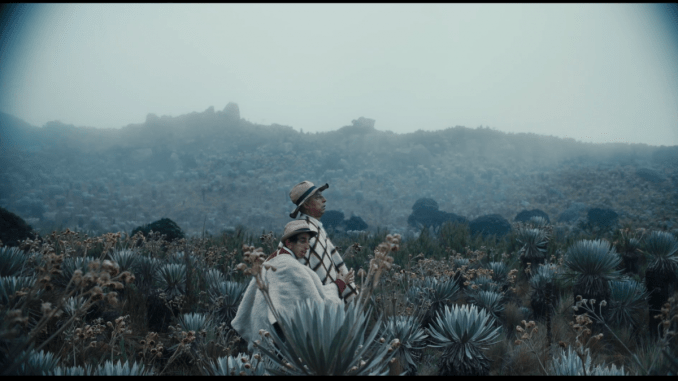
 First-time cinematographer

 Will has created a facade of mental wellness. As the past comes back to haunt him, can he keep himself together?
  The camera work is an entire entity. Editing wise, reflection, double vision, echoing of dialogue all build as the story progresses. These devices slowly place us into the mindset of Will, forcing us to question reality. There are bizarre and jarring references to films like

 Why do people climb mountains? What is it that drives a person to climb to the peak of the highest mountain on earth? As a person afraid of heights and generally risk-averse, I, for one, will certainly never understand. But whatever it is that lights that kind of internal fire within a person, it is certainly not a male instinct alone.

 THE UNKNOWN COUNTRY is a snapshot of all the people we pass on a journey; the waitress, the motel manager, or the convenience store clerk. It’s a picture of America. The sound editing is a flurry of sounds from a car radio, local and national news reports, music, and whatever Tanna stumbles upon on her way.


 The layers of complexity in this script are unfathomable. A small town brimming with secrets pushes Hamish past his already frazzled limits, physically and mentally. In an attempt to figure out why his late mother left her hometown years ago, Hamish finds himself wrapped up in the local drama. As he navigates through the town landscape, quite literally at times, he faces more personal uncertainty than he could have ever anticipated.
You must be logged in to post a comment.