
MOVE ME

At 27, Kelsey Peterson dove into Lake Superior, off the shores of Wisconsin, and emerged paralyzed. Now, the former dancer struggles to redefine who she is while adapting to life with a disability. At the intersection of acceptance and hope, Kelsey unexpectedly finds herself facing an opportunity to dance again, showing her a new path toward acceptance, all the while grappling with a decision to participate in a cutting-edge clinical trial that could bring her much-desired change — forcing her to evaluate the possibilities of her recovery, body, and spirit.
In Move Me, a first-time filmmaker with a disability simultaneously takes the reins behind the scenes, while revealing her inner revolution through raw storytelling onscreen.

Dancer and choreographer Kelsey Peterson was paralyzed from the chest down after diving into shallow waters. In conjunction with a friend injured in the same manner, Kelsey decides to dance for the first time since her accident by creating a unique piece of choreography. Her documentary feature MOVE ME is a portrait of a woman attempting to reclaim her identity.
The combination of home movies, rehearsals, and scenes from her daily life create a raw picture of Kelsey’s existence. Kelsey explains that after the accident, she realized that the world does not accommodate her current state. This singular statement makes MOVE ME so much more profound for able-body viewers. When you see the rehearsal restroom, the irony is exhausting.
MOVE ME doesn’t simply tell the tale of a single dance. Kelsey navigates her father’s declining health while simultaneously researching the possibility of joining an experimental trial. She speaks with other participants, discovering that it’s not all positive outcomes. Uncertainty looms large as Kelsey weighs her options. She holds nothing back, tackling everything from bowel function to sexual sensation.
 “A Cripple’s Dance” bases pieces of its choreography on Kelsey and Gabe’s moments of impact and what followed in the water. The intimacy of the camera work is visceral. Gabe’s lyrics are profoundly beautiful and hit you in the heart like a dagger. The result will give you chills.
This film was personal for me. I began dancing at the age of three. Since then, I have competed, choreographed, and expressed myself through movement. When I lost some of my abilities from an emergency appendectomy and then years later, a neck injury, I was devastated. I remember the grief of losing those lifelong skills, talents that came without thought as they were muscle memory. Let me be clear I am able-bodied. You would not know I was in pain by the way I move through the day. I cannot begin to fathom the strength Kelsey Peterson possesses daily. Her positive outlook and relentless optimism drive her film. To me, she’s fearless. She’s sort of my hero. MOVE ME makes me appreciate my body’s movement tenfold.
 Co-Directors: Kelsey Peterson, Daniel Klein
Producers: Kelsey Peterson, Daniel Klein, Madeline Brown
Executive Producers: Lois Vossen, Sally Jo Fifer, Joanna Rudnick
Cinematographer: Brennan Vance
Editor: Nico Bovat


 The creature design is reminiscent of something that might come out of the Wētā Workshop from Jim Henson‘s team. Its evolution is fascinating. It manages to be shockingly grotesque and yet adorable. If you’re a fan of

 “With great power comes great responsibility.” A group of children in an apartment complex realizes they have a strange and often dangerous bond. They possess otherworldly powers. As the connection between the children grows, so too do their abilities. The Innocents plays like a mysterious superhero and villain origin story.
 The complexity of The Innocents is endless. This young cast carries a heavy emotional weight. They delighted and terrified me. The evolution of this dark sci-fi narrative gave me full-body goosebumps. The volatility of young feelings is on an entirely uncharted plain. What these characters do with their power speaks to the purity of good and evil. Look for an extraordinary turn from


 The Thief Collector is a film that is not what you expect. The film is nominally about the theft of de Kooning’s painting Woman Ochre from the University of Arizona in 1985. The painting was cut from the frame and carried off by a couple not long after the museum opened on the day after Thanksgiving. Where it went or who took it remained a mystery for decades…until it was rediscovered in the effects of Rita and Jerry Alter. While that is a part of the story, the film actually is a look at the Alters and their obsessions. This is not a look at the crime but at the way people feed their obsessions and how seemingly normal people almost always seem to have another side to them.


 A look at the US policy under Donald Trump to separate illegal immigrant parents from their children. It focuses on the plight of several women who had their children taken away as well as the mothers turned activists who fought to reunite the family. The film focuses on how mothers from across America came together to create Immigrant Families Together (IFT) which was aimed at working to get the separated families together any way they could. In the case of Yeni Gonzalez, the women drove her across the country in stages in order to get her and her kids back together.


 DIO DREAMERS NEVER DIE was not one of the films I picked for the SXSW dance card. It was so low on my must-watch list as not to be on it. Frankly, I had no idea the film was playing at all. Then somehow I noticed it when I was putting things on and off my must-see list and added it simply because it fits a slot.


 Bobby Cannavale, Rose Byrne, Celeste Barber, Daniel Webber, and Thomas Campbell give superb performances. Seriously Red lives and breathes in screenwriter and star Krew Boylan. She brings unbridled nuance to Red. Comedy timing from the gods, slapstick chops, and a voice for days, Boylan owns every scene. You can’t take your eyes off of her.

 You can see the momentary panic on the faces of friends, family, and frontline workers wondering where to place their small white flag in an eventual sea of over 700,000. We hear the intimate audio, prayers, sobs, and send-offs that no person dreams of giving in this way. Beyond that, the sound design is simple, the wind blowing gently against each tribute. The result is like the sound of the ocean. The title serves as a triple entendre, echoing the relentless tragedy of the ever-evolving virus, the flapping of the flags, and the words of the Japanese Death Poem by Seiju.




 Jane and Charlotte find common ground in parenting styles and celebrity. They speak openly about Jane’s lifelong dependency on sleeping pills, inspiration for songs, and her various marriages. The loss of her daughter Kate was perhaps the most impactful event in her life. The grief she carries is palpable. Jane and Charlotte discuss maternal guilt. It’s one of the most poignant through lines in the film. Charlotte’s eye and adoration for her mother are written all over this doc. It’s a lovely ode to a beloved icon from a daughter who continues to idolize her. As a mother, Jane By Charlotte has a revelatory feeling of intimacy. Gainsbourg‘s documentary makes me jealous in the best way possible.


 Shudder original
  Writer-director
  As Kiera investigates the house’s history, we are introduced to everything from Jewish mysticism to quantum physics. I wasn’t expecting math to be a thing, yet here we are. I thought the record player that coaxed the family members into all sorts of trouble was clever. But, not so much the characters googling Latin quotations. It’s a lot. There are fleeting moments of greatness, such as an ancient abacus moving on its own, air blowing from underneath the cellar door as if a creature were heavily breathing. The classic scares worked best for me. The final 20 minutes is where the real action occurs, a clear nod to

 Simultaneously awkward and natural, this is an awesome and important ten minutes about accessibility, perception, and power. Stay for the credits!
 Synopsis: For a stand-up comic, a drastic life change can mean losing one’s entire act. Bisexual comedian Krista has decided her relationship with a trans woman is worth coming out over—but will she commit to an entire rebrand with one gay haircut?
 A seemingly simple change with a lot of weight attached. In 7 minutes we get an entire journey about identity filled with some quirky weirdness.
 Writer-director Christian Nolan Jones brings to life a coming-of-age short that dives into the universal feeling of acceptance. Set in the 90s, two best friends Jibril and Tawanda are on a mission to purchase an item that will catch the eye of his crush. Glitter Ain’t Gold perfectly captures middle-school angst. The costumes and overall aesthetic were spot on. Our two young leads Alfred R. Lewis III and Priah Ferguson are stellar. This might as well have been a documentary with their natural ability to captivate the audience. Each beat is authentic. Glitter Ain’t Gold is a tight treatment for s feature or series.

 At 41, I cannot imagine navigating a new relationship at this precise moment in time. I remember when Match.com first became a thing and how weird I thought it sounded. Then I recall attending four weddings in the years that followed, each couple had met through Match. RADICAL HONESTY, a 7-minute short film, tackles the complexities that Gen Z and Millenials face day-to-day. Performances are natural and the opening camerawork is fun. It is no surprise that the idea of radical honesty is something we experience more and more now. With the push of social media platforms, everyone is encouraged to share an opinion. Yes, this leads to awareness, self-discovery, and connections across the globe, if we’re talking upsides, only. My Xennial self also understands this to be a potential trap. C’est la vie.

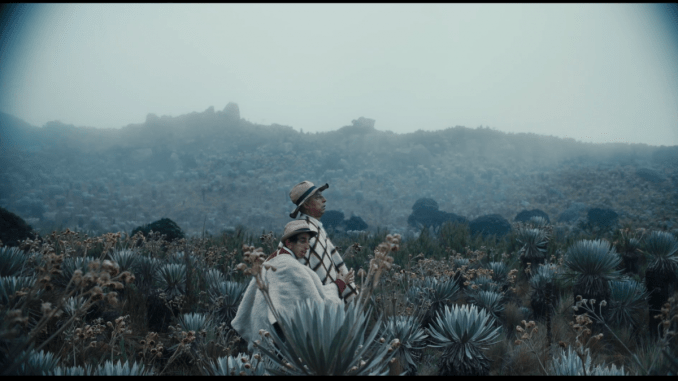
 First-time cinematographer

 Will has created a facade of mental wellness. As the past comes back to haunt him, can he keep himself together?
  The camera work is an entire entity. Editing wise, reflection, double vision, echoing of dialogue all build as the story progresses. These devices slowly place us into the mindset of Will, forcing us to question reality. There are bizarre and jarring references to films like

 THE UNKNOWN COUNTRY is a snapshot of all the people we pass on a journey; the waitress, the motel manager, or the convenience store clerk. It’s a picture of America. The sound editing is a flurry of sounds from a car radio, local and national news reports, music, and whatever Tanna stumbles upon on her way.
You must be logged in to post a comment.