
DOSED
This film, the second by Nicholas Meyers and Tyler Chandler, tells the story of a loving mother of four, Laurie Brooks, who receives a grim diagnosis: terminal cancer. Given only a year to live, she becomes one of the first patients to be granted the legal right to the medical use of psilocybin (“magic mushrooms”) for end-of-life treatment. As they documented her journey, they were able to secure interviews with top scientists, doctors, and clinicians in the field of psychedelic research, including Dr. Gabor Maté, Paul Stamets, Dennis McKenna, Dr. Robert Sealy, and Sharan Sidhu, among others. The resulting film, DOSED: The Trip of a Lifetime, contains powerful information with the potential to repair families and save lives.


The magic medicine of mushrooms. Filmmakers Nicholas Meyers and Tyler Chandler follow the 53-year-old married mother of four, Laurie Brooks, through grief and acceptance after a dire cancer diagnosis. Pushing past fear and diving head first into the earth’s soil for a possible therapy, DOSED: The Trip of a Lifetime gives audiences a fresh look at the mind and body and a new outlook on life, death, and healing.
 Although outlawed in 1970, mushrooms had been in innumerable treatments beginning in the 20s. In 2000 Johns Hopkins received approval to continue research. Psychological readiness is intrinsic in granting patient approval. The study of psilocybin is just as important as cannabis studies, a subject DOSED also delves into at length. Meyers, Chandler, and Brooks allow us into raw trips. Laurie describes the images and sensations and, more importantly, the emotional after-effects of psilocybin. We hear from researchers and therapists about the positive effects of “magic mushrooms,” When we receive a fatal diagnosis, the psychological impact is immeasurable.
 Meyers and Chandler fully acknowledge the limitations of solely profiling Laurie but hope that her story will open up the dialogue for the curious and the medical field to come together in a mutually beneficial journey. DOSED is an intimate and deeply affecting film about the possibilities in the relationship between nature and healing. Laurie Brooks’ story is one filled with inspiration. We walk away acknowledging one vital thing; that fully experiencing every moment is the key to living.


 When Abby’s grandma dies, the only thing she inherits a stupid kite – after giving it to her brother; he is mysteriously killed and the kite disappears. While searching for the truth, she is tangled in a strange supernatural plot, where this killer kite continues to kill! Now, Abby must string together a way to stop the kite before it blows us all away. Kites may not be the scariest monster ever, but they’re up there.
 Could KILLER KITES be the new Midnight Madness screening? Anything is possible. Check out the trailer below.
 FROM BLACK
 Anna Camp plays Cora. She is unrecognizable in this role. Audiences usually recognize her perky personality and blonde hair. Raven-haired and emotionally battered, Cora brims with complexity. Camp allows herself to dive deep into grief and regret. It is an out-of-the-box performance for her, and she is magnificent. I’d love to see her in more dark roles. She can handle them.

 Directed by John Slattery
 When two women with the same name are murdered days apart, small-town police chief Jordan Sanders (Hamm) finds himself wading through an unlikely collection of cheating husbands, lonely hearts, nosy neighbors and contract killers in an effort to put the pieces of the case, and his life, together. The film is inspired by actual events.

 The End of Sex tells the story of a married couple (Hampshire and Chernick) who are feeling the pressures of parenting and adulthood. After they send their young kids to camp for the first time, they embark on a series of comic sexual adventures to reinvigorate their relationship.
 Lily Gao
 The script nails the unfiltered complexities of adult relationships, particularly co-parenting and the ebb and flow of physical attraction. It centers on communication and the dangers of giving up on ourselves to mollify our partners. Relationships are rarely 50/50. THE END OF SEX goes there and sometimes falls off the edge in the best way possible.
  The quirky and overtly sexualized visuals on signs throughout the film become an over-the-top running joke. A brief but brilliant cameo from a comedy legend takes the script to another level. It is an unforgettable scene. THE END OF SEX celebrates kink rather than shaming. It permits viewers to explore fantasy while reflecting on intimacy. It’s a beginning of a conversation between partners, new and old, and a hell of a good time.


 Once she finds Jackson, Marge discovers he has been spending his days surfing, coaching, and drinking himself into oblivion. He is in no shape to bring Marge into his life. Undeterred, Marge makes him pinky promise to do better. As they fumble toward reconciliation, Marge learns to be bolder, braver, and more self-accepting.
 The women’s fútbol team overflows with cheeky personalities. These girls are great foils for Marge’s insecure nature. Jess Gabor is fantastic as Marge. She is natural, sarcastic, and vulnerable. Steve Zahn never disappoints. His comedic self-defense mechanisms pair well with the well-intended fatherly guidance. At the heart of it, Jackson is a damaged but kind soul. Zahn embraces his flaws, making him human and accessible. Together, they are easy to watch.
 Waving the logistical fact that a minor would never be allowed to cross the border without a passport or note from their parents, GRINGA tells the story of two lost souls growing together. The script tackles body dysmorphia, eating disorders, culture, alcoholism, grief, and unresolved emotional trauma. In the end, GRINGA is a charming coming-of-age story for both father and daughter.

 Despite the length of the contest, we learn very little about most of the contestants. This is the rare film I actually wished was a mini-series. Kyle (Joe Cole) serves as the audience’s main proxy in the competition. Before the competition details surrounding Kyle are mostly superficial. Kyle works at a local fast-food restaurant, has a deaf brother, and is motivated to win the truck to provide for his wife and baby. Kyle begins to unravel as the contest drags on from hours into days.
 The atmosphere surrounding the contest itself is beautifully realized. The imagery surrounding the laying of hands on the gleaming metal car feels explicitly religious. As the contest progresses, certain elements of the plot do begin to strain credibility. Kyle faces many rivals within the contest, but none of the build-ups leads to a satisfying payoff. A twist surrounding one character seems particularly far-fetched. A final coda has rich details but feels like it arrives too late.


 Director Oscar Harding happened upon the tape as a child but had only had the pleasure of watching until his father hit stop on the VCR. It isn’t until the VHS reemerges in his adulthood that he feels compelled to dig deeper into the man beyond the vast amount of background provided by Charles along the way.


 Saini interweaves her family history into her search. She films herself on long solo journeys from interview to interview and in the back of a pickup truck.
  These women are genuinely fearless and incredibly generous. Many groups attach charity to their rides. Many have been in life-threatening accidents and got tight back on a bike. These women thrive in a community. Their clear communication creates a sense of safety and care for each other.

 Luke Bracey plays Jesse, a photographer who returns with PTSD. His anger, bitterness, and assumptions sabotage a return to normalcy. Bracey takes us along on a journey that provokes real questions.
  The script would benefit from more scenes establishing the strength of Emma and Sam’s bond. The humor comes from Sam’s endearing and feisty conversations with his students. These scenes are genuine and hilarious. The film probably needs one or two at the beginning to establish Sam as a fully fleshed-out character, which only happens much later in the plot. Additionally, I would have loved to see Sam pining away for Emma as a kid. These nitpicky issues speak to the editing as a whole. The narrative is tricky as we jump in time. It could use a bit of reworking, in my opinion. I would watch this story as a series. There is so much to dig into.
 ONE TRUE LOVES


 Giedrius Kiela and Gabija Bargailaite play Paulius and Indre, respectively. Each brings qualities of pain. Kiela’s aggression has the audience in a death grip. His volatility is frightening. Bargailaite is more subtle. Her unraveling happens in a finale that breaks you. They are hypnotizing.
  Slick editing and long takes on a stationary camera make the audience an unwilling witness to Paulius and Indre’s plans. The script’s structure leaves much to the imagination as clues come slowly. My mind swirled as I watched Paulius walk Indre through the crime’s timeline. You feel compelled to keep watching. As someone whose close friend died under mysterious circumstances years ago, the unresolved pain and trauma are palpable. The need to understand and reason with the devil never fades, no matter how many years go by. PILGRIMS captures the very messy essence of grief.


 Thomas Parigi‘s performance transfixes. His ability to hold the audience in the palm of his hands, quite literally in this case, has the viewer waiting with bated breath for his next move. Parigi is a musician. His Soundcloud is as mesmerizing as his performance in the film. This debut role should garner him the attention he deserves. Parigi pulls you into this one-of-a-kind folklore horror dealing with loss, love, self-confidence, and generational embracement. The Strange Case of Jacky Caillou is an undisputable gem.


 The cast makes PAINT watchable. Stephen Root and Wendi McLendon-Covey are ensemble highlights. Ciara Renée plays Ambrosia with cool confidence. She is a smart foil for Wilson. Michaela Watkins plays Katherine, Nargle’s producer and ex-lover. Watkins displays a down-to-earth vibe. Her warmth is endearing, and her coping mechanism for rejection is relatable and funny. Owen Wilson brings his iconic vocal stylings to Carl. The character is more complex than at first glance. Underneath the fame is a lack of SF esteem and regret. Wilson does his best to save the script.
 The pace perfectly mirrors the setting of a PBS station in Burlington, Vermont. The dry humor will hit or miss with audiences. It plays like a Christopher Guest film without the mockumentary structure. It pokes fun at the art industry in a tangible and blunt way. In the end, PAINT is an unexpected love story. If you can rock with the vibe, good for you. If not, it’s a bit like watching paint dry.


 Alex Vincent, the original Andy, speaks to his experience at ages six and seven. Everyone boasts of his maturity and the professionalism he displayed on set. Jennifer Tilly plays Tiffany, aka Bride of Chucky. When Tilly came into the franchise, it revitalized the humor as a straighter foil for Dourif’s maniacal Chucky. The creation of her character is cinematic genius involving the Bride of Frankenstein and a bathtub. Dourif raves about her ability to improvise.
  For
For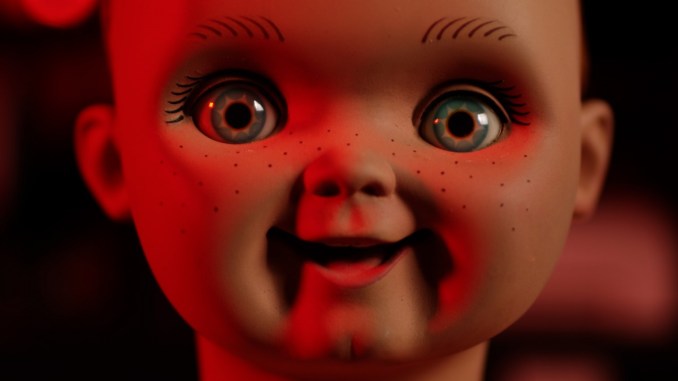 As a Child’s Play fan, transition scenes show you every minute detail of creating a single Chucky doll, and popping in each physical piece of media one at a time is fascinating. Everyone comments on the difficulty of movie-making and maintaining family life. The franchise structure is a unique chance to reconnect with people from year to year. They become your support system while away from your biological crew. Director Kyra Elise Gardner brings her second family into the limelight. LIVING WITH CHUCKY allows fans to celebrate one of their horror legends and those responsible for his status. It’s killer fun.


 The cast’s chemistry is spectacular. Michael Urie is Jamie, Larry’s fiance. He’s the most down-to-earth of the bunch, with the better part of his screen time in sequences over the phone. Urie can do no wrong in my book. Veanne Cox is Sylvia. Her performance is frightening and downright brilliant. I would watch a stand-alone film on her character.
  Nicholas Logan plays Harrison. His overtly masculine energy, physical discomfort, and aggressive nature are a perfect foil for our four friends. His aura forces the audience to take stock of microaggressions and outright bigotry. Logan handles the distasteful behavior like a champ, and Harrison’s arch is a nuanced breath of fresh air.
 SUMMONING SYLVIA is one of the funniest queer films of the year. As a theatre girl, I was in my element. I knew these characters. The film’s climax has a dual purpose that beautifully mirrors life and the afterlife. The finale is celebratory. Do not miss this hell of a good time.
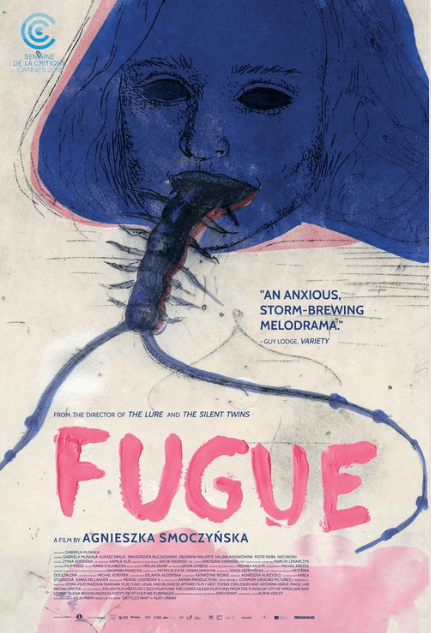
 Sporadic blue-tinged purgatory-like flashbacks of the woman in her heels, mussed blonde hair, and filthy trench coat give us little to go on. These sequences are undeniably unsettling. For most of the film, we draw our own conclusions based on the apparent hollowness of their marriage and a suggestion of an affair. Jakub Kijowski‘s bleak, but ravishing, cinematography sets the tone. Alicja stands apart from most of the action, furthering the feeling of isolation in an already stark environment.
  Iwo Rajski plays Daniel with a natural fierceness that suggests he is starring in a documentary rather than a narrative. He is fantastic. Gabriela Muskala pens the screenplay and plays Alicja/Kinga. Her ability to reel you into her turmoil feels effortless. She is magnetic.

 Azia Dinea Hale plays Nina, a young phone tech who gives private lessons to Mordecai. Dealing with an unexpected family secret, Nina pushes onward to assure Mordecai that he can take his future into his hands and heal through experience and art. Hale is as sweet and patient as we need her to be.
  Sean Astin is Marvin, Mordecai’s son. Marvin’s confident facade begins to crack under the pressure of his cigar business, Fela’s diagnosis, and unresolved feelings with his father. Astin leaves his heart on the screen. Marvin is a complex person doing his best to keep his head above water. Astin takes each beat with thoughtfulness. It is a carefully crafted character study.


 Two dominant themes in The Lost King are disability visibility and gender bias. Phillipa feels a kinship with Richard, angered he has been deemed a monster due to his severe scoliosis. It seems Shakespeare had a hand in demonizing his appearance for these years. The historical digging that happens in the film is eye-opening. She is whipsmart and undeterred in her mission to clear King Richard’s sullied reputation. We feel the frustration as Philiipa comes up against men taking credit for her work. Cheering her on when she stands up for herself, choosing to spread a strong feminist message to young girls rather than chase the fame regaled onto male archeologists on her dig.
 The film’s magical realism adds a beautiful element to Phillipa’s journey. It highlights the emotional pull to finish her search. Not to mention how charming actor Harry Lloyd is as Richard. Steve Coogan plays Phillipa’s ex-husband John, a man going through a mid-life crisis who grows to respect Phillipa’s passion for her subject. Coogan is an icon and is no less intriguing in this role. Sally Hawkins plays Phillipa. Her ability to live in a character’s skin is magnificent. Her physicality dazzles. She can do no wrong in my book. Her enthusiasm is contagious.


 THE WORST ONES is a meta-narrative that succeeds in conveying hope through hardship. Not only does the film shine in its storytelling, embracing heartbreak and socioeconomic trauma, but the performances also by our four young actors will hypnotize the viewer. Check out the clip below for a taste:
You must be logged in to post a comment.