
MOTION DETECTED

Eva narrowly escaped being murdered during a recent terrifying home invasion in Mexico City. She and her husband decide to relocate to Los Angeles where she can recuperate. But when her husband has to travel for business, she’s left alone in an unfamiliar place and suffering from paranoia. She’s consoled by the smart home security system, but the technology is difficult to master and she starts to wonder if it will actually keep her safe or take over her life.
 MOTION DETECTED relies entirely on Natasha Esca‘s performance as Eva. Her descent into madness goes from 75 to 200 very quickly. A moment with wine is, perhaps, a touch over the top. Esca shines brightest when speaking Spanish. It’s her most natural delivery.
I understand the need for lighting, but the nighttime bedroom scenes appear overlit. That aside, the set is gorgeous. This LA mansion has all the architectural features to swoon over. Using what appear to be Ring video clips to create palpable fear is a slick device, and the subplot of trauma heightens the stakes.
 The film struggles with picking a storytelling lane. Eva’s PTSD and (*spoiler alert*) the haunted alarm system conflict more than they mesh. The idea that Diablo might manifest your greatest fears to lure you in needs a better narrative anchor in the film’s opening scene. Overall, the notion of tech knowing too much about us at every moment is a solid starting point. We can all relate to using some version of an AI assistant. The meat is on the bone in MOTION DETECTED, but it is a tad undercooked, in my opinion.


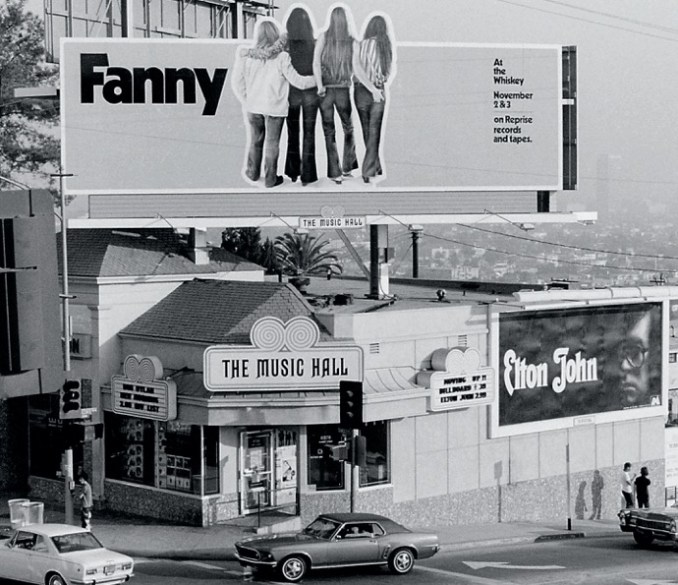 Experiencing Fanny’s songs for the first time, I immediately recognized the impact made on so many other artists. So how is Fanny not in my musical catalog? Jean, June, Alice, Brie, Patti, Cam, and Nickey were trailblazers who worked three times as hard as men and cranked out thought-provoking lyrics ahead of the times. Fanny was a feminist rock group with sharp wit and zero fear. The documentary utilizes sit-down interviews, studio sessions past and present, and live performances on stage and on television. The archival photography from Linda Wolf is extraordinary.
 Fanny broke up due to a deadly combination of things; misogyny, societal times, no one big bop to make money, and having a studio that pushed them to their limits. As members came and went throughout the years, the sound morphed but always retained that iconic grit.

 When Abby’s grandma dies, the only thing she inherits a stupid kite – after giving it to her brother; he is mysteriously killed and the kite disappears. While searching for the truth, she is tangled in a strange supernatural plot, where this killer kite continues to kill! Now, Abby must string together a way to stop the kite before it blows us all away. Kites may not be the scariest monster ever, but they’re up there.
 Could KILLER KITES be the new Midnight Madness screening? Anything is possible. Check out the trailer below.


 The End of Sex tells the story of a married couple (Hampshire and Chernick) who are feeling the pressures of parenting and adulthood. After they send their young kids to camp for the first time, they embark on a series of comic sexual adventures to reinvigorate their relationship.
 Lily Gao
 The script nails the unfiltered complexities of adult relationships, particularly co-parenting and the ebb and flow of physical attraction. It centers on communication and the dangers of giving up on ourselves to mollify our partners. Relationships are rarely 50/50. THE END OF SEX goes there and sometimes falls off the edge in the best way possible.
  The quirky and overtly sexualized visuals on signs throughout the film become an over-the-top running joke. A brief but brilliant cameo from a comedy legend takes the script to another level. It is an unforgettable scene. THE END OF SEX celebrates kink rather than shaming. It permits viewers to explore fantasy while reflecting on intimacy. It’s a beginning of a conversation between partners, new and old, and a hell of a good time.


 Once she finds Jackson, Marge discovers he has been spending his days surfing, coaching, and drinking himself into oblivion. He is in no shape to bring Marge into his life. Undeterred, Marge makes him pinky promise to do better. As they fumble toward reconciliation, Marge learns to be bolder, braver, and more self-accepting.
 The women’s fútbol team overflows with cheeky personalities. These girls are great foils for Marge’s insecure nature. Jess Gabor is fantastic as Marge. She is natural, sarcastic, and vulnerable. Steve Zahn never disappoints. His comedic self-defense mechanisms pair well with the well-intended fatherly guidance. At the heart of it, Jackson is a damaged but kind soul. Zahn embraces his flaws, making him human and accessible. Together, they are easy to watch.
 Waving the logistical fact that a minor would never be allowed to cross the border without a passport or note from their parents, GRINGA tells the story of two lost souls growing together. The script tackles body dysmorphia, eating disorders, culture, alcoholism, grief, and unresolved emotional trauma. In the end, GRINGA is a charming coming-of-age story for both father and daughter.

 Despite the length of the contest, we learn very little about most of the contestants. This is the rare film I actually wished was a mini-series. Kyle (Joe Cole) serves as the audience’s main proxy in the competition. Before the competition details surrounding Kyle are mostly superficial. Kyle works at a local fast-food restaurant, has a deaf brother, and is motivated to win the truck to provide for his wife and baby. Kyle begins to unravel as the contest drags on from hours into days.
 The atmosphere surrounding the contest itself is beautifully realized. The imagery surrounding the laying of hands on the gleaming metal car feels explicitly religious. As the contest progresses, certain elements of the plot do begin to strain credibility. Kyle faces many rivals within the contest, but none of the build-ups leads to a satisfying payoff. A twist surrounding one character seems particularly far-fetched. A final coda has rich details but feels like it arrives too late.


 Director Oscar Harding happened upon the tape as a child but had only had the pleasure of watching until his father hit stop on the VCR. It isn’t until the VHS reemerges in his adulthood that he feels compelled to dig deeper into the man beyond the vast amount of background provided by Charles along the way.


 Saini interweaves her family history into her search. She films herself on long solo journeys from interview to interview and in the back of a pickup truck.
  These women are genuinely fearless and incredibly generous. Many groups attach charity to their rides. Many have been in life-threatening accidents and got tight back on a bike. These women thrive in a community. Their clear communication creates a sense of safety and care for each other.

 Luke Bracey plays Jesse, a photographer who returns with PTSD. His anger, bitterness, and assumptions sabotage a return to normalcy. Bracey takes us along on a journey that provokes real questions.
  The script would benefit from more scenes establishing the strength of Emma and Sam’s bond. The humor comes from Sam’s endearing and feisty conversations with his students. These scenes are genuine and hilarious. The film probably needs one or two at the beginning to establish Sam as a fully fleshed-out character, which only happens much later in the plot. Additionally, I would have loved to see Sam pining away for Emma as a kid. These nitpicky issues speak to the editing as a whole. The narrative is tricky as we jump in time. It could use a bit of reworking, in my opinion. I would watch this story as a series. There is so much to dig into.
 ONE TRUE LOVES


 Alex Vincent, the original Andy, speaks to his experience at ages six and seven. Everyone boasts of his maturity and the professionalism he displayed on set. Jennifer Tilly plays Tiffany, aka Bride of Chucky. When Tilly came into the franchise, it revitalized the humor as a straighter foil for Dourif’s maniacal Chucky. The creation of her character is cinematic genius involving the Bride of Frankenstein and a bathtub. Dourif raves about her ability to improvise.
  For
For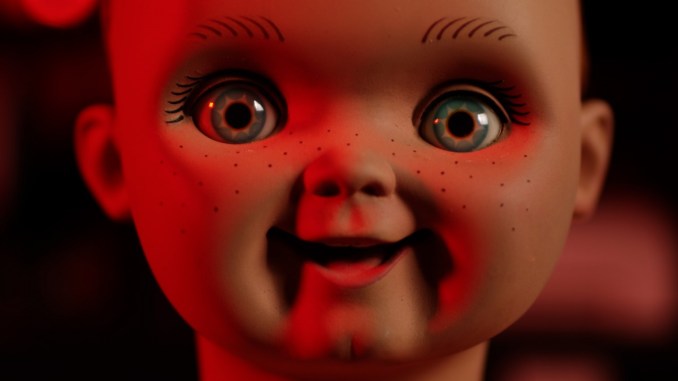 As a Child’s Play fan, transition scenes show you every minute detail of creating a single Chucky doll, and popping in each physical piece of media one at a time is fascinating. Everyone comments on the difficulty of movie-making and maintaining family life. The franchise structure is a unique chance to reconnect with people from year to year. They become your support system while away from your biological crew. Director Kyra Elise Gardner brings her second family into the limelight. LIVING WITH CHUCKY allows fans to celebrate one of their horror legends and those responsible for his status. It’s killer fun.


 Michael Patrick Lane is Emily’s captor and psycho ex, Charlie. Scary and somehow kooky, he is like the Michael Myers of ex-boyfriends. Missi Pyle plays Carole, and she’s a real asshole. Her performance is both caricature and authentically terrifying. Pyle gives us rich, tacky, gun-toting Karen energy. I mean, had station is in Tallahassee. Her character work is unreal.
 Midori Francis is an absolute badass as Emily. Minutes in, I was yelling at the screen, cheering her on. Her shockingly calm demeanor is all the motivation Sam needs to help. Jolene Purdy plays Sam with zero self-esteem and a heart of hold. Her emotional arc in the film will leave you with a smirk. She and Francis have electric chemistry, especially considering they are never in the same space as one another. They are both stars.
 Areal shots are stunning. The addition of out-of-focus camerawork puts you in Emily’s chaotic mindset. The splashy neon colors of the Gator Galore station contrast beautifully with Emily’s overcast forest landscape. Directed by Yoko Okumura and written by Salvatore Cardoni and Brian Rawlins, UNSEEN balances comic, over-the-top characters with nuanced ones and the plausible scenario of a woman’s abduction by her ex. The script is a commentary on class and one hell of a story of gender-based violence. It is undeniably entertaining. Some audiences might initially make comparisons with Shudder’s


 The plot and narrative are an awkward fit for such an intriguing setting. Troubled young Finn (Hart Denton, toned down from his manic turn on Riverdale) drifts through the town. He’s obviously troubled. His relationship with his parents is strained, and we can tell there’s anger (or worse) bubbling under his quiet exterior. He connects with Eliza, a girl at his school. Eliza is troubled too, in her own quieter way: she lives with her alcoholic mother, the two of them living through a trial separation from her step-father and step-sister. As Finn and Eliza deepen their bond, it quickly becomes clear that he will bring great love or great danger into her life (perhaps both.)
 I found much to love about American Cherry, but left confused surrounding its tone and intention. From a genre perspective, it somehow sits right at the intersection of romance and psychological thriller, but that ambiguity was confusing in ways that felt unintentional. Is this trying to be Fear for the zoomer generation? Good Will Hunting with more bite? I felt it needed to commit a little bit more firmly. By seeking such balance, it risks underdelivering on both counts.

 Ashleigh Murray is Alex’s best friend, Grace. She gives us the perfect balance of sweet, supportive, and firey. She’s a foil for Beauchamp. Sherri Sheperd is outstanding as Alex’s AA sponsor Ronnie. This is a fantastic turn filled with grounded concern, loving energy, and wise words. Her calm demeanor balances the chaos beautifully. She is a thoughtfully curated character.
 Jonny Beauchamp plays Alex. Writet-director Barry Jay‘s screenplay allows him to show his vast range as he assumes some of Shane’s personality traits as the story progresses. Beginning as a meek and mild, lost young man, Alex slowly becomes increasingly more aggressive. Mike C. Manning (Slapface) throws you off balance from the moment he appears onscreen. He oozes toxic masculinity, helped by his intense workout obsession and the score. Shane goes from subtle to overt manipulation quicker than I expected. He is downright scary. While Manning portrays the ultimate gaslighter, his character is more nuanced than at first glance.
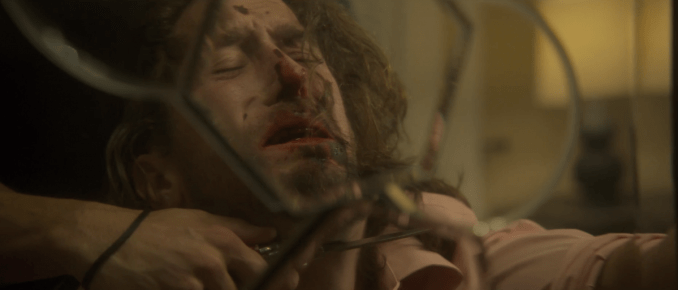 Overall, the lighting is a bit dark for my taste, but the score is carefully crafted and smartly used. The script morphs into a sick and twisted revenge story I did not see coming. There is a complex moral ambiguity that is endlessly intriguing. The Way Out is an unexpected journey of self-discovery and one credible psychological thriller.


 The film utilizes classic devices. Mirrors and reflection play a dual role. Reds and fuchsias feature prominently in the form of nail polish, shoes, a toothbrush, Kyoko’s blouse, a robe, and phone case, and most importantly, the scar. I can see why this was such a hit on the festival circuit. WOMAN OF THE PHOTOGRAPHS begs a larger conversation about image and self-worth as dictated by the internet and society.

 Although the zombie makeup is not great, costumes and general makeup are thoughtfully aged and disheveled. Something that is usually a sticking point in low-budget apocalyptic films. I was equally impressed with the locations. It appears the filmmakers had a lot of options, and they used them to their advantage. Performances are strong all around. A large ancillary and featured extra cast makes for a more impressive final product.
 While the drama is a touch overplayed, perhaps akin to a Lifetime drama hokeyness, that does not lessen the intriguing arc in a genre that is tricky to conquer with new ideas. So while we’ve seen the sentimental attachment aspect in the past, the surprising plot point surrounding the very badass Ellen Hillman was phenomenal. Alive‘s final reveal garnered an honest, approving nod from me. I applaud the passion and commitment of writer-director David Marantz. It undoubtedly has an audience.


 The film begins with intriguing flashbacks of a cult murder, newspaper clippings, and a hauntingly saccharine song. The setup immediately captured my attention. A sudden shift in style and time reveals Karma and Sunny living in fear and relying on the kindness of former cult members for protection. Small crumbs of cult life are just enough to keep you invested in Karma’s fate.
 Michael Madsen is vile. His iconic voice serves him well as Paul, giving him an effortless presence. He could have been made more menacing with a few tighter shots overall. Kimberly Alexander plays Sunny with extraordinary nuance. This roller coaster ride of a role spans every emotion; adoration, cruelty, and unadulterated honesty. Alexander goes for it.
 It takes a solid 25 mins to get to any action, but then it is pretty much maniacal from there on out. The plot gets more sick and twisted as we roll along, both physically and psychologically. WAKING KARMA shines brightest in the scenes between mother and daughter. The shockingly devastating dialogue by director Liz Fania Werner with co-director Carlos Montaner‘s DP work almost demands an in-depth

 First-time director Ric Maddox, alongside writers Sean Crampton and Jordan Wisely, brings the story of an elite ex-Navy seal with PTSD placed in a top-secret government rehabilitation program. Using criminal civilians as bait, can our soldier in question be saved? A twist on The Most Dangerous Game (1931) meets Universal Soldier (1992), THE STALKING FIELDS is an action-packed entry into a potential new franchise.
 The dialogue has a uniquely poetic perspective at times but quickly becomes contrasted by innumerable F-bombs. I say this as a person who has a sailor’s mouth, and this felt excessive. The quick-take editing has all the horror genre elements. From the lighting to the angles, it is visually intriguing. I must applaud the creativity in location design. Besides the woods, the military behind the scenes could easily take place in a cleverly lit warehouse walled off entirely with plastic sheeting. That budget must have been astronomical. I have to hand it to the CG team for some legit graphics on each monitor. They had my eyes darting from screen to screen. Bravo for the detail.

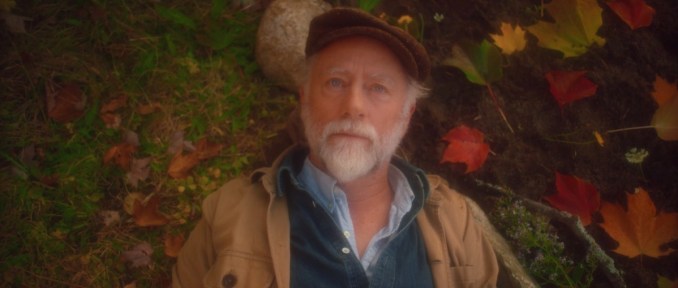 Steve Balderson‘s films are rather distinctive. Their lush visual impact sticks in your brain. His newest film, Alchemy of the Spirit, is no exception. Possessing a dreamy, even otherworldly look, Balderson makes the mundane glow. The quiet becomes claustrophobic. As the film begins, the sound editing alongside the score creates an unsettling feeling. The audience resides inside the manic mind of a grieving man. At 23 mins and 10 seconds into the film, we get a shot that elicits every emotion tied to this film. The symmetry, artistic and of two souls as one, is breathtaking. You will not miss it. There is a Picasso-esque madness to it. Balderson thought about its impact as it is the current key art for the film. Very smart. That sense of panic eases once introduced to a languid score of Debussy, Bach, and other classical beauty. While the darkness lies just under the surface, the screenplay’s nuances extend beyond what I expected from the first third of the film.
 Sarah Clarke, as Evelyn, is chilling and beautiful. Her voice, combined with soul-piercing imagery, is haunting. The grounded chemistry between Clarke and Xander Berkeley plays with a familiarity of real-life lovers, which makes sense as the two actors have been married since 2002. Berkeley, who I recently lauded in
  The idea of “the proper way to grieve” is front and center. How do we honor the dead? How do we mark the life we have? Oliver creates a literal death mask both as a means to stop time and keep Evelyn’s spirit alive. We get to explore the meaning of life through memory. The film easily could have been a stage play. It is dripping with theatricality. Alchemy of the Spirit is a genre-bending ode to art and romance. It’s a visual love poem.

 “Ryan” takes an emotionally invested approach as JK’s publicist. He speaks in disguise, understanding the sensitive nature of everything he is about to reveal. Since Ryan has a sister with a painful genetic disease, his interest lies in protecting the children and JK’s bold innovation. Politics, science, government regulations, and public opinion clash as JK’s work is exposed before publication. The Chinese government rescinds its promise of protection.
You must be logged in to post a comment.