

MR BACHMANN AND HIS CLASS

Where does one feel at home? In Stadtallendorf, a German city with a complex history of both excluding and integrating foreigners, genial teacher Dieter Bachmann offers his pupils the key to at least feeling as if they are at home.

When children get caught in the crosshairs of sociopolitical complexities, it’s rarely a good thing. In one specialized German school, an extraordinary teacher treats his students like his own children. Through language, history, German, and music, Dieter Bachmann breaks down the walls of his classroom and the industrial landscape in which they reside. Their families mostly hail from Turkey, having left to find work at the local factories. They must learn to adapt to new languages and ideas, thus breaking a cycle for their generation.
 Director Maria Speth immerses the audience in the cinema verite style, and the choice is perfection. As a former teacher, placing the camera inside the action gives the viewer a real sense of the minute-to-minute chaos of a classroom. Kids are laughing, rolling their eyes, struggling, learning, expressing opinions all at once. Their anxiety is palpable as we watch parent-teacher conferences. The heart of Bachmann is the purest. You are invested in these children as they navigate challenges in and outside of school. You get to experience the aha moments that are some of the most rewarding times as a teacher. The kids are bright and thoughtful. Their opinions often differ, but the conversations sparked from those differences are brilliant. Mr. Bachmann and His Class reminds us that the human spirit needs encouragement. We cannot do it alone. While it does take a village to raise a child, Stadtallendorf is lucky to have Dieter Bachmann.
For Tickets to Mr. Bachmann and His Class click here!
Director: Maria Speth
Year: 2021
DOC NYC, America’s largest documentary festival, runs in-person November 10-18 at IFC Center, SVA Theatre, and Cinépolis Chelsea and continues online until November 28.


 Pollack’s gritty documentary takes the viewer through the story of Ricky Kasso, a disaffected teen who took the media by storm in 1984 when he stabbed a friend to death in an alleged “satanic sacrifice.”
 The documentary can’t decide if it’s about a kid who was repeatedly failed by his parents, about mental illness, or about the start of the satanic panic. It gives you a little bit of everything. Rather than bringing a voice to the victim behind this story, it focuses much more on the myth and legacy of Ricky Kasso. This documentary makes clear that the satanic elements of the case were sensationalized but simultaneously give a platform to some interviewees to further perpetuate these very myths.


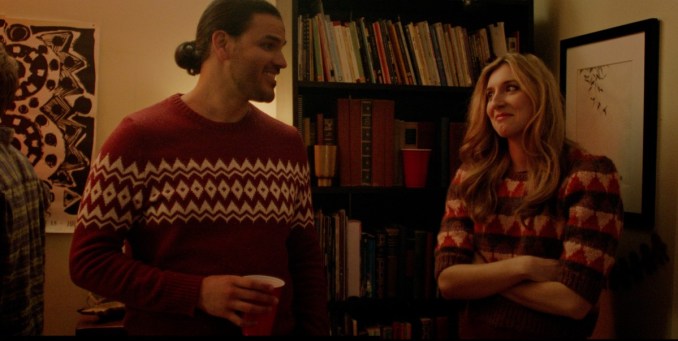
 Elizabeth Guest


 Leonard blew up his life by cheating on his girlfriend. She is kicking him out. In the meantime, her photographer father that she so clearly adores is visiting at an inopportune time, leaving Leonard to play an awkward host. Dennis is loathsome. He regards himself very highly and cares little for the opinion of others. He’s brash and his attitude seems to be contagious. Leonard is spiraling in every aspect of life. His cooking skills are garbage, he’s running out of money, what’s left of his personal space has been invaded.


 Grief is a personal journey. When your person gets ripped from your orbit, all bets are off. “Coping” can mean destructive behavior in the form of alcohol, binge eating, even self-harm. Or, grief can manifest itself into the most creative outlets. In Zowie’s case, pain and darkness are where she’s become comfortable. It’s also where her sister appears to her, bringing her momentary joy. In


 IDA RED
 Sofia Hublitz
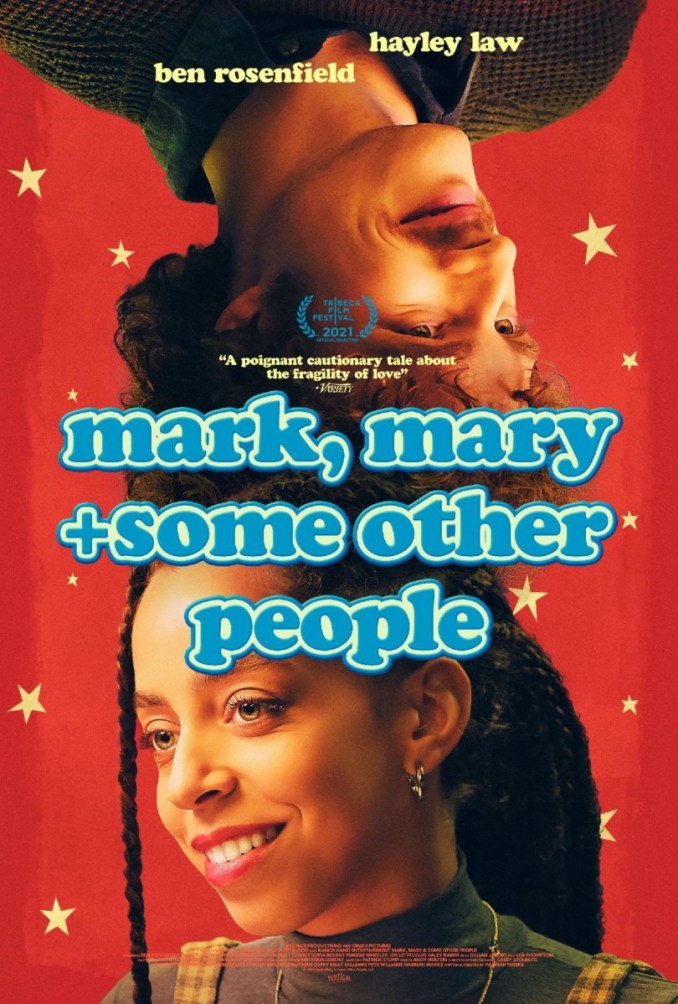
 “Traditional” relationships structures were created by, well, who knows. Love is weird and complicated, no matter how hard we try. We’re only human. We have urges that are as basic as they come. Anyone who claims to not be attracted to a person outside of their monogamous relationship is a liar. Love is messy and ever-evolving, and writer-director Hannah Marks gets that. Marks popped onto my radar with

 The environmental inevitability of our planet is the backdrop of Finch. Tom Hanks plays the titular role. He’s a scientist surviving with his dog and his rover pet Dewey. His goal is to create a robot with the capabilities of protecting Goodyear when he passes on. This rag-tag crew attempts to outrun a superstorm by escaping St. Louis to San Francisco in a 1980s RV. Finch becomes a hilarious and heartwarming road movie you never saw coming.
 Caleb Landry Jones as Jeff is brilliant. His performance has a childlike quality that melts your heart. The script smartly allows Jones to explore every human emotion for the first time. The savant aspect combined with its innocence reminded me of my five-year-old autistic son. The linear and literal way of expression was something so familiar. Jones’s energy will undoubtedly speak to every single parent. His physical performance is through motion capture, and it alone is award-worthy. Hanks and Jones’ chemistry is the stuff of movie magic.

 In most true crime stories, the mystery of “what really happened” carries the narrative. Viewers are invited to reconstruct timelines and decipher motives, then try and solve the crime simultaneously with the professional investigators. Alice is Still Dead turns that formula on its head. For instance, what if there is a brutal murder, but the facts– while devastating– are relatively straightforward? What if the central protagonist is tragically incidental to the killer’s motive? What if the police and justice system function exactly as society intends them to do? This film illustrates that even without the standard narrative hooks of true crime, a shocking senseless death is still a story. There is still a family that must find a way to carry on despite their grief and try to find contentment with the limits of justice.


 As
As  The palpable sadness of

 Performances across the board are phenomenal.


 Sisters With Transistors beautifully brings to life a niche history that you didn’t know you were missing but will surely recognize. The film seamlessly weaves together the personal stories of innovative composers like Clara Rockmore, Daphne Oram, Bebe Barron, Pauline Oliveros, and Suzanne Ciani through live performances, archival footage, and visual interpretations of their music. Some pieces are moody and atmospheric; others are challenging and experimental. Yet, all of them reverberate with unique genius, creativity, and passion. The overall effect is a captivating documentary on an unsung history that is endlessly engaging to watch.


 Amy Smart

 Ed in Kansas has an elaborate estate titled “Subterra Castle”. Above ground, it appears to be a menagerie of land gardens with

 Masao is coming to terms with his mortality in a quietly epic fashion. They say your life flashes before your eyes when you are about to die. In Masao’s case, we are a party to the type of man he was years ago. He is ushered into death by the ghost of his wife Grace, who takes him on a journey through time. There is a bit of a Christmas Carol quality, as Grace brings him into the memories of different and defining times. We come to learn his shortcomings, self-sabotage, doubt, adoration for his wife, and finally, acceptance of his fate.

 The hook is irresistible, and the image of the killer’s surgical mask smeared with a bloody smile will stick with me for a few nights. Unfortunately, the overall plot can’t quite keep up. The narrative dances back and forth between quarantine flashbacks and the harsh reality facing the players trapped in the deadly game. I love a tight 90-minute feature, but this is one film where I wished we had a little bit more exposition.




You must be logged in to post a comment.