
YAKUZA PRINCESS

Based on the acclaimed graphic novel “Samurai Shiro” by Danilo Beyruth and set in the expansive Japanese community of Sao Paulo, Brazil — the largest Japanese diaspora in the world — YAKUZA PRINCESS follows orphan Akemi (played by pop star MASUMI), who, upon turning 21, discovers that she is the heiress to half of Japan’s expansive Yakuza crime syndicate. After forging an uneasy alliance with an amnesiac stranger (Jonathan Rhys Meyers, History Channel’s The Vikings) who believes an ancient sword binds their two fates, Akemi unleashes war against the other half of the syndicate who wants her dead.
 Part girl power, part crime drama, all revenge thriller, Vicente Amorim‘s Yakuza Princess has something for everyone. Action-packed with spectacular fight choreography, the pacing is super satisfying. Yakuza Princess is just cool. This ensemble cast is phenomenal. I want to see more of every actor, but I’ll focus on our two primary leads. MASUMI as Akemi is a spitfire. Her nonchalant power is striking. Then there is Jonathan Rhys Meyers (who never seems to age) playing the mysterious Shiro. He is such a brilliant foil for MASUMI. His ability to own the screen with but a glance is always magic. Together, their chemistry is ripe for a franchise.
 Visually speaking, it’s a neon-soaked feast for the eyes. The use of light in this film is hypnotizing. It’s insanely thoughtful. Films like this are the reason we go to the movies. A LOT is going on in Yakuza Princess. This story is an epic journey. A complex family dynamic, murder, amnesia, kidnapping, a mysterious ancient sword all come into play in major ways. I would also have been delighted to watch this as a limited series. The drama! The plot twists! I was there for it all! It makes me want to run out and buy the graphic novel that is its source material. I demand its sequel, immediately. Pretty, please?
YAKUZA PRINCESS opens in U.S. theatres and virtual cinemas on Friday, September 3rd.


 Growing up Catholic didn’t honestly impact me until 8th-grade. I should say that attending Catholic School didn’t make me feel any different until one specific religion class. It was a moment that changed my entire life. It was explained to me, that telling my mother I was gay would be the equivalent of telling her I had committed murder. That was a defining moment. Today, my mother lovingly refers to one of my younger sisters and me as her “heathen children.” I begrudgingly attended Christmas and Easter Mass with my family throughout my college years. Then I put my foot down. I would no longer perpetuate the charade. To put this all in extra context, I am a straight woman. I grew up in the arts, surrounded by some of the most extraordinary humans on this planet. I continue to defend equal rights and acceptance, despite pushback from too many. Films like Scott Boswell’s A WAKE are important for families who may not even know they are in crisis. This story offers acceptance and unconditional love as lifesaving tools.
 The cast is amazing. Each actor brings the energy necessary to tell this story with truth and realism. Some moments are awkward, while others are rage-inducing. Megan Trout, as older sister Megan, is great. She’s the voice of reason in all of the chaos, whether the other family members are ready or not. Kolton Stewart, as Jameson, is lovely. His quiet strength brings a calm to the sadness. Bettina Devin as Grandmother is a gem. She’s elegant and understanding. Sofia Rosinsky‘s neurotic mentality is a story unto itself. Through flashbacks, we can see a clear progression of her personality, her growing manic tendencies, and genuine curiosity. She’s a spitfire.


 A story of cyclical abuse with a touch of magical realism, Baby, Don’t Cry was a completely unexpected journey. Fair warning for survivors of abuse, this film may be a trigger watching for you. The deeper you go into the story the more complex our leads are revealed to be. Two young people in hopes of escaping their sad circumstances, latch onto one another. It’s evidently unhealthy to the audience but entirely understandable. Lack of father figures is a running theme, as are racism and mental illness. The emotional burdens that Baby and Fox carry are unrelenting. Zita Bai, our leading lady, and creator of Baby, has given us a thoroughly nuanced character. Some moments will make you infuriated with her, while others provoke sympathy It’s an extraordinary culmination of emotions. Baby, Don’t Cry will make you cringe, shake your head, and fill you with a bit of wonder.
 Thanks to Twitter, an estranged and dysfunctional family throws an accidental party on their move-out day. A barrage of quirky characters show up to explore and wreak their own brand of havoc. Wonderful Paradise is an absurdist sideshow. I would genuinely recommend watching this high. The number of times I exclaimed, “Huh?”, “What?”, or, “Sure, why not?! ” I lost count quite frankly. I must applaud the cast for their absolute commitment to their craft. The cast grows exponentially as the film rolls on and every single performer gives it 110%. The slow and district progression of the set is wild. The practical FX combined with the wackiest of screenplays make Wonderful Paradise perfect for Fantasia audiences. It is unlike anything I’ve ever seen before. Do I understand the final result? Absolutely not. Would I watch it again? Don’t threaten me with a good time.

 I feared this Martyrs Lane would be overlooked among the plethora of gore-filled content. That would have been the biggest shame to befall this year’s Fantasia International Film Festival. Writer-director Ruth Platt‘s carefully crafted tension and mystery should be celebrated. It has a quieter Babadook energy to it that is unmistakable. The film manages to be both a slow burn and a vice grip of tension. The editing puts your head in a spin in that you’re never sure what is real until the very final scene. Performances are outstanding. The fact that the entire premise mostly hinges on the work of two small girls will blow you away. It is no wonder young lead Sienna Sayer won the Special Jury Rising Star award. Martyrs Lane will hit harder for parents. Any story centered around children begets that internal ache from the very getgo and Martyrs Lane is no exception. It’s beautifully shot and elegantly lit. The exquisite progression in makeup heightens the overall dread. It speaks to the consuming power of grief and secrets. I cannot wait for Shudder audiences to experience this film in a few weeks. This one is special. Undoubtedly, one of my favorites from this year’s lineup.


 Perry Blackshear is the man with all the hats taking on directing, writing, cinematography, and producing. One of the best goosebumps-inducing moments occurs in the form of actress Libby Ewing’s hand appearing from nowhere. There is something so startling about this simple action. Its impact speaks volumes. There is a nice connection between the physical and metaphorical. The fight training scenes are a great representation of emotional preparedness. And without spoiling anything, the devil you know is sometimes a safer bet than the devil you don’t. When I Consume You is an addiction allegory. Whether that is drugs or depression, the weight of trauma never quite leaves you. While the pacing of the film had some static moments, overall this is a fresh take on a haunting premise.


 Performances across the board are stellar. The commitment to the absurd is magic. The chemistry within this cast is outstanding. They are charming and energetic. It’s like watching a group of bright-eyed kids play. The camera work is a real marvel considering the impressively long takes. This film is all about timing, no pun intended. The cuts, if any, are tricky to spot. You’d think that reliving scenes would get old, but they manage to feel fresh each play based on location. Makoto Ueda’s script is that phenomenal. The camera also allows the viewer to feel like they’re part of the action. BEYOND THE INFINITE TWO MINUTES will be a huge hit with Fantasia audiences of all ages. It’s a nonstop, joyous experience.

 A delicious mix of absurdity and folklore, Kratt is everything Fantasia International Film Festival 2021 audiences want in a single film. There’s a plethora of practical FX and gore, but the best moments come from actress Mari Lill as Grandma. Her commitment to the slapstick and over-the-top character changes makes Kratt one of the best films from this year’s fest.
 You cannot miss the mockery of government, technology, religion, extremist politics, and everything in between. The score is wonderful and the cinematography is sharp. The script has one of the most brilliant and whip-smart final moments, cranking up the social commentary to 11. Kratt will have Fantasia Fest 2021 audiences doubled over. Whether that’s from gross-out moments or the laughs us up to the individual.

 The set is enthralling. Painted windows, lace curtains, antique furniture, and gardens as far as the eye can see within the boundaries they protect. But this carefully curated surrounding is also a prison for this family. The moment this existence is challenged, their sacred way of life begins to crumble. Performances, across the board, are phenomenal. The script grows more intriguing by the minute. With learned skepticism and real fear of losing the ones they cherish, Glasshouse reveals itself like a meticulously structured novel. The twists are dark and plenty. The finale will shock you. Glasshouse is undoubtedly one of my favorite films at the Fantasia International Film Festival 2021.

 Performances are filled with greatness. What might only be a highlighted extra role in any other genre film turn into a slew of memorable ones. It’s that well written and performed. Seeped in genuine incel energy, social commentary, and over-the-top gore and violence create a shocking watch. The amount of movie blood that must have been involved in this production is unfathomable. I’ve watched a lot of horror, (like, a lot a lot) and The Sadness is not fucking around. One hour in, there is a moment so offensive, even I gagged. Fantasia International Film Festival 2021 audiences were treated to one of the most insanely disturbing films in the festival’s 25-year run. If you can watch and hold in your lunch, bravo. Director Rob Jabbaz, much respect to you, sir.


 At an impasse of religion and love, the title of this thought-provoking short film suggests that it’s a horror film. While not touted as such, what unfolds in 25 minutes between family members is absolutely horrific. To fully appreciate the nuance in Over My Dead Body takes an open mind. Often, we place ourselves in the shoes of the characters on screen. Here, depending on your religious beliefs (or lack thereof), the complexities are unsurpassed. Having religion forced upon me as a child backfired at the age of about 14. In a world filled with volatility caused by media corporations, conflicting gods, and traditions, Over My Dead Body hits harder in modern times. Our families are supposed to love us unconditionally. What happens when that isn’t true? The cinematography is smart and takes advantage of the lush sets and costumes. Performances from this true ensemble cast are magnetic. You know this family. It resembles your own in more ways than you might realize at first watch. With an ending that will leave you breathless, the impact of this short should echo loudly.


 Confetti is a heartfelt film that aims to tackle complicated issues of immigration, dyslexia, and the barriers that parents will overcome to provide a better life for their children.
  Confetti is a refreshing insight into the Asian American immigrant experience that is not frequently centered. Director Ann Hu should be commended for elevating complex intersectional stories like this one, even if some plot points feel a bit disjointed or unfinished. Charming performances by Zhu Zhu and Harmonie He animate a touching story of perseverance and sacrifice.


 The French Dispatch


 I’ve never trusted wolves. You could argue this is because I’ve always been raised around ultra-docile dogs, but I think my 20+ years of watching movies are really to blame. The ratio just doesn’t hold water. For every domesticated wolf acting as Kevin Costner’s sidekick, there are countless more stalking our hero through a snowy tundra, howls echoing through the night.
 Sam Hobkinson’s smooth direction compels the audience forward. There’s a charming and particularly modern manner to the way that Hobkinson features key figures in Misha’s journey to stardom – their whole essence summarized into a single characteristic (“The Publisher”, “The Journalist”) We are not really meant to get to know these people (although “The Survivor” radiates winking humor with deep emotion in her few minutes of screen-time) – they are here to feed us the facts we need to drive the narrative forward, to build momentum towards the film’s core question. Which is, of course, can we believe Misha?


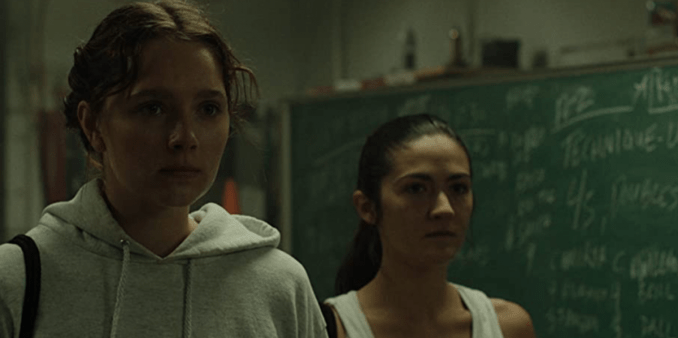 Quick take editing alongside exaggerated and repetitive audio gives the film urgency, all while a string-heavy score plays underneath. The culmination of all these elements lands The Novice somewhere between tense and inspiring. Then there is Furhman’s performance. Her obsessive behavior pushes The Novice past genre definitions. Furhman brings a ferocious passion to the role. Writer-director Lauren Hadaway‘s script is ultimately not about rowing. It is about mental health. It keenly delves into privilege, relationship dynamics, competition, and self-harm. The energy of this film is extraordinary. Bentonville Film Festival audiences will be hypnotized by its greatness. It is a must-see.


 Drugging his family and holding them captive in a bunker aside, toxic masculinity is smartly displayed throughout John’s journey. It appears in a spit fight, inappropriate conversations, and almost drowning a friend. The culmination of these moments keeps you tense and extremely uncomfortable. John and The Hole is unpredictable. I believe the most disturbing aspect of Nicolás Giacobone‘s screenplay is actually the final scene. Not wanting to spoil anything for the reader, I was horrified. The reasons are a complex mix of socioeconomics and Giacobone’s understanding our how the world functions. John and The Hole begs a larger conversation about aggression, pressure, and parenting. Do not miss this film.

 Ride The Eagle is a one-of-a-kind film. The script is written by director Trent O’Donnell and star Jake Johnson. Tackling regret, forgiveness, and everything in between, there’s an honesty that stings and inspires. Mostly, Ride The Eagle makes you smile.
 The script is filled with quirky characters. J.K. Simmons is fantastic in his manic energy. His delivery makes you involuntarily grin. Susan Sarandon, who we only see in her videotape to Leif, gives us warmth, and wisdom, and a boatload of snark. Her dialogue is yet another example of the care taken by O’Donnell and Johnson in their writing. There is a specificity that allows us to sit in Leif’s emotional shoes.
 I want D’arcy Carden to be my new best friend. The scenes between her and Johnson are pure gold. Their chemistry is off the charts. Made even more impressive by the fact that they speak exclusively over the phone. It’s like watching a masterclass in scene partnering. Their report nudges the script into rom-com territory. But, in truth,
  The score is vibrant and incredibly thoughtful. Ride the Eagle shines with heart and charm. It has a palpable vulnerability that makes it undeniably relatable. Of the nearly 200 films I’ve seen in 2021, Ride The Eagle easily soars onto my top 10 list.


You must be logged in to post a comment.