

THE DISRUPTED dives deep inside the lives of of three Americans working harder than ever, as their place in the middle class slips away. For a farmer, a factory worker, and an Uber driver, rising income inequality betrays the American Dream.

What does the American Dream even look like anymore? When I was a child, it was always something cliche like, “Married, with a house, a dog, and 2.5 kids.” When I graduated college in 2002, I moved back in with my parents for a few months transitioning from NYC to California. When I began to hear how many of my classmates had done the same, I was less embarrassed and more surprised. I began to notice my parents discuss money for the first time. How fellow upper middle class families were in way over their heads with newly built McMansions and more than one kid in college at the same time. My mother checked out a scholarship book from the library the size of three phones books put together. (Did you know you can get one for being left handed?) This time, it was for my two youngest sisters that were merely in 7th and 8th grade at the time. It was very eye-opening. Over the last almost 20 years, this has become the norm. Getting a job immediately following graduation and then working at that job until retirement wasn’t a thing people were doing any longer. Now in 2020, with a global pandemic, the economic wealth gap in more front and center than ever before. Gen Xers knew things were bad. Now that we’re parents and the luckiest of us is homeowners, we’ve come to understand that there is nothing equal in this country. In Sarah Colt’s debut documentary The Disrupted, we follow three different workers struggling to keep food on their table and maintain dignity for themselves, learn about how to manage your income.

The Disrupted – Trailer from Sarah Colt Productions on Vimeo.


 When a movie opens with a silent conversation with a stuffed animal, you’ve got me. Alex hates college, so, so much. Admittedly, it’s awkward as hell. Sharing bathrooms, still eating in a cafeteria, living with weird roommates. Leaving home for the first time can be really hard. The college experience is not for everyone.
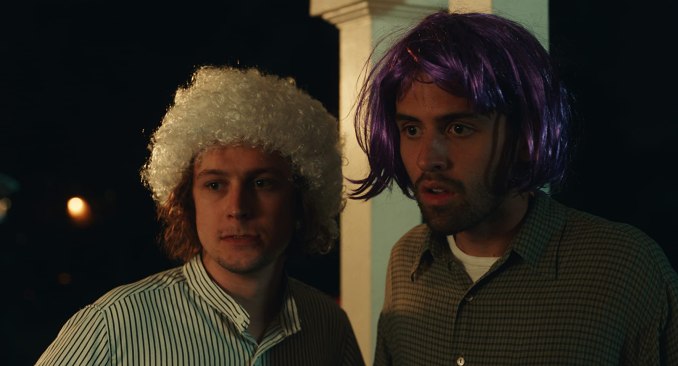 Dylan Gelula, as Maggie, has a whole lot more under her cool girl facade. Her performance feels grounded and sincere. She brings confidence that few can convey with such ease and was an awesome casting choice for Maggie. Writer/director/star Cooper Raiff is someone to watch for all the reasons I mentioned above. He is responsible for a film that feels like it could be any one of our stories from college. He takes real care with Alex. This is a character we need to see more of. He allows him to be sensitive, honest, confused, hopeful, vulnerable. Frankly, he’s one of the most brilliantly written characters this year. S#!%HOUSE shines in its authenticity.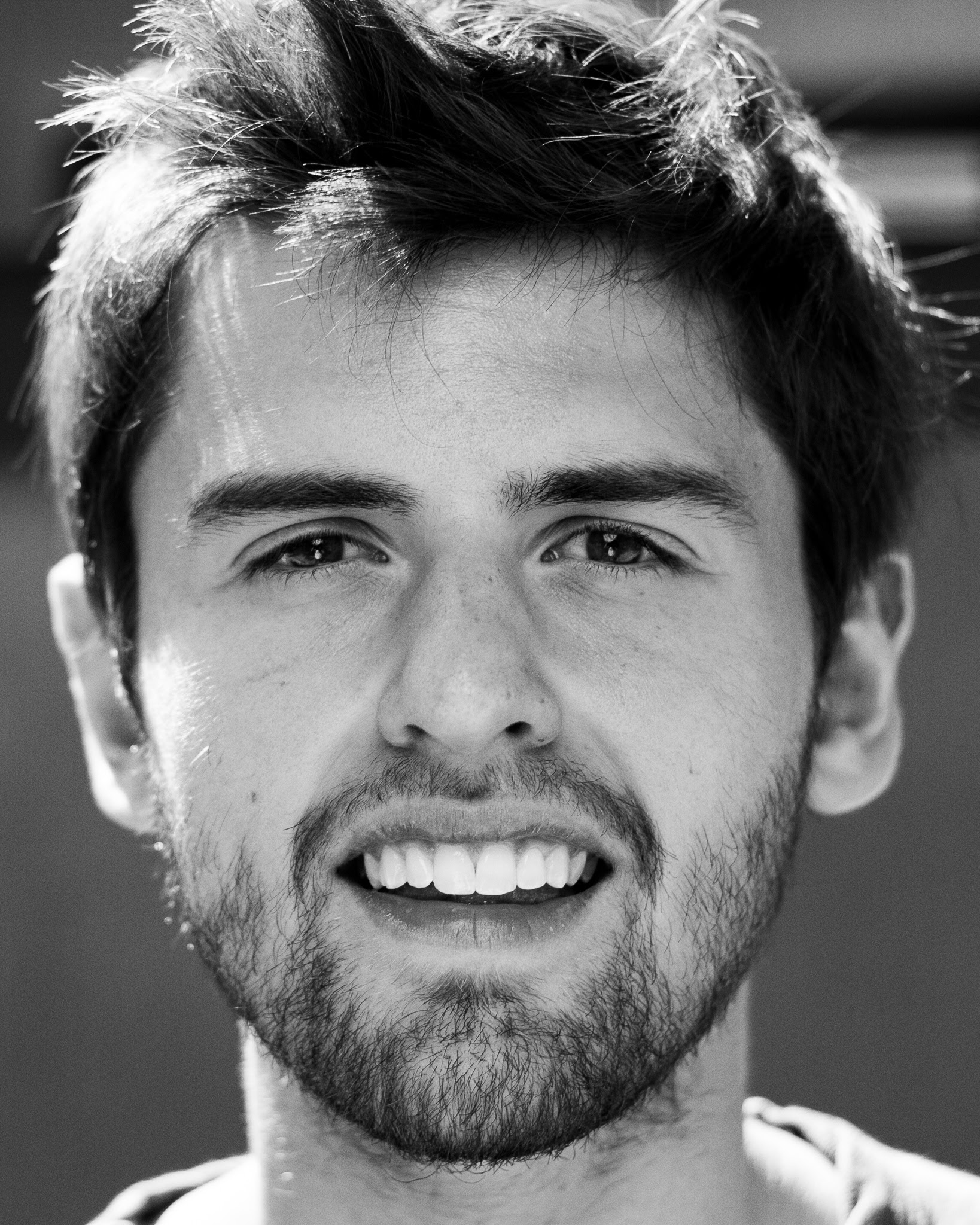


 The song “Yellow Cotton Dress” as performed by lead actor MacLeod Andrews is something I would listen to on loop. I was blown away by his comic timing as well as his ability to make me weep. A great deal of the film is just Andrews doing his thing. You will be enamored with him. After the film ended, I actually watched a 12-minute video of him recording a chapter from an audiobook. It was outstanding. It was a completely different side to the loveable and vulnerable character of Jack we get in this film. I’m suggesting you cast him in all the things, pronto. Natalie Walker clearly has a handle on comedy as well, taking a seemingly serious angle to Muriel. Her commitment to tone is spot on. MacLeod and Walker as a team are spectacular. Their chemistry just works.
 The ending swings from genuinely devastating and to simply beautiful. It speaks volumes about the things we don’t talk enough about to one another. Sometimes all we need is for someone to listen. Sometimes we just need some help. This is one of the most unique scripts of the year. Director Adam Stovall co-wrote the script with Andrews and they’ve given us an entirely different perspective on horror and mental health. A Ghost Waits will undoubtedly surprise Screamfest audiences long after the credits roll. It’s a bit of a genre-bending wonder.


 The cast of Eternal Beauty is a dream. The script is magic. Living somewhere between reality and the imagination, Jane exists in a constant state of determined anguish. Her solitary exacerbated by family members who treat her like a second class citizen. She is eccentric and lovable but most notably, mentally ill. She has a need to control her environment, it is her coping mechanism. Always waging war with herself on whether or not her medication is helping or hindering her stability. This is a film about family dynamics, self-discovery, honesty, and more specifically, one woman’s journey to understand herself.
 David Thewlis is always a charmer, playing Mike as manic and uneven as we need him to be to match Hawkin’s energy. They have lovely chemistry. Doctor Who fans will be delighted to see both Billie Piper and Penelope Wilton as one of Jane’s sisters and her mother. Piper is the favorite daughter, having grown up to be a maneater who is terrible with money. Wilton is a cruel, domineering matriarch. It is clear that Jane’s affliction is hereditary. Bravo to both Piper and Wilton, they are quite a loathsome pair.
  Sally Hawkins is superb. She has such care for the physicality of each character she embodies. Truly becoming whomever she portrays. She is a pure joy to watch as she navigates the highs and lows. It would be no surprise if she were nominated for this role. She takes this rapid-fire dialogue and pounces on it. At times she is wickedly funny but never letting us forget that Jane’s world is something we will never fully grasp for better or for worse. This feels like the closest we’ll come to viscerally experiencing the mind of someone who is mentally ill. It is truly captivating.

 Unsettling, oftentimes ear-piercing sound editing mixed with a 1984-esque storyline makes The Antenna an eerie watch. Set in an unnamed city in Turkey, this film is clearly an allegory for the current (yet timeless) right-wing propaganda spreading like a disease throughout today’s politics. Oppression is the name of the game. The government is installing new tv antennas so that hourly bulletins can more easily be broadcast to citizens. Accompanied by an evil black sludge coming from the new installation that seeps into the pores of high-rise tenants. Once they come in contact with it, their indoctrination is viscerally permanent. The Antenna represents the death of free speech.
 The attention to detail in editing (both audio and visual), close-up shots, are all carefully crafted to induce madness in the residents and the viewer. The inspiration writer/director Orçun Behram has taken from Cronenberg and Ben Wheatley is unmistakable. I don’t know how this film was made on a $200, 000 budget. I am genuinely impressed. The Antenna is a highly stylized dystopian horror that will excite genre fans. Its smart script and dark as hell visuals are a real meal unto themselves. I will be waiting with bated breath for whatever comes next from Orçun Behram. You can watch the film in Virtual Cinemas this Friday, October 2nd, and On-Demand/VOD October 20th. Check out the trailer for some more insight.

 In college, I used to drive 8 hrs, regularly, in my car to visit a boyfriend. I was alone. I drove straight through pausing only briefly if I saw families at a busy rest stop. But, I was alone. John Hyam’s new film is everything I was afraid of happening to me on those long rides. ALONE is a bonafide nightmare. The genius of this script is its simplicity. The relatively mundane encounters build in the most honest and horrifying way. Jessica does everything right. But, once a serial killer has you in his sites, there is no escape, or so you might think. The pacing is absolutely perfect. The sound editing highlights the isolation that is evident in the natural setting. The soundtrack beating it all into you. All combined you feel like you’re in Jessica’s shoes. ALONE is a stripped-down genre winner.
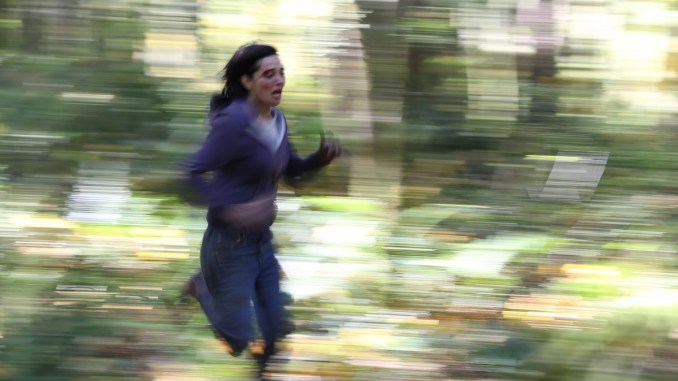 Jules Willcox is a powerhouse as Jessica. Her vulnerability is so relatable making it easy to root for her survival. This is a power dynamic that shouldn’t exist but women, in particular, are used to dealing with it constantly. With an evergrowing population of “incel’ culture, walking with your keys between your fingers, pretending to be on the phone, parking under a streetlight, are all small steps we take to protect ourselves. Women are often deemed too emotional until we are tested by the unimaginable. ALONE exploits all that ingrained fear and mixes it with grief. Willcox nails this role from every angle. Marc Menchaca does a brilliant job with physicality. He comes off as visually harmless but he is downright scary. Perfectly balancing emotional manipulation with the brute strength of a psychopath, you’ll believe he’s done this before.

 The opening credits give you a tiny preview of what kind of visual delight you’re in for. Writer/director Guy Moshe has crafted a frightening and dark film. All the more impactful in 2020, when everything we do has now become virtual, LX 2048 is terrifying because in theory, 28 years from now this feels completely plausible. Residents of this new world are ordered to take government-sanctioned antidepressants because the sun is no longer safe to step into. Once you die, you can upgrade to a clone that will seamlessly take your place. That might sound like a dream to some but when does the human experience end and technology take over completely? Is there where humanity goes to die? With the new countdown clock in Union Square now counting down to irreplaceable climate damage, is this film an omen?
 The sets make you feel like these people are living in Ray Bradbury‘s play The Veldt. Backlit, padded rooms, where the human is visually connected to a virtual pair of glasses creating their reality. It’s fascinating but emotionally disconnected, which is entirely the point. Besides the look, the engrossing exploration of the meaning of life through technology advancement. LX 2048 could easily be an entire series. There is a lot that gets packed into roughly an hour and 45 minutes.
 James D’Arcy‘s performance is riveting. As Adam, he must grapple with the notion that his children are part of this system, that his marriage has deteriorated past saving, and that a “better version on himself” could show up to replace him at any moment. We must sift through his depression, mania, hope, hysteria. It is a roller coaster of emotions for the audience. Many scenes require D’Arcy to speak to people at length that are not actually present. A lot of virtual meetings and calls. It’s like watching a masterclass in acting. Wait for the Shakespeare to drop. You’ve only just begun to see the full scope of his talents.

 Lena Olin and Bruce Dern star in Tom Dolby‘s newest film The Artist’s Wife. While Olin plays the wife of a world-renowned artist, the film is centered on her. She has clearly given her entire life to serve and care and nourish her husband’s talent, but her emotional patience has finally run out, and rightfully so. Olin’s performance is like watching a masterclass in acting because it is not “acting”, she is living in this role. Her effortless grace and honesty explode off the screen. Dern, ever the master himself, brings precision and sadness to his character’s circumstance that you will love and hate him all at once. It is captivating.
 The screenplay by Dolby, Nicole Branding, and Andi Nazemian about is a woman’s reawakening and the pressures of a caretaker. It skillfully highlights perceived gender roles. At some points actually taking an ax to them. The exploration of the ripple effects of dementia on a family unit certainly rings true. The manic behavior, the confusion, the disdain, and anger all come to a head. It’s tragic and very real.
 The cinematography is beautiful. The soundtrack is a spectacular collection of indie hits. I especially adored the placement of Us by Regina Spektor. It’s joyful and perfect. The Artist’s Wife is about loss. But it is also about self-care. It is about sacrifice. Tom Dolby has presented us with a complex look at the human spirit through art and love. You will be entranced from every perspective.


 Now that I’ve has some time to sit on this film, I realize that the entire premise is based on deceit. While centered around the premise of actually getting to a music festival, it is really a selfish trip meant to distract, take advantage of, and use Stacey, the only female character in the film. She is manipulated by her boyfriend so that he can have one last hoorah before being kicked out of the country on an expired visa. He delays their arrival to take in the sites and generally be kind of a douche. While that sounds pretty awful, it’s a great setup for dialogue and genuinely hilarious shenanigans that ensue. Directed by
 Jason Biggs plays Phil, a documentary filmmaker whose conscious ways heavy on him. The Subject is aptly named. Phil made a film about a black 15-year-old whose murder is caught on tape, by him. It’s been two years, he’s worried that Malcolm’s death means nothing back in Harlem. He’s onto his next project but cannot shake the guilt of possible exploitation, nor can the press. His girlfriend wants him to get over it, but Phil tries really hard to do the right thing. After finally attempting to move forward, the other shoe drops. Someone begins filming him.
 Anabelle Acosta as girlfriend Jess is very compelling. There is a lot to learn from their relationship dynamic and it comes into play heavily. Carra Patterson as Marley is quite the catalyst for chaos. She gives off a Maya Rudolph vibe and I dug her energy throughout. Nile Bullock’s performance as Malcolm is exactly where the audience needs him to be; balancing the line of an arrogant teen and an innocent child. Jason Biggs is better than ever. He plays Phil with an understanding of power and guilt. It’s stunning. Aunjanue Ellis plays Malcolm’s mother, Leslie. The scenes between her and Biggs are explosive. She represents so many mothers who lose their children to violence. Her performance is the culmination of everything in this film. Cutting through mansplaining and truth, everything leads up to these moments. The Subject is phenomenal in its storytelling. It’s a must-see film. Harlem International Film Festival was a fitting home for its Manhattan premiere. The film has an ending you will not see coming. Congratulations to director Lanie Zipoy and everyone involved in making this film.


 As a parent, sometimes a film is like a slap in the face. Agustin McCarthy‘, LOOK AT LUCAS is one such short. The plot is simple, a mother and son take a weekend away at the beach. Mom struggles to leave work at work and her son simply wants to spend time together. Parenting today looks very different than it has in the past. With all the stress and expectations, sometimes our phones are the only respite from constant interaction with our jobs or our children. But, most of the time, they are a distraction tool. As a work-at-home-Mom, scrolling through other people’s lives for 10 minutes makes me feel less anxious, all the while I know that energy should be going to my kids, even if I am only a human who needs a mental break from time to time. Watching this sort of story play out from the outside was an entirely different experience. Seeing that scenario from the eyes of a child felt sobering. In the film, we track Mom Lacey desperately trying to finish a work call but also taking plenty of time for Instagram and the like. Her son Lucas just wants his mother to play with him, nothing more. As Lucas plays without attention, your anxiety will undoubtedly rise. You’re sort of waiting for the other shoe to drop but it will not be what you’re expecting. You will recognize yourself in the frustrated tone in actress Jessica Frances Dukes‘ voice. You may see your child in the eyes of Daniel Mekonen. McCarthy’s writing and directing make it easy to do. With a beautiful setting and relatable premise, LOOK AT LUCAS is a fantastic reminder to stop and look up. It can be the most important thing you do for your family.


 The era of Blockbuster store glory also coincided with those weird interaction VHS boardgames. I had one called “Nightmare” where a Gatekeeper character would give you instructions and yell at you through the screen. It was equal parts hilarious and terrifying. Rent-A-Pal is a 90’s throwback filled with psychological terror that uses the same gimmick to the nth degree. Great stationary camera work and color choices really add the somber nature of our leading man’s state of loneliness at the beginning of the film. 15 minutes of brutally sad setup leads to a seemingly simple but chilling turn in the mood. Enter Wil Wheaton as Andy, David’s Rent-A-Pal. This bargain-bin VHS shows up when David seemingly loses out on the Video-Rendevous match of his dreams. His depression is palpable in Brian Landis Folkins’ performance. But, as someone who watched the degeneration of my own grandmother due to dementia, the heavy emotion is warranted. In an attempt to make himself feel better and out of sheer curiosity, David puts in this mysterious tape and “meets” Andy. A first glance, Andy is open and a really good listener. Lying just beneath the surface are clues of the more sinister. Perhaps it’s the language and mindset of the times, but some of his dialogue is almost like today’s incels. It is downright upsetting. Heightened by the editing, we get pieces of the video as David obsesses at learning its timing so his friendship becomes as real as it can be. To a lonely and socially awkward man, Rent-A-Pal is what the internet has now become to so many. Once he feels his luck changing, David is given the chance to take the girl of his dreams out on a date, but that instant connection is thwarted by Andy. The tension built up by the performances and clever structure creates an intensely ominous feeling. You’re constantly waiting for the other shoe to drop as David’s aggression ramps up and his sanity jumps over the edge. Wheaton brings a kind of brilliance to the film that is to be applauded. He has created a fully fleshed out villain without actually interacting with his co-star… as far as we can tell for sure. There were moments where I found myself staring at the screen longer than maybe I should have, wondering if my mind was playing tricks on me or not. Rent-A-Pal will disturb you. You will want to hit rewind again and again.


 “An emotional avalanche of mourning and celebration” is perhaps the best way to describe the viewing experience. Director Tylor Norwood has mixed intimate sit down interviews with neighbors, friends, and Robin’s wife Susan, with television appearances, personal photographs, and most notably to the subject at hand, Robin’s doctors. As someone who’s grandmother recently passed from the same disorder, this hurt just a bit more. To have an inside view of the pain and fear and confusion that Williams (and his loved ones) must have been feeling, it makes this all the sadder. His doctors agree that his high level of cognitive function, much higher than the average person, is most likely what made the diagnosis so elusive. The man was nothing short of brilliant. Weaved into the film is his love story with Susan. She has become an advocate for the disorder. When you think of soulmates, these two are it. It is beautiful to watch. For the cinephile, Robin’s Wish is also a fantastic insight into his work and mindset from some of his most iconic career moments. But it is the personal asides, the conversations with injured troops from his USO tour days that will solidify him as one of the most treasured human beings of our time. To see him celebrated properly and more fully understood feels like vindication from the tabloid mess that initially ensued following his death. It was not deserved. It was shameful. This film is both a tribute and an education for so many suffering in silence. Robin’s Wish can come true in this documentary.

 The film has a simple enough setup but the script goes off the rails in the darkest way possible. There is a thread of manipulation that runs deep with Sylvester McCoy‘s dialogue. It’s not even hidden but it is enthralling to watch. As a Doctor Who and The Hobbit fan, this was so far out of the box for my experience with his persona it made my skin crawl. Can someone be too good at being bad? Maisie Williams holds her own against this maniacal couple and the group of misogynistic thugs in her sphere. The violence in the film is extremely high and she bares the brunt of much of it. Handling it like a pro, we are rooting for her survival from the very beginning. Writer-director Julius Berg (along with co-writer Matthieu Gompel) turns up the weird and evil with a subplot that is downright heinous. You’ll be sweating and yelling at the screen as you watch what happens to every single character. Another interesting subplot is centered around dementia. It goes hand in hand with manipulation but at times, you have to respect the way in which it ties in. It’s just so sick you cannot look away. The practical fx are gag-worthy but completely appropriate. I can easily admit that my anxiety was through the roof while viewing. Rita Tushingham‘s performance, in particular, gave me flashbacks to The People Under The Stairs and more recently,
You must be logged in to post a comment.