

MANIFEST WEST

Dave moves his wife, Alice, and two young daughters, Riley and Mary, to a remote cabin in the American wilderness. Where guns and boredom meet the desire to push society away, MANIFEST WEST sees tensions rise when Dave’s new way of living shirks the norms.
Tim Heidecker plays against type as gun-wielding hyper-conservative neighbor Steve Danik. Michael Cudlitz counters Heidecker with his performance as neighbor Eric Lind. He is kind and thoughtful with his actions and words.  Annet Mahendru gives Alice palpable manic desperation. Her ability to jump from one emotion to another in the same breath is impressive. It is one hell of a turn. Milo Gibson is Dave Hayes. His character arc almost feels like the audience is witnessing a slow-motion car crash. Gibson brings not-so-subtle anger and protective alpha energy.
Lexy Kolker plays Riley with perfect corruptable innocence. She gives a performance that is nothing short of captivating. Kolker takes in each beat with precision. Her slow burn of resentment is a ticking time bomb.  MANIFEST WEST addresses a myriad of current and alarming themes in America. The score is melancholy and ominous. Writer-directors Joe Dietsch and Louie Gibson use the girls’ history text as a smart foreshadowing device. Antigovernment sentiment compounds the simmering chaos. Add Alice’s deteriorating bipolar disorder, and you have a powder keg. Children learn from their parents, for better or for worse. MANIFEST WEST runs head-on with its relevance to a shocking conclusion.
Trailer:
Distributor: Samuel Goldwyn Films
Release Date: The film is now in theaters and VOD/Digital!
Writer/Directors: Joe Dietsch, Louie Gibson
Starring: Annet Mahendru, Milo Gibson, Lexy Kolker, Tim Heidecker, Michael Cudlitz


 The intimate nature of Bad Axe is visceral. The Siev family could be anyone’s neighbors. They are friendly, hardworking, and respectful members of their community. They bug each other as much as they love each other. They remind me of my holidays when all four siblings invade our childhood home with inside jokes, arguments, and an unconditional adoration for one another.


 I’ve been sitting on my thoughts about this film for two days now. If I’m being completely honest, I think PRESENCE plays like a rushed prequel to a horror franchise. All the elements are in place for some seriously scary storytelling. Yet somehow, I was left with more questions than answers.
 I must say that the performance of Dave Davis is my favorite part of the film. Davis gives depth to the building mystery, in some moments with nothing but a panicked stare. His intensity immediately reeled me in, calming me during my desperation to make sense of the plot. I would watch an entire film about his journey with the Presence. That’s the story that hooked me instantly.


 Performances from our five leads are exceptional. Dylan Schombing plays Kyle, a young webcam hacker essential to the audience following any trace of sense. Schombing’s eyes speak volumes. Kelcey Mawema is Court. She has a party-girl spirit with a drinking problem that hides an inferiority complex. Mawema gives us a solid performance, never letting herself become a third wheel as the story progresses. Peyton List plays Zooza. This role is a departure for List, even with her darker character of Cobra Kai. You cannot help but focus on her turmoil.
 Brendan Meyer (who I loved in OA, and am still bitter we didn’t get our ending…) plays Rob with a trustworthy boy-next-door aura. But, Ober’s script allows him to explore a nuance that Meyer owns. Kaitlyn Santa Juana‘s turn as Cotton is enthralling. She is the thread we follow through the film as we unravel the game. There’s an “it” quality about her I cannot pin down, but I’m dying to see her in whatever she does next.
 The script had me hanging on every word, every visual, and mind-ending twist. Writer Damien Ober and director Scooter Corkle hypnotize audiences with dizzying editing combined with slowly leaking reveals. It’s a ceaselessly engrossing marriage of devices. Add on the notable red/ blue lighting and jarring soundscape, and The Friendship Game holds you captive from the very first frame. It is emotional manipulation at its finest.

 Diana’s integration into the family lands somewhere between awkward and essential. Husband Felix and young daughter Roberta (they call her Bobs) are caught in the middle, allowing for gaslighting from Felix and growing distrust from Bobs. Add in the class distinction with Christine and her family living in a lavish mansion, while Diana arrives with nothing but a single suitcase, mostly filled not with clothing. Writer-director Lorcan Finnegan utilizes flashbacks of Diana’s life to illustrate the glaring contrast. Little by little, the audience begins to piece things together, but not before being disturbed by the effects of Diana’s folk healing methods.
 As the story progresses and the truth reveals itself, your view of each character shifts. Eva Green plays Chrissy with both a manic and ruthless angle. She is a master at living inside the skin of a character, and Christine is no exception. Chai Fonacier is Diana. This juicy role allows us to see Fonacier’s massive range. I would watch her in all the things, as they say.
 *******SPOILER ALERT*******


 The script is relentlessly chilling. Because the audience has more information than anyone else, it feels as though the characters are sitting ducks. We are right alongside Sara as she witnesses her tormentors thrown into the back of a serial killer’s van. She says nothing, both out of fear and perhaps relief. Those that have ever been on the receiving end of horrible words and despicable actions will undoubtedly wince throughout the film.
 PIGGY also speaks to the weight of parental support. We find Sara’s mother to be a nagging, uncaring shrew, while her father pays attention to her with genuine love. Her woes are exacerbated by her parents owning the local butcher shop, leading vile peers to dub her “Piggy.” One of the girls, Claudia, has a deeper connection to Sara based on her delay tactics in teasing and a matching bracelet with Sara.


 Natascha McElhone is elegant and effortlessly charming. CARMEN is essentially a later coming-of-age tale. McElhone’s wide-eyed exploration of life is enchanting, funny, and honest. Shot on the beautiful island of Malta, which if you’ve never been, I suggest you visit. The script’s structure utilizes flashbacks of Carmen’s elusive backstory. Writer-director Valerie Buhagiar brings unbridled joy and hidden complexity to audiences. CARMEN is a delight.


 Lucas Neff, whom I loved in Fear, Inc, plays Jason, the target of Benny’s sting. His effortless performance had my palms sweating. Neff’s emotional highs and lows elicit a visceral reaction. Jake Dvorsky is Sam, and co-writer Hunter Milano plays Ryan. Both are Benny’s buddies and unwitting co-conspirators. Do not write either of these performances off as sidekicks because each gives a nuanced and enthralling performance.
  Benny’s deep-seated unresolved trauma motivates his revenge under the guise of heroism. Wes Dunlap‘s performance is mesmerizing. He displays alpha confidence accompanied by simmering hurt and fear. When things go haywire, Dunlap leaves it all on the screen. It’s one hell of a turn.
 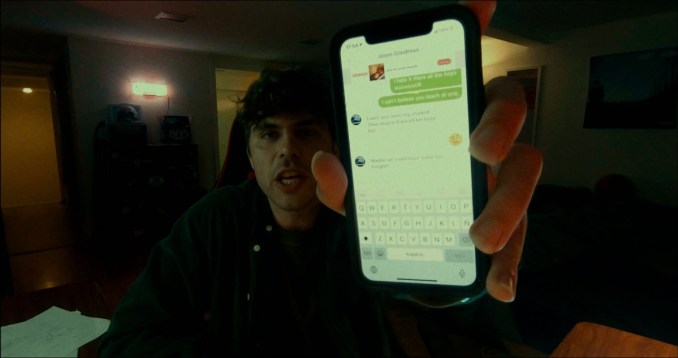 A ping pong match of intensity, Low Life benefits from rapid and thoughtful editing. But it’s the script that continues to shock. At every turn, I had my head in my hands. My heart was constantly racing, waiting for the other shoe to drop. How Milano and Rotter craft a script that ramps up the severity of the situation blew me away. Twist after twist, Low Life is one of the year’s best screenplays.


 Both leads deliver strong performances. Hirsch’s Mike is an artist. While he wants the prize money, his easygoing demeanor hints at a more privileged background. Hirsch gives a grounded performance – his career has taken some strange turns since his bravura turn in 2007’s Into the Wild. Here he again proves he will excel when given roles where he can use physicality to convey emotion. Bosworth’s Kate is more guarded and driven – she recites mantras to herself every morning in the bathroom mirror. I loved the versatility of Bosworth’s performance – keep an eye on the techniques Kate employs to motivate and keep Mike focused on the prize throughout the film.


 Grace Kaufman is Abbie. As a college student, she possesses a casual abandon to her behavior. Her age-appropriate nonchalance is perfectly balanced with Hall’s ever-evolving intensity. Tim Roth is a master manipulator as David. He’s downright frightening. His backstory as a groomer is beyond upsetting. Roth gives off a slimy aura that makes the viewer’s full body cringe. Rebecca Hall
 The heightened sound editing chills the senses. It’s a palpable stress-inducing choice that accosts the audience. You’ll have to remember to breathe while watching Resurrection. Andrew Semans‘ writing astounds me. He understands the fear and gaslighting so many women live with daily, then takes it to the nth degree. It’s also about telling your story. Resurrection is relentlessly terrifying and grossly relevant. Believe women.


 Kota Eberhardt, as Desi, holds her own against Krige. Her presence is equally as fierce as her costar. Something about her performance demands your attention. Eberhardt could easily carry a film on her own. Alice Krige is the epitome of genius as Veronica Ghent. The nuance she radiates is breathtaking.
 The film possesses a mesmerizing score from Clint Mansell. Something Argento would approve. Jaime Ramsay‘s camera work is dizzying and invasive. The juxtaposition of striking visuals and memory fragments represents unresolved trauma, new and ancient. She Will feels like a victory cry for the #MeToo movement. Slick editing heightens the film’s themes of nature, instinct, suppression of power, and interconnected female experience. Charlotte Colbert‘s debut with co-writer Kitty Percy is a rage-shedding catharsis. She Will is the witchy stuff of dreams.


You must be logged in to post a comment.