

WARSHA

Warsha follows Mohammad, a Syrian migrant working as a crane operator in Beirut. One morning he volunteers to take on one of the tallest and notoriously most dangerous cranes in Lebanon. Away from everyone’s eyes, he is able to live out his secret passion and find freedom.
Circumstance drowning out his authenticity, Mohammad takes a risk at his construction job in the short film Warsha. Handheld and tight cinematography force the viewer into the vibrating chaos. But it’s the wide shots that astound in their scale and shared panic and awe. You will not see where this short is going.
Khansa plays Mohammad with a captivating vulnerability. Warsha introduces the entire world to Khansa, a multi-disciplinary artist redefining masculinity in the Middle East. I had chills watching his transformation. What brilliant casting. Writer-director Dania Bdeir has given Sundance audiences a short film that defies gender stereotypes. Its celebratory nature will leave you breathless.
To find out more information on Sundance 2022, including screening times, click here!

 Having switched from in-person to completely virtual, audiences of Sundance 2022 will have the opportunity to see a plethora of entertainment that will terrify, tantalize, and remind you of why we love storytelling so much. From horror to drama, television series to shorts, documentaries to VR experiences, we’ll be watching as much as our eyes can consume from January 20-30th. Things are finding distribution left and right, with is always great news. That means even if you miss something during the festival, it will most likely be coming to a theater or streaming platform very soon.
 Cha Cha Real Smooth / U.S.A. (Director and Screenwriter: Cooper Raiff, Producers: Dakota Johnson, Ro Donnelly, Erik Feig, Jessica Switch, Cooper Raiff) — A directionless college graduate embarks on a relationship with a young mom and her teenage daughter while learning the boundaries of his new bar mitzvah party-starting gig. Cast: Dakota Johnson, Cooper Raiff, Vanessa Burghardt, Evan Assante, Brad Garrett, Leslie Mann. World Premiere.
 Dual / U.S.A. (Director and Screenwriter: Riley Stearns, Producers: Nate Bolotin, Aram Tertzakian, Lee Kim, Riley Stearns, Nick Spicer, Maxime Cottray) — After receiving a terminal diagnosis, Sarah commissions a clone of herself to ease the loss for her friends and family. When she makes a miraculous recovery, her attempt to have her clone decommissioned fails, and leads to a court-mandated duel to the death. Cast: Karen Gillan, Aaron Paul, Beulah Koale. World Premiere.
 I Didn’t See You There / U.S.A. (Director: Reid Davenport, Producer: Keith Wilson) — Spurred by the spectacle of a circus tent that goes up outside his Oakland apartment, a disabled filmmaker launches into an unflinching meditation on freakdom, (in)visibility, and the pursuit of individual agency. World Premiere.
 Brian And Charles / U.K. (Director: Jim Archer, Screenwriters: David Earl, Chris Hayward, Producer: Rupert Majendie) — A story of friendship, love, and letting go. And a 7ft tall robot that eats cabbages. A comedy shot in documentary format. Cast: David Earl, Chris Hayward, Louise Brealey, Jamie Michie, Lowri Izzard, Mari Izzard. World Premiere.
 Calendar Girls / Sweden (Directors, Screenwriters, and Producers: Maria Loohufvud, Love Martinsen) — A coming-of-golden-age look at Florida’s most dedicated dance team for women over 60, shaking up the outdated image of “the little old lady,” and calling for everyone to dance their hearts out, while they still can. World Premiere.
 Something In The Dirt / U.S.A. (Directors: Justin Benson, Aaron Moorhead, Screenwriter: Justin Benson, Producers: David Lawson, Aaron Moorhead, Justin Benson) — When neighbors John and Levi witness supernatural events in their Los Angeles apartment building, they realize documenting the paranormal could inject some fame and fortune into their wasted lives. An ever-deeper, darker rabbit hole, their friendship frays as they uncover the dangers of the phenomena, the city, and each other. Cast: Justin Benson, Aaron Moorhead. World Premiere. Fiction.
 Hatching / Finland (Director: Hanna Bergholm, Screenwriter: Ilja Rautsi, Producers: Mika Ritalahti, Nico Ritalahtit) — While desperately trying to please her demanding mother, a young gymnast discovers a strange egg. She tucks it away and keeps it warm, but when it hatches, what emerges shocks everyone. Cast: Jani Volanen, Siiri Solalinna, Sophia Heikkilä, Saija Lentonen, Reino Nordin, Oiva Ollila. World Premiere. Fiction.
 Speak No Evil / Denmark (Director and Screenwriter: Christian Tafdrup, Screenwriter: Mads Tafdrup, Producer: Jacob Jarek) — A Danish family visits a Dutch family they met on a holiday. What was supposed to be an idyllic weekend slowly starts unraveling as the Danes try to stay polite in the face of unpleasantness. Cast: Morten Burian, Sidsel Siem Koch, Fedja van Huêt, Karina Smulders, Liva Forsberg, Marius Damslev. World Premiere. Fiction.
 Maika / Vietnam (Director and Screenwriter: Ham Tran, Producers: Jenni Trang Le, Duy Ho, Anderson Le, Bao Nguyen) — After a meteor falls to earth, 8-year-old Hung meets an alien girl from the planet Maika, searching for her lost friend. As Hung helps her otherworldly friend search, the alien inadvertently helps Hung make new friends and heal a broken heart. But danger lurks everywhere… Cast: Phu Truong, Diep Anh Tru, Tin Tin, Ngoc Tuong, Kim Nha. World Premiere. Fiction.
 The Dark Heart / Sweden (Director: Gustav Möller, Screenwriter: Oskar Söderlund, Producers: Anna Carlsten, Caroline Landerberg) — Sweden: in a mythological landscape, search parties roam through forests of spruce, secret conversations are whispered in open fields, and verbal duels fought on narrow country roads. A story of family feuds, inheritances, and forbidden love. Cast: Aliette Opheim, Clara Christiansson Drake, Gustav Lindh, Peter Andersson. World Premiere. Fiction.
  Huella / U.S.A. (Director and Screenwriter: Gabriela Ortega, Producers: Helena Sardinha, Rafael Thomaseto) — When the death of her grandmother unleashes a generational curse, a disenchanted flamenco dancer resigned to a desk job is forced to experience the five stages of grief through a visit from her female ancestors. Cast: Shakira Barrera, Denise Blasor, Carla Valentine.
  Long Line of Ladies / United States (Directors: Rayka Zehtabchi, Shaandiin Tome, Producers: Garrett Schiff, Pimm Tripp-Allen, Rayka Zehtabchi, Sam Davis, Dana Kurth) — A girl and her community prepare for her Ihuk, the once-dormant coming of age ceremony of the Karuk and Yurok tribes of Northern California. World Premiere. DAY ONE


 Jason Isaacs takes a logical approach as Jay. The arc of Kranz’s writing allows Isaacs to break this role wide open. It was akin to watching a teapot slowly come to a boil. Ann Dowd plays Linda. She is gentle, hesitant, and genuine in her grief and guilt. It feels like she’s trying too hard to appease and remain compassionate. Dowd’s best moments are when she’s in tune with Reed Birney. As Richard, Birney counters Dowd’s apologetic energy. He is defensive at every turn, to the point of unlikability. It’s his survival mechanism. Birney wears an air of toxic masculinity like a badge of honor. Martha Plimpton plays Gail with thoroughly justifiable guarded anger. She is seeking ownership and responsibility from Linda and Richard. Her pointed line of questioning makes her intentions clear as day. Plimpton owns every glance, sigh, and raw syllable uttered in Mass. It’s an entire emotional journey right before our eyes. It’s a performance that captivates. The chemistry between these four actors is something so rare. They understood the assignment, as they say.
 The quiet, lingering moments in the first 20 minutes of the film are meticulously crafted to keep you stewing in anticipation of the inevitable storm to come. The entire film has a low registering hum and a palpable heaviness. As the plot is slowly revealed, politics seep into the conversation. The aftermath of trauma and grief are front and center. The discussion of mental health will echo in many households. The included social pleasantries on either end establish a grounded aspect, but it is that final unexpected 10 minutes that hit hardest. It’s a visceral catharsis. This is a master class in writing and performance. I would watch this on stage in a heartbeat. Mass is a portrait of four parents dealing with unthinkable loss. The most powerful aspect is the understanding that this conversation could be happening any day of the week nowadays. This is an emotional rollercoaster you cannot be prepared for. Mass brilliantly challenges the perspectives of cause and effect, blame, acceptance, forgiveness, life and death, and what parenthood means, deep in your soul. You will walk away changed.


 There is underlying violence that feels inevitable as Joseph begins to break. There may be a suggestion of hidden trauma. Ben Whishaw plays every beat with his whole body. His minute idiosyncrasies create an entire backstory. Compounding micro-aggressions lead to ticks, and then ultimately, a total breakdown in civilized behavior. He becomes manic. This is the epitome of base instinct. Whishaw will have you teetering on the brink of terror and awe. He is sensational.


 Is this another out-of-this-world Nic Cage movie? Duh. Is it like watching a graphic novel and an episode of MST3K, all at once?! Yup. Overall, the screenplay features the smallest bit of backstory, and perhaps an homage to films like Return To Oz, Mad Max, and even The Wiz. There is so much happening in this wild story. I would not be angry if sequels popped up sooner rather than later. I have so many questions about this world that I’d even love a prequel! Give me all the whacked-out colorful silliness that is Prisoners of The Ghostland. I demand a franchise.
 Bill M
 This film’s visual is all about vibrant color. Your eyes dart everywhere in an attempt to take in every detail. Joseph Trapanese’s score is gorgeous. You will not be able to ignore it. The costumes are wild, and the set dressing is bewildering. Prisoners of The Ghostland is a genre-defying spectacle. It’s captivating in its eccentricity. It deserves to be viewed on the largest possible screen. You’ve never seen anything like this film. The story is completely disjointed at times, but that’s not a reason to write this off. Will I watch this again because it’s destined to be a cult favorite? You know it.


 I’ve never trusted wolves. You could argue this is because I’ve always been raised around ultra-docile dogs, but I think my 20+ years of watching movies are really to blame. The ratio just doesn’t hold water. For every domesticated wolf acting as Kevin Costner’s sidekick, there are countless more stalking our hero through a snowy tundra, howls echoing through the night.
 Sam Hobkinson’s smooth direction compels the audience forward. There’s a charming and particularly modern manner to the way that Hobkinson features key figures in Misha’s journey to stardom – their whole essence summarized into a single characteristic (“The Publisher”, “The Journalist”) We are not really meant to get to know these people (although “The Survivor” radiates winking humor with deep emotion in her few minutes of screen-time) – they are here to feed us the facts we need to drive the narrative forward, to build momentum towards the film’s core question. Which is, of course, can we believe Misha?

 This eclectic documentary traverses from the inception to the nuance of programming this iconic television show. Everything from the production design to intimate interviews with the actors, from the musical guests to the writers’ room is in this film. It hits on the social, racial, and educational impact of the show. The show’s schedule was one of the most intense I’ve ever heard of. 100 episodes per year filled to the brim with original sketches (both muppet and street scenes), animation, and original songs, Sesame Street has changed the lives of countless families across the globe.
 Some of the most charming bits in the film are the blooper reels. The genius, off-the-cuff moments between cast members staying in muppet character will slay you. One very poignant time in the show’s history was anything but unscripted. The death of Mr. Hooper was a carefully curated scene. It sticks with me still today. In 1990, when Jim Henson passed at the age of 53, the world mourned alongside the cast and crew of Sesame Street. Caroll Spinney as Big Bird singing “It’s Not Easy Being Green” at Jim’s funeral is heartbreaking and eternal.


 I have actually spent a few days on the island of Malta. When I met my husband he told me that his heritage was Scottish, Irish, and Maltese. I honestly had no idea what he was talking about. I’m half Italian and was completely unaware of the small, bustling island off the coast of Italy. Even with my little experience in the area, I can attest to the authenticity you get in LUZZU. Pre-pandemic, it was filled with tourists taking ferry boats from Sicily or to the smaller island of Gozo, where they actually filmed some of Game Of Thrones. It boasts crystal blue waters and ancient architecture. It also contains kind, hardworking locals that have been thriving in the fishing industry for a long, long, time. Now, things are changing and everyone is being forced to adapt. LUZZU takes all that local beauty and then gives us a weighty story we can sink our teeth into.
 Jes is down on his luck in every way possible. He’s not catching anything that he can sell. His new son is not growing as he should. His mother-in-law doesn’t respect him. Jes dives headfirst into the black market fishing industry. While he fixes his luzzu (which is his wooden fishing boat) by hand, he snatches up any side hustle that comes his way. It’s heartwrenching to watch him struggle. You just want him to make it. As the danger grows, so do the emotional consequences.


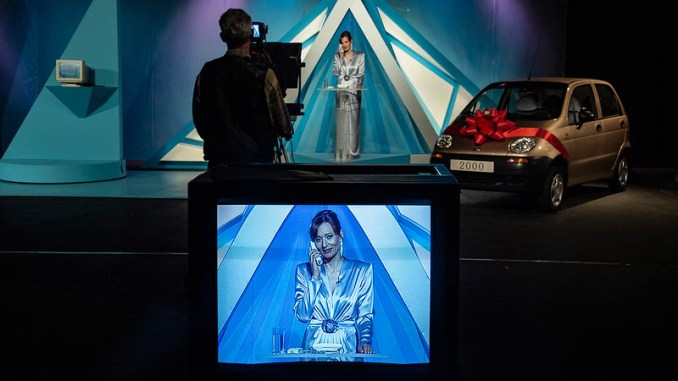 The juxtaposition of what all other networks are airing during this incident is rattling. No one, outside the studio, knows what is occurring. Everyone is nonchalant or celebratory so when the danger escalates, seeing the calm on ancillary characters is unnerving. It’s fantastic. This script manages to tackle class structure and emotional trauma, with media profits as the underlying force of everything that goes awry in Sebastian’s “plan”. Prime Time does an incredible job of keeping you on the hook until the screen goes black. In a present era where every second of media is either controlled or completely reckless, Prime Time taps into every viewer’s own fear of being lied to. Sundance audiences will love this film.
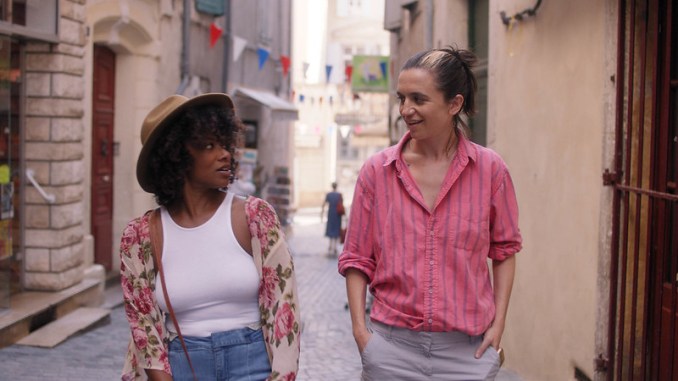
 An already messy relationship between three individuals is challenged when they’re thrown back together after two years. As they one-up each other, passive-aggressively, boundaries are pushed to their breaking points. The film has a nonchalant pace that will either be up your alley or not. The settings will undoubtedly dazzle the Sundance audience. Bertie is played by Idella Johnson. Her acting warms up as the plot rolls along. She hits her stride once we hear her sing. Not warm up, but really SANG!. Her performance around the fire is explosive. Broadway-quality, touch your soul kind of stuff. Lucien Guignard as Fred is as complicated as this script needs him to be. He is charming and perhaps even underutilized. There was so much more to his story that I wanted to hear about. Hannah Pepper as Lane is the most relatable character for the masses. We don’t see a lot of polyamory portrayed in film. It’s often left as a punchline in romcoms. Here, Pepper opens her veins on screen. The idea of not sharing a lover but running when things get hard is very grounded. She walks a line that keeps the story honest and grounded in a reality we can sink our teeth into. Wine, adventure, confession, disappointment, you get it all in a visceral way. Ma Belle, My Beauty a fantastic feature debut for writer/director Marion Hill. She and the entire cast and crew should be proud.


 Every once in a blue moon a film comes along that pushes you past your own emotional boundaries. The heaviness of the stories in Identifying Features swallows you whole. You are forced to confront the realities that are far too often swept under the political rug here in the US and are dreaded in Mexico. With a score that vibrates your already unsettled soul, the handheld cinematography puts you in the shoes of any one of these individuals getting shoved back across the border… And those who don’t ever make it. The alternating scenes from a mother to a son build up a visceral tension to an ending that is beyond shocking. The intimacy of the sound editing and long lingering beautifully shot close-ups force you to remain engaged no matter how badly you’d like to look away. Identifying Features is brilliant in its unyielding honesty. You will sink so far into the depths of these families’ grief, digging out will take more time than you’ll realize. It’s nothing short of captivating.

 Sir Walter Scott said it best in his poem “Marmion”, ‘Oh, what a tangled web we weave,/ When first we practice to deceive!’ The genius of this script is the storytelling structure. Minutes in you understand that our leading lady is caught in a web so large she cannot get out now. The relentless danger he allows herself to be in is astounding. The audience is constantly waiting for the other shoe to drop. Now that I have had time to sit on my viewing, I am actually aghast at the pace of the film. It barrels along in its deception and doesn’t let up for a minute. While there is clearly a backstory that predates the present timeline in White Lie, I found the lack of information all the more intriguing. I was forced to make assumptions thus leading to, perhaps, a completely different take than anyone sitting next to me. Bravo to writers/directors Yonah Lewis, Calvin Thomas for being bold enough to make such choices.
 Kacey Rohl‘s performance as Katie makes the film as enthralling as it is. Her ability to make you loathe her and sympathize with her is uncanny. You understand that the complexity of this role is massive. She absolutely nails it. White Lie will have you uncomfortable from start to finish. It will be impossible to look away even though you’ll feel as entangled in the lies as Katie. It’s quite masterful.


 Based on the book of the same name by Naoki Higashida, The Reason I Jump is an emotional rollercoaster. I was already welling up listening to the opening monologue. The echolalia, the sensory overstimulation, the hand flapping, and ear covering all punched me in the gut when presented on screen. I’m a lucky Mom. At 5 years old, my child is now very verbal, he’s hyperlexic which means he’s been reading since he was two. He loves hugs, sleep, and eats well. On the autism spectrum, he would be closer to Asperger’s, if that were a diagnosis recognized nowadays. None of these facts lessen the fear, frustration, exhaustion, and pure elation in raising an exceptional human being. The Reason I Jump is tailor-made from the words of a nonverbal 13-year-old boy’s experiences from the inside out. In film form, it’s simply triumphant.
 In the doc, we are introduced to 5 unique young people with autism.
 Joss -(UK)

 Jestina – Sierra Leone
 The narrated excerpts from the book directly correlate with whichever child is being highlighted at that time. Voiced by Jordan O’Donegan, they have a poetic feel to their profundity. Naoki writes, “Making sounds with your mouth isn’t the same as communication.” That quote did me in. When you hear that, truly hear it, you will be taken aback. Jestina, Ben, Emma, Joss, and Amrit all communicate in a different way, we just had to learn how to listen. The heightened sound design immerses you into the world of an autistic person. We do not understand what it is like to be utterly overwhelmed not being able to be fully understood. The cinematography is breathtaking. Quick cuts, predominantly in close-up form combined with a gorgeous soundtrack put you in an alternate headspace. The editing takes all these elements and blends them into a viscerally stunning documentary.
 As a mother of a child on the autism spectrum, I feel like I can see I want to broadcast this film to the world so that neurotypical individuals can understand my son and every other person on the spectrum. The label of autism, whether people realize it or not, creates implicit bias. We are missing out on the potential and impact of an entire faction of our society. It is our duty to meet each other in the middle. The Reason I Jump is a captivating peek behind the autism curtain. Don’t look away now. Thank you Naoki Higashida for writing this book. Thank you David Mitchell for translating it for your son. Thank you Jerry Rothwell for directing such an important film. Thank you to the families that shared their lives. Watch this film, then choose to listen and learn in a new way.


 Vicky Knight as Jade is a revelation. Her expression of physical and emotional pain in all its nuance makes Dirty God as successful as it is. She just wants a bit of normalcy. From the fear her own daughter displays, to the reaction of peers, to confronting her ex and attacker in court, to feel loved, the daily battle screams from the screen. One of the most impactful scenes comes when she purchases a burka. Hiding the majority of her body gives her the confidence to act with freedom. It’s an exhilarating scene to experience with her. The emotional scars are as relevant as the physical ones. Knight, who was burnt as a child in real life, can represent the undercounted number of women that have been attacked in this manner.
 Jade attempts to connect with others online. Those scenes are incredibly profound in the grand scheme of her arch. The most difficult thing is watching people treat Jade in a subhuman manner. It’s positively atrocious. The entire conversation around the importance of appearance in society, ableist behavior, and kindness, in general, is one for the ages. Dirty God is inspired and important viewing where the human divide and vitriol are so wide and prevalent. It’s an awesome statement on bullying and an even bigger one for self-esteem.


You must be logged in to post a comment.