

GENIUS FACTORY

In the 1980’s an eccentric billionaire named Robert Graham wanted to create the world’s smartest kids, so he funded the largest legal genetic experiment in human history. He felt that unintelligent people were breeding too often and smart people weren’t breeding enough, so he decided to do something about it. Today, 30 years later, the children of his eugenics experiment walk the streets of America as adults. These super babies seem normal enough, but there is a hidden struggle to understand who they are and why they came to be. They struggle to understand if the Genius Factory rewarded them or condemned them.
The founder is dead, the sperm bank is closed, and the records were burned. But now, for the first time, people who worked at the bank are ready to talk, the genius children are going to meet each other and find out who their fathers are. Never before has nature vs nurture ever been tested quite like this.

Discovery+ documentary Genius Factory tells a remarkable story. In the 1980s a wealthy optometrist became fixated on creating the world’s smartest babies through selective breeding, or as it’s more commonly known, eugenics. Now the children from the largest legal genetic experiment in the U.S. are in their 30’s. As one might expect, they have decidedly mixed feelings about their origins.
The documentary takes viewers on a journey from the eccentric billionaire Robert Graham’s personal philosophy behind the clinic to first-person accounts of clinic operations with a colorful cast of former employees in sequences reminiscent of Tiger King. Some of the most intriguing interviews, however, are with the adult children of the genetic experiment. They grapple with the knowledge of where they came from and whether their lives measure up to the grand expectations that they were born into.

Genius Factory is a fascinating watch that mostly does an adequate job explaining complex subjects like the dark history of genetic science, the racist personal beliefs of many of the clinic’s supporters, and how the experiment weighs into the “nature vs. nurture” debate. That being said, I question the decision to include commentary from an uncompromising supporter of eugenics here. For decades, the public debate on this issue has been closed. I am not sure it is the right choice to provide a tv credit to an unapologetic eugenicist in 2021. Overall, however, the documentary does a good job shining a light on the darker aspects of this science.
It is telling that the first frame of Genius Factory is the legendary quote from Jurassic Park: “Your scientists were so preoccupied with whether they could, they didn’t stop to think if they should.” As a lifelong fan of Jurassic Park, I found the introduction to be an absolute delight. Genius Factory spends the next 75 minutes detailing how much thought actually went into creating a sperm bank for Nobel Prize winners and how many people thought on balance that it seemed like a good idea.
Streaming on discovery+ May 20, 2021
Directed by Daryl Stoneage (Donkey Love, Pizzicato Five, Shlomo Arigato)


 Romania’s hit film Two Lottery Tickets is the most enjoyable buffoonery you can think of. In his second feature, writer/director Paul Negoescu takes a story from writer Ion Luca Caragiale and sends us on a €6 million fool’s errand. Local pushover Dinel’s wife fled to Italy with her boss two years ago. He is depressed and going broke trying to raise enough money to bring her back home. Drinking buddy Sile, a womanizing gambler, convinces him to spend his last few euros on a lotto ticket. Against all logic, Dinel’s idiotic chosen numbers end up being the winner. After two thugs steal his bum bag with the ticket inside, Dinel, Sile, and local conspiracy theorist Pompiliu must follow the clues by annoying neighbors, evading the police, and generally being ridiculous. It’s the sincerity of these three men simply being themselves that makes Two Lottery Tickets both loveable and hilarious. Actors Dorian Boguță, Dragoș Bucur, and Alexandru Papadopol all deliver lines in a way that makes you smirk and cringe. This is a film that has such comic ease to it. Once in a while, you come across a film that is like a cinematic hygge (because that’s a thing I just made up but you totally know what I mean, so whatever). Two Lottery Tickets has all the makings of that film you want to tell your friends about. Negoescu and cast have given viewers such relatable characters. In fact, if you watch it in a group setting, someone in the room is probably a Dinel, a Sile, or a Pompiliu. It is truly that delightful.


 Wendell is an ex-con whose parole officer enjoys berating him over the phone. When a new handyman job brings him to the door of Suzanne, a quirky woman with dementia, he’s in for more than unclogging her pipes. The set-up gets weirder and weirder. Secrets and lies live in this house, but not for long. Wendell’s path to freedom is dean on arrival. Do not get comfortable for a single minute of Dementia Part II.
 Graham Skipper plays such an asshole. It’s incredible to watch. Najarra Townsend, who was phenomenal in
  Shout out to Matt Mercer and Mike Testin for normalizing a runtime of 1 hour and 5 minutes. Good storytelling doesn’t need to be overstuffed with unnecessary nonsense. The dark comedy of Dementia Part II mixed with the very serious underlying mental health issues makes this film ripe for midnight screenings. I can already hear the audience yelling out Wendell’s many alternative names, making lewd gestures with pipes, and throwing $100 bills at the screen. You cannot go wrong with its vomit-inducing practical fx and outstanding performances from the entire cast.

 Transitioning from your college bubble to adulthood is hard enough. Add a breakup and no sense of direction and you’ve got yourself a basic outline for a film. Based on a story by screenwriter Chris Molinaro and directors Brandon LaGanke and John Carlucci, DRUNK BUS gives us a coming-of-age buddy comedy that you won’t see coming. This film is unexpectedly guffaw-inducing. I was knocked off my feet watching the chemistry of this cast. This film is about overcoming fear, anxiety, latent rage, guilt, you name it. DRUNK BUS has it all without ever getting too heavy.


 The score immediately reminded me of The Goonies. It is a perfect mix of ominous and whimsical. Dylan’s reading voice is costar Rob Brownstein’s voice. As a mute boy, Dylan’s internal vocal reference would most certainly be that of his father. This moment of specificity from Charbonier and Powell is magic. The entire film’s sound design is award-worthy. Dylan’s hearing is likely acutely sharp due to developmental adaptation. The audio is jarring in a way that places the viewer in his constant state of hyper-awareness. His panic is our panic and it is palpable.
 It’s a fresh take on the legend and more shudder-inducing than you’d expect. The pacing is perfection. All the tropes are there but with a hell of a twist. The Djinn‘s main conflict plays out within an hour, making the stakes feel higher as we count down the minutes alongside Dylan. Speaking of our leading young man, Ezra Dewey is a star. His chemistry with Rob Brownstein is charming and genuine. Dewey’s ability to own this entire film sans dialogue is the stuff of dreams. Mark my words, he will be everywhere. The Djinn is a very scary bedtime story warning us all to be careful what we wish for.


 The mockumentary style is unbelievably hilarious. Every single cast member is a damn laugh riot. I don’t know how much of this film is improvised and how much is scripted, either way, you will be entertained from start to finish. Handheld camera work and snarky voiceovers push 15 Things to some next-level hilarity, but also a legit gorgeous looking movie. The editing and cinematography are ridiculously stunning. If you put it on mute, you’d never know the difference between this and Vice. It’s scary good. Is this the first of a franchise for these guys? I would not be mad at that. 15 You Didn’t Know About Bigfoot is now available In Theaters + on VOD.

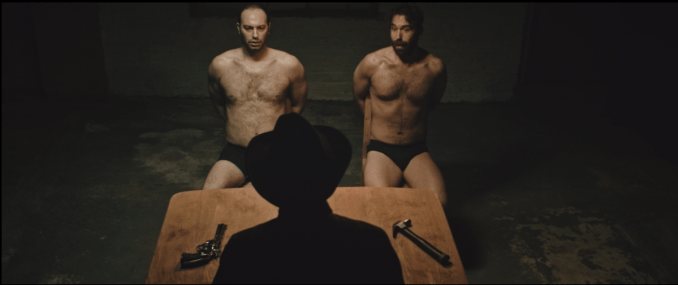 Low-budget creative genius. All hail Sean Kenealy and Eric Silvera, writers, directors, producers, and stars of IN ACTION. The dialogue is quippy and the chemistry is electric. The look of the film is truly impressive. Anything too elaborate to shoot is filled with super fun animation by Richard Walsh, close-ups, great sound effects, and sometimes just rudimentary home-movie style silliness. The overall setup of a sit-down interview is a fantastic premise. What essentially becomes a mixed media project forces you to not only pay attention but keep you completely engaged. Its sharp back and forth between visuals and over-the-top new dad/bro vibe is insane. Bravo to editor Billy Nawrocki. I cannot begin to imagine how long this film took to piece together. While this will hit harder with viewers of a certain age and stage for sure, it will undoubtedly tickle any film fan. The references on Eric and Sean’s t-shirts tell you everything you need to know about their baseline inspiration. These guys have no shame. Which, if we’re being honest, makes for great performances. The continuous gag about using foul language is laugh-out-loud funny. It’s not all dick jokes and movie clichés, we also get a nice takedown of toxic masculinity within the South Park-esque perverseness. It’s their commitment to every single moment of In Action that makes it relentlessly fun. Don’t get comfortable because 26 minutes in the script gets flipped. Can you imagine what this group of creatives could do with a large budget? As for In Action, it’s meta mayhem, movie magic. This is a labor of love made by honest-to-goodness fans. It’s an ode to indie filmmaking. Oh, makes sure you stay for the credits for some insider information. It’s worth it.


 While the action revolves around the accident, these characters are fully fleshed-out people we recognize. The remarkable performances in SILO might even suggest that this film was a documentary and not a narrative. The cast has a chemistry that genuine. It’s astounding. You won’t have a moment to breathe once things go awry. Even within a 76-minute runtime, the writing is so great that we have enough backstory for every person on the scene to feel the emotional pull. We understand why they’re there and how they’re connected. SILO doesn’t simply address farming safety but gives us a compelling drama about small-town dynamics. It is impossible to watch this and not be consumed by the relationships in this film. That’s what happens when you have the perfect storm of acting, writing, and directing. This is a film that will resonate with a massive audience, regardless of their background. It sheds a light on a culture that is often taken for granted and the very real dangers of farming. SILO is a harrowing film about safety and an undeniably important watch.


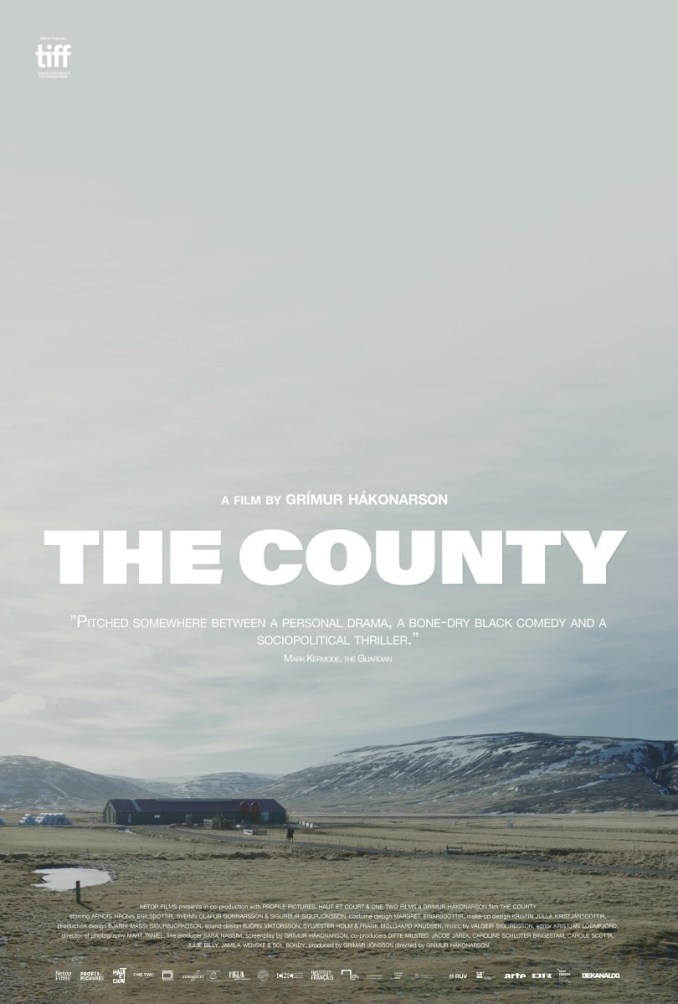

 What I loved about this film was watching the tenacity of a woman pushed past the breaking point. Using wit and pure gumption, Inga helps a community that’s being taken advantage of. Arndís Hrönn Egilsdóttir‘s performance is out of this world. She is funny, powerful, gutsy, and yet completely vulnerable and grounded. The film doesn’t simply rely on the natural cinematic landscape but smartly uses its scope to tell this story. The script has a beautiful flow to it.


 Up close, hand-held camera work intensifies the manic energy that radiates from this cast. This tragic and explosive story stems from a hit-and-run. With the world in upheaval over police action, this film focuses on the reactions of a small town department. When the mysterious driver flees on foot, chaos reigns when the incident becomes personal. The performances are astonishing. The screenplay is genius. You’re getting multiple narrative stories by watching the reactions of family, coworkers, and onlookers all at once. A naive rookie, a Chief close to retirement, hooligans in the crowd, a female officer’s first day, those connected to the victims, and a villain so loathsome your head will spin. These characters simultaneously clash in Supernova as events play out in real-time. There is not a moment to breathe. The quietest moment is the opening shot. Once the actors enter the frame the energy ramps up and become increasingly intense. Writer-director Bartosz Kruhlik plays with empathy and power dynamics in such an intelligent way. The complexity of the story just keeps growing. Your heart will race, you’ll seethe with anger, Supernova is that good.
 of *
of *

 Simply beautiful cinematography and one hell of a leading performance consume the audience in BAM’s Kino Polska’s New York premiere of NEVER GONNA SNOW AGAIN. Alec Utgoff as Zhenia gives an intoxicating performance. There’s something about his gaze that puts you at ease. You’re fully aware there’s a complexity tied to his childhood in Chernobyl. The dialogue from his clients never lets you forget. The nuance of this role is enthralling. The darker mystery slowly makes its way to light as he does his massage and, unbeknownst to them, hypnosis on his clients. They reside in a wealthy, gated estate outside the city. From the outside, each house essentially a replica of the next. Inside, the residents gossip and confess their trauma and innermost thoughts. Sinister undertones always linger. Zhenia’s unique ability to connect with people is merely the beginning of his capabilities. That talent isn’t something that can be hidden indefinitely. The score is haunting and meaningful, heightening this carefully crafted film. Trust me when I say, this movie is special. You’ll be as hypnotized as Zhenia’s clients. NEVER GONNA SNOW AGAIN is bursting with endless intrigue. It’s a journey that you will never see coming.
 of *
of *

 If you’re looking for something wholesome to watch with the family, look no further than DOLPHIN ISLAND. Filmed in The Bahamas after the devastation of Hurricane Dorian, the cast and crew are local and lovely. The film’s score is perfect for the story and the characters. It’s light and friendly and matches like a dream with mother nature’s gorgeous scenery. Mitzy the dolphin provides laughs and heart alongside the family drama. I watched this with my four-year-old daughter who is obsessed with sea creatures. She absolutely adored the scenes with Mitzy and the rest of the beautiful creatures on the island conservatory where our leads Jonah and Annabel live and work. The performances are charming. You’ll recognize a few faces and be introduced to some great new talent, as well. Tyler Jade Nixon is grounded and genuine as we need her to be. You know this young lady. Bob Bledsoe uses his comedy chops to be a slimy lawyer you’ll love to hate. Peter Woodward is the grandfather we all wish we could enjoy. His sense of responsibility, gumption, and adoration for Nixon‘s Annabel is captivating. The script tackles complex family dynamics, friendship, class warfare, grief, and climate change. It’s never preachy. DOLPHIN ISLAND is a film you’d find on the UP network or even Hallmark. It’s quaint with well-thought-out messaging. Family films are few and far between. Rest assured you can sit down with your entire family and enjoy.
 From Friday, April 30th through Thursday, May 6th BAM presents the fourth edition
 I NEVER CRY
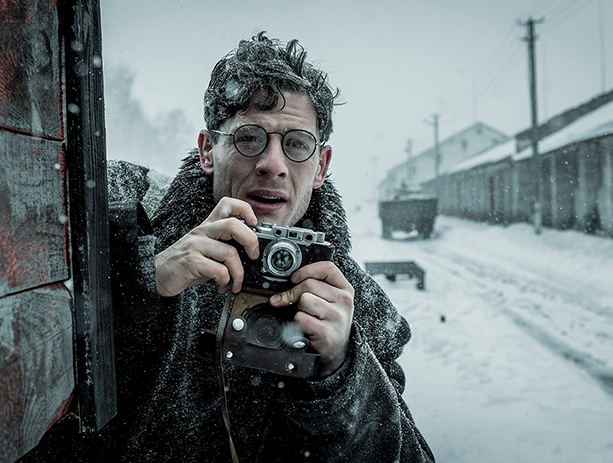 MR. JONES
 KILL IT AND LEAVE THIS TOWN
 EASTERN
 THE TASTE OF PHO


 I’ve been waiting for Brian Tyree Henry to get a leading role since he charmed the pants off of audiences in television, film, and on Broadway for the past 10 plus years. He’s sheer perfection. You just want to spend time with him. You can tell he is thoughtfully listening to his fellow cast by the tone of his responses. That is great acting. His journey culminates in a revelatory and emotional finale. It all just fits beautifully.

 Tyler Dean Flores plays the titular character. He’s a star. There is an ease to his performance that mixes charm and innocence. This film arrives at the tail-end of a murder trial for police brutality, and as we continue the complicated immigration policy debate. REEFA is not simply one family’s story but thousands. What is phenomenal about this script is its ability to tackle multiple subjects simultaneously, never entering the preachy territory. Not only is this a love story about two young people from very different backgrounds, but it’s also a dreamer’s story. REEFA tackles the immigration debate from a humanistic standpoint, The Hernandez family does everything right to obtain their green cards but their fear of stepping over any line is palpable. The conversations between Reefa and his parents highlight the sacrifices and innate understanding that the system is not just. Certainly, the film culminates with an explosive confrontation between Reefa and the police officer hellbent on making him an example. Having read about the effects of tasers on the human body, especially in teenagers, I knew this family would be forever changed as soon as it enters the scene. There is a lot to digest in REEFA, and every part of it is an ode to this young man’s beautiful life and art.


You must be logged in to post a comment.