





After the sudden death of her mother, Marge seeks out the father who abandoned her. Crossing the border into Mexico in search of her soccer phenom and estranged Dad, Marge hopes to overcome childhood trauma and connect with the only person who understands her grief.
 Once she finds Jackson, Marge discovers he has been spending his days surfing, coaching, and drinking himself into oblivion. He is in no shape to bring Marge into his life. Undeterred, Marge makes him pinky promise to do better. As they fumble toward reconciliation, Marge learns to be bolder, braver, and more self-accepting.
 The women’s fútbol team overflows with cheeky personalities. These girls are great foils for Marge’s insecure nature. Jess Gabor is fantastic as Marge. She is natural, sarcastic, and vulnerable. Steve Zahn never disappoints. His comedic self-defense mechanisms pair well with the well-intended fatherly guidance. At the heart of it, Jackson is a damaged but kind soul. Zahn embraces his flaws, making him human and accessible. Together, they are easy to watch.
 Waving the logistical fact that a minor would never be allowed to cross the border without a passport or note from their parents, GRINGA tells the story of two lost souls growing together. The script tackles body dysmorphia, eating disorders, culture, alcoholism, grief, and unresolved emotional trauma. In the end, GRINGA is a charming coming-of-age story for both father and daughter.
Directed by:
EJ Foerster and Marny Eng
Written by:
Patrick Hasburgh
Starring:
Steve Zahn
Jess Gabor
Roselyn Sanchez
Judy Greer
Jorge A. Jimenez
Run time:
1hr 42 min

Bastian Günther’s One of These Days is a fascinating drama with an attention-grabbing core concept you can’t look away from. Based on real events, it centers on an annual Texas competition (Hands On) where contestants place their hands on a truck and then try to outlast the other hopefuls to bring the vehicle home. Contestants must maintain constant contact with the truck at all times, but they cannot lean on the vehicle or squat down. 5-minute breaks are given every hour, and 15-minute breaks are every 6 hours. The contest can last for days.
 Despite the length of the contest, we learn very little about most of the contestants. This is the rare film I actually wished was a mini-series. Kyle (Joe Cole) serves as the audience’s main proxy in the competition. Before the competition details surrounding Kyle are mostly superficial. Kyle works at a local fast-food restaurant, has a deaf brother, and is motivated to win the truck to provide for his wife and baby. Kyle begins to unravel as the contest drags on from hours into days.
Cole is effective as Kyle, but the true star of the film is Carrie Preston’s Joan. Joan is not a contestant – she’s the marketing brains behind Hands On. A cheaper movie might paint Joan as an egomaniacal villain with an appetite as wide as Texas. Preston imbues Joan with equal parts sweet gusto, social cunning, and quiet sadness. Small details surrounding her family and personal life are given, but they nevertheless contribute to a richer understanding of her every action. Preston shines, but her brilliance also serves to highlight the lack of detail given to the other characters.
 The atmosphere surrounding the contest itself is beautifully realized. The imagery surrounding the laying of hands on the gleaming metal car feels explicitly religious. As the contest progresses, certain elements of the plot do begin to strain credibility. Kyle faces many rivals within the contest, but none of the build-ups leads to a satisfying payoff. A twist surrounding one character seems particularly far-fetched. A final coda has rich details but feels like it arrives too late.
The competition at the core of the film is a strong enough hook to overcome the film’s shortcomings. The central themes of One of These Days are gripping and compelling. Ultimately, this was a film I didn’t regret taking for a test drive.
Directed by: Bastian Günther
Starring: Carrie Preston, Joe Cole, Carrie Hernandez
Distributor: Uncork’d Entertainment
In a small town in Texas, an annual endurance contest (Hands On) to win a pickup truck promises thrilling entertainment to spectators and the chance of a lifetime to participants but ends in real tragedy.
From writer/director Bastian Günther, and starring Carrie Preston (“True Blood”, “The Good Fight”), Callie Hernandez (Shotgun Wedding, “The Flight Attendant”), Joe Cole (“Gangs of London”, “Peaky Blinders”), and Cullen Moss (“Outer Banks”), ONE OF THESE DAYS will screen in select theaters and be available On Demand and Digital April 14, 2023 from Gravitas Ventures.
CA – L.A/SAN FRAN
Arena Cinelounge (Hollywood, CA)
Cinelounge – Tiburon (Tiburon, CA)
New York
Kent Triplex (Brooklyn, NY)
Cleveland
Atlas Cinemas Diamond Center 16 (Mentor, OH)
Boston
Entertainment Cinemas Leominster 10 (Leominster, MA)


Somerset, England, and a mysterious VHS tape of a local farmer named Charles Carson. A LIFE ON THE FARM is a documentary feature that has had genre festivals buzzing since last year. Well, the chickens have come to roost, as they say, because the film finally arrives in theaters. You are not ready.
Carson’s tape provides viewers with so much unwanted information and detail. Most notably, a distasteful closeup of a bovine afterbirth and a dead cat. That is only the first taste of weirdness, as images get much darker the longer you watch. Carson’s nonchalant attitude toward everything on the farm feels jarring. His nervous laughter echoes throughout the film and viewers are disturbed. A LIFE ON THE FARM is one of the most bizarre home movies ever discovered. It feels wrong to watch, and yet you cannot look away!  Director Oscar Harding happened upon the tape as a child but had only had the pleasure of watching until his father hit stop on the VCR. It isn’t until the VHS reemerges in his adulthood that he feels compelled to dig deeper into the man beyond the vast amount of background provided by Charles along the way.
Carson’s neighbors and fans of the tape share their confusion, fascination, and shock at the tape’s contents, but I stopped in my tracks and took a step back when I realized the deeper meaning behind Charles’s actions. The films are part of his coping mechanism for loneliness, loss of purpose, grief, and, eventually, dementia. Friends honor Carson’s memory with understanding and respect for his complicated circumstances.
A new chapter to the mystery of Charles Carson occurred in 1996 when a new video appeared on YouTube. Harding and his peers are astounded by the short film’s artistry, story, and editing. Carson’s view of mortality is astonishing. A LIFE ON THE FARM is a creepy, enchanting, unusual, and extraordinary chronicling of a particular life.

Fan Favorites from Fantastic Fest 2022, CHOP & STEELE, and A LIFE ON THE FARM will be screened as a double feature, with a theatrical rollout starting on April 13th at Alamo Drafthouse theaters throughout the country. The above special screenings will all precede live comedy shows with Found Footage Festival founders Joe Pickett and Nick Prueher, as well as filmmaker Q&As for A LIFE ON THE FARM in select cities. This double feature will screen as part of the theater chain’s fan-favorite “Fantastic Fest Presents” series and will expand further with additional shows in the weeks following.

SYNOPSIS: Simu Liu (Shang-Chi And The Legend Of The Ten Rings), Phillipa Soo (Hamilton), and Luke Bracey (Point Break) star in this modern twist on a classic love story from NY Times bestselling author Taylor Jenkins Reid. Emma and Jesse are living the perfect life together until Jesse disappears in a tragic helicopter crash on their first wedding anniversary. Four years later, Emma has found happiness again and is about to marry her best friend when Jesse resurfaces, turning her world upside down and leaving her torn between two great loves.
Emma faces an impossibly complex scenario. ONE TRUE LOVES puts the audience in the shoes of a woman torn in opposite directions through memory, loss, and love.
 Luke Bracey plays Jesse, a photographer who returns with PTSD. His anger, bitterness, and assumptions sabotage a return to normalcy. Bracey takes us along on a journey that provokes real questions. Simu Liu is Sam. He is a high school orchestra teacher. His scenes are funny, charming, and self-deprecating. I would have happily watched an entire film about him and his students. I request a spin-off. Phillipa Soo plays Emma, a former travel writer. At the urging of her older sister, Emma uses books to heal. Soo is enchanting as she embraces change. She brings a timeless leading lady energy. You will fall in love with her sincerity.
 The script would benefit from more scenes establishing the strength of Emma and Sam’s bond. The humor comes from Sam’s endearing and feisty conversations with his students. These scenes are genuine and hilarious. The film probably needs one or two at the beginning to establish Sam as a fully fleshed-out character, which only happens much later in the plot. Additionally, I would have loved to see Sam pining away for Emma as a kid. These nitpicky issues speak to the editing as a whole. The narrative is tricky as we jump in time. It could use a bit of reworking, in my opinion. I would watch this story as a series. There is so much to dig into.
 ONE TRUE LOVES has all the makings of a Hallmark classic; a quaint New England town, a bookshop, grief, and a love triangle. It speaks to the nuance of relationships, not just romantic but familial. It addresses the concept of growing apart rather than together. In a world where divorce is statistically high, ONE TRUE LOVES dares to challenge the audience’s moral compass and sense of loyalty. It is a glorious springboard for Phillipa Soo, letting audiences experience her range from stage to screen.
IN THEATERS: April 7, 2023
ON DIGITAL: April 14, 2023
ON DEMAND: April 28, 2023
DIRECTOR: Andy Fickman
WRITERS: Taylor Jenkins Reid, Alex Jenkins Reid
CAST: Phillipa Soo, Simu Liu, Luke Bracey
RUN TIME: 100 minutes
RATING: PG-13
GENRE: Romance, Drama, Comedy
DISTRIBUTOR: The Avenue


Written and directed by Wesley Taylor and Alex Wyse, the horror comedy SUMMONING SYLVIA is ridiculous and absolutely fabulous. Three friends kidnap their engaged bestie Larry for a bachelor weekend in a haunted house. The property’s history, and a witchy book of spells, call for a seance. Duh. The group summons the former owner and her son to find out what happened to them. Things get extra spooky when the groom-to-be’s future military brother-in-law shows up. It’s not just the spirits causing trouble. (pun intended)
Magnificent editing from Sara Corrigan keeps the audience on its toes. We jump through time in a single pan of the camera. Bravo to the choreography in these particular scenes. Makeup and costumes from both eras are fantastic. The dialogue is so quippy. It’s fun, heartfelt, and surprisingly deep. The cast’s chemistry is spectacular. Michael Urie is Jamie, Larry’s fiance. He’s the most down-to-earth of the bunch, with the better part of his screen time in sequences over the phone. Urie can do no wrong in my book. Veanne Cox is Sylvia. Her performance is frightening and downright brilliant. I would watch a stand-alone film on her character.
Noah J. Ricketts is Kevin, the dimmest bulb in the group. His relentlessly horny energy is a fun addition. Opposites attract in this friend group. Troy Iwata is Reggie, the type A of the group. Reggie’s meticulously planned itinerary gets wrecked with the appearance of the very straight Harrison. Iwata’s annoyed bitchy attitude (and rightfully so) made me love him even more.  Nicholas Logan plays Harrison. His overtly masculine energy, physical discomfort, and aggressive nature are a perfect foil for our four friends. His aura forces the audience to take stock of microaggressions and outright bigotry. Logan handles the distasteful behavior like a champ, and Harrison’s arch is a nuanced breath of fresh air.
Frankie Grande as Nico and Travis Coles as Larry are hysterical. Grande’s every beat is delicious. I found my eye seeking him in each frame, and he did not disappoint. He fills every possible moment with specificity, I guffawed. Coles brings mother energy and fierceness like no other. I wanted to have drinks and karaoke with him immediately. I am requesting a Grande-Coles buddy comedy asap. SUMMONING SYLVIA is one of the funniest queer films of the year. As a theatre girl, I was in my element. I knew these characters. The film’s climax has a dual purpose that beautifully mirrors life and the afterlife. The finale is celebratory. Do not miss this hell of a good time.

SYNOPSIS: Two women form an unlikely connection when a depressed gas station clerk SAM (Purdy), receives a call from EMILY (Francis), a nearly blind woman who is running from her murderous ex in the woods. Emily must survive the ordeal with Sam being her eyes from afar using video call.

Emily wakes up disoriented and tied up in a remote cabin by her ex. After fleeing into the woods but breaking her much-needed glasses, she accidentally dials Sam, a meek gas station attendant. (*cue the My Girl fans) Emily cannot see without her glasses. Begging this anxious stranger to video call her to aid in her escape from the ever-looming Charlie. These unlikely partners team up in different locations, leading to freedom for both women.
 Michael Patrick Lane is Emily’s captor and psycho ex, Charlie. Scary and somehow kooky, he is like the Michael Myers of ex-boyfriends. Missi Pyle plays Carole, and she’s a real asshole. Her performance is both caricature and authentically terrifying. Pyle gives us rich, tacky, gun-toting Karen energy. I mean, had station is in Tallahassee. Her character work is unreal.
 Midori Francis is an absolute badass as Emily. Minutes in, I was yelling at the screen, cheering her on. Her shockingly calm demeanor is all the motivation Sam needs to help. Jolene Purdy plays Sam with zero self-esteem and a heart of hold. Her emotional arc in the film will leave you with a smirk. She and Francis have electric chemistry, especially considering they are never in the same space as one another. They are both stars.
 Areal shots are stunning. The addition of out-of-focus camerawork puts you in Emily’s chaotic mindset. The splashy neon colors of the Gator Galore station contrast beautifully with Emily’s overcast forest landscape. Directed by Yoko Okumura and written by Salvatore Cardoni and Brian Rawlins, UNSEEN balances comic, over-the-top characters with nuanced ones and the plausible scenario of a woman’s abduction by her ex. The script is a commentary on class and one hell of a story of gender-based violence. It is undeniably entertaining. Some audiences might initially make comparisons with Shudder’s SEE FOR ME, but that would be a mistake. Unseen stands apart in its unexpected comedy, performances, and clever writing. The final reveal made me say, “Oh, shit.” Be sure to stick around for the credits.
Paramount Home Entertainment will release the horror thriller film UNSEEN on Digital and On Demand on March 7, 2023 and on MGM+ on May 2023.
UNSEEN stars an ensemble cast of Midori Francis (“Grey’s Anatomy”), Jolene Purdy (“Orange is the New Black”), Missi Pyle (Gone Girl) and Michael Patrick Lane (“Dynasty”). The film is directed by Yoko Okumura (“The Bold Type”) and written by Salvatore Cardoni (Gnomes & Trolls: The Secret Chamber) and Brian Rawlins. The film was executive produced by Alexander Kruener, Jeremy Gold, Chris McCumber and Jason Blum.
The film is part of the Blumhouse Television and MGM+ deal to produce eight original films together. MGM’s streaming service, EPIX, rebranded as MGM+ on January 15, 2023.
Building on Blumhouse Television’s success with the Welcome to the Blumhouse movies slate for Amazon and Into the Dark anthology series for Hulu, the deal is the first-of-its-kind for MGM+, which is adding films to its growing slate of premium original content.


American Cherry unfolds like a bold and hazy dream. There are moments of such quiet beauty in every corner of the film – patient shots of dust swirling in a sunbeam, a butterfly crawling across a screen door. The dusty, nondescript town at the center of the film manages to feel familiar and alien all at once. The plot and narrative are an awkward fit for such an intriguing setting. Troubled young Finn (Hart Denton, toned down from his manic turn on Riverdale) drifts through the town. He’s obviously troubled. His relationship with his parents is strained, and we can tell there’s anger (or worse) bubbling under his quiet exterior. He connects with Eliza, a girl at his school. Eliza is troubled too, in her own quieter way: she lives with her alcoholic mother, the two of them living through a trial separation from her step-father and step-sister. As Finn and Eliza deepen their bond, it quickly becomes clear that he will bring great love or great danger into her life (perhaps both.)
I was impressed with both young leads. Denton appears in nearly every scene of the film and provides its narration. If the audience doesn’t connect with him, American Cherry has no chance. He is up to the task. Sarah May Sommers is particularly affecting as Eliza – I especially admired scenes where she has to navigate between her budding happiness with Finn and the thoughts and expectations of her high-school friends. I found much to love about American Cherry, but left confused surrounding its tone and intention. From a genre perspective, it somehow sits right at the intersection of romance and psychological thriller, but that ambiguity was confusing in ways that felt unintentional. Is this trying to be Fear for the zoomer generation? Good Will Hunting with more bite? I felt it needed to commit a little bit more firmly. By seeking such balance, it risks underdelivering on both counts.
I found the script somewhat overwrought as well – the heavy-handedness of the dialogue is difficult to reconcile with the casual nuance of the cinematography. It is hard to watch young actors deliver lines like “there’s an umbilical cord connecting my belly with this town” with stone-faced seriousness.
All this being said, the visual power of the film is difficult to resist and does the heavy lifting of transporting the audience when the script can’t quite deliver. This is a confusing picture, but undeniably beautiful.

Pizza delivery boy and recovering alcoholic Alex grieves the loss of his abusive father while navigating the inheritance of his childhood home and mortgage. To get by, he rents a room to Shane, a domineering trainer who takes over Alex’s life with intrusive advice.
 Ashleigh Murray is Alex’s best friend, Grace. She gives us the perfect balance of sweet, supportive, and firey. She’s a foil for Beauchamp. Sherri Sheperd is outstanding as Alex’s AA sponsor Ronnie. This is a fantastic turn filled with grounded concern, loving energy, and wise words. Her calm demeanor balances the chaos beautifully. She is a thoughtfully curated character.
 Jonny Beauchamp plays Alex. Writet-director Barry Jay‘s screenplay allows him to show his vast range as he assumes some of Shane’s personality traits as the story progresses. Beginning as a meek and mild, lost young man, Alex slowly becomes increasingly more aggressive. Mike C. Manning (Slapface) throws you off balance from the moment he appears onscreen. He oozes toxic masculinity, helped by his intense workout obsession and the score. Shane goes from subtle to overt manipulation quicker than I expected. He is downright scary. While Manning portrays the ultimate gaslighter, his character is more nuanced than at first glance.
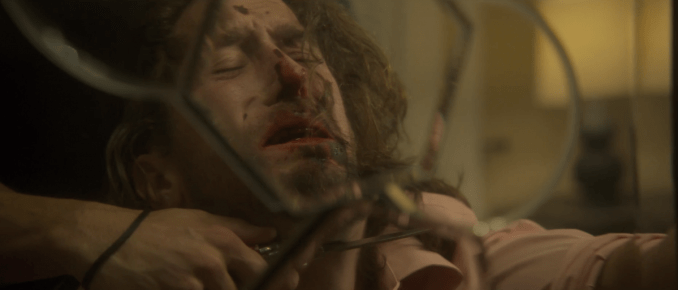 Overall, the lighting is a bit dark for my taste, but the score is carefully crafted and smartly used. The script morphs into a sick and twisted revenge story I did not see coming. There is a complex moral ambiguity that is endlessly intriguing. The Way Out is an unexpected journey of self-discovery and one credible psychological thriller.

An unassuming photographer finds himself entangled in influencer Kyoko, who has body dysmorphia. Part fable, part romance, and certainly part body horror. WOMAN OF THE PHOTOGRAPHS is a one-of-a-kind, genre film.
The juxtaposed images of Kai and his pet praying mantis eating are a delight. Hideki Nagai‘s physicality mirrors that of the insect. He is skittish, introverted, and meticulous in his work. Nagai draws you in immediately. Itsuki Otaki is equally captivating as Kyoko. The chemistry of our two leads is endlessly intriguing. I could not take my eyes off their engrossing dynamic.
The score is lighthearted, almost French. The hyper-augmented sound editing draws attention to the fact that Nagai has zero dialogue. Combined with eclectic music like jazz and Jazz and The Nutcracker Suite, it accentuates the playful nature of the film. Kyoko experienced many fantasy sequences as a coping method. The film utilizes classic devices. Mirrors and reflection play a dual role. Reds and fuchsias feature prominently in the form of nail polish, shoes, a toothbrush, Kyoko’s blouse, a robe, and phone case, and most importantly, the scar. I can see why this was such a hit on the festival circuit. WOMAN OF THE PHOTOGRAPHS begs a larger conversation about image and self-worth as dictated by the internet and society.
WOMAN IN THE PHOTOGRAPHS in Select Theaters on February 3rd and On Demand everywhere on February 7th.
https://epic-pictures.com/film/woman-of-the-photographs

A blackmarket cannabis dealer gets squeezed out of the business when marijuana becomes legal, and is forced to make one last deal with the people he should trust the least.
A strong fast-paced opening turns into a predictable script of double-crosses and drug debts. The score and transitional fade-outs feel generic and dated. Although, the handheld camerawork is a bright spot. I’ll give the script credit where credit is due, with one surprisingly violent scene halfway through.
 An hour in, we briefly meet a round of new characters. One, in particular, provides a cringeworthy moment that is a complete waste of time. On the other hand, actress April Lang provides a tangible grounding for Vince as a character, but the glaring lack of a thick Boston accent matching her son made me roll my eyes. That’s not on Lang. Her performance is the most natural in the film, and I wanted to see her storyline more than anyone. Kenny Johnson also impressed me as Vince’s pilot Carter. That’s another story I’d like to explore.
Sala Baker plays The Boss with badass energy. He steals every second of attention when he appears onscreen. Mister Fitzgerald is Bobby. His confident demeanor makes him likable immediately. More of him everywhere. Anthony Molinari is strong enough as Vince to carry the film. His voiceover work sets a Narcos-level tone at the beginning and end of the film. Unfortunately, the script doesn’t keep up with his potential.
IN THEATERS NATIONWIDE FEB 3
ON DEMAND FEB 7
Directed by Jonathan Salemi, and also starring Anthony Molinari (Tenet), Mister Fitzgerald (“F.B.I.”), Jeffri Lauren (Inside & Out), Mike Ferguson (Ebola Rex), Conner Floyd (“The Young & The Restless”), and Gigi Gustin (The Retaliators), THE LAST DEAL is a Scatena & Rosner Films release.

Helen navigates a ravaged world with her boyfriend Kevin and her little brother Barney. Desperate to find help after Barney’s infection slowly turns him into a zombie, they come upon a house where lives Dan, a man harboring a heavy secret.
The film has a very BBC look to it. It is difficult, beyond the appearance of a smartphone, to tell what year the film occurs. A mix of religion, politics, and pure survival mode mix to keep the audience engaged in the narrative. The sound editing by Rob Pepper, especially the creepy sound of the virus progressively infecting young Barney, made my skin crawl.
 Although the zombie makeup is not great, costumes and general makeup are thoughtfully aged and disheveled. Something that is usually a sticking point in low-budget apocalyptic films. I was equally impressed with the locations. It appears the filmmakers had a lot of options, and they used them to their advantage. Performances are strong all around. A large ancillary and featured extra cast makes for a more impressive final product.
 While the drama is a touch overplayed, perhaps akin to a Lifetime drama hokeyness, that does not lessen the intriguing arc in a genre that is tricky to conquer with new ideas. So while we’ve seen the sentimental attachment aspect in the past, the surprising plot point surrounding the very badass Ellen Hillman was phenomenal. Alive‘s final reveal garnered an honest, approving nod from me. I applaud the passion and commitment of writer-director David Marantz. It undoubtedly has an audience.


High school senior Karma and her mother Sunny are on the run from her father, an infamous cult leader. Trapped inside a remote wooded compound, her already complicated reality is about to crumble.
 The film begins with intriguing flashbacks of a cult murder, newspaper clippings, and a hauntingly saccharine song. The setup immediately captured my attention. A sudden shift in style and time reveals Karma and Sunny living in fear and relying on the kindness of former cult members for protection. Small crumbs of cult life are just enough to keep you invested in Karma’s fate.
 Michael Madsen is vile. His iconic voice serves him well as Paul, giving him an effortless presence. He could have been made more menacing with a few tighter shots overall. Kimberly Alexander plays Sunny with extraordinary nuance. This roller coaster ride of a role spans every emotion; adoration, cruelty, and unadulterated honesty. Alexander goes for it.
As Karma, Hannah Christine Shetler is the definition of wide-eyed vulnerability. She navigates chaos and confusion with equal parts innocence and fearlessness. Waking Karma is a terrific vehicle for her talents.
 It takes a solid 25 mins to get to any action, but then it is pretty much maniacal from there on out. The plot gets more sick and twisted as we roll along, both physically and psychologically. WAKING KARMA shines brightest in the scenes between mother and daughter. The shockingly devastating dialogue by director Liz Fania Werner with co-director Carlos Montaner‘s DP work almost demands an in-depth prequel. I have so many questions, and I’d love to see more about the beginnings of this cult. That’s the story we need now.
A group of civilians runs for their freedom when they find themselves caught in the middle of a Black Ops program designed to cure PTSD.
 First-time director Ric Maddox, alongside writers Sean Crampton and Jordan Wisely, brings the story of an elite ex-Navy seal with PTSD placed in a top-secret government rehabilitation program. Using criminal civilians as bait, can our soldier in question be saved? A twist on The Most Dangerous Game (1931) meets Universal Soldier (1992), THE STALKING FIELDS is an action-packed entry into a potential new franchise.
 The dialogue has a uniquely poetic perspective at times but quickly becomes contrasted by innumerable F-bombs. I say this as a person who has a sailor’s mouth, and this felt excessive. The quick-take editing has all the horror genre elements. From the lighting to the angles, it is visually intriguing. I must applaud the creativity in location design. Besides the woods, the military behind the scenes could easily take place in a cleverly lit warehouse walled off entirely with plastic sheeting. That budget must have been astronomical. I have to hand it to the CG team for some legit graphics on each monitor. They had my eyes darting from screen to screen. Bravo for the detail.
Performances are solid as hell. Angela Nordang, Adam J. Harrington, and Rachel Markarian all impress. Jake Davidson plays an eager young soldier, Jason Rawlings Jr. He brings a firey spirit, and I wanted to see more. Michael King nails the role of Price. He is naturally alpha but has ceaselessly charming energy to his delivery. He is a true standout. I think Sean Crampton needed more dialogue. I’d love to see more of his backstory in a second film. Taylor Kalupa‘s delivery is solid, as well. I invite Crampton and Wisely to explore more of her past, as well. These two need a weightier redemption. I would be remiss if I didn’t mention William Gabriel Grier’s performance. I could not take my eyes off him. There is another story worth exploring in flashbacks or a spinoff. The final moments of the script have a classic franchise set up as there is not one twist but two. Overall, THE STALKING FIELDS has all the elements you look for in an action thriller; intrigue, fight sequences, guts, and glory.
The film has a running time of 90:27 minutes and will not be rated by the MPAA.
THE STALKING FIELDS was written by Sean Crampton and Jordan Wiseley and directed by first-time filmmaker and Army veteran Ric Maddox. The film stars Crampton in a breakthrough performance, as well as Taylor Kalupa, Adam J. Harrington, Rachael Markarian, Jordan Wiseley, and Richard O. Ryan.
Drawing from personal experience, both Crampton and Wisely grew up in military families and felt it was important to make a film about the ramifications of PTSD.

Scientists, tech journalists, ethicists, and filmmaker Cody Sheehy navigate the genome technology space of genetic tailoring. In 2018, world-renowned Chinese geneticist He “JK” Jiankui ignited a controversial firestorm when his edited embryos produced twin girls without the public support of the scientific community. MAKE PEOPLE BETTER is the story of the martyr for the scientists who thought this was a great idea until the negative PR did not serve them.
Understanding the global uproar the Covid 19 vaccine caused, the idea of an “embryonic vaccine” might cause mass hysteria. But what if we would prevent the existence of disease before birth? With scientific timelines displaying those who laid the framework of genetic modification, playing God is slowly becoming a reality.
 “Ryan” takes an emotionally invested approach as JK’s publicist. He speaks in disguise, understanding the sensitive nature of everything he is about to reveal. Since Ryan has a sister with a painful genetic disease, his interest lies in protecting the children and JK’s bold innovation. Politics, science, government regulations, and public opinion clash as JK’s work is exposed before publication. The Chinese government rescinds its promise of protection.
The title of the film speaks volumes. “Make People Better” has innumerable interpretations. If we can stop disease, isn’t that what we want? On the other hand, choosing the attributes of a child, blue eyes and blonde hair, feels like a slippery slope on numerous levels. But, MAKE PEOPLE BETTER does an excellent job of putting scientific advances into perspective. Though instantly, the notion of socioeconomic comes to mind. What makes any of this technology available to those whose communities already struggle to receive rudimentary medical care? Weighing the positives and negatives will be an ever-evolving discussion. MAKE PEOPLE BETTER is a stunning continuation of a complex conversation. Ethical or not, it will not stop.
MAKE PEOPLE BETTER is available on TVOD Now!
In 2018, the Chinese scientist Dr. He Jiankui crossed a Rubicon in human evolution by altering the genetic structure of embryos to produce the world’s first genome-edited babies. This controversial experiment, supported by China’s government and top U.S. scientists, led to an
international uproar and swift moves by Chinese authorities to disappear not just Dr. He, but the twin girls whose genes he had edited. The documentary thriller MAKE PEOPLE BETTER reveals the unknown story behind this historic scientific event from the perspectives of those who were there including a whistleblower’s testimony, never-before-seen interviews with He Jiankui, and the depiction of a world being awakened to a future where rival governments and corporations compete to make designer babies the new normal.
Directed By: Cody Sheehy
Produced By: Cody Sheehy, Samira Kiani, Mark Monroe
https://makepeoplebetterfilm.com/


SYNOPSIS:
Movie icons and Pulp Fiction costars Bruce Willis and John Travolta face off in this action-packed thriller. When bounty hunter Ian Swan (Willis) is shot and presumed dead after disappearing in Maui waters, Swan’s son, Ryan (Blake Jenner), his ex-partner (Stephen Dorff), and a local detective (Praya Lundberg) set out to find his killers. After being threatened by a ruthless power broker (Travolta), it appears Ryan and his team are out of options — until an excursion to the closely guarded island community of Paradise City unites them with an unforeseen ally.
 John Travolta plays island crime boss Buckley. His eccentricity is evident through costume choices and dialogue. Thank goodness he is who he is because the character leans heavily into caricature territory. He is at his best in high-stakes action sequences.
Stephen Dorff is Ian Swan’s former bounty-hunting partner. He has a bit of an ambulance-chaser energy to him. He vibes well with Jenner, and his chemistry with Willis is chef’s kiss.  Bruce Willis plays Ian Swan with that legendary, effortless swagger we love. He is funny, charismatic, and a total badass. He is everything you want him to be.
I’ve been a fan of Blake Jenner since his turn on GLEE. He stands out from the crowd in every role. In PARADISE CITY, he plays Willis’s son, Ryan Swan. He possesses a natural fearlessness. No matter who is his opposite onscreen, your eyes stay on Jenner. He deserves more leading roles. Frankly, he has the charm of a young Bruce Willis. It was spectacular casting. He is magnificent.  Somehow, PARADISE CITY makes Jenner’s character impervious to automatic rifle bullets and, somehow, possesses the ability to survive a 10th-floor header into a shallow koi pond. It is unbelievable. No, literally, even for an action film, it is far-fetched. And this pains me to say that every female performance is downright atrocious, except for Mary Ann Perreira as Auntie Kona. She is a treasure. The dialogue from director Chuck Russell and co-writers Corey Large, and Edward John Drake, is mostly eye-roll-inducing. The already sped-through, convoluted plot also jumps in time, but not enough. It is messy.
  Here is what works. The fight choreography is undeniably entertaining. (Extra points for having Savannah kick off her heels for brawling.) Overall, the tightest scenes occur when Savannah and Ryan arrive in Paradise City proper. There is genuine yet surprising humor and a grounded backstory. That’s all I’ll say to avoid spoilers. I could see this story maybe working better in serial form. But that’s a big maybe. Jenner is the only one that sustains authenticity. He deserves better, and so does Bruce Willis’s legacy.
**Stick around for the credits**
DIRECTED BY:
Chuck Russell
WRITTEN BY:
Corey Large, Edward Drake and Chuck Russell
STARRING:
John Travolta, Bruce Willis, Blake Jenner, Praya Lundberg, with Stephen Dorff
RATING:
R for violence and language
RUN TIME:
94 minutes
GENRE:
Action


Dave moves his wife, Alice, and two young daughters, Riley and Mary, to a remote cabin in the American wilderness. Where guns and boredom meet the desire to push society away, MANIFEST WEST sees tensions rise when Dave’s new way of living shirks the norms.
Tim Heidecker plays against type as gun-wielding hyper-conservative neighbor Steve Danik. Michael Cudlitz counters Heidecker with his performance as neighbor Eric Lind. He is kind and thoughtful with his actions and words.  Annet Mahendru gives Alice palpable manic desperation. Her ability to jump from one emotion to another in the same breath is impressive. It is one hell of a turn. Milo Gibson is Dave Hayes. His character arc almost feels like the audience is witnessing a slow-motion car crash. Gibson brings not-so-subtle anger and protective alpha energy.
Lexy Kolker plays Riley with perfect corruptable innocence. She gives a performance that is nothing short of captivating. Kolker takes in each beat with precision. Her slow burn of resentment is a ticking time bomb.  MANIFEST WEST addresses a myriad of current and alarming themes in America. The score is melancholy and ominous. Writer-directors Joe Dietsch and Louie Gibson use the girls’ history text as a smart foreshadowing device. Antigovernment sentiment compounds the simmering chaos. Add Alice’s deteriorating bipolar disorder, and you have a powder keg. Children learn from their parents, for better or for worse. MANIFEST WEST runs head-on with its relevance to a shocking conclusion.
Trailer:
Distributor: Samuel Goldwyn Films
Release Date: The film is now in theaters and VOD/Digital!
Writer/Directors: Joe Dietsch, Louie Gibson
Starring: Annet Mahendru, Milo Gibson, Lexy Kolker, Tim Heidecker, Michael Cudlitz


Synopsis: After leaving NYC for his rural hometown of Bad Axe, Michigan, at the start of the pandemic, Asian American filmmaker David Siev documents his family’s struggles to keep their restaurant afloat. As fears of the virus grow, deep generational scars dating back to Cambodia’s bloody “killing fields” come to the fore, straining the relationship between the family’s patriarch, Chun, and his daughter, Jaclyn. When the BLM movement takes center stage in America, the family uses its collective voice to speak out in their conservative community. What unfolds is a real-time portrait of 2020 through the lens of one multicultural family’s fight stay in business, stay involved, and stay alive.
The Siev family patriarch Chun is a Cambodian refugee who came to the US to attain the American Dream. He and his wife Rachel opened a donut shop named Baker’s Dozen. Times were hard, and money was tight, but the Siev family stuck together and thrived. In 2000 they opened Rachel’s, a family restaurant in their hometown of Bad Axe, Michigan.
Director and only son in the Siev pack, David had the foresight to capture the upheaval of his family and their community beginning in March 2020. Like many families, the Sievs found their adult children moving back into their homes to help their vulnerable parents. Bad Axe is a small, tight-knit town with two stoplights. It’s a nice place to raise a family. When lockdown begins, local tension boils over, and the Siev family becomes targets of racism and conspiracy theories.
The eldest daughter, Jaclyn, has palpable anxiety. She tries her hardest to protect her father. The tension and stakes are higher than they’ve ever been. The family’s livelihood, quite literally, is on the line. Siblings, Michelle and Raquel, joined by Jaclyn’s husband Mike, Rachel’s boyfriend Austin, and a small handful of Rachel’s loyal employees, work day and night to feed the community and maintain a sense of normalcy while facing political and racial upheaval.  The intimate nature of Bad Axe is visceral. The Siev family could be anyone’s neighbors. They are friendly, hardworking, and respectful members of their community. They bug each other as much as they love each other. They remind me of my holidays when all four siblings invade our childhood home with inside jokes, arguments, and an unconditional adoration for one another.
Chun is a fascinating member of the family. He is a proud man. An opinionated individual, a responsible gun owner, and a survivor of the Cambodian killing fields, Chun’s unresolved trauma reveals itself in harsh words toward Jaclyn. He knows it and owns it. His emotional journey is everything.
The footage of the Black Lives Matter confrontation made my palms sweat. The aftermath of ignorant racist attacks will undoubtedly infuriate you. You will not believe the sheer terror these people have to endure. The courage of the Siev family makes my heart swell. Their bravery to move forward in the face of chaos is astounding. David’s commitment to telling their story gives audiences a peek inside the hatred stirred up by those in politics and the media that I refuse to give fuel by naming them. We all know who is responsible for the uptick of hate. May he lose again and again.
While we witness the many trials and tribulations alongside the Siev family, in the end, BAD AXE is a love letter to an ever-evolving community and an ode to a family that believes love conquers all. I can easily say Bad Axe is one of the year’s best documentaries.
BAD AXE — Directed by David Siev
New York Premiere — Winner’s Circle — IFC Films Release on Nov 18, 2022
Produced by Jude Harris, Diane Quon, Kat Vasquez, David Siev
Executive Produced by Daniel Dae Kim, Jeff Tremaine
Featuring Chun Siev, Rachel Siev, Jaclyn Siev, Skylar Janssen, Michael Meinhold
Screenings:
Online Screening Window – Sunday, November 13, 2022 12am through Sunday, November 27, 2022 at 11:59pm
Run Time: 102 minutes

Business partners Jennifer and Samantha are invited on a weeklong yachting voyage with a potential investor. Jennifer begins to have strange dreams, and it becomes clear that she may have brought something else with her.
 I’ve been sitting on my thoughts about this film for two days now. If I’m being completely honest, I think PRESENCE plays like a rushed prequel to a horror franchise. All the elements are in place for some seriously scary storytelling. Yet somehow, I was left with more questions than answers.
Writer-director Christain Schultz gives us a damaged lead in Jennifer. She has emotional trauma that feels unresolved, even in the final moments. I wanted specifics, other than everyone around her referencing a “breakdown in New York.” Jenna Lyng Adams has moments of badassery, but they are few and far between (no fault of her own). I was also slightly confused about the dynamic of Jennifer and Sam’s relationship. At first, I thought they were lovers. It was a bit messy. Schultz and co-writer Peter Ambrosio ultimately make Jennifer a victim, even though I believe the intention was a reclamation of power through supernatural forces. I’m unclear whether this was an editing issue or a script issue.  I must say that the performance of Dave Davis is my favorite part of the film. Davis gives depth to the building mystery, in some moments with nothing but a panicked stare. His intensity immediately reeled me in, calming me during my desperation to make sense of the plot. I would watch an entire film about his journey with the Presence. That’s the story that hooked me instantly.
Overall, PRESENCE got me revved up with slick visuals but never satisfied me with its overall arc. I don’t need it spelled out because the bones are there. I was looking for a further explanation of “why” all around.


Four best friends play a mysterious game procured at a tag sale, testing their relationship in unpredictable and terrifying ways. Glitchy body doubles and piecemeal memories are only the beginning of the nightmare-fueled film.
 Performances from our five leads are exceptional. Dylan Schombing plays Kyle, a young webcam hacker essential to the audience following any trace of sense. Schombing’s eyes speak volumes. Kelcey Mawema is Court. She has a party-girl spirit with a drinking problem that hides an inferiority complex. Mawema gives us a solid performance, never letting herself become a third wheel as the story progresses. Peyton List plays Zooza. This role is a departure for List, even with her darker character of Cobra Kai. You cannot help but focus on her turmoil.
 Brendan Meyer (who I loved in OA, and am still bitter we didn’t get our ending…) plays Rob with a trustworthy boy-next-door aura. But, Ober’s script allows him to explore a nuance that Meyer owns. Kaitlyn Santa Juana‘s turn as Cotton is enthralling. She is the thread we follow through the film as we unravel the game. There’s an “it” quality about her I cannot pin down, but I’m dying to see her in whatever she does next.
 The script had me hanging on every word, every visual, and mind-ending twist. Writer Damien Ober and director Scooter Corkle hypnotize audiences with dizzying editing combined with slowly leaking reveals. It’s a ceaselessly engrossing marriage of devices. Add on the notable red/ blue lighting and jarring soundscape, and The Friendship Game holds you captive from the very first frame. It is emotional manipulation at its finest.
SYNOPSIS: The Friendship Game follows a group of teens as they come across a strange object that tests their loyalties to each other and has increasingly destructive consequences the deeper into the game they go.
THE FRIENDSHIP GAME stars Peyton List (“Cobra Kai”), Brendan Meyer (“The OA”), Kelcey Mawema (To All the Boys I’ve Loved franchise), Kaitlyn Santa Juana (“The Flash”) and Dylan Schombing (“Watchmen”). The film was written by Damien Ober (“The OA”) and directed by Scooter Corkle (Hollow in the Land).


You must be logged in to post a comment.