

MANIFEST WEST

Dave moves his wife, Alice, and two young daughters, Riley and Mary, to a remote cabin in the American wilderness. Where guns and boredom meet the desire to push society away, MANIFEST WEST sees tensions rise when Dave’s new way of living shirks the norms.
Tim Heidecker plays against type as gun-wielding hyper-conservative neighbor Steve Danik. Michael Cudlitz counters Heidecker with his performance as neighbor Eric Lind. He is kind and thoughtful with his actions and words.  Annet Mahendru gives Alice palpable manic desperation. Her ability to jump from one emotion to another in the same breath is impressive. It is one hell of a turn. Milo Gibson is Dave Hayes. His character arc almost feels like the audience is witnessing a slow-motion car crash. Gibson brings not-so-subtle anger and protective alpha energy.
Lexy Kolker plays Riley with perfect corruptable innocence. She gives a performance that is nothing short of captivating. Kolker takes in each beat with precision. Her slow burn of resentment is a ticking time bomb.  MANIFEST WEST addresses a myriad of current and alarming themes in America. The score is melancholy and ominous. Writer-directors Joe Dietsch and Louie Gibson use the girls’ history text as a smart foreshadowing device. Antigovernment sentiment compounds the simmering chaos. Add Alice’s deteriorating bipolar disorder, and you have a powder keg. Children learn from their parents, for better or for worse. MANIFEST WEST runs head-on with its relevance to a shocking conclusion.
Trailer:
Distributor: Samuel Goldwyn Films
Release Date: The film is now in theaters and VOD/Digital!
Writer/Directors: Joe Dietsch, Louie Gibson
Starring: Annet Mahendru, Milo Gibson, Lexy Kolker, Tim Heidecker, Michael Cudlitz


 The intimate nature of Bad Axe is visceral. The Siev family could be anyone’s neighbors. They are friendly, hardworking, and respectful members of their community. They bug each other as much as they love each other. They remind me of my holidays when all four siblings invade our childhood home with inside jokes, arguments, and an unconditional adoration for one another.


 Performances from our five leads are exceptional. Dylan Schombing plays Kyle, a young webcam hacker essential to the audience following any trace of sense. Schombing’s eyes speak volumes. Kelcey Mawema is Court. She has a party-girl spirit with a drinking problem that hides an inferiority complex. Mawema gives us a solid performance, never letting herself become a third wheel as the story progresses. Peyton List plays Zooza. This role is a departure for List, even with her darker character of Cobra Kai. You cannot help but focus on her turmoil.
 Brendan Meyer (who I loved in OA, and am still bitter we didn’t get our ending…) plays Rob with a trustworthy boy-next-door aura. But, Ober’s script allows him to explore a nuance that Meyer owns. Kaitlyn Santa Juana‘s turn as Cotton is enthralling. She is the thread we follow through the film as we unravel the game. There’s an “it” quality about her I cannot pin down, but I’m dying to see her in whatever she does next.
 The script had me hanging on every word, every visual, and mind-ending twist. Writer Damien Ober and director Scooter Corkle hypnotize audiences with dizzying editing combined with slowly leaking reveals. It’s a ceaselessly engrossing marriage of devices. Add on the notable red/ blue lighting and jarring soundscape, and The Friendship Game holds you captive from the very first frame. It is emotional manipulation at its finest.

 Diana’s integration into the family lands somewhere between awkward and essential. Husband Felix and young daughter Roberta (they call her Bobs) are caught in the middle, allowing for gaslighting from Felix and growing distrust from Bobs. Add in the class distinction with Christine and her family living in a lavish mansion, while Diana arrives with nothing but a single suitcase, mostly filled not with clothing. Writer-director Lorcan Finnegan utilizes flashbacks of Diana’s life to illustrate the glaring contrast. Little by little, the audience begins to piece things together, but not before being disturbed by the effects of Diana’s folk healing methods.
 As the story progresses and the truth reveals itself, your view of each character shifts. Eva Green plays Chrissy with both a manic and ruthless angle. She is a master at living inside the skin of a character, and Christine is no exception. Chai Fonacier is Diana. This juicy role allows us to see Fonacier’s massive range. I would watch her in all the things, as they say.
 *******SPOILER ALERT*******


 Jessica Lowe is positively loathsome as influencer girlfriend Sadie. You cannot help but laugh at her ridiculously aloof behavior. Brendan Scannell as Runway Dave and Asif Ali as Angry Mike provide the added laughs to round out our group of guys. They give unforgettable performances.
 The script has honest Hangover vibes. While I wish the film focused more on actual roommate scenarios and less on the wacky road trip aspect, I still laughed my ass off. The climate change aspect is subtle and pitch-perfect. Kudos to the writers for using it effectively. The numerous cameos and ancillary characters no doubt strengthen the film, from beginning to end. Rob Riggle, Flula Borg, and Parvesh Cheena leave lasting impressions. In the end, raunchy and over-the-top, BROMATES is undeniably goofy as hell. You’ll laugh at the sheer absurdity of it all.


 Justin P. Lange‘s The Visitor is an immensely enjoyable horror film populated by a protagonist who has certainly never heard this joke. Things pretty quickly go amiss when Robert (Finn Jones) relocates from London to his wife’s small town. While settling into her childhood home, Robert finds a mysterious portrait in her attic. It is of a man referred to only as “The Visitor”, and he bears a striking resemblance to Robert.
 There is still much to like in The Visitor. The core performances are uniformly strong. Jones and McNamee have nice unforced chemistry, and I wished the film had given us more time with them. It is effectively paced (86 minutes!) and contains several genuinely frightful and inventive scares. I especially loved the way the film leveraged the biblical plagues without feeling the need for too much supporting exposition.


 Uncork’d Entertainment has acquired SAWED OFF, a new supernatural horror feature based on a comic anthology story and starring Eva Hamilton (RUIN ME, DEATH KISS), Jody Barton (UGLY SWEATER PARTY), and Trae Ireland (13/13/13).
 Hunter Johnson (IRRATIONAL FEAR) produces and directs. The screenplay is by Barton, Johnson, and Chuck Wagner, based on Wagner’s Eclipse Comics story “Bag Limit,” published in TALES OF TERROR in 1986.


 In private, there is an uncomplicated intimacy between Maria and Sascha, but judgment bubbles to the surface once in mixed company. Self-loathing and regret are deep-seated, a deadly combination for sabotage. The script slowly but slickly reveals Sascha’s inner demons, putting Maria and the audience in an uncomfortable position. The second half of Bliss deals with the ripple of her emotional instability. It’s tricky but familiar. Performances from Katharina Behrens and Eva Collé are spectacular, fearless, and raw. It’s stylistically similar to a docu-drama, and I dug the energy of the entire film. Writer-director Henrika Kull gives audiences a gem.

 *Resisting the urge to title this review “camping is in tents.”*
 Performances are fine. I wish I sensed more believable chemistry between our four protagonists. Michael D’ Amico and Jonathan Vanderzon fare better as our villains. Their presence elicited a genuinely visceral reaction.
  Camping Trip would benefit from a 15 to 20-minute cut. While the climax is satisfying, by no means did it need that much slow-motion editing. What follows is a confusing shift in relationships that feels forced. Like much of their response to finding a body and a bag filled with money, their decisions are laughable, if not infuriating. If nothing else, it gives the audience a reason to keep watching and wondering how this bungling crew parts ways.
  The camera work in the final ten minutes is quite literally dizzying. It also allows the audience to use their imaginations, rather than relying on mediocre fight choreography and the continued use of watered-down practical fx blood. Polly’s particular skill makes for a slick final moment. I had hoped it was featured more in the story. Michel DeMars’ score in this scene, in particular, is perfect. In the end, Camping Trip has an intriguing plot, even if the exposition lacks polish.


 With a title like Get Away if You Can, I sat down expecting a 90-minute sea-set thriller with the potential for a high body count. Instead, I was treated to a thoughtful meditation on love, purpose, and gender.
 The filming locations are stunning – the filmmakers deftly navigate the cramped interiors and deck of the sailing yacht, giving a sense of scale and place at all times. The island drawing Domi’s (Dominique Braun) attention might be part of the “islands of despair”, but it is truly gorgeous. As in, I can understand having a fight with your spouse over an island like this. If despair looks like this, sign me up. Scenes away from the boat and island are purposeful, and further our associations with the two leads. Through flashbacks and phone calls, Domi’s world is shown to be lush, green, and free. TJ’s flashbacks, on the other hand, are grounded in steel, machinery, and work. The settings smartly reinforce the opposing dynamics pulling at the two lovers.
 Since much of the film’s plot finds TJ and Domi in conflict, we don’t get to see much direct chemistry between the two leads. Braun’s Domi has a heavy load to carry, and we feel her appetites and frustrations. Martin’s TJ is given less to work with, expressing his frustrations by guzzling red wine and gorging himself on saltines. Ed Harris gives a compelling supporting turn as Alan, the father of Martin’s character. Alan is a stern man from a military background. But, more than this, he seems to embody toxic masculinity itself. Harris’ restrained physical performance speaks volumes – this is a man who can make chewing a piece of steak simultaneously hilarious, intimidating, and hostile. Harris’ energy lurks even in scenes where is physically absent.
 I found the film’s climax to be brave and thoughtful. You may not agree with the choices the characters make, but you can understand the journey that has brought them to that moment. Despite some choppy waves, there’s ultimately a lot to like about this boat trip.


 Performances sell this film. Matthew Finlan at Gunnar with a slimy rich kid flair that makes him supremely punchable. Rossif Sutherland‘s genuine vulnerability in grounds the chaos. With the audience’s knowledge, his performance is one of the most important in the film. Julia Stiles is mind-blowing as Tricia. I’ll only reveal that the rollercoaster of this role is delicious, and I did not see it coming.
 Isabelle Fuhrman plays the audience like a fiddle in what might seem like a tricky undertaking years later. The final reveal in Orphan was a game-changing moment that sticks in genre fans’ minds. For Fuhrman to nail this performance, knowing the audience is in on the secret this time speaks volumes about her skills. The use of body doubles ensured that she remained in the role. Had she been recast, we might have had a very different conversation about this franchise.
 The use of mirrors is a noticeable and effective trope. Growing up in Connecticut, I can attest that the costume department gets an A+ for their work. Now, we need to discuss the screenplay. A total WTF twist keeps Orphan: First Kill fresh and engaging. The terror tables overturn with an unexpected villainous turn from multiple characters in the film. The unpredictability of this prequel manages to be creepy and cringe all at once. There’s a deliberate white privilege that is chef’s kiss. I wasn’t sure whom to root for. It was a ping-pong match of vile behavior. That made me all the more invested in the madness. When I tell you that I reveled in a particular kill, you’d be hard-pressed to disagree upon viewing. Orphan: First Kill is a wild ride genre fans will happily stay on if only to see how this chapter plays out.


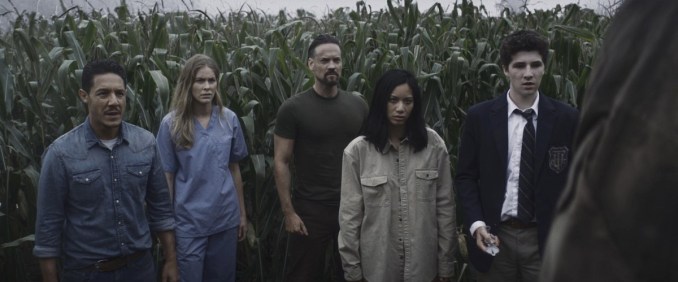 With reminiscent aspects of the cult favorite
  Shane West
  The solutions to the puzzles evolve from difficult to unchallenging and back again. This inconsistency is forgivable from someone who is an avid winner of ‘Escape The Room’ experiences. (*Nerd alert)


 Director


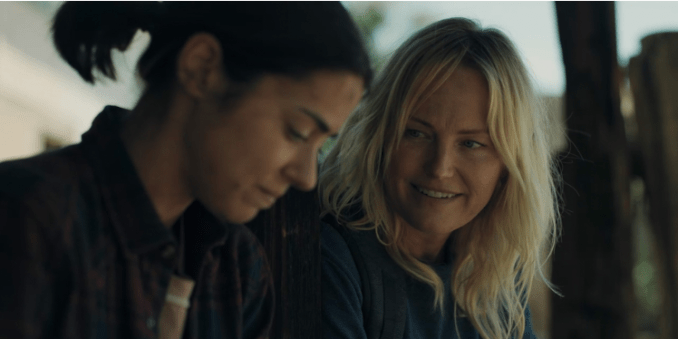 Two women attempt to escape a cult by hiking through the desert. When plans go awry, deception, confusion, and brainwashing pit them against one another.
  The screenplay’s wordplay, score, and scene blocking heightened every moment. There was never a dull moment. The endless mindfuckery rubbed my nerves raw. I found I had left fingernail impressions on my palms without realizing it. The paranoia and tension in the dialogue had my head spinning. Are these women gaslighting one another, is one of them a villain and is this even real? These are some of the questions I had while sorting through the madness that is
You must be logged in to post a comment.