

THE PRICE OF GLEE

GLEE premiered the week of my 30th birthday. I was a musical theatre nerd in high school who graduated from a Manhattan conservatory that has churned out Tony winners and Oscar nominees. Watching GLEE made me feel seen for the first time through the storylines of these young adults. The attachment was real, and the show became a cultural turning point for millions. Because of that emotional investment, the drama surrounding the show still affects so many. Nothing is off the table in the salacious ID (Investigation Discovery) docuseries THE PRICE OF GLEE.  As a self-professed Gleek, the series contains so much information I didn’t know. Safety issues, money, and around-the-clock nonstop work, from the mouths of friends, crew members, and entertainment reporters, The Price of Glee pulls the curtain back on all the behind-the-scenes drama and addresses the all too familiar internet rumor that the show may be cursed. Episode one concludes with Cory Monteith’s death and ends on a cliffhanger. Episode two picks right back up where we left off, focusing mainly on the aftermath of Monteith’s passing. Delving into Mark Salling’s child pornography conviction and subsequent suicide, this episode melds into the third with Naya Rivera‘s father speaking about her tragic death.
 Transitions between conversations feature video clips and cast photos. My main gripe with episodes two and three is the repetition of said images. A show that spanned six seasons deserved fresh photos. It was a glaring amateur mistake. Is THE PRICE OF GLEE a touch like an E! True Hollywood Story? Very much so, but as a fan, I was endlessly intrigued, hoping for any new information. While the cast has come forward to say they were not involved, hearing crew members that genuinely cared for them and with (mostly) kind words, their insight is vital to understanding the immense pressure this phenomenon created.

courtesy of ID


 The 6-month journey from Earth to Mars captured the most intense solar flares ever experienced in all space exploration, forcing the team to reboot both rovers. Angela Bassett’s voice gently narrates Spirit and Opportunity’s actions. The CGI simulations of Spirit and Opportunity are breathtaking. I’ve never seen anything like them. The footage from inside the labs and control room, combined with the tense sci-fi-inspired score, keep you on the edge of your seat. You find yourself cheering, holding your breath, tearing up, and singing along to the mission-curated soundtrack.
 If the mystery of space intrigues you, if you’ve ever looked up at the night sky and wondered if we were alone in the universe, GOOD NIGHT OPPY is a film tailor-made for your imagination. It’s a shame The Academy overlooked such a crowd-pleaser. If there ever was a more appropriate “To infinity and beyond” moment in documentary filmmaking, I sure as hell can’t think of one.


 The insights into Caro’s work process are breathtaking. One moment, in particular, stands out: while working on one of the volumes focused on the life of Lyndon Johnson, Caro had the opportunity to interview Johnson’s younger brother, Sam Houston Johnson. A tremendous opportunity, but Caro found he wasn’t getting the level of rich detail he craved. So, he brings Sam back into his childhood kitchen and has him sit in the very chair he sat in as a young boy. Caro sits behind him so that everything appears just as it would be in Sam’s memories. It is only then that Caro asks his questions again. Talk about literal background research.
 Turn Every Page offers a peek behind the curtain of a complex and critical industry. Ironically, what it offers very little of is the dynamic between its two titular protagonists. Aside from one scene, they never interact on camera. Despite director Lizzie Gottlieb’s best efforts, this cannot help but feel a bit like a missed opportunity. In this framing, both men are free to lay their own narratives. It would have been a pleasure to see them challenged to edit one another’s perspectives.


 “Ryan” takes an emotionally invested approach as JK’s publicist. He speaks in disguise, understanding the sensitive nature of everything he is about to reveal. Since Ryan has a sister with a painful genetic disease, his interest lies in protecting the children and JK’s bold innovation. Politics, science, government regulations, and public opinion clash as JK’s work is exposed before publication. The Chinese government rescinds its promise of protection.

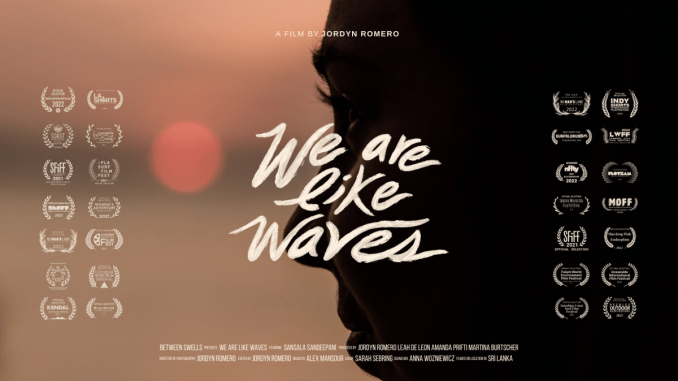
 Director Jordyn Romero bonded with Sanu over their love of surfing, a predominantly male-dominated sport. Sanu’s fearless pursuit of wanting to become the first female surf instructor from Sri Lanka lies beyond the horizon. In Sanu’s words, “We Are Like Waves. You cannot stop us.” This simple act of rebellion is certain to have a ripple effect. Romero brings audiences a relatable story told with grace. Boasting a beautifully encompassing score, WE ARE LIKE WAVES sees Romero and Sanu carve a path for the next generation.


 Yale University’s meticulous record-keeping in the Sterling library proves invaluable. After scanning 60, 000 pages in the microform media room, the aha moment appears; a 1959 letter between


 Kimi’s traumatic childhood and Russia’s national political upheaval created the perfect ticking time bomb of existence. He and Marusya needed each other to stay alive, but unresolved trauma is a killer lying in wait. Through marriage, rehab, divorce, and Kimi on a headlong downward spiral, Marusya must find other ways to dull the inner chaos. She had to decide, make a plan to live, or join her innumerable friends in suicide.


 The systemic failure at Fort Hood will leave you seething. After two months of desperate outcry, the Army finally makes a statement and begins to search, but it is too little too late. With the pro bono help of maverick lawyer Natalie Khawam, The Guillen family takes their fight to Capital Hill.
 I remember this story. I remember feeling so angry when I heard how long Vanessa had been missing before I heard about it on the news. Then, when the details emerged of her murder and subsequent failure at Fort Hood, I was disgusted. Those feelings returned and multiplied as I watched this film. Understanding the extent of their coverup will blow your mind. The military justice system allows for secrecy and discretion to sweep everything under the rug. It is beyond broken.


 The doc also discusses Mainstream Mickey and counterculture Mickey and how his image became synonymous with cultural change through the years. They touch upon copyright infringement and the complexities that grew out of Walt’s loss of Oswald the Rabbit. Filmmakers and interviewees do not shy away from the negative stereotypes appearing in certain cartoons and how Mickey became a corporate symbol. It’s an honest take.
 I was lucky enough to have been a performer at Disneyland in 2000. For the insiders, I’ll say I had the magical title of “pageant helper,” which carries more weight than it suggests. I thought perhaps working at the parks would kill a little bit of the joy, as technically, I had peeked behind the curtain, quite literally. Nothing could be further from the truth. Anytime I stepped onto the grounds out from backstage (the areas no guest ever sees), I would be a giant kid all over again. On one unforgettable day, I had the unprecedented honor of meeting the actor Walt hired to wear the first Mickey costume on Disneyland’s opening day. There I am, a sweaty mess, in half a costume smiling like a fangirl. It was a part of history most people would never get to touch.
 Visually, Mickey: The Story of a Mouse is a cinematic dream. From hand-drawn frame-by-frame cell animation to chemist-mixed paint to the collaborations we see today as animation and technology shift by the day. We experience the sheer artistry involved in Mickey as animators recreate some of his most iconic roles throughout history. In a sort of meta moment, these creators work on the newest Mickey short, “Mickey In A Minute,” during the doc, one hand-drawn scene at a time. The final product is Disney perfection.


 The intimate nature of Bad Axe is visceral. The Siev family could be anyone’s neighbors. They are friendly, hardworking, and respectful members of their community. They bug each other as much as they love each other. They remind me of my holidays when all four siblings invade our childhood home with inside jokes, arguments, and an unconditional adoration for one another.


 Home videos, Tess’ narration, and Liv’s diary entries comprise a narrative that looks and sounds like so many young people. The doc plays out in two distinct halves; before and after. My Sister Liv begins with Tess telling the audience Liv’s story. The second is Tess and their mother’s emotional devastation and how the pandemic rolled into their already heavy grief, with videos of Liv replaced by videos of Tess. Then zoom discussions of Tess speaking with young people Liv’s age and mental health professionals, expressing similar feelings, coping mechanisms, causes, and statistics.


 Abigail Fuller’s short film Shepherd’s Song contemplates Earth’s interconnectedness through the eyes of California grazier Jenya Schneider. Climate change threats in the west frequently come in the form of severe droughts and wildfires. Jenya and her partner Jack have chosen a cyclically beneficial lifestyle for the Earth, their clients, and themselves. Four hundred ewes, recycled fencing, and unrelenting passion comprise their venture. Grazing becomes a service to the land, and the sheep produce wool and lanolin. The science behind grazing done right shows the value to the ecosystems it serves. It’s healing the land.
 A beautiful score by Serena Goransson moves from subtle to soaring as the film progresses. It feels perfect. Carmen Delaney’s mix of handheld and drone cinematography gives the audience an idea of the landscape scale against Jenya and Jack’s figures through the mountainous grasslands. It is stunning. SHEPHERD’S SONG is part climate film, part nature film, and all heart. We can all learn a whole lot from Jenya and Jack. They are showing the world how to repair the damage we’ve done, one area of grassland at a time.


 Tora the Trucker Cat, truck driver David, and girlfriend Destiny travel together from state to state for months. Tora has a leash to explore national parks and a seat in David’s backpack when she needs a break. Tora has become the focus of David’s newfound photography skills. She’s a bit of a celebrity that’s allowed David to express himself in ways he never thought possible.


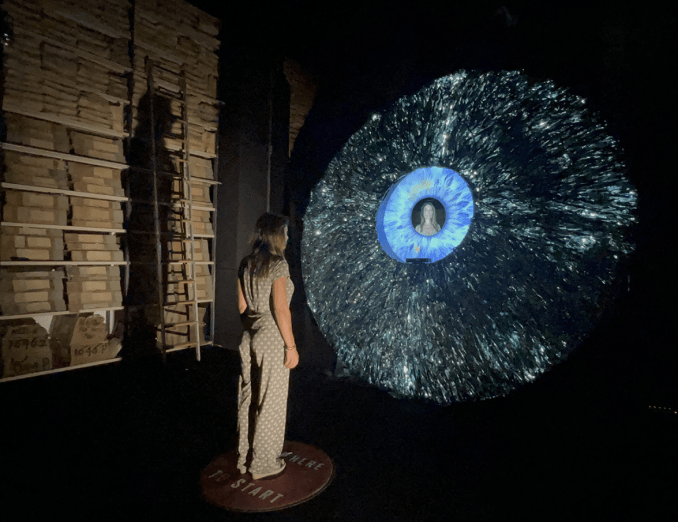 Youssouf arrived on the shores of Naples in a rubber dinghy from the Ivory Coast in 2016. Alone and with nothing to his name, he endured discrimination, educated himself, and began to work. Engaged and with a child, his goal is to be present for her. Adopted at the age of five from Moscow, Larissa found herself bullied for her appearance, leading her to abuse alcohol. Resiliency and self-love push her forward in life.


 The film chronicles Diana’s life in the media from the days before her engagement until her horrific death. There are no talking heads, no overarching narration, simply thousands of hours of archival footage edited together with care and great intention. Studying the body language of Diana, Charles, and the royal family is fascinating. The commentary comes in the form of media voiceovers that are equally adoring and scathing. Feeling as if we know Diana and understanding the revelations that have since come to light, I was seething as I witnessed the treatment of an uncaring husband and the fickle media.
 The score is breathtaking. The editing is an award-worthy triumph. Watching the downward spiral of a young woman thrown to the wolves is daunting. I found myself shaking my head, filled with sadness and anger at those who failed spectacularly to protect her. And therein lies the double-edged sword of this film. Our obsession with a woman so special and fascinating makes us accomplices.

You must be logged in to post a comment.