

ISOLATION

As a narrative framework, Director and Producer, Nathan Crooker created a fictional world many months into the future that is based around the current global pandemic. All eleven filmmakers used the same unifying framework in creating their stories. The filmmakers were tasked with how to stay creative using only what was available to them at the time. They were not allowed to use Zoom or any other video conferencing services and were only allowed to use the equipment and resources they had with them when they entered into lockdown, including cast and crew, adhering to their respective COVID-19 protocols.
 As Fil Eisler‘s opening credits crawl across the screen, and you hear his eerie score, you already feel you’re in for something unsettling. Nathan Crooker is behind the concept of Isolation. His instructions to fellow filmmakers? Solely use what you have at your disposal in lockdown. Each sequence transition utilizes Eisler’s animation to highlight a new city and story. It’s sheer perfection.
Larry Fessenden‘s piece “Fever” is precisely that; a wildly dark, creatively shot, fever dream. It nailed the undying spirit of New York and hit me square in the chest. Andrew Kasch‘s film “5G” takes a conspiracy theory angle. It’s that online alt-right anger we know all too well. But how they communicate with our man Chad is altogether something new. Cody Goodfellow‘s script is clever. Paranoia takes hold in Dennie Gordon‘s “The Dread” as a husband and wife hole up in their Los Angeles hillside home. Are their fears so unfounded after all?
Bobby Roe‘s “Pacific Northwest” broke my heart into a million pieces. What would happen if my kids had to survive on their own? It destroys me to let my mind go to that place. Co-written by Zack Andrews, this one kept my pulse pounding. Written and directed by Adam Brown and Kyle I. Kelley, “Meat Hands” was unexpected. Loneliness is a killer, but so is interacting with people in a pandemic. Physical intimacy is vital to survival. Cleverly connecting back to “5G,” Alix Austin and Keith Siewert‘s “It’s Inside” takes place in London. Pushing 5G and chemtrail theories, YouTuber Paige believes someone is inside her flat. Bravo for the practical FX and sound editing because it all makes you cringe.
 The palpable sadness of Zach Passero‘s film “Gust” is unavoidable. Outside of the pandemic, it touches the monotony of motherhood and its emotional isolation day in and day out. “Homebodies” by Alexandra Neary sees an investigative journalist come upon a horror he did not expect. The film taps into the sensationalism that’s crept into the media. If you weren’t waiting for Cuomo’s daily updates last year, you were seeing the same images of empty streets and not much else. I was not expecting this more traditional turn. It was awesome. Finally, we find ourselves in Berlin with Christian Pasquariello‘s “Comfort Zone.” If this doesn’t scream governmental and scientific transparency to viewers, I don’t know what will. It’s a super slick cherry on top of Isolation‘s overall storytelling.
Isolation taps into authentic fears. For anyone unfamiliar, what a fantastic introduction to the work of these filmmakers. The length and uniqueness of styles keep you hovering on the edge of your seat. You don’t have a moment to get settled.
*Available on VOD Tomorrow, November 2nd, 2021*
Produced by Nathan Crooker
Directed by:
Dennie Gordon (Jack Ryan, Legion, Hunters, Waco)
Larry Fessenden (“The Last Winter,” “Habit,” “Depraved”),
Bobby Roe, (“The Houses October Built 1&2”)
Andrew Kasch, (“Tales Of Halloween”),
Zach Passero (“Wicked Lake”)
Christian Pasquariello (“Alien Invasion: S.U.M. 1”)
Alexandra Neary (“The Innocent”)
Alix Austin & Keir Siewert (“Retch”)
Kyle I. Kelley & Adam Brown (“The Music Lesson”)


 Mimi Kuzyk

 Performances across the board are phenomenal.
 Giant Bear (*shown alongside Don’t Say Its Name)
 The Death Doula
 Watershed
 Creepy Bits- Chapter 1- “Baby Face”
 Narcoleap: S2
 GHOST- A Primitive Evolution
 Midnight Lunch Break
 The Revenge of the Snowflakes
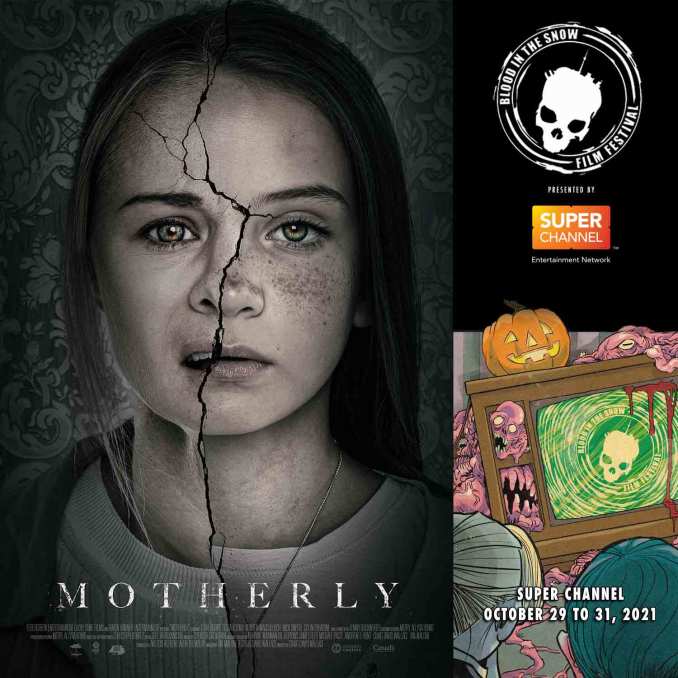
 We All Dream (*being shown with Motherly at 9 pm this evening)
 Disquietude (screening with Tin Can Sunday night at 11:30 pm.)


 Two kickass female leads in one film? Thank you. The cast generally consists of more women, and I am not complaining. It’s inspiring to watch these actresses communicate with each other. Leads,


 Sisters With Transistors beautifully brings to life a niche history that you didn’t know you were missing but will surely recognize. The film seamlessly weaves together the personal stories of innovative composers like Clara Rockmore, Daphne Oram, Bebe Barron, Pauline Oliveros, and Suzanne Ciani through live performances, archival footage, and visual interpretations of their music. Some pieces are moody and atmospheric; others are challenging and experimental. Yet, all of them reverberate with unique genius, creativity, and passion. The overall effect is a captivating documentary on an unsung history that is endlessly engaging to watch.


 Amy Smart

 Masao is coming to terms with his mortality in a quietly epic fashion. They say your life flashes before your eyes when you are about to die. In Masao’s case, we are a party to the type of man he was years ago. He is ushered into death by the ghost of his wife Grace, who takes him on a journey through time. There is a bit of a Christmas Carol quality, as Grace brings him into the memories of different and defining times. We come to learn his shortcomings, self-sabotage, doubt, adoration for his wife, and finally, acceptance of his fate.


 The cinematography is gorgeous. The setting, the costumes, everything pops. The main set is magical. The walls adorned with landscape paintings, the massive rooms filled with antique furnishings, and the ceilings boast curious murals. The score is perfectly whimsical. The stunning fx makeup is never too terrifying for its intended audience.

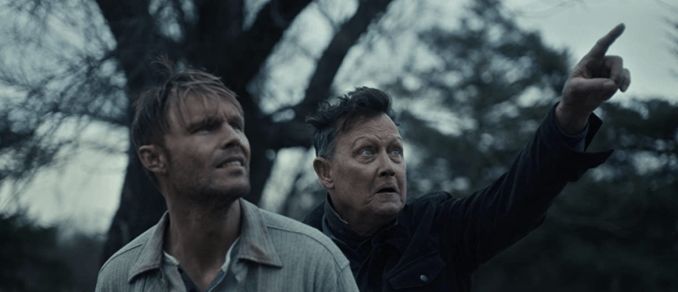 Each segment of the film has a very different tone. The early scenes on the farm (where, years earlier, Josiah’s wife mysteriously committed suicide) are filled with eerie unease. Josiah and Thomas’ relationship is tense and cold. It feels very much like a haunted house film. I feel like Robert Patrick has been playing supremely creepy characters for my whole lifetime – he slips into these roles without even trying. There’s a scene where Josiah gives Thomas some fatherly advice that is some of Patrick’s most squirm-inducing work to date.

 The hook is irresistible, and the image of the killer’s surgical mask smeared with a bloody smile will stick with me for a few nights. Unfortunately, the overall plot can’t quite keep up. The narrative dances back and forth between quarantine flashbacks and the harsh reality facing the players trapped in the deadly game. I love a tight 90-minute feature, but this is one film where I wished we had a little bit more exposition.
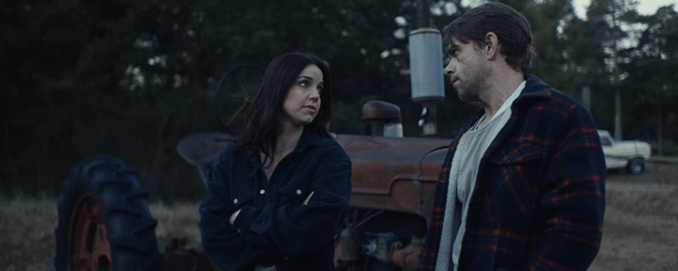


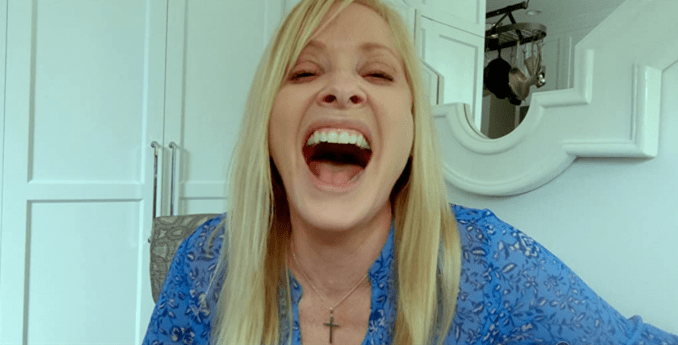 Emily Bennett understands how to accentuate a feeling of claustrophobia. Stuck in a wildly angled apartment, brimming with eccentric kitsch, Charlie awaits the arrival of her girlfriend behind a front door that won’t open. As time passes, confusion arises. Simone should be home by now. Charlie hears voices, doesn’t know what time it is, and things seem to move on their own. Reality shifts under her, and things get worse by the minute.
 Dora Madison, as Thea, is fantastic. She’s got this crunchy, stoner vibe. The way she holds the phone during her video calls with Charlie is incredible. It adds to the realism of her party friend vibe. Madison’s laid-back attitude counters Bennett perfectly. Emma Myles, who you’ll recognize from Orange Is The New Black, plays Simone. She’s the photographer girlfriend of Charlie. The script allows her to play both soft and hard moments, and she kills it.

 *Warning – this review contains light spoilers*
 Woof. That finale would have been tough for any sequel to top, but I was comforted by the fact that many of the same players that made 2018’s entry so successful had returned for 2021’s Halloween Kills (the 2nd entry in a planned trilogy, with Halloween Ends already penciled in for next year.) And, for the first 15 minutes, Halloween Kills is up to the challenge. It doesn’t take us back to Michael in that burning building but instead flashes back to the original night of carnage back in 1978. Here, Green mirrors much of the visual norms of Carpenter’s original film to great effect. It’s a shot of nostalgic adrenaline.
 What I don’t understand about this tone shift is why Green would abandon the core tenants of what made his previous film so successful. Maybe he was bored by the previous film’s pacing? Maybe he fell victim to studio pressures to continue to amp things up for a sequel. Whatever the rationale, it was a mistake.
You must be logged in to post a comment.