
 SOUTH BY SOUTHWEST ANNOUNCES OPENING NIGHT FILM, COMPETITIONS, AND SELECT FILM & TV PROGRAM TITLES
 DUNGEONS & DRAGONS: HONOR AMONG THIEVES TO OPEN FEST
Austin, Texas, – South by Southwest® (SXSW®) Conference and Festivals (March 10-19, 2023) announced the Opening Night film, Feature and Short Competitions, Midnighters, select titles from other categories, and XR Experience for the 30th edition of the SXSW Film & TV Festival. The rest of the lineup will be announced in early February. SXSW Film & TV will open with Paramount Pictures and eOne’s Dungeons and Dragons: Honor Among Thieves, directed and co-written by Jonathan Goldstein and John Francis Daley. In the film a charming thief and a band of unlikely adventurers embark on an epic quest to retrieve a lost relic, but things go dangerously awry when they run afoul of the wrong people. The movie brings the rich world and playful spirit of the legendary roleplaying game to the big screen in a hilarious and action-packed adventure starring Chris Pine, Michelle Rodriguez, Regé-Jean Page, Justice Smith, Sophia Lillis, Chloe Coleman, Daisy Head, and Hugh Grant.
“We are thrilled to announce the first wave of our incredible lineup for SXSW 2023,” said Claudette Godfrey, VP Film & TV. “It’s an amazing collection of films, TV series and XR experiences that promise to inspire, entertain and challenge our audiences. We’re also proud to open with Dungeons and Dragons: Honor Among Thieves, a raucous and engaging fantasy adventure, and look forward to welcoming everyone to Austin in March for what promises to be an unforgettable event.”
SXSW draws thousands of fans, film and television creators, press, and industry leaders to immerse themselves in the smartest, most innovative and entertaining new films, TV and XR projects of the year, as well as giving access to hundreds of Conference Sessions, Music and Comedy Showcases, Creative Industry Exhibitions, Mentoring, Meetups and Special Events that define the cross-industry event. The 2023 Film & TV Festival will be in-person only.
Feature films in the SXSW 2023 lineup screen in the following categories: Headliners; Narrative Feature Competition presented by Panavision; Documentary Feature Competition; Narrative Spotlight; Documentary Spotlight; Visions; Midnighters; Global presented by MUBI; 24 Beats Per Second; Festival Favorites, and Special Screenings. The TV program consists of TV Premieres, TV Spotlight, and the Independent TV Pilot Competition. The SXSW 2023 Shorts Film Program presented by IMDbPro will present seven competitive sections. XR Experience Competition, XR Spotlight and XR Special Events programming round out the Film & TV Festival program. All Categories with the exception of Special Screenings and TV Spotlight will be eligible for section-specific Audience Awards.
Global, Visions, 24 Beats, Festival Favorites and additional titles across all other sections will be announced in early February.
HEADLINERS
Big names, big talent: Headliners bring star power to SXSW, featuring red carpet premieres and gala film events with major and rising names in cinema.
Dungeons & Dragons: Honor Among Thieves
Directors: Jonathan Goldstein, John Francis Daley, Producers: Jeremy Latcham, Brian Goldner, Nick Meyer, Screenwriters: Jonathan Goldstein, John Francis Daley, Michael Gilio
A charming thief and a band of unlikely adventurers undertake an epic heist to retrieve a lost relic, but things go dangerously awry when they run afoul of the wrong people. Cast List: Chris Pine, Michelle Rodriguez, Regé-Jean Page, Justice Smith, Sophia Lillis, Chloe Coleman, Daisy Head and Hugh Grant (Opening Night World Premiere)
Evil Dead Rise
Director/Screenwriter: Lee Cronin, Producer: Rob Tapert
Evil Dead Rise tells a twisted tale of two estranged sisters, played by Sutherland and Sullivan, whose reunion is cut short by the rise of flesh-possessing demons, thrusting them into a primal battle for survival as they face the most nightmarish version of family imaginable. Executive Producers include Sam Raimi and Bruce Campbell. Cast List: Lily Sullivan, Alyssa Sutherland, Morgan Davies, Gabrielle Echols, Nell Fisher
Problemista
Director/Screenwriter: Julio Torres, Producers: Emma Stone, Dave McCary, Ali Herting
Alejandro (Torres) is an aspiring toy designer from El Salvador, struggling to bring his unusual ideas to life in New York City. As time on his work visa runs out, a job assisting an erratic art-world outcast (Swinton) becomes his only hope to stay in the country and realize his dream. From writer/director Julio Torres comes a surreal adventure through the equally treacherous worlds of New York City and the U.S. Immigration system. Cast List: Julio Torres, Tilda Swinton, RZA (World Premiere) Flamin’ Hot
Director: Eva Longoria, Producer: DeVon Franklin, Screenwriters: Linda Yvette Chávez, Lewis Colick
Flamin’ Hot is the story of Richard Montañez, the Frito Lay janitor who channeled his Mexican American heritage and upbringing to turn Flamin’ Hot Cheetos into a snack that disrupted the food industry and became a global phenomenon. Cast List: Jesse Garcia, Annie Gonzalez, Dennis Haysbert, Emilio Rivera, Tony Shalhoub, Matt Walsh, Pepe Serna, Bobby Soto, Jimmy Gonzales, Brice Gonzalez (World Premiere)
NARRATIVE FEATURE COMPETITION Presented by Panavision
Panavision, the global provider of optics, cameras, and end-to-end services that power the creative vision of filmmakers, is sponsoring the Narrative Feature Competition. Eight world premieres, and eight unique ways to celebrate the art of storytelling.
I Used To Be Funny (Canada)
Director/Screenwriter: Ally Pankiw, Producers: James Weyman, Jason Aita, Breann Smordin
Sam, a stand-up comedian struggling with PTSD, weighs whether or not to join the search for Brooke, a missing teenage girl she used to nanny. Cast List: Rachel Sennott, Olga Petsa, Jason Jones, Sabrina Jalees, Caleb Hearon, Ennis Esmer, Dani Kind (World Premiere)
Late Bloomers
Director: Lisa Steen, Producers: Alexandra Barreto, Taylor Feltner, Sam Bisbee, Screenwriter: Anna Greenfield
An aimless 28-year-old Brooklynite lands in the hospital after drunkenly breaking her hip being stupid. An encounter with a cranky elderly Polish woman who speaks no English leads to a job caring for her. Neither likes it, but it’s time to grow up. Cast List: Karen Gillan, Margaret Sophie Stein, Jermaine Fowler, Kevin Nealon, Talia Balsam (World Premiere)
Mustache
Director/Screenwriter: Imran J. Khan, Producers: Christina Won, Jessica Sittig, Christopher Storer, Tyson Bidner
It’s the mid-90s and 13-year-old Pakistani-American Ilyas is forced out of his cushy Islamic private school and thrown into public school with non-Muslim kids, all while suffering daily through life with his inescapable pre-pubescent Mustache. Cast List: Atharva Verma, Rizwan Manji, Alicia Silverstone, Hasan Minhaj, Meesha Shafi, Ayana Manji (World Premiere) Parachute
Director: Brittany Snow, Producers: Jordan Yale Levine, Jordan Beckerman, Brittany Snow, Lizzie Shapiro, Screenwriters: Brittany Snow, Becca Gleason
Riley is determined to recover from her addictions to food and body image when she soon falls for another addiction, Ethan. Cast List: Courtney Eaton, Thomas Mann, Francesca Reale, Gina Rodriguez, Joel McHale, Scott Mescudi, Dave Bautista, Jennifer Westfeldt, Kathryn Gallagher, Chrissie Fit, Kelley Jakle (World Premiere)
Pure O
Director/Screenwriter: Dillon Tucker, Producers: Ricky Fosheim, Dillon Tucker, Ray Lee
A young screenwriter/musician grapples with Pure O, a lesser-known form of OCD, while juggling his recent engagement and his day job at a high end Malibu drug rehab. Inspired by the filmmaker’s own personal true story. Cast List: Daniel Dorr, Hope Lauren, Landry Bender, Jeff Baker, Candice Renee, Breon Gorman, Tim Landfield, Isaac Nippert, Devon Martinez, Clint James (World Premiere)
Raging Grace (United Kingdom)
Director/Screenwriter: Paris Zarcilla, Producer: Chi Thai
A bold coming-of-rage story where Joy, a Filipino immigrant, and her daughter Grace encounter a darkness that threatens all they have worked for. Cast List: Maxine Eigenman, Leanne Best, David Hayman (World Premiere)
Scrambled
Director/Screenwriter: Leah McKendrick, Producers: Gillian Bohrer, Jonathan Levine, Brett Haley, Amanda Mortimer
A broke, single millennial unleashes an existential shitstorm when she freezes her eggs. Cast List: Leah McKendrick, Ego Nwodim, Andrew Santino, Clancy Brown, Laura Ceron, Yvonne Strahovski, June Diane Raphael, Adam Rodriguez, Brett Dier, Sterling Sulieman (World Premiere)
Story Ave
Director: Aristotle Torres, Producers: Lizzie Shapiro, Datari Turner, Jamie Foxx, Aristotle Torres, Screenwriters: Bonsu Thompson, Aristotle Torres
After running away from home, a teenage graffiti artist holds up an unsuspecting MTA worker in a robbery gone right that changes their lives forever. Cast List: Asante Blackk, Luis Guzmán, Alex Hibbert, Melvin Gregg, Coral Peña, Cassandra Freeman, Hassan Johnson (World Premiere)
DOCUMENTARY FEATURE COMPETITION
Eight world premieres: Eight non-fiction stories that demonstrate integrity, energy and unique voices.  Angel Applicant
Director/Screenwriter: Ken August Meyer, Producers: Ken A. Meyer, Jason Roark
A sick man discovers empathetic wisdom on how to cope with his deadly autoimmune disease within the colorful expressive works of the late Swiss-German modern artist, Paul Klee. (World Premiere)
Another Body (United Kingdom, U.S.)
Directors: Sophie Compton, Reuben Hamlyn, Producers: Elizabeth Woodward, Sophie Compton, Reuben Hamlyn, Screenwriters: Sophie Compton, Reuben Hamlyn, Isabel Freeman
Another Body follows a college student after she discovers deepfakes of herself circulating online. (World Premiere)
Geoff McFetridge: Drawing a Life
Director/Producer: Dan Covert, Screenwriters: Erik Auli, Dan Covert, Amy Dempsey, Tara Rose Stromberg
What defines a life? The iconic work of artist Geoff McFetridge is everywhere. But this film is more than a primer on his career—it’s about the choices we confront in trying to lead meaningful lives, and how we use our most precious resource: time. (World Premiere)
Join or Die
Directors/Producers/Screenwriters: Rebecca Davis, Pete Davis
A film about why you should join a club—and why the fate of America may depend on it. Follow the story of America’s civic unraveling through the work of Robert Putnam, whose legendary Bowling Alone findings light a path out of our democracy’s crisis. (World Premiere)
Pay Or Die
Directors: Rachael Dyer, Scott Ruderman, Producers: Rachael Dyer, Scott Ruderman, Yael Melamede
3 American families are on the receiving end of a ransom note. Their journeys reflect how lives are being threatened and taken by the soaring price of insulin, and reveal the harrowing reality of life with illness in the richest country in the world. (World Premiere)
Queendom (France, U.S.)
Director: Agniia Galdanova, Producers: Igor Myakotin, Agniia Galdanova
Gena, a queer artist from a small town in Russia, dresses in otherworldly costumes and protests the government on the streets of Moscow. She stages radical performances in public, which becomes a new form of art and activism – and puts her life in danger. (World Premiere)
Riders on the Storm (Austria)
Directors/Producers: Jason Motlagh, Mark Oltmanns
A young horseman battling to make his name and keep a family tradition alive in the ancient sport of buzkashi learns that fame is a gift and a curse as the Taliban take control of Afghanistan and threaten his life. (World Premiere)
You Were My First Boyfriend
Directors: Cecilia Aldarondo, Sarah Enid Hagey, Producer: Ines Hofmann Kanna
In this high school reunion movie turned inside out, filmmaker Cecilia Aldarondo relives her tortured adolescence, wondering if she remembered it all wrong. (World Premiere)
NARRATIVE SPOTLIGHT
High profile narrative features receiving their World, International, North American, or U.S. premieres at SXSW.
Bloody Hell (Canada)
Director/Screenwriter: Molly McGlynn, Producers: Jennifer Weiss, Liane Cunje
A teenage girl gets diagnosed with a reproductive condition that upends her plans to have sex and propels her into exploring unusual methods to have a sex life, challenging her relationships with everyone in her life, but most importantly, herself. Cast List: Maddie Ziegler, Emily Hampshire, Djouliet Amara, Ki Griffin, D’Pharaoh Woon-A-Tai (World Premiere)
Deadland
Director: Lance Larson, Producers: Elizabeth Avellan, Bob Bastarache, Jas Shelton, Lance Larson, Tara Pirnia, Chris Wilks, Screenwriters: Lance Larson, Jas Shelton
A U.S. Border Patrol Agent tries to apprehend the ghost of his father, a grave decision that will haunt him forever. Cast List: Roberto Urbina, McCaul Lombardi, Julieth Restrepo, Kendall Rae, Luis Chavez, Julio Cesar Cedillo, Manuel Uriza, Chris Mulkey (World Premiere) Down Low
Director: Rightor Doyle, Producers: Ashley Fox, Lucas Wiesendanger, Ross Katz, Screenwriters: Phoebe Fisher, Lukas Gage
Down Low is an outrageous comedy about one wild night, a deeply repressed man, the twink who gives him a happy ending, and all the lives they ruin along the way. Cast List: Zachary Quinto, Lukas Gage, Simon Rex, Sebastian Arroyo, Christopher Reed Brown, Audra McDonald, Judith Light (World Premiere)
Frybread Face and Me
Director/Screenwriter: Billy Luther, Producer: Chad Burris
An 11-year-old city boy is sent to his grandmother’s ranch on the Navajo reservation against his will. He is introduced to a new way of life, and an unexpected guest teaches him the importance of family, tradition, and what it means to be a man. Cast List: Kier Tallman, Charly Hogan, Martin Seinsmeir, Kahara Hodges, Ryan Begay, Sarah Natani (World Premiere)
If You Were the Last
Director: Kristian Mercado, Producers: Andrew Miano, Dan Balgoyen, Britta Rowings, Dennis Masel, Gabrielle Nadig, Jessamine Burgum, Kara Durrett, Jon Levin, Sean Woods, Screenwriter: Angela Bourassa
Adrift in their broken-down space shuttle with little hope of rescue, a male and female astronaut argue over whether they’re better off spending their remaining days as friends or something more. Cast List: Anthony Mackie, Zoë Chao, Natalie Morales, Geoff Stults (World Premiere)
Self Reliance
Director/Screenwriter: Jake Johnson, Producers: Jake Johnson, Ali Bell, Joe Hardesty
Given the opportunity to participate in a life or death reality game show, one man discovers there’s a lot to live for. Cast List: Jake Johnson, Anna Kendrick, Andy Samberg, Natalie Morales, Christopher Lloyd, Wayne Brady, GaTa, Emily Hampshire, Mary Holland, Boban Marjanović (World Premiere)
Upon Entry (Spain)
Directors/Screenwriters: Alejandro Rojas, Juan Sebastián Vásquez, Producers: Carles Torras, Carlos Juárez, Xosé Zapata, Sergio Adrià, Alba Sotorra
Upon their arrival at Newark’s airport with their approved residence visas, Diego and Elena are unexpectedly held and subjected to an interrogation by border agents who attempt to discover whether the couple may have something to hide. Cast List: Alberto Ammann, Bruna Cusí, Ben Temple, Laura Gómez (North American Premiere)
DOCUMENTARY SPOTLIGHT
Shining a light on new documentary features receiving their World, International, North American or U.S. premieres at SXSW.  A Disturbance in the Force
Directors: Jeremy Coon, Steve Kozak, Producers: Jeremy Coon, Steve Kozak, Kyle Newman
Travel back to a galaxy far, far away—the infamous Star Wars Holiday Special. Dive into the mystery of how it happened and why 45 years later it has become, much to the chagrin of George Lucas, the ultimate cult classic among Star Wars fans. (World Premiere)
The Arc of Oblivion
Director: Ian Cheney, Producers: Meredith Desalazar, Manette Pottle, Rebecca Taylor
The Arc of Oblivion illuminates the strange world of archives, record-keeping, and memory through a filmmaker’s quixotic quest to build an ark in Maine. (World Premiere)
Being Mary Tyler Moore
Director: James Adolphus, Producers: Lena Waithe, Debra Martin Chase, Ben Selkow, Rishi Rajani, Andrew C. Coles, Laura Gardner
Being Mary Tyler Moore explores Mary’s vanguard career, who, as an actor, performer, and advocate, revolutionized the portrayal of women in media, redefined their roles in show business, and inspired generations to dream big and make it on their own. (World Premiere)
Confessions of a Good Samaritan
Director: Penny Lane, Producer: Gabriel Sedgwick
Director Penny Lane’s decision to become a “Good Samaritan” by giving one of her kidneys to a stranger turns into a funny and moving personal quest to understand the nature of altruism. (World Premiere)
Great Photo, Lovely Life
Directors: Amanda Mustard, Rachel Beth Anderson, Producers: Amanda Mustard, Rachel Beth Anderson, Luke Malone, Screenwriters: Amanda Mustard, Rachel Beth Anderson, Tyler H. Walk, Josef Beeby
A photojournalist turns her lens on the decades of sexual abuse her family and community experienced at the hands of her grandfather in this unflinching portrait of intergenerational trauma, family secrets, and redemption. (World Premiere)
The Herricanes
Director: Olivia Kuan, Producers: James Lee Hernandez, Brian Lazarte, Lisa France, James Short, Olivia Kuan, Justin Baldoni, Andrew Calof
The Houston Herricanes were a women’s full-tackle football team from the 1970’s whose fight to play the game continues to resonate with female athletes today. (World Premiere)
The Lady Bird Diaries
Director: Dawn Porter, Producers: Kim Reynolds, Dawn Porter
From award-winning filmmaker Dawn Porter comes The Lady Bird Diaries, a groundbreaking documentary film that uses Lady Bird’s audio diaries to tell the story of one of the most influential and least understood First Ladies in history. (World Premiere)
Last Stop Larrimah
Director: Thomas Tancred, Producers: Sean Bradley, Rebecca Saunders
Nestled deep in the Australian Outback is the town of Larrimah and its 11 eccentric residents. When one of them mysteriously disappears into thin air, the remaining residents become suspects and a long history of infighting is unveiled. (World Premiere)
The New Americans: Gaming a Revolution
Director/Screenwriter: Ondi Timoner, Producers: Ondi Timoner, David Turner
The New Americans is a visceral, meme-driven journey at the intersection of finance, media, and extremism, which uncovers the connection between the Gamestop squeeze and the Jan 6th Insurrection and reveals explosive possibilities of our digital future. (World Premiere)
Periodical
Director: Lina Lyte Plioplyte, Producer: Pegah Farrahmand
Periodical is an eye-opening documentary that examines science, politics, and mystery of the menstrual cycle, through the experiences of doctors, athletes, movie stars, journalists, activists, and everyday people. (World Premiere)
Who I Am Not (Romania)
Director/Screenwriter: Tünde Skovrán, Producers: Andrei Zinca
There is male, there is female, and then there is I. Born male and female within one single body, a beauty queen and a male-presenting activist break the intersex taboo through a personal and intimate exploration of truth, faith, and belonging. (North American Premiere)
MIDNIGHTERS
Scary, funny, sexy, controversial – eight provocative after-dark features for night owls and the terminally curious.
Aberrance (Mongolia)
Director: Baatar Batsukh, Producers: Trevor Doye, Alexa Khan, Angarag Meguun, Screenwriters: Baatar Batsukh, Byambasuren Ganbat
An estranged couple takes a retreat in the woods. Foreboding neighbors, frivolous friends, and dark unseen forces lead to a shocking conclusion. Cast List: Erkhembayar Ganbat, Selenge Chadraabal, Yalalt Namsrai, Oyundary Jamsranjav, Sukhee Ariunbyamba, Bayarsanaa Batchuluun, Badamtsetseg Batmunkh (North American Premiere) Brooklyn 45
Director/Screenwriter: Ted Geoghegan, Producers: Seth Caplan, Michael Paszt, Pasha Patriki, Sarah Sharp
In the months following World War II, five old military friends are talked into an impromptu séance, which brings to troubling light each of their haunted pasts. Cast List: Anne Ramsay, Ron E. Rains, Jeremy Holm, Larry Fessenden, Ezra Buzzington, Kristina Klebe (World Premiere)
It Lives Inside
Director: Bishal Dutta, Producers: Raymond Mansfield, Sean McKittrick, Screenwriters: Bishal Dutta, Ashish Mehta
An Indian-American teenager struggling with her cultural identity has a falling out with her former best friend and, in the process, unwittingly releases a demonic entity that grows stronger by feeding on her loneliness. Cast List: Megan Suri, Neeru Bajwa, Mohana Krishnan, Betty Gabriel, Vik Sahay (World Premiere)
Late Night With the Devil (Australia, United Arab Emirates)
Directors/Screenwriters: Colin Cairnes, Cameron Cairnes, Producers: Derek Dauchy, Steven Schneider, Roy Lee, Adam White, Mat Govoni
A live television broadcast of a popular late night talk show in 1977 goes horribly wrong during a demonstration of demonic possession, unleashing evil into the nation’s living rooms. Cast List: David Dastmalchian (World Premiere)
Monolith (Australia)
Director: Matt Vesely, Producer: Bettina Hamilton, Screenwriter: Lucy Campbell
All you have to do is listen. A disgraced journalist turns to podcasting to try and rebuild her career – but her rush to generate headlines soon uncovers a strange artifact, an alien conspiracy, and the lies at the heart of her own story. Cast List: Lily Sullivan (International Premiere)
Talk To Me (Australia)
Directors: Danny Philippou, Michael Philippou, Producers: Samantha Jennings, Kristina Ceyton, Screenwriters: Danny Philippou, Bill Hinzman
Lonely teenager Mia gets hooked on the thrills of conjuring spirits through a ceramic hand, but when she is confronted by a soul claiming to be her dead mother, she unleashes a plague of supernatural forces. Cast List: Sophie Wilde, Miranda Otto, Alexandra Jensen, Joe Bird, Otis Dhanji, Zoe Terakes, Chris Alosio (Texas Premiere)
The Wrath of Becky
Directors/Screenwriters: Matthew Angel, Suzanne Coote, Producers: Raphael Margules, JD Lifshitz, Tracy Rosenblum, Russell Posternak, Chadd Harbold
After living off the grid for two years, Becky finds herself going toe to toe against Darryl, the leader of a fascist organization, on the eve of an organized attack. Cast List: Lulu Wilson, Seann William Scott, Matt Angel, Courtney Gains, Aaron Della Villa, Michael Sirow, Denise Burse-Fernandez, Jill Larson, Kate Siegel (World Premiere)
TV PROGRAM
TV PREMIERES
Presenting world premieres of prestige serials slated for release.
I’m A Virgo
Showrunner/Director/Screenwriter: Boots Riley, Producers: Boots Riley, Michael Ellenberg, Lindsey Springer, Tze Chun, Jharrel Jerome
This is a fantastical coming-of-age joyride about a 13ft-tall young Black man who lives in Oakland, CA. It’s called I’m A Virgo. The series stars Jharrel Jerome, Brett Gray, Kara Young, Allius Barnes, Olivia Washington, Walton Goggins, Mike Epps, and Carmen Ejogo.
(World Premiere)
Mrs. Davis
Showrunner: Tara Hernandez, Directors: Owen Harris, Alethea Jones, Screenwriters/Producers: Tara Hernandez, Damon Lindelof
Mrs. Davis is the world’s most powerful Artificial Intelligence. Simone is the nun devoted to destroying Her. Who ya got? Cast List: Betty Gilpin, Jake McDorman, Andy McQueen (World Premiere)
Slip
Showrunner/Director/Screenwriter: Zoe Lister-Jones, Producers: Zoe Lister-Jones, Ro Donnelly, Dakota Johnson, Katie O’Connell-Marsh, David Fortier, Ivan Schneeberg
Restless inside a marriage that totally works, Slip follows Mae through a fantastical journey of parallel universes as she enters new relationships, trying to find her way back to her partner, and ultimately, herself. Cast List: Zoe Lister-Jones, Tymika Tafari, Whitmer Thomas, Amar Chadha-Patel, Emily Hampshire (World Premiere)
TV SPOTLIGHT
Presenting world premieres of new seasons of prestige series.
Blindspotting Season 2 Premiere
Showrunner/Director: Rafael Casal, Producers: Rafael Casal, Daveed Diggs, Jess Wu Calder, Keith Calder, Emily Gerson Saines, Ken Lee, Tim Palen
Ashley was nipping at the heels of a middle-class life in Oakland until Miles, her partner and father of their son, was suddenly incarcerated, forcing her to move in with his mother and sister as she attempts to navigate the chaos of her life while trying to be a fun mom for her son…with mixed results. Cast List: Jasmine Cephas Jones, Helen Hunt, Benjamin Earl Turner, Atticus Woodward, Jaylen Barron, Candace Nicholas-Lippman, Rafael Casal, Margo Hall, April Absynth, Lance Holloway (World Premiere)
INDEPENDENT TV PILOT COMPETITION
A pilot showcase introducing fresh work from bright new talent, many with an eye towards finding production, completion funds, or a release platform.
A Guide To Not Dying Completely Alone
Showrunner/Screenwriter: Kevin Yee, Director: Yen Tan, Producer: Bekah Sturm
After a near death experience, a queer Asian writer decides to change his life for the better and chronicles his journey in a book. Cast List: Kevin Yee, Brittani Nichols, Alex MacNicoll, Betsy Struxness, Paul Wong (World Premiere)
Chuchi & Adaliz
Showrunner: Ashley Soto Paniagua, Directors: Dani Adaliz, Lance Cameron Holloway, Screenwriters: Ashley Soto Paniagua, Dani Adaliz, Jocelli Paniagua, Producers: Jocelli Paniagua, Heidi Williamson
After losing her job for insider trading, Adaliz moves in with her childhood bestie Chuchi who teaches her how to be poor. Cast List: Ashley Soto Paniagua, Dani Adaliz, Andrea Bashe, Kathryn Peters, Jocelli Paniagua, Selorm Kploanyi, Dariany Santana, Jeremy Habig, Jullian Farris (World Premiere)
Grown
Showrunner/Director/Screenwriter: Jocko Sims, Producers: Jocko Sims, Christophers Santiago, Chaz Hazlitt, Andrew Zolot
After sneaking into a strip club, 14 year old Rogelio, learns a few hard lessons about being man — all thanks to the aid of his older sister Chelly. Cast List: Josiah Gabriel, Giovanni Cristoff, Tristan-Lee Edwards, Angela Mejia-Loggia, Eliza Ramos, Kevin Rodriguez, Nixon Cesar (World Premiere)
Harbor Island
Showrunner/Director/Screenwriter: Calvin Lee Reeder, Producers: Carlos A.F. Lopez, Megan Leonard
A dad joke comic wanders the industrial zone at night. Cast List: Josh Fadem, Sidney Jayne Hunt, Matt Olsen (World Premiere)
Marvin? (Netherlands)
Showrunners/Screenwriters: Anton van der Linden, George Gottl, Director: Anton van der Linden, Producers: Anton van der Linden, Daan Geuke
Two young friends struggling to get ahead in life stumble onto a magical fridge that literally makes their dreams come true and soon learn that their shiny materialistic world is not what they expected. Cast List: Cameron Tharma, Sarah Rose, Sven Ironside, Jay Reaper, Cendy Barlag (World Premiere)
Metal Man
Showrunner: Tomas Pais, Directors: Laurel Parmet, Tomas Pais, Screenwriters: John Patton Ford, Tomas Pais, Laurel Parmet, Producer: Kaelan Housewright
A heavy metal handyman gets called to fix a tub but gets pulled into the drama/life of his customer and must handle more than he signed up for. Cast List: Tomas Pais, Lily Du, Andrew Walke, Da’Vone McDonald, David Massil (World Premiere)
Notarize Me
Director: Erika Rankin, Screenwriters/Producers: Erika Rankin, Brigitte Valdez
BFFs and mobile notary publics, Jackie and Louise, find themselves in intimate situations with wacky strangers as important legal documents get signed. Cast List: Brigitte Valdez, Erika Rankin, Sarah Cornell, Harley Tarlitz (Texas Premiere)
SHORTS PROGRAM Presented by IMDbPro
IMDbPro, the essential resource for entertainment industry professionals, is sponsoring the lineup of short films across six competitive sections. The SXSW 2023 Shorts Film Program presented by IMDbPro will include a selection of original, well-crafted films that take advantage of the short form and exemplify distinctive and genuine storytelling. The membership-based IMDbPro service empowers entertainment professionals with information and tools designed to help them achieve success throughout their career and is a service of IMDb, the world’s most popular and authoritative source for information on movies, TV shows and celebrities.
NARRATIVE SHORTS COMPETITION
A selection of original, well-crafted films that take advantage of the short form and exemplify distinctive and genuine storytelling. Breaking Fast with a Coca Cola
Director/Screenwriter: Amy Omar, Producers: Karine Benzaria, Jordan Hart, Amy Omar
After growing up in the secular households of their Turkish immigrant parents in the Midwest, Özlem and Ada are desperate to celebrate a tradition of their own. For the first time, they embark on a day of fasting and a night of feasting for Ramadan. (World Premiere)
The Breakthrough
Director/Screenwriter: Daniel Sinclair, Producers: Kate Chamuris, Valerie Steinberg
Jane and Teddy are on the brink of divorce – but when their marital problems come to a sticking point, they have an unexpected breakthrough. (World Premiere)
Closing Dynasty
Director/Screenwriter: Lloyd Lee Choi, Producers: Jon Hsu, Lloyd Lee Choi
On a school day, a 7 year-old hustles strangers for money on the streets of New York City. (North American Premiere)
Deliver Me
Director/Screenwriter: Joecar Hanna-Zhang, Producers: Noam Argov, Jorge Sistos, Joecar Hanna-Zhang
A billionaire’s long-awaited delivery threatens to upend his already tense relationship with his identical husband, who is having an identity crisis of his own. (World Premiere)
Endless Sea
Director/Screenwriter: Sam Shainberg, Producer: Rachel Walden
Carol begins a normal day only to find out that her heart medication has doubled in price. Afraid, but not without hope, she sets out to find a solution, but her journey doesn’t lead to salvation, only a desperate act of revolution. (Texas Premiere)
The Family Circus
Director/Screenwriter: Andrew Fitzgerald, Producer: Josh Cohen
A Vietnamese-American family’s plan to cover up a drunk driving accident begins to unravel as their emotional baggage spills out in front of the police. (Texas Premiere)
Flores del Otro Patio (Colombia, Switzerland)
Director: Jorge Cadena, Screenwriters: Jorge Cadena, Li Aparicio Candama, Producers: Yan Decoppet, Gabriela Bussmann
In north Colombia, a group of queer activists use extravagant performative actions to denounce the disastrous exploitation by the country’s largest coal mine. (International Premiere)
Fuck Me, Richard (Australia, U.S.)
Directors: Lucy McKendrick, Charles Polinger, Screenwriter: Lucy McKendrick, Producers: Jenna Grossano, Lucy McKendrick, Charlie Polinger
Recovering from a broken leg, a romance-obsessed loner finds herself swept up in a passionate long-distance love affair. Richard is perfect in every way, except that he may be a scammer. (World Premiere)
Graveyard of Horses (China)
Director/Screenwriter: Xiaoxuan Jiang, Producer: Zhulin Mo
A frigid winter on the Mongolian steppe, an untimely snowstorm led a pregnant herder and her 8-year-old daughter to places they’ve never been. (North American Premiere) I Probably Shouldn’t Be Telling You This
Director/Screenwriter: Emma Weinswig, Producers: Emma Weinswig, Will Noyce
When an oversharing, compulsive-lying e-girl is caught in the web of her own lies on her (secretly) favorite podcast, she must finally get off her bullshit. (World Premiere)
It Turns Blue (Iran)
Director/Screenwriter: Shadi Karamroudi, Producers: Shadi Karamroudi, Mehran Noori, Mina Dreki, Theodora Valentis
Pari covers up domestic violence when her brother beats up his 3-year-old daughter. (World Premiere)
The Key (Belgium, France, Palestine, State of)
Director/Screenwriter: Rakan Mayasi, Producers: Frank Barat, Rakan Mayasi, François de Villers, Laura Jumel, Nadine Naous, Patrizia Roletti
An Israeli family’s equilibrium gradually disintegrates as a mysterious sound is heard every evening at the door of their apartment. (North American Premiere)
Leonetty
Director/Screenwriter: Logan Jackson, Producer: Dante Sims
No longer able to live with his mother, young Leonetty is sent to live with his aging grandmother. (World Premiere)
Les Battues (The Fading) (Canada)
Director/Screenwriter: Rafaël Beauchamp, Producer: Léonie Hurtubise
In a small Quebec village, three hunters take possession of the tragedy of a young mother to put their own verdict on it. (World Premiere)
Never Fuggedaboutit
Director/Screenwriter: Dustin Waldman, Producers: Dustin Waldman, Nicholas Nazmi, Sariel Hana Friedman
Amid the high anxiety of post-9/11 NYC, a struggling post-production house is hired to remove a shot of the Twin Towers from the intro to a hit TV show. (World Premiere)
Rest Stop
Director/Screenwriter: Crystal Kayiza, Producers: Jalena Keane-Lee, Brit Fryer
On a bus ride from New York to Oklahoma, Meyi, a young Ugandan-American girl, realizes her place in the world through her mother’s ambitious effort to reunite their family. (Texas Premiere)
Scotty’s Vag
Director/Screenwriter: Chaconne Martin-Berkowicz, Producers: Cailin Lobb-Rabe, Chaconne Martin-Berkowicz, Gia Rigoli, Vero Kompalic
The night of a sorority hazing event, a college freshman learns just how far she’s willing to go to impress an older girl. (World Premiere)
Sisters of the Rotation (Lebanon)
Directors: Michel Zarazir, Gaby Zarazir, Screenwriters: The Zarazir Brothers, Producer: Madame Le Tapis
At the Sisters of the Rotation’s convent, the Earth doesn’t spin by itself. (North American Premiere)
Slick Talk
Directors: Courtney Loo, David Karp, Screenwriter: Courtney Loo, Producer: Katie Mykrantz
Feeling the pressure of an important meeting with a potential music manager, Kiki struggles with her identity as an outsider in the Chinese-American community, a culture vulture in the hip-hop world, and a potential sellout for mainstream success. (World Premiere)
Take Me Home
Director/Screenwriter: Liz Sargent, Producer: Minos Papas
After their mother’s death, an intellectually disabled woman and her estranged sister must learn to communicate in order to move forward. (Texas Premiere)
DOCUMENTARY SHORTS COMPETITION
Slices of life from across the documentary spectrum.
Ball People
Director: Scott Lazer, Producer: Tripp Kramer, Talia Cohen
Behind the scenes of the US Open Ball Crew tryouts. (World Premiere)
Birdsong (United Kingdom)
Directors: Omi Zola Gupta, Sparsh Ahuja, Producers: Sparsh Ahuja, Omi Zola Gupta, Dorn Bouttasing
Birdsong is an intimate portrait of the dying whistled language of the Hmong people in northern Laos. (International Premiere) The Bus (Spain)
Director: Sandra Reina, Screenwriters: Sandra Reina, Fran Menchón, Producer: Valérie Delpierre
This is a round-trip bus ride, which takes passengers on Friday mornings towards the weekend, and picks them up on Sunday afternoons to take them back to the place where they came from. (World Premiere)
The Dads
Director/Screenwriter: Luchina Fisher, Producers: Shan Shan Tam, Luchina Fisher
When five fathers of trans kids join Dennis Shepard, the father of slain gay college student Matthew Shepard, for a weekend fishing trip in rural Oklahoma, they find common purpose across races, generations, and experiences. (World Premiere)
El Bastón (Colombia, U.S.)
Director: Nemo Allen, Producers: Nemo Allen, Aditi Natasha Kini, Hanna Wallis, Juan Blanco García
Two filmmakers, one mother and one son, find answers and strength as they document the struggles of Colombia’s Indigenous Nasa, decades apart. (Texas Premiere)
Margie Soudek’s Salt and Pepper Shakers
Director: Meredith Moore, Producer: Jonna McKone
An artist and VFX instructor connects with her aging grandmother, Margie, in a documentary short on collecting, artmaking, and obsessiveness as a way to enhance our realities. (Texas Premiere)
Mother of the Dawn
Director: Janell Shirtcliff, Screenwriters: Angie Simms, Tommy Savas, Producer: Tommy Savas
In the early 1950s in a remote corner of Brazil, a female truck driver named Tia Neiva started having visions of extraterrestrial spirits; shortly after, she began to gain a following called Vale do Amanhecer (Valley of the Dawn). (World Premiere)
Nǎi Nai & Wài Pó (Grandma & Grandma)
Director: Sean Wang, Producers: Sean Wang, Sam Davis
Nǎi Nai (奶奶) is my grandma. Wài Pó (外婆) is also my grandma. Together, they are my grandmas. Meet my grandmas. (World Premiere)
Puffling (United Kingdom)
Director: Jessica Bishopp, Producers: Alice Hughes, Gannesh Rajah, Ada Benjamínsdóttir
On a remote Icelandic island, teenagers Birta and Selma take it upon themselves to counteract society’s harmful impact on nature, exchanging night-time parties for nocturnal puffin rescues in a coming-of-age story for young adults and puffins alike. (World Premiere)
Roger J. Carter: Rebel Revolutionary
Director: Justin Fairweather, Producers: Zachary Kingham-Seagle, Johnny Starke
Roger J. Carter: Rebel Revolutionary follows the Chicago portrait artist as he creates staggering images of black revolutionaries using hundreds of toy soldiers, representing the wars the marginalized face as they dismantle an established system. (World Premiere)
Suddenly TV (Qatar)
Director/Producer: Roopa Gogineni
A group of young Sudanese create an imaginary television station at a besieged sit-in. Interviewing protestors from around the country, they confront the violence of the regime and conjure a new Sudan. (North American Premiere)
Where the Sun Always Shines (United Kingdom)
Director: Rosie Baldwin, Producer: Lucy Draper
The residents of a quintessential but neglected British seaside town grapple with research suggesting that their home could disappear within their lifetimes due to the climate crisis. (World Premiere)
ANIMATED SHORTS COMPETITION
An assortment of stories told using traditional animation, computer-generated effects, stop-motion, and everything in between.
A Tiny Man (France)
Directors: Aude David, Mikaël Gaudin, Screenwriters: Mikaël Gaudin, Aude David, Producer: Jérôme Blesson
With a delicately penciled animation style, A Tiny Man tells a moral tale of nefarious schemes gone awry. As a husband faces the consequences of his actions, he perhaps begins to realize that maybe size does in fact matter. (Texas Premiere)
Ashkasha (Argentina, Spain)
Director/Screenwriter/Producer: Lara Maltz
Ashkasha is a living being guided by curiosity. This causes her to lose her head and get trapped in the depths, where she is submerged on a discovery journey. (US Premiere) Beyond The Fringe (Spain)
Directors: Han Tang, Costanza Baj, Screenwriter/Producer: Han Tang
A story about a little paper figure’s journey of finding the strength to leave its home, the notebook where it was born, to explore the great world beyond. (World Premiere)
Christopher at Sea (France, United Kingdom, U.S.)
Director: Tom CJ Brown, Screenwriters: Tom CJ Brown, Laure Desmazières, Producers: Emmanuel-Alain Raynal, Pierre Baussaron, Amanda Miller, Hanna Stolarski, Nick Read, Emily-Jane Brown
Christopher goes to sea. (Texas Premiere)
The Debutante (United Kingdom)
Director/Screenwriter: Elizabeth Hobbs, Producer: Abigail Addison
A spirited young woman persuades a hyena from London Zoo to take her place at a dinner dance being held in her honour. (Texas Premiere)
Ice Merchants (Portugal)
Director/Screenwriter: João Gonzalez, Producers: Bruno Caetano, Michaël Proença
Every day, a father and his son jump with a parachute from their vertiginous cold house, attached to a cliff, to go to the village on the ground far away where they sell the ice they produce daily. (Texas Premiere)
Remove Hind Legs Before Consumption (Switzerland)
Directors: Lukas Wind, Finn Meisner, Leslie Herzig, Producer: Gerd Gockell
In an insect food farm, one lucky cricket survives its certain death. (International Premiere)
Sandwich Cat (Spain)
Director/Screenwriter: David Fidalgo, Producers: Daniel Rodriguez, Laura Doval
David lives alone with his kitty, Sandwich Cat. It seemed like an ordinary day, but an unexpected visit will lead him to a crucial reflection to humanity. (International Premiere)
Spring Roll Dream (United Kingdom)
Director: Mai Vu, Screenwriter: Chloe White, Producer: Thijme Grol
Linh is a Vietnamese single mother who’s successfully forged a life for herself and her son in America. But she is confronted with the past and culture she left behind and the question of where it belongs in her family’s new life. (Texas Premiere)
Sprout
Director/Screenwriter/Producer: Zora Kovac
After an agoraphobic scientist accidentally creates a baby-like plant creature, their connection threatens to upend his reclusive way of life. (World Premiere)
MIDNIGHT SHORTS COMPETITION
Bite-sized bits for all of your sex, gore, and hilarity cravings. Dead Enders
Directors: Fidel Ruiz-Healy, Tyler Walker, Screenwriters: Fidel Ruiz-Healy, Tyler Walker, Jordan Michael Blake, Conor Murphy, Producers: Raven Jenson, Amanda Crown, Gregory Barnes, Conor Murphy, Nico Alvo, Jordan Michael Blake, Eduardo Ruiz-Healy
A disaffected gas station clerk finds out why they call it the “graveyard shift” after oil drillers set loose an ancient race of mind-controlling parasites.(World Premiere)
Every House is Haunted
Director/Screenwriter: Bryce McGuire, Producer: Isaiah Smallman
A struggling couple moves into a haunted house… on purpose. (World Premiere)
The Flute (Ireland, U.S.)
Director: Nick Roney, Screenwriters: Nick Roney, Ed Leer, Producers: Brendan Garrett, Ryland Burns
Fleeing a long-term relationship, a young man seeks refuge with his best friends. After discovering their strange instruments, he’ll learn the bachelor lifestyle is not as sweet as it sounds. (World Premiere)
Kodama
Director/Screenwriter: Brian M Tang, Producers: Penny Lin, Brendan Bennett, Norrie Palmer, Brian M Tang
Arthur, a member of an elite SWAT Samurai team, embarks on a rescue mission into the spirit world in order to recover his father from vengeful Japanese Yokai spirits. (World Premiere)
The Mundanes
Directors/Screenwriters: Nicole Daddona, Adam Wilder, Producers: Eric Hendricks, Nicole Daddona, Adam Wilder
Get to know the Mundanes, a faceless suburban family with an unusual appetite. (World Premiere)
Pennies from Heaven
Director: Sandy Honig, Screenwriters: Sandy Honig, Annabel Meschke, Sabina Meschke, Producer: Jake Honig
Pennies from Heaven is a short comedy about two eccentric twin sisters who stumble upon a pickup truck full of pennies and follow the adventure wherever it takes them. (World Premiere)
Pussy Love (Germany)
Director/Screenwriter/Producer: Linda Krauss
Hey Puss! Still playing hard to get? Let me be your pussycat. (World Premiere)
Run
Director/Screenwriter: Alex Prager, Producers: Vincent Landay, Alex Prager, Lisa Lou Ziven
Run celebrates the absurdity of being alive today.
Vibrator Girl
Director: Kara Strait, Screenwriters: Morgane Ciot, Zoe Mintz, Producers: Morgane Ciot, Zoe Mintz
A young woman suffers the eerie consequences of her compulsive vibrator use. (World Premiere)
We Forgot About The Zombies
Director/Screenwriter: Chris McInroy, Producers: Kris Phipps, Jarrod Yerkes, Stacey Bell
Two dudes think they found the cure for zombie bites. (Texas Premiere)
You’re Not Home (Ireland)
Director/Screenwriter: Derek Ugochukwu, Producer: Gregory Burrowes
When an ominous mould appears in their room, two African brothers seeking asylum are faced with a dark entity lurking within their direct provision centre. (Texas Premiere)
TEXAS SHORTS COMPETITION
An offshoot of our regular shorts program, composed of work shot in, about, or somehow relating to the Lone Star state. Breaking Silence
Directors: Amy Bench, Annie Silverstein, Producers: Monique Walton, Amy Bench
A portrait of a Deaf activist and his formerly incarcerated daughter who build new bonds through their experiences in the criminal justice system. (Texas Premiere)
Call Me Mommy
Directors: Haley Alea Erickson, Taylor Washington, Screenwriter: Haley Alea Erickson, Producers: Brittany Reeber, David Tenczar
A pedantic mother-to-be hires a stranger to role-play as her unborn daughter. (World Premiere)
Dressed
Director/Screenwriter: Bethiael Alemayoh, Producer: Noam Argov
A former bride-to-be attempts to sell her wedding dress. (World Premiere)
Exit 238
Director/Producer: Henry Davis
In the fall in Austin, TX, the extraordinary roosting display of the Purple Martin attracts people of many walks of life to the Capital Plaza shopping center. (Texas Premiere)
Eyestring (Argentina, U.S.)
Director: Javier Devitt, Screenwriters: Javier Devitt, Alena Chinault, Producer: Alena Chinault
With a mysterious string growing from her eye and questionable advice from a hotline service, Veronica is led on a strange quest for answers. (World Premiere)
Funny Face
Director: Jude Hope Harris, Screenwriters: Krista Fatka, Jude Hope Harris, Producers: Genevieve Jones, Nick Vitale
When country singer Randy travels to take care of his sister Sophie as she recovers from facial feminization surgery, he meets her girlfriend, Morgan, for the first time. The three bond over family history, love, and an extremely chaotic home nurse. (World Premiere)
La Cosecha
Director: Samuel Díaz Fernández, Screenwriters: Ái Vuong, Samuel Díaz Fernández, Producer: Ái Vuong
As one of many residents who lack access to fresh food in Austin, Nolvia Castillo takes the driver’s seat and distributes vegetables to her neighbors. When filmmaker Ai Vuong rides along, they speak the language of immigrants: memories of food. (World Premiere)
When You Left Me On That Boulevard
Director/Screenwriter: Kayla Abuda Galang, Producers: Alifya Ali, Kayla Abuda Galang, David Oconer, Udoy Rahim, Samantha Skinner
Teenager Ly and her cousins get high before a boisterous family Thanksgiving at their auntie’s house in southeast San Diego in 2006. (Texas Premiere)
Wüm
Director/Screenwriter: Anna Margaret Hollyman, Producers: David Hartstein, Seana Flanagan, Shelby Hadden
Bennett, a nonbinary new parent, joins a Mommy Group called Wüm. What is supposed to be a supportive space turns into a Hipster-Stepford-Wife nightmare with Bennett being smothered in the middle of white lady “wokeness.” (World Premiere)
MUSIC VIDEO COMPETITION
A range of classic, innovative, and stylish work showcasing the scope of music video culture.
alt-J – ‘The Actor’ (United Kingdom) / Director: Saskia Dixie
Amanda Sum – ‘Different Than Before’ (Canada) / Director/Screenwriter: Mayumi Yoshida
Arlo McKinley – ‘Stealing Dark from the Night Sky’ / Director: Matt Reynolds
Ben Abraham – ‘If I Didn’t Love You’ / Director: Jillian Bell
Diplo feat Miguel – ‘Don’t Forget My Love’ / Director: Kinopravda, Screenwriters: Viktor Horvath, Zoltan Aprily
Doechii – ‘Crazy’ / Director: C Prinz
Drew Ashby – ‘Her’ / Directors: Chris Scholar, Bevin Brown
Kuba Kawalec – ‘I Died’ (Poland) / Director/Screenwriter: Zuzanna Plisz
Little Simz – ‘Point and Kill’ (United Kingdom) / Director: Ebeneza Blanche
Mac Miller – ‘Colors and Shapes’ / Director: Sam Mason
Michael Kiwanuka – ‘ Beautiful Life’ / Director: Phillip Youmans
Mick Jenkins – ‘Truffles ‘ (United Kingdom, U.S.) / Director: Andre Muir
Mothermary – ‘Coming for You Remix’ / Directors/Screenwriters: Larena Danielle Winn, Elyse Winn
Number One Popstar – ‘Dance Away the Pain’ / Director/Screenwriter: Kate Hollowell
Pearl Derringer – ‘Little Baby (feat. Margo Price)’ / Director: Kimberly Stuckwisch, Screenwriters: Pearl Derringer, Kimberly Stuckwisch
Pranav Bhasin, Rohini Maiti – ‘Screaming on the Fly’ (India) / Director/Screenwriter: Pranav Bhasin
Residente – ‘This is Not America ft. Ibeyi’ / Director: Gregory Ohrel
S+C+A+R+R – ‘Never Give Up’ (France) / Director: Jack Antoine Charlot
Yeah Yeah Yeahs – ‘Wolf’ / Director: Allie Avital
Zolita – ‘Somebody I F*cked Once’ / Director/Screenwriter: Zolita
XR EXPERIENCE
The immersive arts are redefining how we experience the world around us. The projects presented in our XR Experience Competition, XR Experience Spotlight, and XR Experience Special Event sections emphasize storytelling, ingenuity, and also showcase how artists of all types are embracing this new medium.
XR Experience Competition
World Premieres of exciting immersive work. Aespa VR Concert at Kwangya (Republic of Korea, U.S.)
Director: Soo-man Lee, Producer: Junyoung Park
“Aespa’s first concert at Kwangya, the artists’ virtual existence coexisting with the future.” – SM Culture Universe. (World Premiere)
Body of Mine VR
Director/Producer/Screenwriter: Cameron Kostopoulos
Experience gender dysphoria and trans identity with Body of Mine VR, an intimate experience that takes you inside the body of another gender. (World Premiere)
Consensus Gentium (United Kingdom)
Director/Screenwriter: Karen Palmer, Producers: Tom Millen, Thalia Mavros, Jackson Lapsley Scott, Tuyet Huynh
Consensus Gentium is an emotionally responsive film app designed to be experienced on a mobile phone. Set in a near future of surveillance and bias AI that watches you back. (World Premiere)
The District VR (Germany)
Directors: Dennis Lisk, Ioulia Isserlis, Max Sacker, Producers: Dennis Lisk, Fabian Vogelsteller, Ioulia Isserlis
Welcome to The District VR, a music-driven 3D world full of vibrant games and virtual live entertainment. Put on a VR headset and dive into a virtual twin of Berlin. Be the DJ, use provided equipment, and mix music live in front of a virtual crowd. (World Premiere)
El Beat (Colombia)
Directors: Irene Lema, Sergio Bromberg, Producers: Rafael Ospino, Irene Lema, Screenwriter: Irene Lema
El Beat is a cross-platform experience (interactive film and VR), telling the story of Benkos Biohó, enslaved African and founder of the first free town in the Americas. It is a tribute to the African diaspora and the Black Power of Latin America. (World Premiere)
Find WiiLii – Ep.1 The Gate-Crasher (Republic of Korea)
Directors: Mina Hyeon, Sooyoung Choe, Producer: Sohee Kim, Screenwriters: Sooyoung Choe, Mina Hyeon
On the first day as a newcomer at the Teleportation Service Company IIOIIG, the ordinary mission flows unexpectedly, meeting a stranger. (World Premiere)
Forager: Immersive Multi-sensory Experience (Canada, U.S.)
Directors: Winslow Porter, Elie Zananiri, Producers: Winslow Porter, Casta Zhu, Screenwriters: Winslow Porter, Elie Zananiri, Adam Lerman, Daniel Perlin
In this immersive, multi-sensory experience guests will experience the complete life-cycle of mushrooms. Starting as a spore floating to the forest floor, you become an integral part of this essential, live-giving process. (World Premiere)
Fresh Memories: The Look (Czechia, Ukraine)
Directors/Screenwriters: Ondřej Moravec, Volodymyr Kolbasa, Producers: Ondřej Moravec, Robin Pultera
Look into the eyes of Ukrainian people whose home has been taken away by war. (World Premiere)
The Invited (United Kingdom)
Directors: Davy McGuire, Kristin McGuire, Producers: Davy McGuire, Nesta Nelson, Dan Tucker, Screenwriters: Ben Steiger-Levine, Richard Hurford
The Invited reimagines the gothic story of Dracula in a solitary séance in which a handcrafted fine art pop-up book comes to life with vivid augmented reality animations to serve as a conduit for Dracula’s curse to re-enter the modern world. (World Premiere)
Jailbirds- The Eye of the Artist (Belgium, France)
Director/Screenwriter: Thomas Villepoux, Producers: Griselda Gonzalez Gentile, Francois Klein
Jailbirds takes place in a modern hell prison ruled by a vicious Chief Warden. But in this living nightmare, one guy, Felix, is always happy. It enrages the Chief Warden who will do everything he can to discover Felix’s secret. (World Premiere)
JFK Memento (France, U.S.)
Director: Chloé Rochereuil, Producer: Victor Agulhon
JFK Memento is a VR documentary chronicling JFK’s assassination. Narrated by the last living witnesses of the events, it explores the defining moments of the investigation as archive photos and films remastered in 3D come to life in the historic sites. (World Premiere)
Once a Glacier
Director/Screenwriter: Jiabao Li
Once a Glacier is a VR film about a girl and her relationship with a glacier. As the girl grows older, the piece of ice is threatened. The viewer is taken on a journey through her seemingly futile efforts to protect what was once an entire glacier. (World Premiere)
Rockets, by Pillow (Brazil)
Director/Producer/Screenwriter: Lucas Rizzotto
The world’s first VR narrative designed for lying down in bed. Control a brave little rocket named Crimson through a number of mind-bending puzzles as you attempt to save the Universe from a terrible evil you set free. (World Premiere)
Stay Alive, My Son (Chapters 1 & 2) (Greece, U.S.)
Director/Producer/Screenwriter: Victoria Bousis
Stay Alive, My Son takes players on a fantastical, interactive, and powerful journey through the mind and heart of Pin Yathay as he relives a tragic past and loss of his son during the Cambodian genocide, but eventually finds his salvation and heals. (World Premiere)
Whipped Cream “The Dark” (Canada)
Directors: Caroline Cecil (aka Whipped Cream), Will Selviz, Producer: Brenda Medina Carmona, Screenwriter: Caroline Cecil
The Dark, featuring Monstercat artists Whipped Cream, Jasiah, and Crimson Child, presents a VR experience that blends EDM and opera music with photorealistic holographic performances in an emotion-oriented story about a toxic relationship. (World Premiere)
XR Experience Spotlight
Shining a spotlight on acclaimed immersive projects.
Behind The Dish (France, U.S.)
Director: Chloé Rochereuil, Producers: Victor Agulhon, Jonathan Gleit
Behind the Dish is a virtual reality docu-series that dives into the world of gastronomy. Through three 10-minute episodes in 360° film, meet extraordinary women chefs revolutionizing the food industry and watch their cuisine in super-sized macro 3D.  Eggscape (Argentina)
Director: German Heller, Producers: German Heller, Lucila Trobbiani, Screenwriters: German Heller, Federico Heller, Jorge Tereso
An MR experience about terrified little eggs struggling to stay alive in a world full of enemies. Play in an unprecedented way with the physical world, and build your own adventure with friends mixing the digital with the real. (North American Premiere)
The Eye and I Vol. I (Taiwan)
Directors: Hsin-Chien Huang, Jean-Michel Jarre, Producer: Hsiao-Yue Tsao, Screenwriter: Hsin-Chien Huang
The Eye and I is a VR experience that illuminates the surveillance crisis with music from legendary electronic musician Jean-Michel Jarre and visuals from award-winning VR director Hsin-Chien Huang. (International Premiere)
Figural Bodies (United Kingdom)
Directors: Clarice Hilton, Neal Coghlan, Producers: Susanna Dye, Kat Hawkins
Figural Bodies challenges and reimagines the normative and ableist ways the body is understood and represented through immersive technology. This dance mocap performance explores fantastical interaction and embodiment beyond the humanoid avatar form (World Premiere)
In Pursuit Of Repetitive Beats (United Kingdom)
Director/Screenwriter: Darren Emerson, Producers: Ashley Cowan, Dan Tucker
A multi-sensory joyride into the heart of a revolution in dance. Grab your friends and plug into a virtual reality adventure that transports you into the early days of the Acid House movement. Share in an experience that shaped a generation. (North American Premiere)
Lou (Canada)
Directors: Martine Asselin, Annick Daigneault, Producers: John Hamilton, Sebastien Gros, Screenwriters: Annick Daigneault, Martine Asselin, Louis-François Archambault-Therrien
Experience the world with the sensitivity of a person with autism. (U.S. Premiere)
Mrs Benz (United Kingdom)
Director: Eloise Singer, Producer: Siobhan McDonnell, Screenwriters: Eloise Singer, Jedidjah Noomen
Travel back in time to 1886 with Bertha Benz and discover how her journey changed the course of history. (North American Premiere)
Shib the Metaverse
Directors: Marcie Jastrow, Sherri Cuono, Producer: Brandie Konopasek
The Metaverse is the culmination of our history as a community, virtually displayed, in a layer of beautiful visuals that showcase our innovation and unity with a place to truly call home. (World Premiere)
Spring Odyssey (France)
Director: Elise Morin, Producer: Lucid Realities, Screenwriter: Sabrina Calvo
Tangible, material sculptures await the digital in the exhibition space. The display invites a reversal of our apprehension of the relationship between reality and the digital by completing the gaps of one and the other. (International Premiere)
Temporal World: A Haptisonic Virtual Reality Memory World (Germany)
Director/Producer: Chloé Lee
Temporal World is a haptisonic VR experience inspired by the artist’s memories in a place where she has no personal history. Visitors explore and shape a landscape that is as fragmented and fickle as memory itself while wearing a custom haptic coat. (International Premiere)
UnEarthed (United Kingdom)
Director: Jamie Davies, Producer: Jennifer Mortimer, Screenwriters: Jamie Davies, Phil Porter
UnEarthed is a spectacular interactive adventure into the natural world, inspiring people to respect, protect, and restore our planet’s biodiversity, through impactful learning and entertainment. (North American Premiere)
You Destroy. We Create. (Germany)
Directors/Producers: Felix Gaedtke, Gayatri Parameswaran
Witness how Ukrainian art and culture have become targets of the ongoing war, and meet the inspiring people on the frontlines protecting it.
Yuki MR (Brazil)
Director: Kako, Producer: Lia Pinheiro, Screenwriters: Kako, Flavio Mattos, Lia Pinheiro, Marcelo Nery
Yuki MR is an upbeat mix of bullet-hell in Mixed Reality! Take your favorite toy in your hand to defeat evil creatures in a multidimensional universe. (Texas Premiere)
XR Experience Special Events
Neo-Wulin: The Era of Black Ark (China)
Director/Screenwriter: Guanyu, Producers: Chenchenchen, Bingbing Wang
Neo-Wulin is the first virtual performance series IP in China created by the OXYZ3 team.
Each musician will have a unique music world that combines performance, exhibition, and social interaction, and can be constantly extended. (International Premiere)
COMPETITION AWARDS
The Narrative Feature Competition, the Documentary Feature Competition, Poster Design, and Special Awards will be announced on Tuesday, March 14 along with all the Short Film Program winners, which are eligible for Jury Awards within their respective screening categories. All film categories, except Special Screenings and TV Spotlight, will be eligible for category-specific Audience Awards, which will be certified by the accounting firm of Maxwell Locke & Ritter and announced via sxsw.com the following week.
SXSW is proud to be an official qualifying festival for the Academy Awards® Short Film competition. Winners of our Best Animated, Best Narrative and Best Documentary Short Film categories become eligible for Academy of Motion Picture Arts and Sciences awards (Oscars). Any British Short Film or British Short Animation that screens at SXSW is eligible for BAFTA nomination. Films are also eligible for the Independent Spirit Awards, more information on eligibility here.
In addition to film festival screenings, registrants also have access to the full range of content available during SXSW including Conference Keynotes, Featured Speakers, Mentor Sessions, Networking Meet Ups, Music Showcases, Comedy Festival Showcases, Exhibitions and Professional Development. For more information on everything SXSW Online has to offer, please visit sxsw.com.
About SXSW Film Festival
Now in its 30th year, SXSW Film & TV Festival brings together creatives of all stripes over nine days to experience a diverse lineup and access to the SXSW Music and Comedy Festivals plus SXSW Conference sessions with visionaries from all corners of the entertainment, media, and technology industries.
About SXSW
SXSW dedicates itself to helping creative people achieve their goals. Founded in 1987 in Austin, Texas, SXSW is best known for its conference and festivals that celebrate the convergence of tech, film, music, education, and culture. An essential destination for global professionals, the annual March event features sessions, music and comedy showcases, film screenings, exhibitions, professional development and a variety of networking opportunities. SXSW proves that the most unexpected discoveries happen when diverse topics and people come together. SXSW 2023 will take place March 10 – 19, 2023. For more information, please visit sxsw.com. To register for the event, please visit sxsw.com/attend.
SXSW 2023 is sponsored by White Claw, Volkswagen, Itaú, and The Austin Chronicle

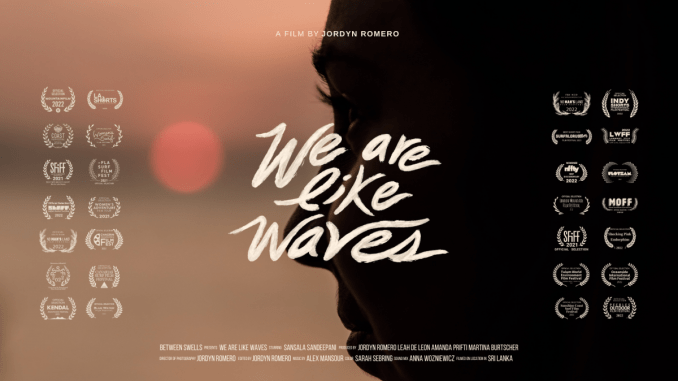
 Director Jordyn Romero bonded with Sanu over their love of surfing, a predominantly male-dominated sport. Sanu’s fearless pursuit of wanting to become the first female surf instructor from Sri Lanka lies beyond the horizon. In Sanu’s words, “We Are Like Waves. You cannot stop us.” This simple act of rebellion is certain to have a ripple effect. Romero brings audiences a relatable story told with grace. Boasting a beautifully encompassing score, WE ARE LIKE WAVES sees Romero and Sanu carve a path for the next generation.


 Chris Zylka‘s vulnerability is award-worthy. The performance reminds me a lot of Cooper Raiff in

 Abigail Fuller’s short film Shepherd’s Song contemplates Earth’s interconnectedness through the eyes of California grazier Jenya Schneider. Climate change threats in the west frequently come in the form of severe droughts and wildfires. Jenya and her partner Jack have chosen a cyclically beneficial lifestyle for the Earth, their clients, and themselves. Four hundred ewes, recycled fencing, and unrelenting passion comprise their venture. Grazing becomes a service to the land, and the sheep produce wool and lanolin. The science behind grazing done right shows the value to the ecosystems it serves. It’s healing the land.
 A beautiful score by Serena Goransson moves from subtle to soaring as the film progresses. It feels perfect. Carmen Delaney’s mix of handheld and drone cinematography gives the audience an idea of the landscape scale against Jenya and Jack’s figures through the mountainous grasslands. It is stunning. SHEPHERD’S SONG is part climate film, part nature film, and all heart. We can all learn a whole lot from Jenya and Jack. They are showing the world how to repair the damage we’ve done, one area of grassland at a time.


 2D charcoal and pen animation and an ominous score (in fact, my six-year-old son heard it in the background and exclaimed, “That’s so scary!”)


 The ending of the film is a double twist. The first had me yelling at the screen. The second was so shocking I audibly exclaimed, “Okay, that’s AWESOME.” Writer-director-producers
You must be logged in to post a comment.